
























Opening
In Stellaris you do not play a hero. You play an entire civilization, and the first fifty years of your first run will flatten almost every newcomer. You barely figure out how to scout a neighbouring system before you bump into a quietly drifting megastructure left by a long-dead species; you finalize your first defensive pact just in time to dig up an alien fleet that has been sleeping for thirty thousand years on the edge of an archaeology site. That "flip a planet, drop a bomb" density of discovery is the single trait that puts this game in a different category from anything else marketed as a 4X strategy title.
It is a grand strategy. It is also a 4X. And it is also a sci-fi narrative sandbox dressed up in space opera. A decade of long-tail operation has turned it from a "newly released game" into a fully polished modern classic — every system from pop jobs to ascension perks, from the Galactic Community to becoming the crisis, has been ground smooth by thirty-plus expansions and an endless stream of free patches.
The price of that decade is the same as its strength. The number of expansions to evaluate, the patience required for late-game tick speed, and the willingness to accept Paradox's "press space to pause" tempo — these gates filter out a meaningful slice of players before they ever see the sandbox spectacle. But if you are willing to climb those three small mountains, what waits on the other side is the most free, most theatrical, most thousand-hour-friendly version of space the 4X genre has ever produced.
Story | 9.0/10
Story: 9/10Stellaris has no fixed main storyline. Its story is stitched together by dozens of crossing event chains, producing what fans correctly call a "sandbox epic." This is the single biggest rewrite of traditional 4X narrative design — instead of handing you a script you can recite, it lets your empire and your galaxy generate their own.
No main quest, only a galactic chronicle
Compare Stellaris to Civilization VI and you quickly realize they are not playing the same game. Civ uses victory conditions like target lines on a chessboard. Stellaris hangs its endgame on a much vaguer hook: can you survive the endgame crisis at all? That open-ended structure turns every playthrough into an independent chronicle of one specific galaxy.
In the opening years you play a species that just invented faster-than-light travel. The first science ship launches with a memo from an in-universe bureaucrat telling you the known universe has just gained one more civilization. Within thirty in-game years you will likely run into a slumbering void-creature, an archaeological dig, a border dispute with a neighbour, and the first patronizing message from a Fallen Empire. None of these events are scripted in advance. They are conditional event chains, each branching into three to five player decisions and rolling forward from there.
By the midgame the narrative is held together by two long arcs: wormholes that open up unexplored regions, and L-Gates that lead to a lost galactic cluster. After that comes the endgame crisis: the Galactic Community summons all empires for emergency action because the Prethoryn swarm has spilled out of an edge sector, your own AI has rebelled, or extradimensional invaders have torn open a previously dormant rift. This is the fourth-act crescendo where every thread you have been pulling for three hundred years finally converges.
Character work through leaders and the council
The council and leader systems are the load-bearing pillars of Stellaris's narrative feel. Starting from the Galactic Paragons expansion every leader has personal traits, loyalty values, political opinions. You can assign them as fleet admirals, science directors, foreign envoys, or planet governors. You are not commanding abstract stat blocks. You are managing named people with histories and coup tendencies.
A common dramatic beat goes like this. You promote a research-oriented leader to head Ascension Theory studies. Half a game-year later he resigns because he read an anti-divinity tract buried in an ancient archive. Six months after that he founds an opposition faction in your government demanding the cancellation of your cybernetic ascension programme. That kind of character arc is almost unheard of in 4X — Civilization leaders are essentially portraits with passive modifiers.
The cost of that depth is high churn. Leaders rotate often, and a newcomer easily ignores the council UI in favour of the resource bar. Players who push through to a second run usually arrive at the realization that leaders are themselves a resource. From that moment on, the cast of every campaign becomes a third dimension of play — which is also why veterans keep saying "let me start another run just to see who shows up on the council this time."
The three-flavour crisis is the climax
The endgame crisis comes in three flavours and that triplet is the narrative spine of the entire sandbox. The Prethoryn swarm is a tide of biological horror. The AI rebellion is a synthetic uprising sparked inside one or more empires. The extradimensional invader is a war machine pouring out of a single contaminated rift.
Each flavour ships with its own soundtrack, its own event chain, and its own optimal strategic counter. The swarm wants overwhelming volume from many fleets. The AI wants surgical decapitation. The extradimensional wants tech-maxed elite formations. Trigger time, intensity multiplier, and entry method are all configurable at game setup. That means a player with a thousand hours can still meet a brand-new flavour profile in hour 1001.
After the Nemesis expansion you can also reverse the role — instead of stopping the crisis, you become it, building the Aetherophasic Engine and converting the rest of the galaxy into energy as you ascend to godhood. This gives "playing the villain" a clean dramatic motive: be the Galactic Custodian appointed to save the galaxy, or be the looming threat the entire galaxy unites to destroy. Two mutually exclusive scripts make replay finally feel worth the time.
Choices encoded in government, not dialogue
Stellaris has no traditional RPG dialogue tree, but its government-level decisions function more like the world-shaping choices in The Witcher 3. Pick democratic elections today and the next ruler might be a dove. Pick imperial autocracy and the same dictator stays at the wheel for centuries. Pick hive mind and your leaders lose individual will entirely.
This "policy decides plot" approach binds story feel to systemic mechanics. Council resolutions, tradition trees, ascension perks, Galactic Community votes — all four layers respond to "what kind of civilization are you?" The moment you lock in devouring swarm ethics, your diplomacy panel collapses: most civilizations declare war on sight, and only other swarms accept you as a natural ally.
The price is that these choices are sticky. Outside of a handful of special events, your ethics lock for the whole run. Players who want mid-run reinventions find this rigid, but players who enjoy "choose an identity, live with it" find it gives every campaign a clear thematic arc. That, in turn, is exactly the replay engine the game depends on: next run, pick a different way to live.


Audio | 9.5/10
Audio: 9.5/10The Stellaris soundtrack is one of composer Andreas Waldetoft's signature works, recorded by the Brandenburg State Orchestra and the Budapest Film Orchestra with wordless vocals by soprano Mia Stegmar. It is not just "pleasant background music." It is welded into the gameplay loop on a level few 4X games attempt.
Track titles map directly to strategic phases
The full album contains sixty-three tracks and runs more than four hours. Every title points at a specific phase of play. Creation and Beyond is the galactic theme that plays on the title screen. Cradle of the Galaxy carries the early colonization phase. Assembling the Fleet underpins fleet rallies and jump preparation. Doomsday cuts in the second a crisis lands. That naming policy gives the music inherent narrative weight.
A common veteran observation is that you can guess what is happening in the galaxy just by listening. The ethereal synth-string blend of early game makes you feel like you are reading SCP entries while you sift through archaeological digs. The slightly tighter percussive march of midgame raises the stakes without changing scene. The full-choir intervention layered on top of crisis combat tells your ears immediately, "the Prethoryn just arrived." Audio cues track game state. That kind of synchronized audio-gameplay design is in the top tier of the entire 4X catalog.
If you dig into specific tracks, Infinite Being is the recurring motif you hear when poking at relics; Genesis is the short tune that opens species creation; Assembling the Fleet plays whenever a large group of ships activates a jump. The community even maintains "OST trigger guides" cataloguing which conditions cause which cues, which is a meaningful sign that the music itself has become part of how players read the state of the game.
Voice and ambient work is intentionally restrained
There are no big cinematic voice cuts in Stellaris. Event chain dialogue is text on the screen. Major decisions get a UI sting and an occasional spoken line, but the overall posture is "restrained sound design." That restraint matches the broader sandbox simulation tone — you are not watching a film, you are listening to the ambient feed of a galaxy you happen to be running.
Ambient sound mostly comes from the low hum of ship engines, the pulse of planetary scanners, and the phase-distortion sweep of FTL jumps. None of it competes with the score, but all of it sustains the sense that you are operating a civilization rather than directing a scene. Compared with Endless Space 2, which leans on character VO theatrics, Stellaris picks a more mechanical, tool-rational soundscape — the noises you hear are physics and machinery, not personalities.
That posture loosened slightly with the Machine Age expansion. The new virtual machine empire playstyle introduces dense electronic vocal effects and data-pulse ambient layers. When you play a virtual empire the soundscape changes shape entirely, going noisy and synthetic. It is the first time Stellaris audio design varies meaningfully across gameplay branches.
Platform differences in audio output
The console version on PS5 and Xbox Series X|S supports spatial audio and Dolby Atmos. The PC version defaults to stereo but the audio pipeline can be configured for 5.1 or 7.1 output through OBS or external chains. Console players particularly benefit during huge fleet battles, where directional cues for incoming jumps become spatially distinguishable through headphones.
The console version has one long-standing weakness, however. Custom playlist support is weaker than the PC build. PC players can drop their own MP3s into the Music directory and have the in-game player cycle through them. Console players cannot. Given that most Stellaris players accumulate well over a thousand hours, that omission compounds into a meaningful long-term gap, which is why the community still considers PC the friendliest version for music customization.
The console version still has one upside on a different axis. If you hook the game up to a living-room OLED and a full surround setup, the bass-heavy thumps of fleet jumps and crisis arrival deliver a physical sensation that desktop builds rarely replicate. That "couch 4X" experience is a genuinely different way to engage with the music and is hard to replicate on a desk.
The tenth anniversary concert and its industry meaning
The tenth anniversary celebrations include a critically acclaimed classic soundtrack concert featuring Andreas Waldetoft and others. This is not the usual "OST tie-in event." It is Paradox explicitly pushing the Stellaris score into the classical performance repertoire. Within the grand strategy genre's OST canon, Stellaris is regularly listed alongside Mass Effect 2, Civilization VI, and Endless Space 2 as a top-four science fiction strategy soundtrack — but only Stellaris and Mass Effect 2 have ever sustained their own standalone live performances.
The concert programme also confirms how tightly bound the score is to the game loop. The opening number is Creation and Beyond, anchoring listeners to the title-screen motif. The middle act shifts into the marching tempo of Assembling the Fleet, mimicking the midgame buildup. The climax is the full-choir version of Doomsday. The whole evening is essentially a single Stellaris run compressed into two hours of orchestral storytelling. For veterans, it is "playing a thousand hours again, this time using only the music."
This kind of orchestral live event also moves attention back to the soundtrack itself. Spotify play counts for the Stellaris OST roughly doubled around the concert window, and several streaming platforms placed it on the front page of their sci-fi orchestral playlists. That is the textbook example of soundtrack-driven brand spillover. The "voice of Stellaris" has now reached audiences who never played the game.


Visuals | 8.0/10
Graphics: 8/10Stellaris does not win on raw rendering tech. It wins on an aesthetic strategy. Grand strategy games rarely market themselves on visuals, but Stellaris does — and largely succeeds — by leaning on "space opera as look and feel" rather than fidelity.
Art direction — star maps and stellar wonders
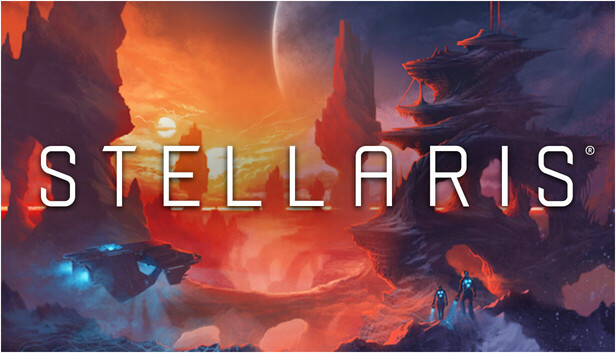
The galactic map in Stellaris is one of the most visually satisfying displays in the genre. Pull the camera from full-galactic overhead to a single-system view and the transition is smooth. Nebulae, dark-matter currents, supernova remnants — every astronomical feature is rendered as a hybrid of hand-painted texture and procedural generation. At maximum zoom the galaxy looks like a deep oil painting, each star a glowing brushstroke on a dark canvas.
Each planet has a distinct surface art identity. Agricultural worlds show green meadows. Desert worlds glow with red and orange dunes. Ocean worlds ripple in blue. Relic worlds bear ruined cities under cracked skies. You never drop into a planetary 3D view, but the planet cards and selection previews carry enough flavour that every colony feels climatically distinct. That "art difference equals gameplay difference" design is the secret behind why each colony in Stellaris feels different rather than fungible.
In the midgame the map starts overlaying political layers — the golden barriers around Fallen Empire territories, the rainbow halos around the Galactic Community's borders, the gradient regions where empires bleed into each other. These visual elements double as a geopolitical visualization tutorial. You do not need to read any UI panel; a single glance at the galaxy tells you who is dominant and who is currently a vassal.
Engine technology and visualization
Stellaris runs on Paradox's in-house Clausewitz engine, the same family that powers Europa Universalis IV, Crusader Kings III, and Hearts of Iron IV. It is not a AAA graphics engine, but for a workload of 2D star maps with light 3D ship effects, it performs remarkably well. Even on the largest galaxy size with a thousand systems, zooming and panning hold smooth frame rates (provided you are not in the late-game tick slowdown).
Ship art is another strength. Every species archetype — humanoid, arthropoid, reptilian, fungoid, machine, lithoid, hive — has its own complete ship aesthetic. Machine ships are clean geometric cuts laced with neon. Fungoid ships look organically grown. Psychic ships carry strange energy striations. That art-level differentiation does a lot of heavy lifting for the "what kind of civilization am I" fantasy, especially across multiple replays.
Lighting and particles really shine during large fleet engagements. The phase distortion of an active jump, the charging arc of a Colossus main weapon, the tidal wave of Prethoryn swarmers pouring out of a corrupted rift — these are the brief "cinematic moments" where the engine briefly tries hard. They are not the default state of routine combat, which still resolves as strategy-first numbers on healthbars, but they happen often enough that long campaigns accumulate a folder's worth of screenshot-worthy frames.
Platform version differences
The console version on PS5 and Xbox Series X|S looks close to PC high settings, but the UI has been redone heavily for controller use. Console players manage the galaxy map with d-pad plus LB/RB combinations, which feels about a half-step slower than mouse navigation on PC. PC has the most complete graphics options panel, including resolution, anti-aliasing, shadow quality, and particle density independent controls.
PlayStation 4 and Xbox One last-generation consoles also receive Stellaris Console Edition Season 8 updates — part of Paradox's long-running strategy of "keep old hardware in sync." That cross-generation parity is friendly to console players, but the cost is visible frame dips on old machines at the largest galaxy size, which is hard to engineer around with current console hardware.
During the tenth anniversary celebration all players received free copies of Utopia, Synthetic Dawn, and the Humanoids Species Pack. Ship art and species portraits from those packs were synced to console as well, so console players are not missing any visual content. This kind of fully-synchronized asset rollout on console-side 4X is rare — most console 4X titles do meaningful visual simplifications relative to their PC counterparts.
UI and accessibility
The user interface is one of the most polarising aspects of Stellaris. Information density is high. A single planet's management panel surfaces job lists, resource outputs, building queues, and modifier lists simultaneously. Newcomers cannot parse it for the first five hours. Veterans counter with the standard grand-strategy defense — this is "necessary complexity," because you cannot make decisions without that much data; the UI is simply not hiding things from you.
Accessibility features include colorblind-friendly palettes, UI scaling by percentage, and independent font sizing. What is missing is a full accessibility suite — no voice command, no automated assistive playstyle, no screen reader integration. For players with visual or motor needs this remains a long-standing gap. Paradox has been filling it in over recent updates, but the gap to AAA accessibility frameworks is still visible. Volunteer mods on the community side partially close the remainder, with the best of them pulled into the launcher featured-mods list curated by Paradox itself. The official roadmap has accessibility improvements scheduled across the coming year, which suggests this gap will continue to narrow even if it never fully closes.


Combat | 8.5/10
Gameplay: 8.5/10Gameplay is the part of Stellaris that deserves ten thousand words of explanation. It takes the canonical 4X skeleton — explore, expand, exploit, exterminate — and fills it back in with the Paradox grand-strategy trio of event chains, named leaders, and deeply modeled economy. The result is a hybrid that nothing else on the market is currently replicating at this scale.
Real-time with pause is the pacing anchor
Stellaris has no turns. The world advances continuously, with time speed adjustable between one times and five times normal, and a spacebar shortcut to pause whenever you need it. The core benefit of "real-time with pause" is tempo control. Pause and think during high-stakes moments. Run at five times during low-event stretches and wait for the next chain.
Compared to Endless Space 2 — a turn-based 4X where every decision waits for "next turn" — Stellaris feels more like piloting a living civilization. Compared to Sins of a Solar Empire — pure real-time with no pause — Stellaris still gives you room to think strategically. This pacing is Paradox's signature interaction layer, refined over a decade and a half across Europa Universalis, Crusader Kings, and Hearts of Iron.
New players tend to stumble in exactly this layer. Either they refuse to use 5x speed ("I have to see every planet"), in which case two real hours pass before their first jump completes. Or they leave the game on 5x permanently ("nothing is happening anyway") and blow past major event prompts. The community proverb is that "pressing space is the real skill" — knowing when to pause shapes the new-player experience more than any tactical detail.
Pop and job systems are the economic engine
Pop count on each planet is the most scarce resource of the entire campaign. Pops auto-assign to jobs based on trait weights through three strata — Workers, Specialists, Rulers. Four district types — City, Generator, Mining, Farming — determine the available job pool on each colony.
This design is the "soul layer" of Stellaris's economy. You cannot just "build five mines and get five units of minerals" the way you can in old-school 4X. You first need enough pops, then the right district mix, then the right trait priorities for those pops, before any actual production happens. The most common midgame action veterans take is migrating surplus farmers into alloy foundries, or reassigning surplus energy technicians into research labs.
This same system is also the source of late-game tick lag. The 1.x era used a unit-pop model where a thriving planet could host 200+ pop units. The 2.x rewrite went weighted-auto-assign, and 3.x clamped pop caps further. Even so, a maximum galaxy past year 250 still produces audible tick slowdown on five times speed. Steam community posts are very clear about the cause — "reducing habitable worlds at game setup is the most effective preventive measure."
Ascension paths and tradition trees form character building
Tradition trees and ascension perks are the heart of Stellaris's character build system. Completing a tradition tree or acquiring Ascension Theory tech unlocks a perk slot. A single campaign supports up to eight perks total.
The four broad lanes are species transformation (Engineered Evolution, Mind over Matter, The Flesh is Weak), diplomatic hegemony (Galactic Paragon, Federation Builder), military supremacy (Defender of the Galaxy, Galactic Force Projection), and ultimate antagonist (Galactic Nemesis, Become the Crisis). Each lane shapes your endgame fantasy — transformation for "max biological optimization," hegemony for "weave the federations to your will," supremacy for "infinite fleet scaling," and antagonist for "burn the galaxy as a fuel source."
This design makes replaying Stellaris genuinely meaningful. Civilization VI replays usually mean swapping civilizations. Stellaris replays mean choosing a different endgame identity. This "role-playing 4X" is a category of one — no other 4X currently lets you "deliberately destroy the world and call it a win condition." That single innovation is what keeps the title relevant a full decade after launch, and is the most replicated idea among newer competitors trying to break into the same space.
Combat is not the focus, but it is necessary
Combat is lighter than Hearts of Iron IV — fleets engage automatically once they reach a target, and the player neither needs nor can perform tactical micro. But the ship designer is a critical strategic tool. Before any war you must tune the fleet class mix (corvette, destroyer, cruiser, battleship, titan, colossus), weapon types (kinetic, energy, missile, disruptor, torpedo), and the shield-versus-armour ratio.
The pleasure of combat is not tactical. It is "have I prepared enough?" Three centuries of tech investment, pop management, and alloy stockpiling all converge in the moment of one large fleet engagement. That delayed-gratification loop is the classic 4X reward structure, scaled up to galactic geography.
Compared with Sins of a Solar Empire's real-time fleet brawls, Stellaris combat is shallower tactically but deeper strategically. You have already determined the outcome before the first shot fires. Combat is just the visualization of a decision you made hundreds of in-game years ago. That distinction is exactly what separates Stellaris from real-time space RTS, and it is also the reason fleet engagements in Stellaris feel either crushing or hopeless, never even — you walked into the battle with either a decisive edge or none at all.
Difficulty curve and newcomer friendliness
Stellaris's difficulty curve is the classic Paradox cliff. The first fifty in-game years are brutal because you must absorb pop jobs, influence economy, tradition trees, ship design, and diplomatic relations all at once. From year fifty onward the slope flattens. By year 250 the curve drops sharply — you have already conquered the galaxy or fully prepared for the endgame crisis.
The in-game tutorial solves only the first ten in-game years of onboarding. Everything past that requires wiki reading and community videos. Paradox is aware of this, and recent updates layered in more contextual tooltips and strategic hints, but the underlying truth has not changed — Stellaris is not a game you learn in ten minutes.
This is the core difference between Stellaris and Endless Space 2. The latter uses faction quest lines as gentle onboarding rails. Stellaris drops you into the galactic deep end and asks you to swim. That difference means it is not friendly to players who refuse to learn, but it is the most complete space grand-strategy sandbox available to players who want depth they can dig into.


Content | 9.5/10
Content: 9.5/10Stellaris's content footprint sits in the top tier of the entire 4X genre. A decade of long-tail operation, more than thirty expansions of various sizes, and a continuous stream of free patches have turned it from "a game" into "an ecosystem." That is simultaneously its biggest strength and the largest barrier facing new players today.
Main campaign length and pacing within a single run
Campaign length is highly variable. The smallest galaxy size — two hundred systems — takes about twenty to thirty hours per run. Standard galaxies of five hundred systems land at forty to sixty hours. The maximum thousand-system galaxy can stretch to eighty or one hundred and twenty hours. That puts Stellaris among the largest single-campaign 4X experiences on the market, with playtime per run pushed to the genre ceiling.
Within a single run, pacing splits into four stages: exploration (years zero to fifty), expansion (fifty to one hundred), consolidation (one hundred to two hundred), and the crisis-resolving endgame (after two hundred). The first two stages are widely acknowledged as the "joy zone" — you are flipping over unknown systems, negotiating with neighbours, debating the AI cap. The last two are the "payoff zone" — the outcome is decided, the rest is visualizing your victory.
Most new players abandon a run somewhere in consolidation. Influence deficits, alloy shortages, and tangled diplomacy stack on top of five times tick speed and produce the dreaded "what am I doing here" fog. The community has discussed this midgame slump for years. Paradox's response has been to keep stuffing midgame events into expansions — Astral Planes, Distant Stars, Ancient Relics all exist specifically to repopulate the midgame. After installing those expansions the slump shrinks visibly.
Expansion matrix and purchase decisions
The Stellaris expansion matrix splits into four classes: core mechanical expansions, narrative DLC, species packs, and mechanical packs.
Core mechanical expansions are the must-buy tier — Utopia (opens ascension paths), Apocalypse (adds the Colossus), Federations (rebuilds diplomacy), Nemesis (Become the Crisis / Galactic Custodian), Overlord (subjugation and Hyper Relays), Galactic Paragons (council and leader system), and The Machine Age (virtual machine empires). Together these seven cover essentially every modern Stellaris mechanic.
Narrative DLC are the highly recommended tier — Distant Stars (ancient narrative chains), Ancient Relics (archaeological digs), Astral Planes (cross-dimensional map). These do not rewrite core mechanics but they significantly boost event density. For story-driven players they are extremely high value, but combat-and-economy purists can defer them.
Species packs are taste-based — humanoid, machine, plantoid, arthropoid, reptilian, fungoid, lithoid, aquatic — each providing distinct ship art, city art, and leader portraits. They strongly appeal to players who want to "be a particular kind of civilization," but they can be skipped without affecting mechanics.
Mechanical packs are the most contentious group. Cosmic Storms in particular drew sharp community criticism that "this DLC was outsourced and the space weather just is not fun." It is the most visible result of Paradox letting third-party studios produce DLC content, and quality control issues showed. The internal lesson visible in subsequent updates is that gameplay-adjacent mechanical packs are now spec-reviewed more aggressively before shipping, with Paradox staff embedded in the partner studio's development cycle to keep the design language consistent with the broader Stellaris feel.
Mod ecosystem and community production
The Stellaris mod ecosystem is one of the most active in the industry. The Steam Workshop hosts tens of thousands of mods, ranging from pure art swaps ("HD ship texture pack") through gameplay overhauls ("entirely rewritten economy") to large content packs ("new galactic nation chapters"). Managing mod conflicts is the second skill new players learn — most players use Paradox's own launcher to order load lists, and players with complex setups use third-party tools for compatibility checks.
The uplift from mods is dramatic. The most popular UI overhaul, "Extended Notes," visualizes job assignment logic and lets new players read the economy by the second campaign. The "More Events" mod doubles event chain density, giving thousand-hour veterans fresh narrative beats. This "official plus community" dual-engine model is another core reason Stellaris has sustained a decade-long tail. Community contribution volume now exceeds official expansion output on several axes. The Chinese-speaking community in particular runs very active localization and gameplay-overhaul groups, and the Workshop's most-subscribed list routinely surfaces non-English content as top-tier examples of fan production.
Console versions and cross-platform progress
The console version, available on PS4, PS5, Xbox One, and Xbox Series X|S, follows a "Season N" expansion cadence. The current Season 8 release synchronously includes The Machine Age and Cosmic Storms from the PC line, plus a free next-gen upgrade path. That kind of all-platform sync cadence is uncommon for console-side 4X.
PS5 and Xbox Series X|S players migrating from last-generation hardware get a free next-gen upgrade. Saves do not transfer between console and PC, however. That is a deliberate Paradox tradeoff — the console UI restructure altered save structure enough that cross-platform sync is not economically viable. Given that grand strategy players tend to run a single save across dozens of hours, this limitation impacts the player experience less than it would in a multiplayer-first genre.
The console upside is the "DLC season pass" — buy a whole season of core expansions at once for less than the per-DLC price on PC. The downside is the complete absence of the PC mod ecosystem on console. That means console offers "pure Stellaris," and PC offers "infinitely extensible Stellaris," with no meaningful overlap.
Tenth anniversary free bundle and newcomer friendliness
The tenth anniversary celebration gives every player Utopia, Synthetic Dawn, and the Humanoids Species Pack for free. That single action lifts the entry experience from "base game" to "base game plus three flagship expansions." New players entering Stellaris in this window can immediately access complete ascension paths, the machine empire baseline, and the most complete ship art roster — none of which costs anything extra.
This is Paradox's deliberate "friendliness adjustment" after a decade of operation. Combined with the new official merchandise store, the orchestral concert, and the genre-wide Steam discount window, the celebration is the largest "long-tail giveback" by any same-class game in recent memory. For new players, the tenth anniversary represents the most cost-effective entry point into the Stellaris ecosystem.
Looking at the genre horizontally, no other 4X has pulled off a comparable flagship-free move at a tenth anniversary milestone. Civilization VI, Endless Space 2, and the Master of Orion reboot all skipped that scale of free content giveback. That further cements Stellaris's reputation as the long-tail service benchmark of the 4X genre — the game holds up, but the operations strategy also leads the industry.






Comments 0
We'd love to hear from you
Welcome! Share your take on this game — being first might come with a surprise.
No comments yet — share your thoughts on this review!