























Opening
TEKKEN 7 is a strong return for this legendary 3D fighting series, and a successful pivot into a new era.
Its review scores are solid: on OpenCritic, it has an average of around 82 from 131 reviews, placing it in the "Strong" tier, with 83% of critics recommending it and a spot in the top 14% of all games. Metacritic also sits at 82, while on Steam nearly 67,000 reviews give it an 83% positive rating.
Commercially, by 2024 it had sold over 12 million copies worldwide, making it one of the best-selling entries in the series' history.
Helmed by series mainstay Katsuhiro Harada and built on Unreal Engine 4, it has two headline draws: it puts a dignified full stop on the decades-long Mishima family feud that runs through the whole series, and it opens the door to newcomers with new mechanics like Rage Arts while keeping its hardcore depth intact.
But it is not without flaws. This review looks at where TEKKEN 7 shines — its absorbing fighting system and excellent online play — as well as the shortcomings you should know about going in, and ultimately what kind of player it is for.
Story | 6.0/10
Story: 6/10The end of a decades-long feud
In story terms, TEKKEN 7 sets out to do something that means a great deal to longtime fans: bring the decades-long Mishima family feud that has defined the series to a close. The plot centers on the fateful final showdown between Heihachi Mishima and his son Kazuya, peeling back the love, hatred, and tragedy passed down through generations of this clan.

To tell this sprawling tale, the game adopts a clever narrative vantage point: you follow a journalist whose family was ruined by the events of the previous game as he investigates this ancient, powerful clan, threading the whole story together as an outside observer. Paired with gorgeous cinematic cutscenes — some accented by striking hand-drawn flourishes — the main story gives the Mishimas' tangled grudges real epic weight and dramatic tension. This generations-spanning tragedy, shaped by power, broken trust, and family ties, is handled with genuine gravity; it is not just a series of fights, but a story about fate and a father and son who can never reconcile. For players who treat this series like an old friend, witnessing the feud's curtain fall is an emotional payoff no newer entry can quite replicate.
Newcomer-friendly, but light on substance
To its credit, even though TEKKEN 7 carries decades of narrative baggage, its story mode is quite friendly to newcomers. Through that journalist's outsider perspective and dedicated character backgrounds, even a player who has never touched Tekken can broadly follow the threads of the feud without getting lost. That makes its narrative far more approachable than that of many long-running series.

But it must be said honestly — and this is the lowest-scoring dimension in this review — the story mode has one clear weakness: it is too short. Although it concludes the Mishima feud and the cutscenes are cinematic, the main line itself is quite brief, often clearable in a few hours. For a flagship numbered sequel, a single-player campaign of that size feels a touch thin and leaves you wanting more. Many reviews make exactly this point: the story is competent, even moving at times, but there simply is not enough of it. Compared with peers that offer far richer single-player content — like Mortal Kombat 11, known for the heft of its campaign — TEKKEN 7 clearly comes up short in narrative depth. So if you are mainly here for the story, it is best not to set your hopes too high — it is a sincere but limited offering for the faithful. Still, for a legendary grudge that has spanned decades and lives in the childhood memories of countless players, getting a dignified, complete send-off counts for something in itself. It may not be long, but what it needed to say, it said. It is, in the end, a fitting farewell more than a full-length feature — a moment longtime fans will be glad to witness, even as they wish the studio had given it a little more room to breathe.
None of this should overshadow what the story does well. Within its short runtime, the writing is economical and surprisingly affecting; it trusts you to feel the weight of a grudge built over generations without spelling every beat out. The hand-drawn interludes in particular carry a stylized gravity that the in-engine cutscenes alone could not, and they give the Mishima saga's conclusion a sense of occasion. The problem was never the quality of the storytelling, only its quantity — and for a saga this long-running, a few more hours of it would have transformed a good send-off into a great one. As it stands, it is a heartfelt epilogue that ends a beat too soon, the rare case where the chief complaint is simply wanting more of something genuinely good. It is also worth remembering the constraint the team was working under: in a fighting game, the story is a side dish, not the main course, and most of the studio's energy clearly went into the systems and the online play where this series lives or dies. That is a defensible priority, and commercially and critically it plainly paid off. But for players who value a meaty single-player narrative as much as a strong versus mode, the brevity is a real, if minor, disappointment — a reminder that even an excellent fighting game can only stretch so far across every front at once. Take it for what it is — a coda, not a campaign — and there is real warmth to be found in it.
Audio | 8.0/10
Audio: 8/10A driving electronic pulse
TEKKEN 7's music, composed by Nobuyoshi Sano and others, leans heavily on electronic tracks — strong, propulsive rhythms that perfectly suit the tense, blood-pumping atmosphere of a fighting match. When two skilled players trade blows, with attacks flying back and forth, the swelling electronic beat sends your adrenaline soaring, turning every duel into an intense performance driven by a heavy bassline.
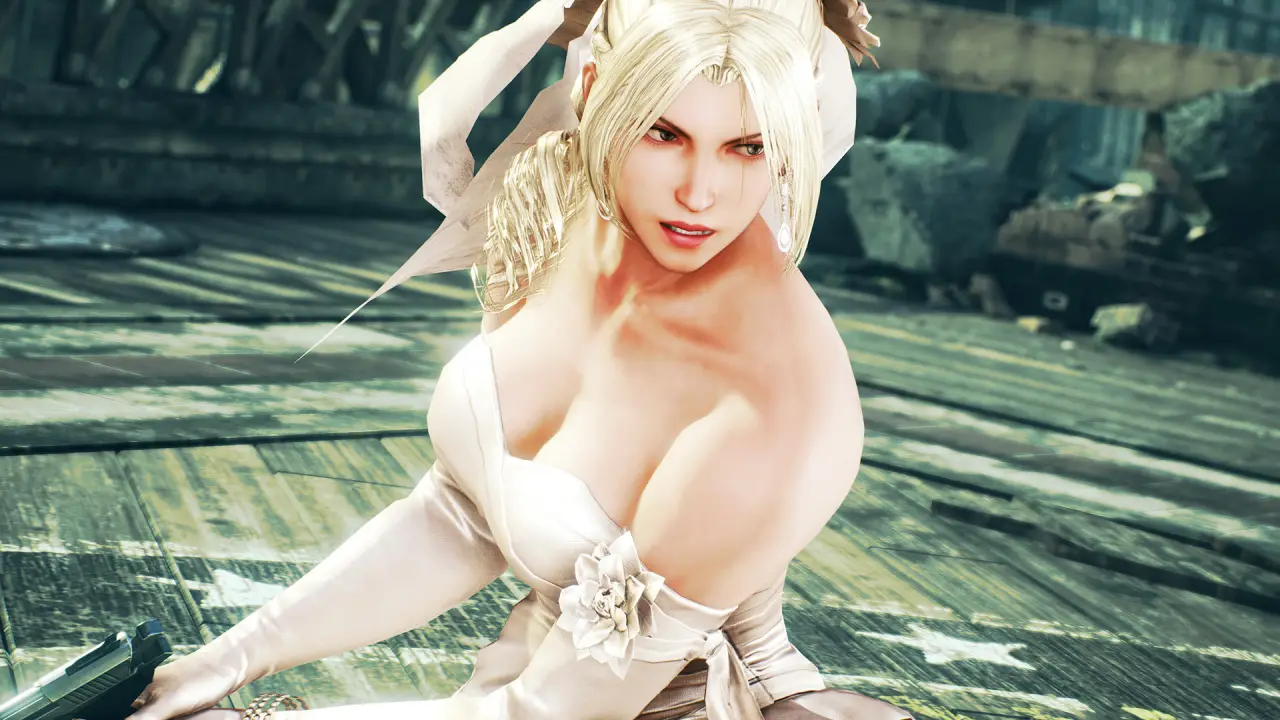
There is plenty of music too — nearly every character and stage has its own theme, with enough variety to give different matchups a distinct feel. That richness keeps long sessions from wearing on the ears and sharpens the identity of each fighter and arena. For many veterans, a few classic Tekken battle tracks are pure nostalgia — the kind of themes that instantly snap you back to a specific arcade or a late night spent grinding ranked years ago. That the series has built up a library of music distinctive enough to trigger that response is no small achievement, and it speaks to how seriously Tekken treats its audio as part of its identity rather than an afterthought.
Meaty, weighty impact
But for a fighting game, more important than the score is the sound effects — especially that crucial "sense of impact." On that count, TEKKEN 7 does very well.

The dull, forceful thud of fists and feet connecting, the crisp, full-bodied sound of a clean hit, the metallic ring of a block — together, these effects give every exchange real weight and make every heavy blow truly land. It is this solid, precise sound design, paired with equally precise animation, that gives TEKKEN 7's duels such presence and impact — you are not just watching two characters spar, you can hear, and even feel, the force of every clash. This matters more than it might seem: in a game decided by split-second reads, audio cues are information, and a clean, distinct hit sound tells you instantly whether a move connected, was blocked, or whiffed, often faster than your eyes can confirm it. Good fighting-game sound is half feel and half function, and TEKKEN 7 confidently nails both halves at once.
A microcosm of polished craft
Taken together, TEKKEN 7's audiovisual design reflects the game's overall polish: it may not be jaw-dropping in any one area, but every part is solid and well judged, all in service of making each fight feel more tense and satisfying. Whether it is the mood-setting score or the grounded impact effects, each one reinforces the raw, physical tension of the fight.
For a fighting game built around one-on-one duels, this kind of mature, restrained audiovisual design is exactly what lets you stay immersed for long stretches and keep playing without fatigue. That care in the sound, while not as eye-catching as the visuals, is an indispensable part of an immersive dueling experience — the quiet half of what makes every exchange feel like it matters. You may never single out the audio as the reason you love the game, but strip it away and the fights would feel weightless, the drama deflated. It is the kind of work that succeeds precisely by not drawing attention to itself, doing its job so reliably that you simply take the impact and intensity for granted — which is, in the end, the highest compliment a fighting game's sound design can earn.
Visuals | 8.0/10
Graphics: 8/10The visual leap of Unreal Engine 4
TEKKEN 7 is the first entry in the series built on Unreal Engine 4, and its visuals are a clear step up from past games. Character models are finely detailed — the lines of muscle, the texture of clothing, and the touches of sweat and dust are all rendered well — while move effects are flashy and impactful, with swirling light and bursts of energy that add real drama.

The game is especially effective in how it presents key duels. When an evenly matched bout reaches its boiling point and both fighters unleash a comeback move at once, the game cuts to cinematic slow motion, heightening that decisive instant with dramatic camera work. The varied stages each have their own character too, from a busy city street to a solemn ancient temple to a wind-scoured desert, with dynamic lighting and weather helping make each one a memorable arena. By the standard of a 2017 fighting game, its visuals are quite strong, and they still hold up today. Worth noting: fighting games place unique visual demands on their presentation — actions must be clear and moves easy to read, or players simply cannot react in time during a high-speed duel. Even with its flashy visuals, TEKKEN 7 never sacrifices that crucial "readability": however dazzling the effects, you can always clearly see your opponent's movements and tell where a move is going. That balance of looking good while staying legible is a sign of mature visual design, and one that many games lose when they chase spectacle at the expense of screen clarity.
Dress up your fighter
Beyond the core visuals, TEKKEN 7 gives players plenty of room for personalization through its rich character customization system.

You can swap all kinds of outfits, hairstyles, and accessories on your favorite fighters — from sleek and cool to goofy and absurd — building a one-of-a-kind fighter that is entirely your own. In online matches, the sheer variety, even the downright silly getups of your opponents, is a bonus delight in itself. This customization not only deepens the bond between player and character but also adds a lot to the game's variety and fun. It is closely tied to casual modes like Treasure Battle — you keep unlocking new cosmetic items in fights, which gives you more reasons to customize your character. In a sense, customization is a streak of playfulness beneath TEKKEN 7's "serious" exterior: even a fierce high-level duel might be a panda in a ridiculous mask squaring off against a fighter in a sharp suit, and that absurd charm is a uniquely fighting-game kind of joy that few other genres can offer.
A look that serves everyone
It is precisely this balance of competitive clarity and lighthearted fun that gives TEKKEN 7's visuals such a broad appeal. Whether you are a hardcore player chasing peak competition or a casual one just out for laughs, you can find your own satisfaction in its visual world — the former appreciating its clean, legible presentation of the fight, the latter losing themselves in wildly imaginative character getups. A fighting game that pleases both camps at once, without compromising either, is handling its visuals about as well as the genre allows. That appeal to both audiences is part of why the game's look has aged so gracefully: a competitive title needs clarity to stay playable for years, and a popular one needs personality to stay beloved, and TEKKEN 7 quietly delivers both at once. It is a reminder that, in a fighting game, art direction is not just about looking impressive in a screenshot — it is about staying legible in the heat of a real match and charming enough to keep you coming back, and on both counts it succeeds. In a genre where many entries chase a single flashy hook, that quiet versatility — beautiful when it needs to be, readable when it has to be, and goofy when you want it to be — is exactly the kind of mature, player-first design that ages well. A decade on, that judgment seems wiser than ever, as flashier games from the same era have dated far more harshly than TEKKEN 7's clean, purposeful presentation.
Combat | 9.0/10
Gameplay: 9/10Easy to learn, hard to master — the golden rule of fighters
TEKKEN 7's core appeal lies in a fighting system that is easy to pick up yet incredibly deep. As a 3D fighter, it lets you sidestep around the arena, and thanks to the series' intuitive "four buttons for four limbs" control scheme — left punch, right punch, left kick, right kick — even newcomers can quickly get the hang of it and enjoy landing combos and knocking opponents down.

What gives it real staying power is the astonishing depth beneath its simple surface. Frame-precise move detection, intricate combo routes, the mind games of defense and punish, the wildly different movesets of each character — these form a bottomless ocean of technique. To truly "master" a character, you have to invest a huge amount of time memorizing move lists, drilling combos, and learning the strengths and uses of every option. On the surface, it's a clash of fists and feet; underneath, it's two players constantly calculating timing, spacing, and psychology — at the highest level, it feels more like high-speed chess. It's exactly this "easy to start, hard to master" quality that makes it instantly fun for newcomers while giving hardcore players something to obsess over for years. To make the game more accessible and heighten the drama, TEKKEN 7 introduces the new "Rage" system. Its standout feature is Rage Arts: when your health drops below a certain point and you enter "Rage," you can unleash a flashy, high-damage comeback move that can turn a match around instantly. The system both gives the underdog a path back and manufactures heart-stopping duel moments. Alongside it are Rage Drive, which can be worked into combos for extra damage, and mechanics like Power Crush, which let a character absorb an incoming hit and force through their own attack. These interlocking designs hugely enrich the mind games of offense and defense — you must constantly read your opponent's intent and decide whether to defend steadily or risk an aggressive push. They are a safety net for newcomers and a toolbox for experts, letting players of every level find their own fun.
A lavish roster and an online paradise
TEKKEN 7 boasts one of the best rosters in series history — 38 wildly varied playable fighters, each with a completely different style and a strong personality. A major surprise is the guest appearance of Akuma from the Street Fighter series, bringing the fireball-throwing, uppercut-hurling fighter into the Tekken world for the first time. He even plays a major role in the story — a crossover that caused a stir in the fighting-game scene at the time.
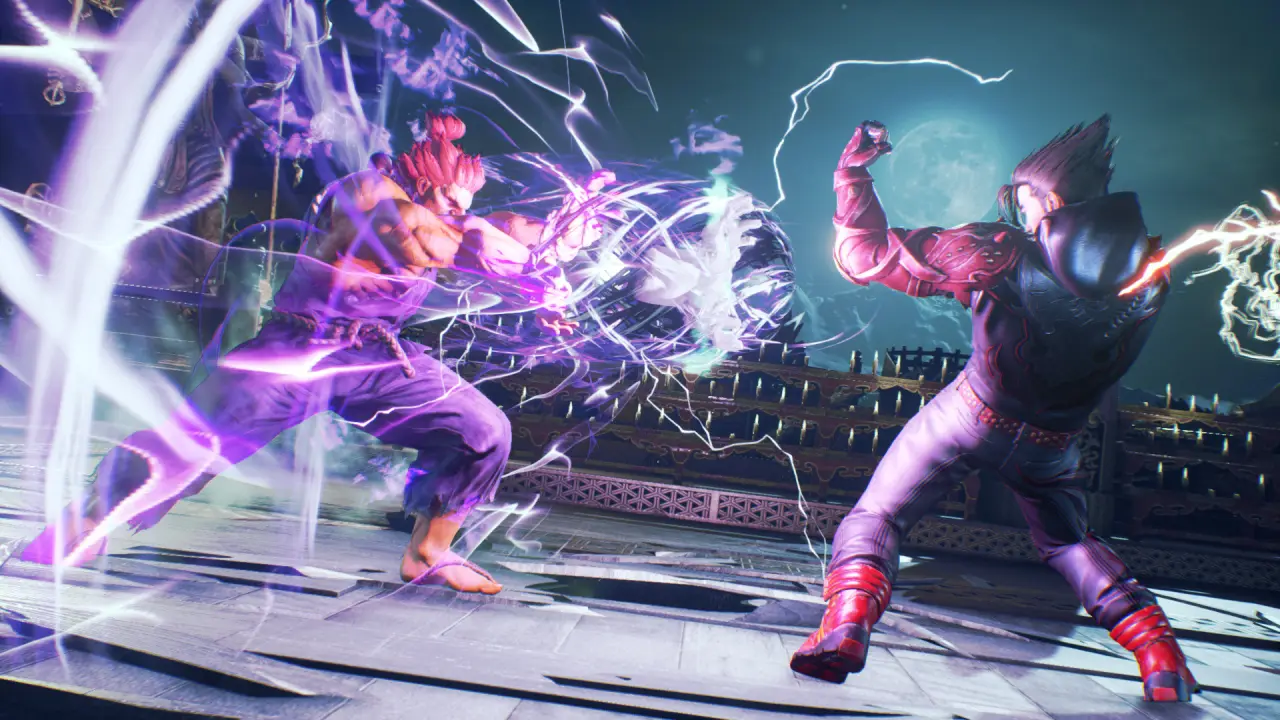
Backing up that vast roster is TEKKEN 7's excellent online play — its netcode is widely regarded as some of the best in fighting games, with low latency and fast matchmaking that make for smooth, fair online competition. It is precisely this stable online foundation, paired with the deep system, that has made TEKKEN 7 an evergreen on the global fighting-game esports stage, with a large and active competitive community. Compared with the more single-player-focused Mortal Kombat 11, TEKKEN 7 may fall short on story, but thanks to the depth of its combat and the intensity of its esports scene, it remains a landmark for fighting-game fans. That near-singular focus on polishing the core fight has kept players coming back across generations, even without much single-player content — and it's exactly why, years later and despite many newer rivals, it still sits comfortably in the top tier of fighting games. More than a bigger roster or better graphics, it is this core — endlessly learnable and endlessly expressive — that is the real reason TEKKEN 7 has endured. A great fighting game is ultimately a great conversation between two players, and TEKKEN 7 gives them one of the richest vocabularies in the genre. Years of patches and balance refinements have only sharpened that conversation further, smoothing rough edges while preserving the depth that the most dedicated players prize, and that ongoing care is a big part of why the competitive scene never went quiet. It is the rare fighting game that feels as fresh in its thousandth match as its tenth. Few games of any genre can claim that kind of lasting freshness.
Content | 7.0/10
Content: 7/10Infinite on one side, limited on the other
You have to look at TEKKEN 7's content from two angles, because it can feel like almost two different games depending on the kind of player you are.

On one hand, its core content is rich, all but infinite for players who love to fight: a vast roster, a bottomless system, active and stable online play, plus casual modes like Treasure Battle where you can fight on and on and unlock heaps of cosmetics — enough to absorb hundreds or thousands of hours without growing stale. Just learning the characters you like one by one, then studying their matchups and synergies, is a near-endless undertaking. For this kind of player, TEKKEN 7 feels inexhaustible. On the other hand, its single-player story content really is limited. Beyond that main story, which only lasts a few hours, there is not much substantial narrative content left for players who only care about single-player. That creates a sharp split in the content: how much you get out of it depends heavily on whether you are here for the single-player story or the competitive side. TEKKEN 7 also adopts the now-common "season pass plus DLC" model, itself a double-edged sword. After launch, it rolled out many paid characters across several season passes. Those new fighters did keep enriching the already-huge roster and extending the game's life, giving the community fresh things to play — but collecting everyone adds up to a non-trivial sum, a point plenty of players have criticized. This model is now practically standard in the genre, and paid DLC is not all bad: by continually adding characters, the developer keeps the game active and brings in long-term revenue, which gives it a reason to keep updating and balancing it. The key is not feeling like you need to own every character — the base roster alone is enough to keep most people busy for a long time. So rather than fret over "how much it costs to collect everything," think of it as a competitive game to pick up over the long haul, on your own terms.
The evergreen, sustained by an active community
Taken together, TEKKEN 7's real strength is not just how much content it ships with, but the huge, active player community behind it.

For years, thanks to its excellent online play and deep fighting system, TEKKEN 7 has been a staple of the global fighting-game esports scene, where countless top players compete. That thriving competitive ecosystem has not only greatly extended the game's lifespan but also given ordinary players clear goals and steady motivation — you can start from online ranked, hone your skills step by step, and challenge higher ranks and stronger opponents. A fighting game's true depth often lies not in how many built-in stages it has, but in whether it creates a space where players keep sparring and improving. On that count, TEKKEN 7 does extremely well, and it is precisely this vitality that keeps it brimming with life years after release. The base game is the entry fee; the community is the content that never runs out, and that is the kind of content no amount of single-player padding could ever replace. For the right player, then, "limited single-player content" is almost beside the point: you are not buying a story to finish, but a skill to keep practicing, and unlike a campaign, that never really ends. That is the bargain TEKKEN 7 offers, and for fighting fans, it is an extraordinarily generous one. It offers something different from a story-driven game: not "how long until the credits," but "how far do you want to go?" For the player who embraces that, the ceiling is effectively limitless. And because the community keeps generating new metagames, matchups, and rivalries, the "content" effectively refreshes itself faster than any developer could add to it — the game you play this year is subtly different from the one you played at launch, even when the patch notes are quiet. For a single purchase, that kind of self-sustaining freshness is remarkable value, and it is the quiet reason so many players who bought TEKKEN 7 years ago are still playing it today.




Comments 0
Share your game review
Join the discussion and share your review of this game.
No comments yet. Share your thoughts on this review.