























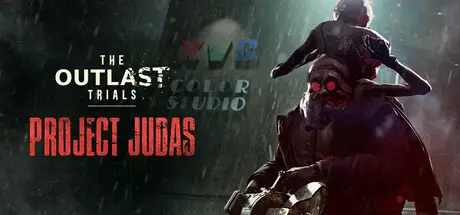

Opening
My favorite moment in this game isn't a monster lunging at the screen. It's the quiet one: crouched behind a desk in the evidence room, holding my breath, watching a blood-soaked prisoner get marched toward the security office by armed guards while the whole space goes silent except for the animal instinct telling me not to move. That single beat captures The Outlast Trials better than any chase ever could. The horror here doesn't bludgeon you with one jump scare after another — it presses you into a state of permanent tension, like a film that refuses to cut away from the long shot, where you know something is coming and the cruelty is precisely that it hasn't come yet.

What makes it sing is that the dread survives co-op. It doesn't get watered down when friends pile in — if anything it gets funnier and meaner, fed by botched plans, blown stealth, and the petty arithmetic of who gets sacrificed first. You want to live, and you also want to watch your friend die before you do. It's cruel. It's a riot. That, more than the scares themselves, is the thing worth talking about: not the fear, but how cleanly the gameplay catches the fear. Hide, dodge the stalker, finish the objective, extract. Plain words on paper that tighten into one taut wire the moment you actually play.
This is Red Barrels' third Outlast game, and the first time the series has tried co-op horror. The 1.0 launch padded out the maps and tasks, so there's more here than there was in early access — but once the novelty burns off, the fatigue of repeating the same trials starts to creep in.
It's a blast. It also isn't quite the unconditional, buy-it-without-a-second-thought kind of blast. Let's take it apart piece by piece.
Story | 7.5/10
Story: 7.5/10The villain isn't a monster — it's a company that treats people as raw material
The real dread lives in the premise. It's the Cold War, and the Murkoff Corporation has lured in the homeless and the socially discarded, made them sign their lives away, and turned them into human test subjects — Reagents, the game calls them — cycling through round after round of so-called "therapy" in an underground facility. You play one of these lab rats. The series' medical-horror streak gets pushed to its limit here, and the thing that actually chills you is never the creature at your heels. It's the vast, unblinking institution behind it that books human lives as a consumable line item.

That kind of designed malice outlasts any jump scare. You didn't wander into a haunted house — you were carefully maneuvered into this one, and you put your name on the dotted line. The absurdity of having sold yourself out lays a cold floor under the entire run. Murkoff never leaps out roaring; it's a system, a contract, a lab with the lights permanently on, patiently converting people into data with no remorse whatsoever. Horror with the cruelty proceduralized like this is among the hardest kinds to disenchant — you can't punch an institution, you can only endure every therapy it has scheduled for you.
The objectives are the story, and the malice is baked into them
There's no conventional rise-and-fall main plot here. The narrative is folded into the trials themselves. A trial typically asks you to commit some act of cruelty in the name of "science" — the first one shoves a snitch all the way across a police station to be electrocuted. You aren't performing heroics; you're running the institution's dirty errands. Welding the storytelling directly onto the objective leaves a faint, queasy aftertaste on every clear.

I'll be honest: this is also where the story dimension falls short. There's no commanding protagonist arc, no character you'd lose sleep over — the narrative is mostly fragmentary environmental telling and worldbuilding stacked on worldbuilding. IGN flagged exactly this: the skeleton is too thin, and hanging more flesh on it would do wonders for the long-term hook. You can piece together scraps from wall slogans, archive files, and set dressing tucked in the corners, but those fragments never converge into a throughline you feel compelled to chase. It builds a charged space, not a story with a beginning and an end. For players who weigh narrative heavily, that's a clear letdown; for those who showed up purely for high-pressure survival, the thin story barely gets in the way, and may even be the right amount of plot to stay out of the gameplay's path.
It traded the personal for the collective
Line it up against the earlier games and the trade becomes clear. This entry is actually a prequel, its timeline sitting before the original Outlast and Outlast 2, dragging you back to the source of Murkoff's sins. But the first game told the tightly personal story of a lone journalist breaking into an asylum, with all the narrative pressure concentrated on you. This one deliberately pulls the camera off the individual and spreads it across the institution and the squad — you and your teammates aren't separate protagonists, you're the same batch of consumables the machine picked out. Judged as "tell one person's story well," it can't match its predecessors; judged as "let a group share one predicament," the premise lays perfect track for the co-op that follows.
That shift also changes the kind of fear on offer. The first game's terror was intimate and claustrophobic, a single body fleeing a single asylum; here it's diffuse and institutional, the slow horror of being one cog the machine fed in and will feed out again. Neither is strictly better, but they aren't the same experience, and it's worth being clear-eyed about which one you're signing up for. If you came to the series for that lonely, hunted, deeply personal dread, the prequel hands you something cooler and more communal instead — closer to a shared nightmare than a private one. It's a deliberate trade, not an accident, and the worldbuilding is poured into making the collective version land.
Audio | 8.0/10
Audio: 8/10What makes "spotted" genuinely bad news is the sound
Half of whether a stealth game works comes down to audio, and this one nails it. Ambient sound is your read on the world: footsteps tell you roughly where a stalker is, distant scuffles let you sense what's unfolding elsewhere, a sudden swell warns you to dive into a locker now. Because that feedback loop is clear enough to trust, getting spotted lands as a stomach-drop of bad news rather than a red icon flashing on a HUD. The audio isn't decoration; it's the information you actually act on. There's real directionality, too — footsteps from the left and footsteps from the right pull you into completely different movement decisions, and in pitch black with your vision choked off, your ears usually flag the danger before your eyes do.

That reliance on listening adds a layer of bodily, instinctive tension to the whole stealth loop. You catch yourself cocking an ear before every move, and the "survive by hearing" pressure is one of the things the game gets completely right.
A boss announces itself by scaring you with sound first
The major antagonists — the Prime Assets — owe a lot of their terror to audio that arrives ahead of them. The standout, Mother Gooseberry, was once a children's TV host with a mental illness; she wears a gas mask, swings a mallet, and hums a warped, off-key nursery rhyme as she enters. A melody that should be tender, laid over that silhouette, sends the wrongness straight up your spine. The atmospheric score follows the same philosophy: it rarely detonates a stinger to make you jump, leaning instead on a low, sustained, never-quite-resolving soundscape that pins you in the "something is about to happen" state. That sustained pressure is the strength critics consistently single out.

Compare it to Dead by Daylight, where the heartbeat hands you an explicit, gamified alarm. The sound here is more immersive — it doesn't tell you "danger has arrived," it makes you feel, on your own, that danger could arrive at any second.
The Skinner Man earns a special mention on the same front. He's the one many reviews single out as the most unnerving design, because he "basically lives in your head" — no matter how you run or where you hide, he never loses your trail, and the audio cue of him simply not going away does more psychological work than any sudden sting. He converts the fear from "if I get past this I'm safe" into "he's always there," and sound is the instrument that drives that shift home.
In co-op, the best sound effect is a teammate's scream
There's a layer of audio the design didn't author but happily catches anyway: voice chat. Cram four people into one narrow corridor, stack the game's own oppressive soundscape over sudden yelps, swearing, and frantic shouts of "run" and "leave me," and you get a strange, terrified, hysterical mix that solo play can never reproduce. Alone, the sound serves pure fear. In a group, it becomes the score for a social farce. Same audio design, two entirely different games depending on the headcount.

This indirectly explains why critic reviews read cool while player word-of-mouth runs hot. Those panicked cries, the bursts of laughter, the cursing — they become part of the experience, often more memorable than anything the game itself plays. What people remember afterward isn't a track; it's the moment a friend's scream cracked into a falsetto. The sound here isn't only a vessel for horror; it's a candid recording of friendship buckling under pressure, and that recording is something no single-player session can ever press to disc.
Visuals | 8.0/10
Graphics: 8/10It doesn't want you to find it beautiful — it wants you uncomfortable
The visuals aren't show-off pretty; they're grimy, cold, and tacky, like an underground operating room nobody has cleaned in years but everybody still uses. What you see isn't beauty — it's a designer deliberately making you squirm. Flames lick the air outside the precinct, wreckage and cardboard cutout figures jumbled together, and the absurdity yanks you straight into the series' familiar register of cruelty. This is Murkoff's aesthetic: every set piece hints that something unspeakable happened here, and is still happening.

The series' signature gore-soaked, suffocating, sickly experimental style carries over rock-steady. Its appeal is the "hard to look at, harder to look away" kind. You won't screenshot it for a wallpaper, but you'll remember every corner that made your scalp prickle. The lighting works against you on purpose — scenes are kept deliberately dark, vast stretches left outside your field of view, and you're never sure whether something in that black is watching back. Art that actively manufactures unease beats art that merely piles on detail; it makes the image itself part of the fear instead of a backdrop carrying it.
The locations aren't novelty — they're landmarks you remember
What matters more is that the locations and enemies have identity rather than mere shock value. The carnival's grinning clown entrance, the dim chapel, the orphanage littered with traces of children yet eerily empty — each carries its own theme of malice, and each makes you pause the first time you walk in. They aren't reskinned corridor mazes; they're themed stages, every one of them serving that trial's "therapy" script. The clown entrance gets more cheerful and the events inside get more skin-crawling; the orphanage's full-of-children-yet-empty contradiction is itself the narrative. The set is both stage and dialogue.

That command of scene design is the reason this game still feels like "every level is memorable" despite thin content. One unforgettable landmark beats ten identical hallways.
And these spaces aren't isolated art assets — they're interlocked with each trial's script. The more wholesome the carnival entrance reads, the more your stomach turns at what happens inside it. The orphanage, strewn with the residue of children yet utterly vacant, is itself a piece of storytelling delivered through dread alone. Here the set is both stage and the line spoken on it; you read the room before any objective marker tells you what you're supposed to do, and that reading is half the horror.
The old flavor's intact, the tech isn't cutting-edge but it's enough
Series veterans will recognize a few things instantly: the handheld-camera viewpoint, that signature wash of green when night vision kicks in, and the all-weaponless, run-and-hide-only design. These hallmarks carry over cleanly and give returning players a familiar handhold the moment they step in. Technically it runs on Unreal Engine 4 across PC, PS5, PS4, Xbox Series X|S, and Xbox One. The visual showing isn't a next-gen benchmark — there's no screen-filling ray-tracing flex — but inside the oppressive, filthy, grounded mood it's chasing, this look is entirely sufficient.

More to the point, the high-legibility design of enemies and spaces is itself functional: you need to tell at a glance, in the dark, whether that's a locker you can dive into or whether that black shape ahead is a stalker. Clean visual information feeds directly into stealth reads, not just good looks. A silhouette has to be legible enough to act on in a fraction of a second, because hesitation is how you get caught — so even the art direction's worst grime is engineered to keep the things that matter readable.
Put another way, the game spends its limited tech budget right where it counts — not competing on fidelity, but pouring everything into style and atmosphere. The result may not look "premium," but it sticks. In horror, being remembered matters far more than being marveled at, and this game does that math clearly, spending nothing on the bragging-rights showcase and everything on the parts you'll still be picturing weeks later.
Combat | 9.0/10
Gameplay: 9/10The Rig's four powers turn weaponless stealth into squad roles
The smartest move the gameplay makes is bolting a lightweight "class" system onto pure flight. Murkoff implants every Reagent with a device called the Rig, offering four active powers — you pick one before a trial: Stun (zap a stalker down, buying a teammate a window to bolt), Heal (group recovery, dragging a downed teammate back from the brink), X-Ray (see enemy positions through walls and call them out), and Blind (deploy a blinding barrier for visual cover to open distance).

Pair those four up and the framework for a full squad's division of labor stands itself up: someone stuns to clear the path, someone keeps everyone breathing, someone watches through walls and warns. Played well, a chase that should have wiped the team resolves into a clean, flowing extraction. But the Rig is kept deliberately light — it's only ever support, never a license to trade blows head-on, and stealth-and-hide stays in absolute command. That restraint is judged perfectly: it gives co-op a skeleton without ever dissolving the fundamental truth that you are still, in the end, prey.
The core loop: sneak in, don't get seen, get out alive
Strip the flourishes and the loop is pure: sneak in, avoid detection, deal with the objective, then find a way out alive. Weaponless throughout, all you've got is running, hiding (into lockers, under beds), throwables to scatter an enemy's attention, and night vision to feel through the dark. This is the series' most signature run-and-hide play, and the entry doesn't touch its roots. On top of that, resource management adds another layer of tension. Bandages, batteries, throwables — all finite, all to be hoarded. Night vision drains power, so safety in the dark is bought in charge.

Every move becomes a small wager: spend this battery now, or save it for the deadlier stretch ahead? That step-by-step calculus is where the depth actually comes from. Lockers and under-beds are temporary sanctuaries, but ducking in isn't absolute safety either — the vicious stalkers actively rummage hiding spots, which means hiding is never a one-and-done finish line but a live judgment of "how much longer can I stay here." Every seemingly safe corner can turn into a dead end the next second.
More people means less fear — by design, and that's the argument
It supports flexible parties of one to four; co-op isn't mandatory but the payoff is huge. Difficulty scales with headcount — four people have more generators to start than two. That scaling drives the most-debated side effect of the whole game: more bodies actually dilute the dread. Surround one enemy with four players and the menace visibly drops; pure terror gets thinned out by safety in numbers.

But Red Barrels folds that "side effect" into the design too, and this is its single most irreplaceable idea: it turns "do I abandon a teammate to save myself" into a genuine moral test. You need your squad, but in the crunch you may have to sacrifice them. Against Dead by Daylight's hunter-versus-survivor contest, this game has everyone in the same boat — mutually dependent, perpetually one bad moment from scheming against each other. The best part is the choice has no right answer: save your teammate and you might both die; leave them and the objective clears, but looking back at the body never sits right. The game doesn't punish you for letting someone die — it just sets the hard moment plainly in front of you and lets trust take a stress test.
You get stronger — not invincible, just better at surviving
Worth a final note: the progression. Character abilities and gear upgrades deliver clear feedback — early on you're mostly white-knuckling the tension, and later you start tasting the "I survived better this time than last" payoff. Not power fantasy. Competence. The back end adds max-level Reborn resets and the high-difficulty Program X loop, giving long-term goals to players willing to dig in.

That sense of improvement is like the first time you learn to run heat, seasoning, and plating at once in a kitchen — hands still busy, heart no longer panicking. The one real regret sits in solo: critics generally find it playable alone, but the balance and pacing still need tuning. Alone, the fear is at its purest, yet the rhythm runs a little off, as if the encounters were tuned with a second pair of hands in mind.
The ceiling here is written for fixed squads willing to grind every Rig loadout and movement pattern flat — the better you know it, the better it plays. There's a quiet thrill in watching a team go from flailing in a corridor to reading each other on a single glance, knowing without a word who's about to stun and who's about to bolt. That growth curve, from chaos to wordless coordination, is the most addictive reward the game offers, and it's one you can only earn by putting in the repetitions together.
Content | 6.0/10
Content: 6/10The signature dish is solid, but the menu's still thin
Let's get it on the table first: content volume is this game's most concrete weakness. At 1.0 launch it shipped with just five trials and two major bosses. That quantity can't hold up an extended novelty curve. IGN's criticism is representative: with so few levels and bosses, the variety isn't enough to carry a long campaign, and even the new difficulty options can't rekindle interest; the first few hours hand you plenty of strange, fascinating moments, but once you've seen everything, the freshness drains fast.
The read is accurate. The core loop genuinely works, and that first run cracking maps open with friends carries a real "one more round" charge — the problem is the back half. As you get more familiar with the flow, the drive to replay slackens. It doesn't collapse at once; it deflates slowly. Like a great late-night diner: the house special is reliable, but the menu's still thin.
One thing to add: that's the March 2024, 1.0 snapshot, and it's worth holding that date in mind because the calculus has shifted since. Content anxiety bites harder in horror than in other genres, because scaring people is most undone by "I already know what's coming next" — the second you've memorized which door a stalker bursts from, that jolt is spent, and no difficulty slider can un-spend it. Which is exactly why raw volume matters so much for this particular kind of game, and why a thin launch lineup hurts it more than it would hurt, say, a roguelike.
Quarterly updates help, but adding content isn't adding difficulty
To be fair, Red Barrels didn't walk away after launch. They've kept feeding it on a roughly quarterly cadence: new trials, new antagonists, holiday limited-time events, MK-Challenge variant runs, and the high-difficulty Program X loop for endgame players. The progression side carries max-level Reborn resets, the kind of evergreen replay scaffolding common to live-service games, stretching a once-a-few-dozen-hours experience into horror you can keep crawling back to.
As those updates pile up, the launch-window "too thin" gap really is getting filled. But one core criticism holds and has to be said plainly: stacking difficulty options and repeat challenges can't substitute for genuinely new content. Variant runs and high-difficulty loops extend a veteran's mileage, but they're ultimately reworking what's already there. What keeps people for the long haul is always "I want to see something new," and only new trials and new antagonists satisfy that. It's the shared bind of live-service: update pace and content quality rarely max out together, and players burn content faster than a studio can make it. The saving grace is that Red Barrels chose free updates over carving them into paid drops — a rare bit of good faith in today's market, and reason to keep some hope for the long run.
It's for binging, not for living in
In practice, that points to a clear best way to eat it: play it intensely over a stretch, ideally grinding trials and drilling coordination with a fixed group of friends, squeezing the existing content dry. The tension and joy it hands you in that window run at high concentration.
But if you want the kind of game you log into daily and play for a solid year, the current content reserve isn't deep enough. Fatal? No. The core fun is genuinely real; it's just not yet rich enough to keep pressing out freshness indefinitely.
A sensible approach is to round up friends, blitz the existing content over a concentrated stretch, then come back once a few big updates have banked — that way each return catches a batch of new trials and antagonists, and the novelty curve smooths out considerably. Treat it like a seasonal dish rather than an all-you-can-eat buffet and the expectation lands right. It rewards intensity over routine: a few weeks of obsessive squad nights will give you far more than a year of logging in out of habit. It's built for playing in waves, not for soaking in every day.




Comments 0
Share your game review
Join the discussion and share your review of this game.
No comments yet. Share your thoughts on this review.