


Total War: ATTILA
Unavailable in United States (1)
These offers are explicitly unavailable in United States — they cannot be purchased or activated there. You can still visit the store to review the restriction.
Price History
Past 36 months · Updated dailyPrices cover Steam and 39 authorized stores; only legitimate offers are counted. The chart shows weekly market-wide lows and Steam's official price across the past 36 months.

01About Total War: ATTILA
Total War: ATTILA begins in 395 AD, combining a turn-based grand campaign with real-time tactics. Lead a barbarian or Eastern kingdom, or defend the last remnants of the Roman Empire. Politics, family, civic management, and technology shape your campaign decisions. Buildings can burn in battle, while the raze mechanic can remove entire cities and regions from the campaign map. The Steam PC version supports single-player, multiplayer, and co-op. Rating: 82% from 27,029 reviews. Released on February 17, 2015.
Credits
Lowest recorded in 36 months
$4.842026-07-30 · KinguinBase game · same records as the chart above; USD history, not a regional Steam low.Language support
| Language | Interface | Subtitles | Audio |
|---|---|---|---|
| English | Yes | Yes | Yes |
| French | Yes | Yes | Yes |
| Italian | Yes | Yes | — |
Show 6 more languages
| Language | Interface | Subtitles | Audio |
|---|---|---|---|
| German | Yes | Yes | Yes |
| Spanish | Yes | Yes | — |
| Czech | Yes | Yes | — |
| Polish | Yes | Yes | — |
| Russian | Yes | Yes | — |
| Turkish | Yes | Yes | — |
Steam PC edition data · 2026-10-19
02Before you buy
Modes
Total War: ATTILA combines a turn-based campaign with real-time battles. Single-player, multiplayer, and co-op are supported.
Language and input
The Steam PC version provides English full audio and subtitles. Controller support is not specified in the available data.
03Frequently asked questions
What do you do in Total War: ATTILA?
You guide a faction through 395 AD while managing politics, family, cities, and technology.
What destruction systems are included?
Buildings can burn during battles, and the raze mechanic can remove cities and regions from the campaign map.
Can I play with others?
The Steam PC version supports single-player, multiplayer, and co-op.
“A reverse campaign driven by climate collapse, asymmetric factions, and harsh strategic depth, built for patient hardcore history-strategy veterans.”
Our Verdict
If you ask whether this game is worth fifty or sixty hours, I would answer with a question of my own: can you accept a grand-strategy game telling you, in all seriousness, to stop dreaming of conquering the world and start figuring out how to merely stay alive? If you can, it is very much worth it. If you cannot, it will hurt.
From a present-day player's vantage point, Total War: Attila occupies an interesting position. Its visuals are only upper-middle tier and its UI carries plenty of historical baggage. But in terms of systems design and content composition, it plainly reads like a work from its era that concentrated a whole set of new ideas into one experiment.
A game that refuses to flatter you
The nomadic horde mechanic, the reverse-campaign rhythm born from climate pressure, and the heavily asymmetric faction design still do not feel dated today; if anything, they remain rare. And yet this is not a game that flatters you. Its learning curve is steep, its difficulty is unfriendly to newcomers, and the campaign repeatedly forces you into decisions that are unpleasant but rational: dismantling your own city, giving up an entire stretch of border, signing an ugly truce with a power that had you on the ropes only a turn ago. If you are used to the crowd-pleasing arc of climbing from weak to strong, this will more often feel like starring in a heavy historical documentary where the protagonist is not you but an age destined to fall apart. The game asks you to sit with that discomfort rather than escape it, and that single demand is what separates the players who bounce off in the first few hours from the ones who quietly fall in love with it over the next forty.
For the patient strategist, that is the appeal
For veteran strategy players, this is exactly where the magic lives. Every campaign is a long-distance run: you have to account for resources and terrain, but even more for your own state of mind, accepting an outlook where doing everything right still only postpones the loss. Players willing to chew on that oppressive mood as a deliberate part of the design will realize, dozens of hours later, that they have rewritten several different versions of the answer to "why did Rome fall," each through a different faction's eyes. Stacked against peers like a long historical strategy epic, Attila trades broad accessibility for a sharper, darker thesis, and it commits to that thesis without blinking. So it is not the kind of fast food everyone should take a bite of; it is a heavy dish that only yields its flavor with time and patience. Players who love strategy and are happy to wrestle with systems will find here a battlefield worth settling into for the long haul, and a score in the mid-eights reflects exactly that: a flawed, demanding, and genuinely distinctive grand-strategy game that knows precisely who it is for.
Popular Steam reviews
Native-language selection · 10 reviewsSelected helpful reviews in this language show both recommendations and criticisms. This selection does not represent the overall positive rating; opinions reflect the version reviewed.
Recommended, but only for veteran Total war players, or those considering buying Rome II. And, when on sale. The good: -actual defensive positions in town and minor settlements -higher ground in towns and settlements actually helps in defending a static line -Cavalry actually do shock damage -Archers actually have decent range -Morale/combat mechanics are better joined (sending in archers with knives after their arrows are gone can actually stabilize a defensive line for a spell) -Archers can finally fire up and over buildings onto units rather than needing a direct line of sight -Mercenaries seem cheaper than in Rome II (except for some higher end units, like Onagers) -When attacking towns, double right clicking on it will cause selected units to automatically find the fastest way around buildings (which the player is shown right away, which means you have the option of changing said orders if you don’t like the path they have been set on around corners, etc) -Enough gold (10-20000 pieces) can sway a faction to join a war with you, even if they don’t like you. This includes the Huns. -Players will be forced into diplomacy (i.e., joining in wars and making friends/allies that way), subjugation does not really work in the long run (except for the AI, of course) -Governors are quite useful, and gain levels and abilities as they go along (just like the generals) -Upgrades for armies and Governors are tree based now, so you can plan ahead finally (unlike Rome II’s system) -Playing as Rome is terrifying and exciting, and many players will pull all 10 armies back to Italy (and perhaps spain) in order to ride out the storm. All of Gaul, Britannia, and Africa go up in flames through rebellion, famine, settlement destruction, separatist movements, and separatist movements to the separatist movements. One may eventually see Romanesque factions eventually, that call themselves “Africa”, “Asia”, and even “Egypt” or “Illyria.” Pulling through that storm (usually about 30-50 turns), takes a long time, but is immensely satisfying. One may even find himself making trade agreements and alliances with Roman factions that split from old areas you lost 100 turns before to rebellion. --The Huns burn everything to the ground. Again and again, and have some terrifying units to play with. Join in a few wars with them and you may win their favor… --Incredible graphics on high end machines Problems; The old, the new, and the frustrating: [EDIT: some of these can be fixed with mods] -Military alliances are great for maintaining a good relationship with factions you are trading with, but worthless when someone actually declares war on YOU. If you call your allies in to join you in war, 90% will say “No. ♥♥♥♥ you”, and your alliances are all severed. This means you will have to either reload, or spend 10-20000 gold trying to reestablish military alliances you had previously had with them in order to keep them from breaking trade agreements, and eventually coming after you. This means that whenever someone declares war on you, you are alone, regardless. -Satrapy states are free to rebel against you the second someone else declares war on you. This means subjugating a faction (when taking their last settlement) is all but pointless if they can rebel the next turn when some piss-ant faction comes after you. -Diplomacy only happens through grotesque amounts of gold and/or with the maxim “Let me join in this war alongside the faction I want to like me, and yes he likes me more eventually, then make a trade agreement, then make an alliance. ” While it can be fun, it gets old fast as it becomes clear that this is the only way to make allies. -Food surplus means nothing, other than that food is getting to your armies and minor “growth” modifiers around your empire. -Food is province based now, and by turn 100 all hell breaks loose with food shortage modifiers hardcoded to the game (apparently their take on history…). This means you really have to build a wheat farm and a cattle farm in all your minor settlements, and both Fish ports and food emporiums in your major cities to counteract the worldwide “shortage” of food. Even as Rome, soon you have a 2000 surplus of food even in winter, but sure as heck certain regions without such buildings are not getting any of it. This leaves very few spots for trade based/economy based buildings in all settlements, which is a shame because it leaves little room for open ended city building. -Sanitation is cool, but it can get out of hand: destroying entire armies if stationed in the affected city. This means another spot of your city is used up with the aqueduct. -Another location in your major cities will be used up by building coliseums and theaters trying to keep the people from rebelling, when playing as Rome. -Immigration becomes a problem, and eventually goes to about a -9 modifier for all regions. Some have said upping the tax rate gets the immigrants to leave, but I haven’t seen that work. -When playing as Western Rome, all the hardcoded events/modifiers that decrease public order (at worst, -20 for food, -9 for immigrants, and so on) means that little can be done but build food based buildings and hope your religion can pull you through. That wouldn’t be bad, if it were possible to convert to Paganism easily (and let your theaters and coliseums do the work). This means the game pushes you to try and be Christian. -War is sometimes declared in very odd ways. 3 factions in the British Isles and Ireland were my trade partners, as Rome, and I was on good terms with them. One minor settlement faction suddenly declared war on me while it was being sieged by the other two. Immediately after that, the siegers (two other factions I was trading with) themselves declared war on me as well. And yet they continued to siege the original minor faction to declare war on me, and destroyed it. All this despite the fact that I was trading with all three of them. Very, very odd. -Second tier units now take 2 turns to muster (which can be crippling, if an enemy is bearing down on you), and said units are barely better than the 1st tier and so on. -All units are outdone by the overwhelming power of artillery. The Artillery is now so accurate it can hit cavalry units at full gallop as they bear down on said artillery unit (to try and kill it off). Often they never make it! -A player may not want to bother researching any military improvements when considering how expensive the units are (and time needed to muster them), and so may only research economy techs to try and make some money. Early game economies are so fragile you are counting down to the last 10 gold pieces sometimes. A total war game perhaps should not be that unforgiving towards being warlike….. -Christian buildings are immensely expensive, so you won’t be able to afford them (and their public ordering abilities) for a long time, but Rome is Christian, and spreading your religion is paramount, but no, you can’t do it… -Faction politics, and gaining office for loyal subjects seems interesting at first but eventually becomes frustrating; every event usually means you either lose influence or control, and your power slowly ebbs away. Not that it matters that much… -Generals eventually rebel against you if they live long enough, and so upgrading them as they gain experience loses its charm since you are constantly thinking “When will I need to kill him?” Getting promotions for them does not seem to work either, in the long run. Creative assembly really needs to play some crusader kings, and learn how to balance their political in-game systems so that players have options, rather than feeling like they are simply a sad witness to history through a lackluster historical simulation of Roman politics (where the general always makes a move for power).Show moreShow less
I hope SEGA will stop this horrible marketting scheme, STOP selling us so much DLC that should have been in the original game in the first place. And STOP downgrading game mechanics, gamers aren't stupid, we want depth and challenge ! You have one chance left, don't screw Warhammer up or you'll lose me as a customer forever, and probably the vast majority of the other fans of the series too. EDIT : I get a lot of hateful comments, people calling me stupid or trying to discredit me in any way possible. Just to be clear, you may think this is not a review and I agree that it may not be one. It's more of a statement, I think it's important for the publisher (yes, I know that SEGA is the publisher and not the developer thank you) to realize that people are fed up with this, and if it may seem profitable at first to sell so much abusive DLC, in the long run, gamers will stop buying both DLC and games from them. Something to think about...Show moreShow less
Best Total war game since medieval. Love the dark atmosphere, blood and fire. Really catches the atmosphere from The great migration times. I recommend this game heavily :)Show moreShow less
I love total war. I have played since the pixellated Shogun first showed us what turnbased combined with real time strategy was all about. I have fought on medieval battlefields, napoleonic battlefields and many others. I dont think i have any more playtime on a single gaming series and now to the bad part. Ever since Napoleon the DLC trend has angered me, i appreciate other series do it aswell but bare with me. I got more content with Darth mod on napoleon then with the DLC packs/game itself. Why would i pay £30 for a brand new game and then two weeks later a DLC comes out? At least be more subtle CA, anyone with half a brain cell can see that the content was ready/very nearly ready when the whole game was released, so know I am expected to shell out another £6 for a few more (very similar) factions that the AI have already been playing as? Basically proving the content was in the game when it was released. So im prepared to pay a little bit more as i know CA are a small PC only company.............Oh wait they just made Alien Isolation which was also on consoles, got great reviews and most importantly sold really well. So i am now not prepared to pay any more money until CA start to treat us with respect. Furthermore i logon to steam today and low and behold £1.99 for the "blood and burning" pack. So now i am expected to shell out more of my very hard earned cash to have blood in the game and enhanced fire effects? Could they not be added in a free update like pretty much any other decent PC gaming series? I just recieved alot more content for Men Of War Assault Squad 2 which is made by a very small developer all for free, just to be loyal to the players that bought that game. Seriously CA I appreciate the cost of game making is astronomical these days and I genuinely am a lot more forgiving then most 15 year olds trolls on the forums/steam but c'mon now you are just taking us all for a ride. Knowone at CA will probably read this but if you do realise that im not a troll, im a very loyal Total war fan and all im doing is echoing the sentiments of the entire Total War community. As a game itself i reccomend Atilla but as someone possessing common sense i cannot.Show moreShow less
A HUGE step up from Rome. 9/10Show moreShow less
Attila Total War; Is it good or is it not? To start off, Attila Total War is in no way a bad game, despite the things I'm about to say regarding the game. Take these points as a general critique of the series direction in general, while still being a review of the game. So, Attila Total War; the title says it all really. It's the year 395AD, and the Roman Empire, now divided between Eastern and Western rule, is on the very edge of collapsing after centuries of corruption and economic turmoil. As a result of this, many Germanic and Nomadic barbarian tribes have decided to take a stab at the world superpower, due to its apparent and alarming signs of weakning it's grip on the known world. You can either choose to try and save Rome from its fate by taking command of either the Eastern or Western Roman Empires, or become the arbiter of its downfall by taking control of the numerous Barbarian tribes and Eastern Kingdoms that wish to see Rome gone. But is it good? Well, Yes and No. Positives are that: -Despite the disastrous attempt in Rome 2, The politics game mechanic now has actual weight and impact upon your game. It's no longer simply making sure your party is on top, now you have to make sure that faction members remain loyal, Governors are assigned to provinces that need them, and that your general dominion over your faction is kept in a careful balance. Failure to complete these tasks can lead to civil unrest, disloyalty from generals and governors, and even a separatist movement erupting to cause a civil war. -The sanitation systems that have been updated from Rome 2 now make actual sense, and aren't nearly useless. Now there's a real need for proper sanitation within one's settlement; lack of such sanitation can cause local disease outbreaks, which can spread across your entire empire if you're not careful. -After their measly display in Rome 2, both cavalry units and ranged units in Attila have regained some of their former tactical worth. Cavalry are now faster and seem to have a greater impact when charging, and ranged units now do much more damage and have increased accuracy, so both of these unit types are now worth the investment again. But of course, to every ying, there is a yang. For the good points, there are also bad: -The sacking and razing options that can be chosen when a settlement is conquered are used way too much by the AI factions, even the civilised ones. I can understand nomadic factions burning a settlement to the ground, but it begins to become unreal when the Persians don't take territory from you; they simply burn your towns and cities. This means, that you will frequently find that you are the only faction in the game actually expanding your borders; everyone else is too busy burning things. -Although a new and interesting mechanic that has given some historical accuracy to the game, the city Razing mechanic (Destroying an entire city and it's buildings and leaving the region neutral) is a massive pain in the backside. Yes, it might be accurate when a Hunnic horde burns the city of Salona to the ground, but reclaiming that land takes a massive amount of money, population and time to rebuild, and it just becomes a massive waste of time. These next two are more of a gripe against Both Rome 2 and Attila, but bear with me here (They're essentially the same game anyway) -In Rome 2, the system of building armies changed quite drastically from previous games in the series. Now, Armies themselves now act as independent characters with traits to improve their effectiveness and morale in the field of battle, rather than simply being a collection of units. Trouble is, they always require a general to manage them; no general - no army. This means that the use of tactical raid parties made up of half an army stack and skirmish groups made of even less are a thing of the past, and you can't leave armies under the command of a captain any more. No longer can you whittle down large armies with the use of clever hit and run tactics. Gone are the days where you fought skirmish after skirmish to get to the larger armies and cities of your enemy. Now, every battle you fight is either a pivotal battle that you must fight or lose because the auto resolve is about as thick as an asphalt milkshake, (I mean, Legionaries losing to levy spearmen, really?) Or it's a pushover city fight that isn't worth your time or skill. This means that wars against other factions become a huge chore, and all of the pacing is slowly squeezed out of the game. What does this mean? It means that the game becomes really, REALLY, boring after about half an hour. Unfortunately, Attila suffers this very same problem. -Also in Rome 2 and Attila, the factions have become more balanced and even, for reasons that are unknown to me; perhaps to facilitate more rounded and player-preference faction choice on the multiplayer section. Now there's two things wrong with this. Firstly, It isn't historically accurate, as with the previously mentioned Legionary-Levy debacle, and it means that even if you win a pitched battle against another enemy army, you'll end up taking so many casualties that the victory really isn't worth it in the long run. Not only does this mean that victory now depends more on numbers, as opposed to the actual skill you needed in previous games of the series, but wars become nothing more than large scale meat-grinders with the winner being whoever can field the largest army. This pile-drives the pace out of the game, as you're always having to wait for more men to back up your depleted units, even after small garrison battles. Once again, it makes the game slow and really boring. So, Attila Total War, is it good or is it not? In my eyes, this is what Rome 2 should have been on launch, not the disaster that it was. However, being someone who's played almost every Total War to date, this game, and Rome 2, are massive disappointments because they just aren't fun anymore. Wars and combat are now too balanced to be fun, as with the afformentioned meat-grinders, and the game feels more like a chore now than an actual fun experience, which you know, is what a Video Game shouls be. I'm not sure why the Creative Assembly have made these changes, but they just don't fit the series and it's mentality. They remove the one thing that makes Total War so unique; the one thing that gave it it's legendary position as one of the most accurate strategy game francises out there; Realism. I know there's an allure to arcade-style combat, but that goes in shooter games and basic strategy games like Halo Wars and Half Life; not a game of this calibre and the reputation the series has. So, if you simply want an expansion of Rome 2, go right ahead, buy it, because that's all it really is. If not, I STRONGLY recommend holding back your wallet, and buying the Rome Total War 1 collection instead; it's more realistic and enjoyable as a result. To me, It's a much better investment. Attila, and by extension Rome 2, are good in their own right, but they just aren't good enough to be called Total Wars, if that name still means anything anymore.Show moreShow less
From the very beginning you can see that they have made changes to make the campaign more interesting. The horde mechanic seems fascinating, and I'm excited to see how it plays out. The addition of assignable Offices and "Region Governerors" is also awesome, if not just for a little immersion. The new campaign map looks great, especially the region panels. Love the new building selections graphics. The new family tree is a welcome harken back, and the more in depth individual character management screen literally has me drooling. I'll update this later, but my first impressions as playing as the ERE have been simply awesome. Also, Embezllement Thank you CA. Also, Hadrians Wall on the campaign map. YusccchhhhhShow moreShow less
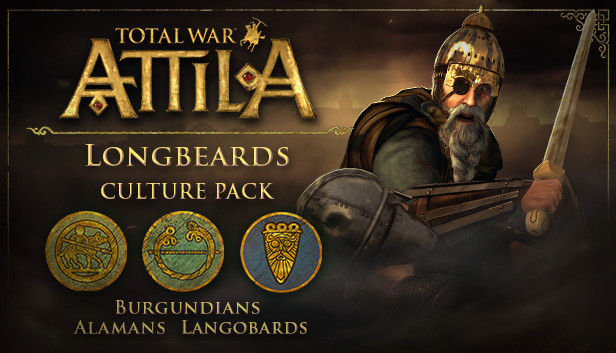
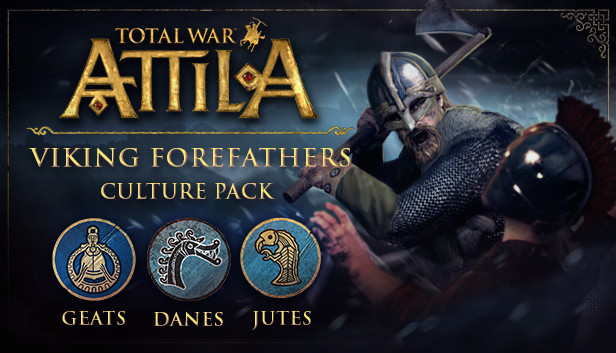
*This review is a statement against recent Total War titles marketing scheme* This recommendation will stay negative unless Creative Assembly and Sega demonstrate to Total war fans that this game will not be plagued by abusive and overpriced downloadable content (as is The Viking Forefathers ''Culture pack'', and the Longbeards ''Culture Pack''). Sega and Creative Assembly, show some respect to Total War fans. We have paid for a complete game. Could you do us the honor of delivering one ?Show moreShow less
Alright, so here is my take on the game. Spent 50 hours total playtime, and overall I will say there is a lot more positive to say than negative. My campaign is with the Saxons, and besides the prologue with the visigoths they are the only factions I have played with so far. The prologue did a fairly decent job of explaining new features, and I think the new features are what are attracting a lot of players to Attila. The biggest (not new but finally returning) feature is the family tree. Best variety and options of any Total War game so far. Lots of actions that can be taken, you can once again chose your heir, marry, divorce, adopt, assassinate and more. The down side is that the pace of the game means you may only have a few kings during your playthrough if you are cautious/lucky with your kings. My second king is 75 years old at 453 A.D. and still going. The units are tiered, which is an interesting change to things. The biggest downside is that as you research and upgrade tiers, you can no longer recruit lower, cheaper tiers in all cases. Now, by the time you have have access to those higher tiers you should be making a higher turn income but other issues compound the frustration of the late game. If you get too big you become everyones target. Diplomacy is futile and you have to be ready to fight on multiple fronts agaisnt multiple enemies. This is the problem I ran into at least. I took all of britain with the exception of ireland, and had frisia and gothskandia under my control along with part of belgica. and was at war with nearly all surviving factions in europe with the exception of Eastern Roman Empire. At this point, I was having to fight off two and three armies at a time, stuck in cities due to the threats of looting (I couldn't afford to lose income per turn and repair) and basically had to keep my armies static to defend rather then expand. Expansion slows down as the game goes on (at least in this playthrough) over 60% of the map was desolate by 453 AD. and the price to recolonize was extreme. Add to that the fact that by 453 AD the fertility across 80% of the map was at the lowest point (a few southerly provines were meager, the second lowest fertility). Even though by this time my building tiers and bonuses for tech levels had increased my income, higher unit upkeep and longer winter attrition periods meant I was still only looking at an average of 1500-2000 income per turn. I never migrated, or abandoned any settlements so I don't have much to say about horde mechanics at this point but i plan the next play through to be the visigoths or alans. I think in general both commander abilities and agent actions have been nerfed. No longer can you expect a half dozen abilities per general, nor can you plan on destroying enemy armies through a blitz of spies poisoning every cup, goatskin, dewdrop of water in the vicinity. But Frank-ly (har har) that's an improvement in regard to realism over Rome II. The biggest negatives i found with Attila are with the endgame. You're provinces will be infertile, raging with epidemics, and if you're large enough, assaulted on all sides. But obviously that was CA's goal. War, Death, Famine, and Pestilence (did I miss someone? Groucho, or perhaps Shemp?) And while it is all in the spirit of apocolpyse, it makes for an extremely frustrating situation. Even achieving the minor victory condition is 14 settlements away. There aren't even 14 undesolate settlements in europe (not counting the ones I own). So I have two options. Hoard wealth at a meager rate and colonize or haphazardly capture the settlements that remain. In hindsight i would have to say I should have abandoned the mainland, captured all of britain, then slowly recolonized and conquer, either through gaul or skandinavia to use the geography to help keep from overextending my territory. I would say I should have expanded faster but Im not sure that is wise given the fact of the major diplomatic penalities and inevitable war with every other damn faction in spitting distance (and then some. Minding my own business with no settlement south of my starting saxon capital and Hispania and Africa join in the fight against me) I'm looking forwards to mods, especially unit additions and an increase in turns per year. Also, some changes to make raiding armies more feasible (less attrition, increase to the bonus of adding warriors after victory) Attila is definitely more satisfying at its start than Rome II. Inevitable DLC will add more units, factions, blood (yeah, seriously,it is ridiculous they are going to make us pay for it again) My deepest desire? Take a note from paradox, give me an extension of the timeline, add events with it. Attila should see a "rise of islam" expansion, take us into the crowning of Charlemagne, and pave the way for Medieval III (or whatever the heck they are going to call it)Show moreShow less
SEGA heard you liked culture packs so they put some culture packs onto your culture packs with reskinned already existing units for 15 euro a piece. Did i mention culture packs?Show moreShow less
Source: original Steam user reviews. Helpful votes are an archived snapshot, not live data. Last collected: 08/15/2026.