






















Opening
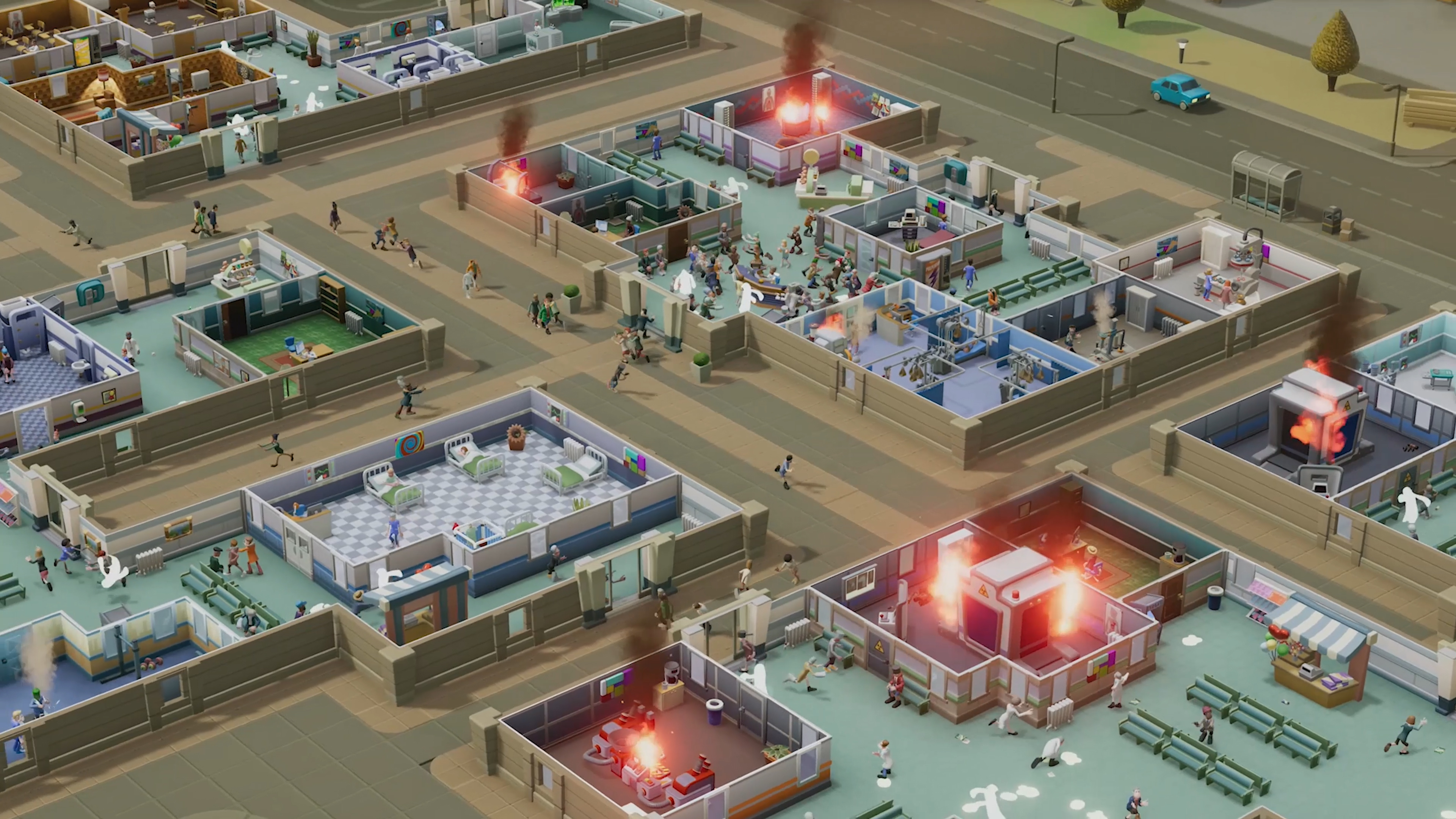
By the time your second facility opens its doors, things start to slip out of your control in the funniest way possible. A line of light-bulb-headed patients spills out past the entrance, the diagnosis rooms and treatment wards are running flat out, a small fire breaks out at the end of a corridor, and a janitor slips on a puddle while trying to put it out. You nudge the thermostat up so nobody faints in the waiting area, then scrape together enough budget to squeeze in one more toilet. It all reads like a shrunken model of a real hospital, except the entire shell has been swapped out for a cartoon.
The most impressive thing here is not how many absurd ailments you can treat. It is that the game dares to let you push a hospital right up to the edge of peak efficiency, then casually drops an epidemic or a mayoral inspection into the mix, forcing you to firefight before the whole thing collapses. Watching your site grow from a handful of consultation rooms into a sprawling industrial park, you arrive at a simple, slightly cruel realization: inside this system, a person is both a patient and a number on a spreadsheet.
That tension is what keeps Two Point Hospital pulling you back. It looks like a breezy build-and-watch toy, and for the first hour it plays like one. Then the systems start to interlock, the timers tighten, and you find yourself optimizing routing diagrams the way a line cook reads tickets during the last fifteen minutes before close. This review walks through how the game handles its sandbox storytelling, its sound design, its readability-first visuals, its deep management loop, its long-haul content, and finally where it all lands.
Story | 7.2/10
Story: 7.2/10Two Point Hospital has no story in the traditional sense. You will not follow a single protagonist through a three-act arc of setup, confrontation, and resolution. Instead, you come to know this absurd yet oddly familiar medical world alongside a sprawling structure of regional unlocks, opening one new town and one new facility at a time. That is an unusual way to deliver a setting, and it asks the player to find meaning in systems rather than in characters.
A management game with no narrative spine
The honest framing is that this is a sandbox management game wearing a thin coat of worldbuilding. There is no quest-giver waiting at the end of a corridor, no cutscene that resolves a personal conflict, and no villain to topple. What you get instead is a sequence of locations, each with its own brief and its own personality, and the loose connective tissue of a fictional Two Point County that ties them together. The opening tutorial hospital eases you into the basics of building consultation and treatment rooms while keeping your cash flow above water, and from there the world simply widens.
Because the progression is structural rather than dramatic, the game never interrupts you with a forced narrative beat. That is a deliberate trade. You are free to sink fully into the loop of spotting a problem, optimizing around it, and watching a fresh problem appear. The cost is that there is rarely an emotional reason to push into the next region beyond your own appetite for a cleaner spreadsheet. The motivation to continue is entirely internal, which suits some players perfectly and leaves others cold.
Worldbuilding hidden in radio, signage, and ailments
If the plot is absent, the flavor is not. Almost all of the worldbuilding lives in the radio broadcasts, the in-hospital announcements, the descriptions of each ailment, and the wording of mission briefs. The tone is unmistakably dry and British: every line wears a joke on its face, but the sentence underneath is quietly mocking the commercialization of healthcare and the cold logic of running people through a profit machine. Read one ailment description and it is just a funny pun. Read a few in a row and you start to notice they are needling real anxieties about working life and social pressure.
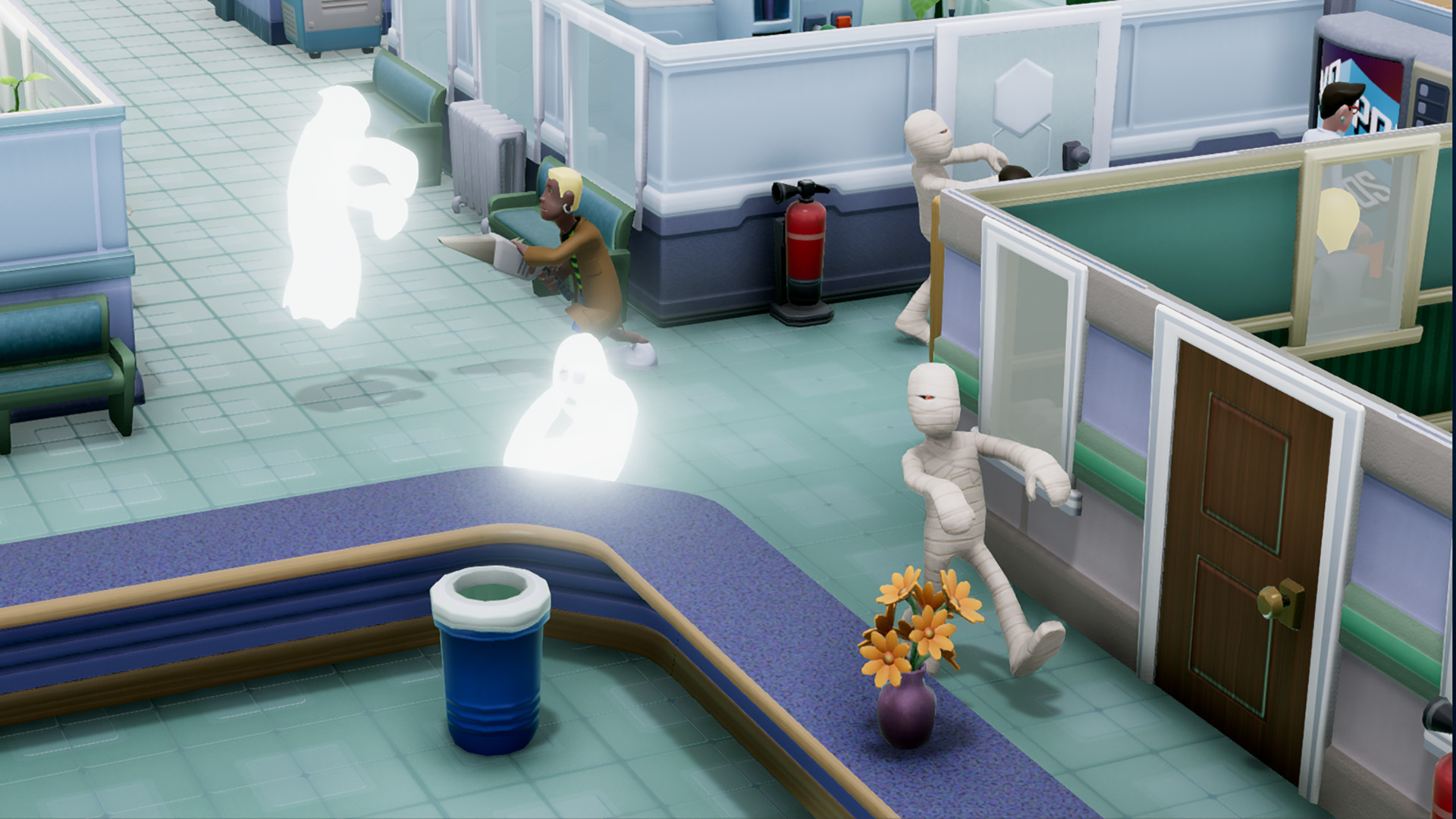
The signature ailments do a lot of heavy lifting here. Patients arrive with a literal light bulb for a head, or wrapped head to toe like a mummy, and each condition needs its own purpose-built treatment room to resolve. These designs are simultaneously the comedy, the setting, and the gameplay hook, because every new gag-ailment also unlocks a new machine and a new optimization problem. The humor is never just decoration; it is load-bearing for how you feel about the place you are managing.
Hospitals as characters, staff as data
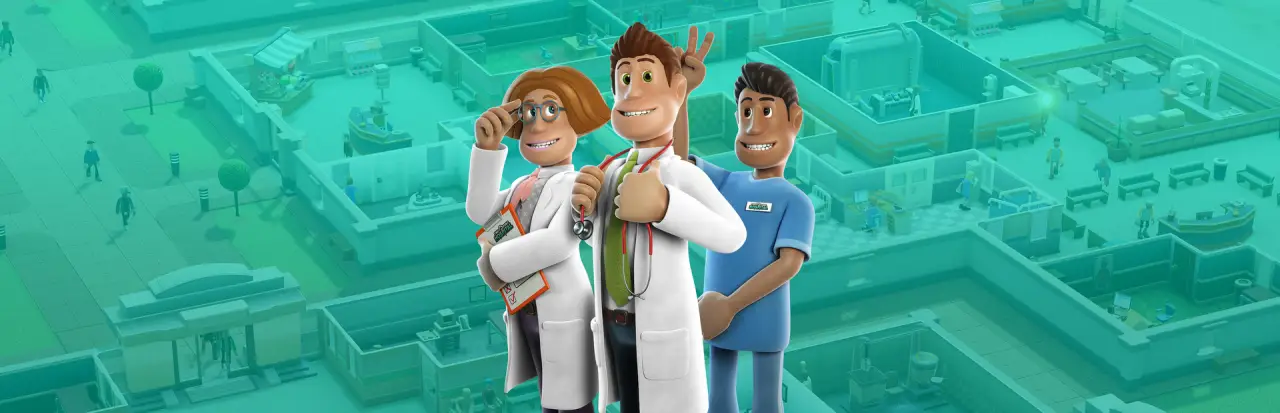
The most interesting narrative trick is that the real characters are the hospitals themselves. Your staff and patients are deliberately functional: a bundle of ability ratings, personality traits, and needs, more an expression of an overall systemic symptom than individuals you bond with. You will not form a strong attachment to any single doctor the way you might to a party member in a role-playing game. There is no protagonist crew here, and the game never pretends otherwise.
What the game emphasizes instead is the personality of each hospital as a system. One site is spacious but riddled with complicated conditions. Another hands you an enormous loan while strapping you to brutal performance targets. A third treats epidemics and disasters as a normal Tuesday. Each location behaves like a different creature with its own likes, dislikes, and temper, and learning to read that temperament is the closest thing the game has to getting to know a character.
This approach has clear upsides and downsides. The upside is that nothing interrupts your management rhythm, so you can sink completely into the cycle of problem, optimization, and fresh problem without a cutscene yanking you out of it. The downside is the absence of that emotional engine that makes you feel you simply have to clear the next level. The storytelling functions more like ambient music supporting the mood than like a motor driving the game forward. If you came hoping for a fully scripted medical drama, Two Point Hospital cannot give you that. What it offers is a string of sharp satirical jokes and a quiet, unflinching mirror held up to the systems we all live inside.
Audio | 8.2/10
Audio: 8.2/10The sound design in Two Point Hospital belongs to a particular category: you barely notice it while you are playing, but the moment you mute the game, something feels off. The audio is woven so tightly into the rhythm of management that it stops registering as a separate layer and becomes part of how you read the hospital.
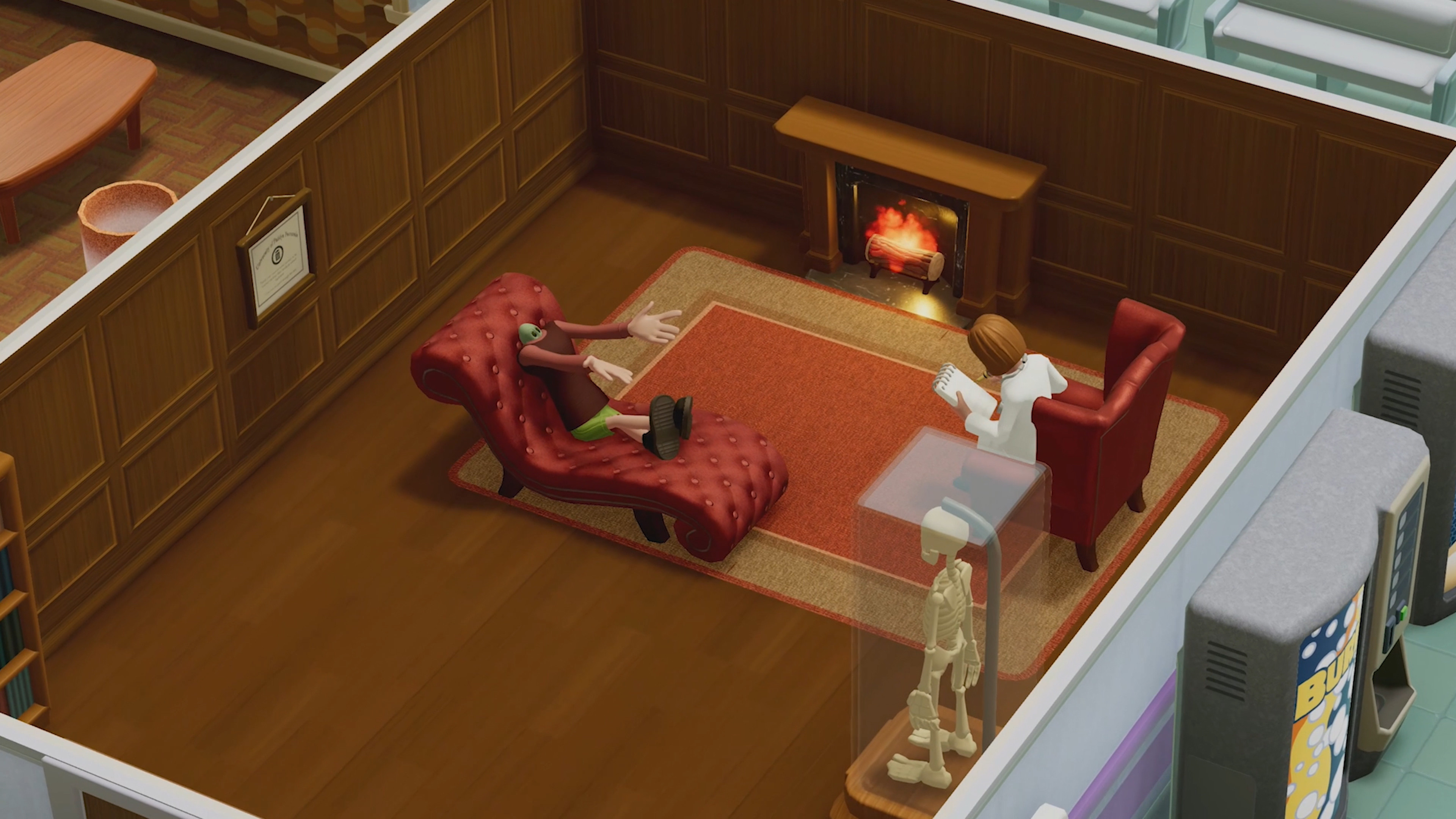
Music that works as background noise-cancelling
The background music is light and looping, drifting along between hospitals without ever demanding attention. A few of the melodies get faintly stuck in your head after a long session, and on their own that repetition would be a flaw. In context, though, the loops pair with the high-pressure pace in a way that almost works as noise-cancelling for the brain. When the waiting room is rioting and the finances are bleeding, a calm, unobtrusive loop keeps you from spiraling rather than ratcheting up the stress.
The overall timbre leans gentle. There is no oppressive, large-ensemble score trying to manufacture tension, which is the right call for a game you might leave running for hours. You can treat the soundtrack as a background radio station and it holds up fine in that role, even if it never produces a track you would seek out on its own. The composers clearly understood that this is a game of long sittings, and they pitched the music to recede rather than to dominate, which is exactly what a marathon management session needs from its audio.
Radio DJ and announcements carry the humor
The real star of the audio is the in-hospital public announcement system and the radio DJ. Their steady stream of dry one-liners and satirical asides paints a layer of British smirk over what would otherwise be a cold pile of management numbers. You sit there squeezing every last coin out of a financial report while the radio cracks jokes about capital and the healthcare system, and the effect is a bit like doing overtime with a stand-up special playing in the background.
This matters more than it sounds, because the voice work is doing tonal work the rest of the game cannot. The systems are clinical and demanding by nature. The announcements keep reminding you, with a wink, that you are running an absurd cartoon institution and not a real one. That constant comedic counterweight is a big part of why the management never tips into feeling grim or grinding, and it gives the place a personality that pure UI feedback could never manage.
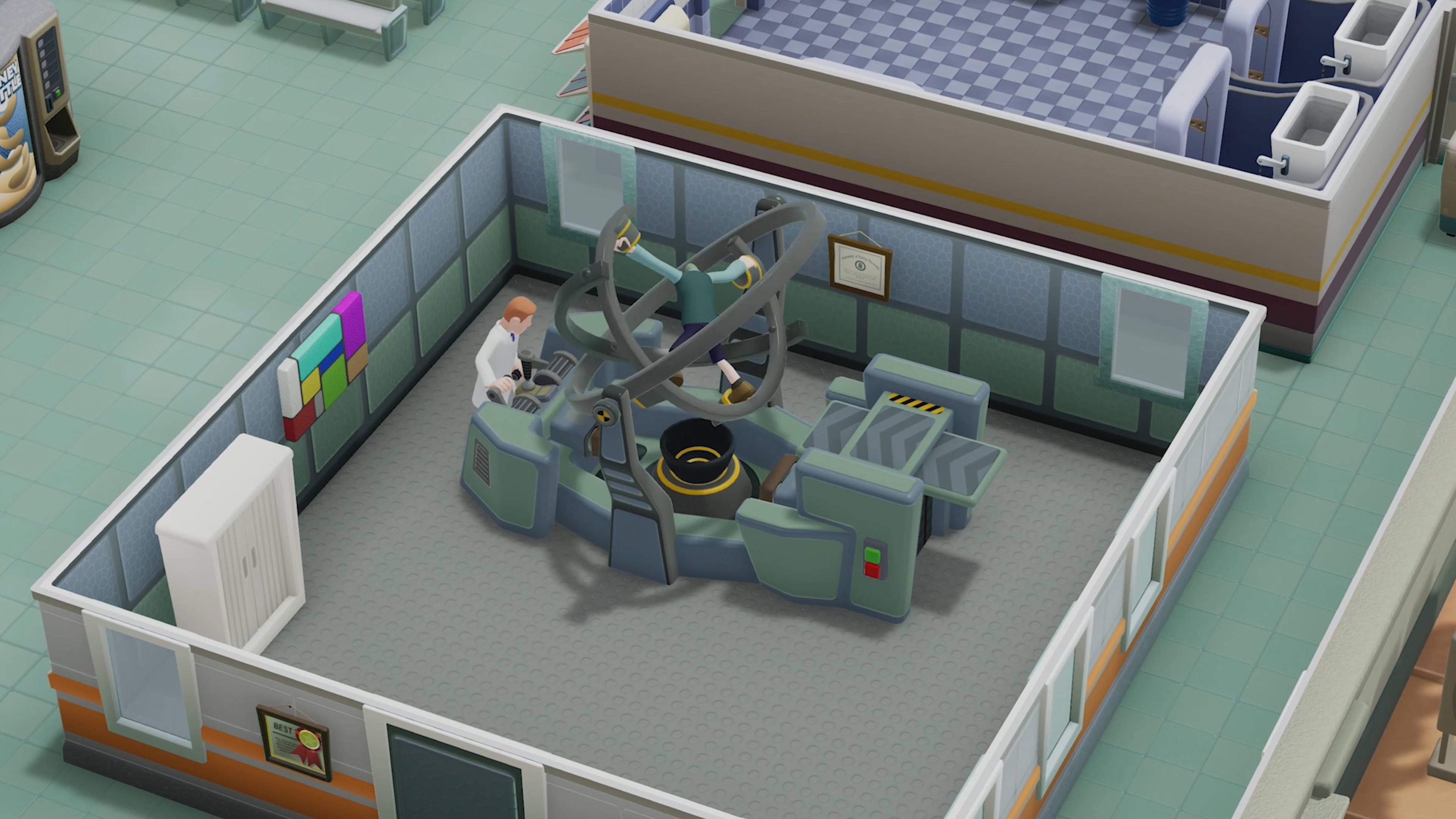
Concrete sound feedback you learn to read
Beneath the music and the comedy sits a genuinely solid layer of functional sound effects. Equipment running, treatments in progress, and patient states all come with clear, distinct audio cues. Someone is sick, someone faints, a machine breaks down, a fire alarm starts blaring, and each of these sounds grabs your attention earlier than any on-screen prompt could. Over time you stop watching the interface so closely and start listening to the room.
Eventually you can diagnose a problem by ear alone. A certain wrong-sounding swell of ambient noise tells you that a corridor has jammed up somewhere before you have even located it on the map. That diegetic feedback loop, where audio guides you to bottlenecks faster than icons do, is one of the quietly clever pieces of the whole production. The one real weakness is the limited number of music tracks: spend a long stretch replaying a single level and the melodies do begin to wear on your ears. It is a minor irritation in an otherwise smartly judged soundscape.
Visuals | 8.3/10
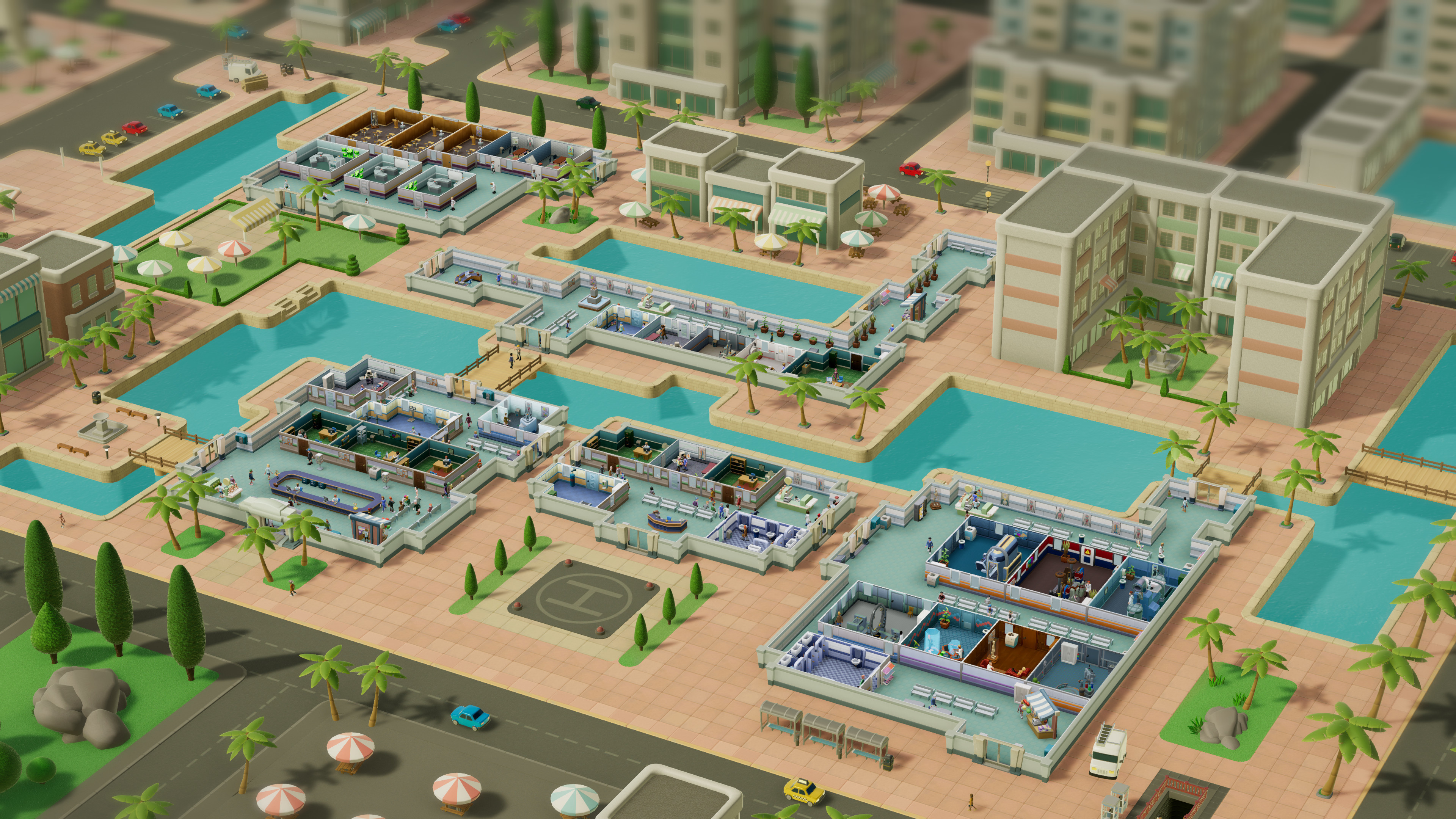
Graphics: 8.3/10The first time you pull the camera high and fit an entire hospital onto the screen, the view is genuinely pleasing in a busy, orderly way. Colored floor tiles trace out the corridors, departments are marked with clearly distinct blocks of color, and the flow of patients and staff reads like a flowchart that updates in real time. The art style looks breezy and weightless at a glance, yet it treats readability with unusual care, and that care is the whole point.
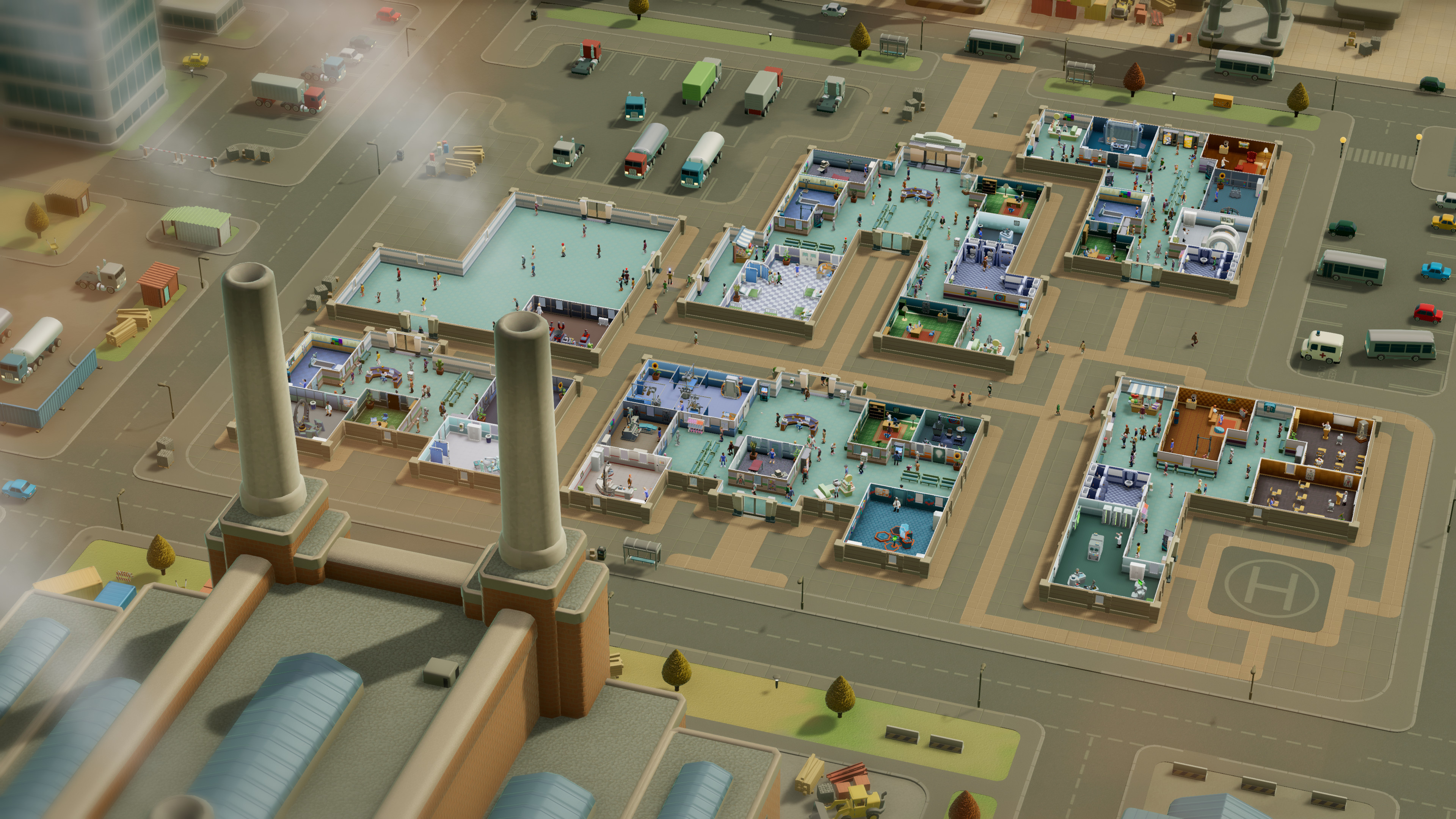
Readability as the core visual philosophy
Everything about the look serves the management. The character and ailment models are exaggerated cartoon designs, from light-bulb heads to mummies to a parade of ridiculous symptoms, and the exaggeration means you can tell at a glance who is a problem source and who is just passing through. More importantly, the functional zones never visually blur together. Diagnosis rooms, treatment rooms, rest areas, toilets, and entertainment spaces each carry their own color, layout, and small details, so even zoomed out to a top-down view you can immediately lock onto the area that matters.
This is closer to the design philosophy of an infographic than to a realistic simulation. The game is not chasing material fidelity or surface texture. Every element exists to communicate a status to you. You do not have to hunt through icons to understand what is wrong. You feel the clustering of color and the congestion of foot traffic, and that sensory read is usually enough to know roughly where the trouble is brewing. It is a remarkably disciplined approach: nothing on screen is purely decorative, and every visual flourish doubles as a piece of information the player can act on. That restraint is rare in a genre that often drowns its players in noise, and it is a big reason the hospital stays legible even as it balloons in size.
Cartoon contrast and comedic juxtaposition
A hospital is a subject that naturally carries a bit of tension and unease. The game leans hard the other way, choosing a light cartoon look and pairing it with dark comedic writing, which produces a pleasant kind of dissonance. It feels like watching a goofy animated short that happens to be about the grind of working life. You laugh at the patient designs while the cold pressure of efficiency quietly climbs up behind you.
That juxtaposition is a deliberate aesthetic choice, not an accident of a limited budget. The bright palette and rounded shapes make the demanding systems underneath feel approachable, almost cozy, which lowers the barrier for newcomers who might bounce off a drier, more clinical presentation. The visual identity is consistent and confident, and it gives the whole game a recognizable face that holds up well years after release. Animations carry the same comedic weight, with patients waddling, slumping, and reacting in exaggerated ways that telegraph their condition before you ever click on them. The result is a world that feels alive and faintly ridiculous at the same time, and that liveliness keeps the long management sessions from feeling sterile or purely mechanical.
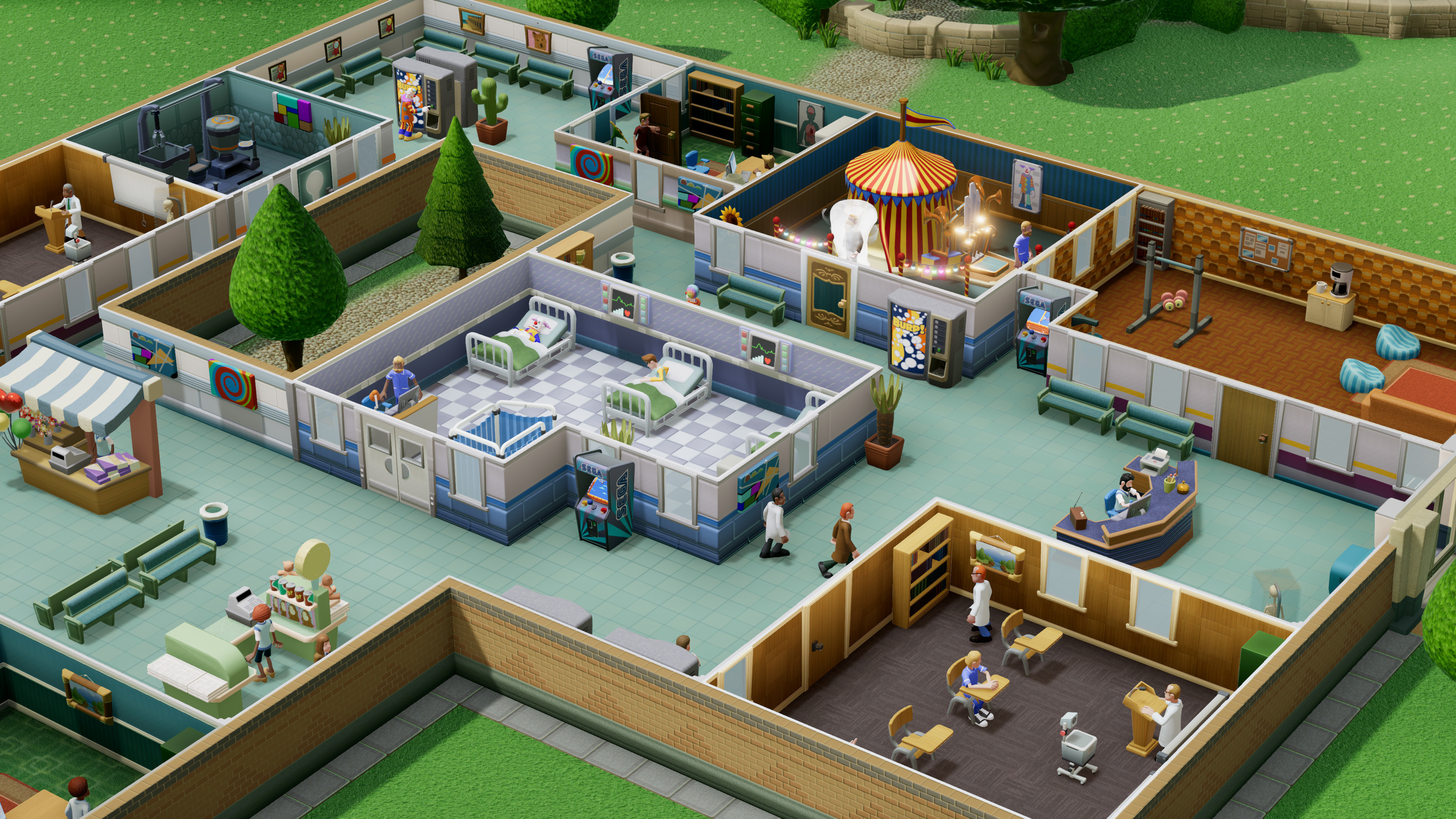
Where the style has limits
The drawbacks here are mostly a matter of taste rather than execution. If you are accustomed to a realistic style, this strongly stylized presentation may not suit your palate, and on a pure detail level it is not going to dazzle you with fidelity. There is no attempt at photorealism, and the models are intentionally simple.
For a simulation that prioritizes information density and system manipulation, though, being easy to read and easy to distinguish matters far more than looking real, and on that measure the game has clearly succeeded. The visual clarity directly feeds the gameplay loop, and that integration is worth more than any amount of surface polish. A few players will wish for more graphical heft, but the choices on display are coherent and purposeful, and they make the act of running a complicated hospital feel legible rather than overwhelming.
It is also worth noting how well the look scales. Whether you are fussing over a single cramped starter room or surveying a multi-floor complex from the highest zoom, the visual language stays consistent and never collapses into mush. That consistency is a quiet technical achievement, and it means the game ages gracefully. Years on, the cartoon aesthetic still reads cleanly on modern displays, where a more realistic art style of the same vintage might already look dated. The art was built to serve the systems first, and that priority has kept it from feeling old.
Combat | 8.8/10
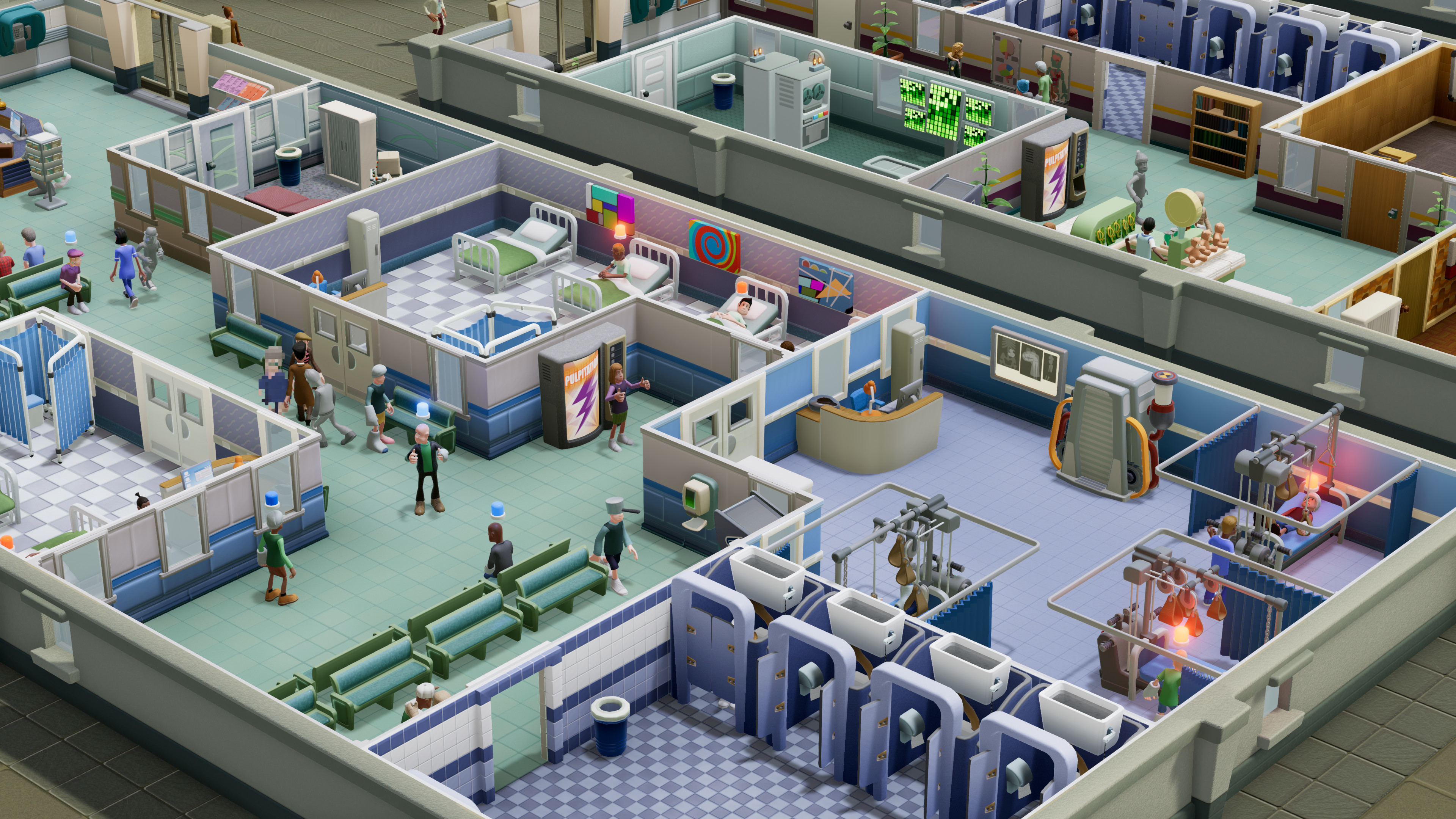
Gameplay: 8.8/10On the surface, Two Point Hospital is the kind of breezy management sim where you build a structure, drop in some equipment, and watch little figures shuffle around. Play it for a while, though, and it reveals itself as a resource-scheduling puzzle in a cartoon costume. Every corridor, every machine, and every employee's personality is a variable, and miscalculate any of them slightly and a full-blown riot is waiting for you in the waiting room.
The interlocking core loop
The core loop is plain enough on paper: build departments, hire staff, treat patients, earn money, expand. What gives it real bite is the way the systems tug against one another. Diagnostic efficiency, cure rate, and the comfort of the hospital environment form a triangle you can never max out all at once. Add a few more entertainment fixtures and satisfaction climbs, but the routing gets longer and patients start expiring on the way to treatment. Compress the rest rooms and toilets to double your bed count, and staff fatigue and error rates double right alongside it.
That constant tension is the heart of the game. You are not solving a single optimization problem but a web of competing ones, and the right answer shifts depending on what each hospital throws at you. The pleasure comes from finding a configuration that holds the whole web in balance, then watching it wobble the moment a new pressure appears. It is the sort of loop that quietly eats an evening, because every fix exposes the next thing that needs fixing.
Difficulty curve and high-pressure spikes
The fifteen hospitals function as a steadily escalating difficulty curve. Early levels teach you how to survive at all. Mid-game levels force you to learn how to read the data and balance the books. Late-game levels drop epidemics, disaster events, and mayoral inspections on you, the kind of sudden situations that yank you into a high-pressure mode. That state feels a lot like the last fifteen minutes before a kitchen closes, with tickets pouring in: you already know you are running at full capacity, yet you have to grit your teeth and keep pushing anyway.
These spikes are what elevate the game above a relaxing builder. An epidemic outbreak demands rapid expansion and clever staffing under a ticking clock. A mayoral inspection forces you to buff reputation, hygiene, and satisfaction to a target line before the deadline. Because the base systems are already deep, these crisis events do not feel bolted on; they feel like the same machine being cranked to a higher setting, and surviving one is genuinely satisfying.
Staff management and the formula problem
The staffing system is the quietly unsettling layer that turns this into real human-resources management. Employee abilities and personality traits directly change the rhythm of the entire hospital. One freakishly efficient doctor can hold up an entire floor, while one slacking nurse can turn an injection ward into a pit of resentment. Once you start seriously weighing who to send for training and who to keep on the front line, the game shifts from playing with little figures into genuine workforce planning.
The honest weakness shows up late. As the pressure keeps stacking in the final hospitals, the solutions tend to land on similar templates: find the bottleneck, pile on the key departments, obsess over routing. After a dozen-plus hospitals, some of the problem-solving starts to feel like déjà vu. The saving grace is that the varied constraints, tight space here, limited funds there, keep that familiarity from curdling into actual boredom. There is always a slightly different wrinkle to account for, and that variety stretches the loop far longer than its template structure should allow.
Taken as a whole, this is a robust, slightly addictive management system that earns its high marks. The genius of the design is how cleanly the simple core loop scales into genuine complexity without ever stopping to explain itself with walls of text. You learn by doing, by failing, and by watching your hospital throb with congestion until you find the cut that unblocks it. That tactile, hands-on quality is what keeps players coming back long after they have technically seen everything the systems have to offer.
Content | 8.5/10
Content: 8.5/10If you only look at clearing the campaign once, Two Point Hospital does not sound excessive: fifteen hospitals and a one-to-three-star unlock pace is a fairly conventional pitch. What actually drains your hours is the compulsive itch to retune just one more layout before bed. Every time you open a fresh map, you are forced to think again about which route you want to build this time around.
Fifteen hospitals, each with a quirk
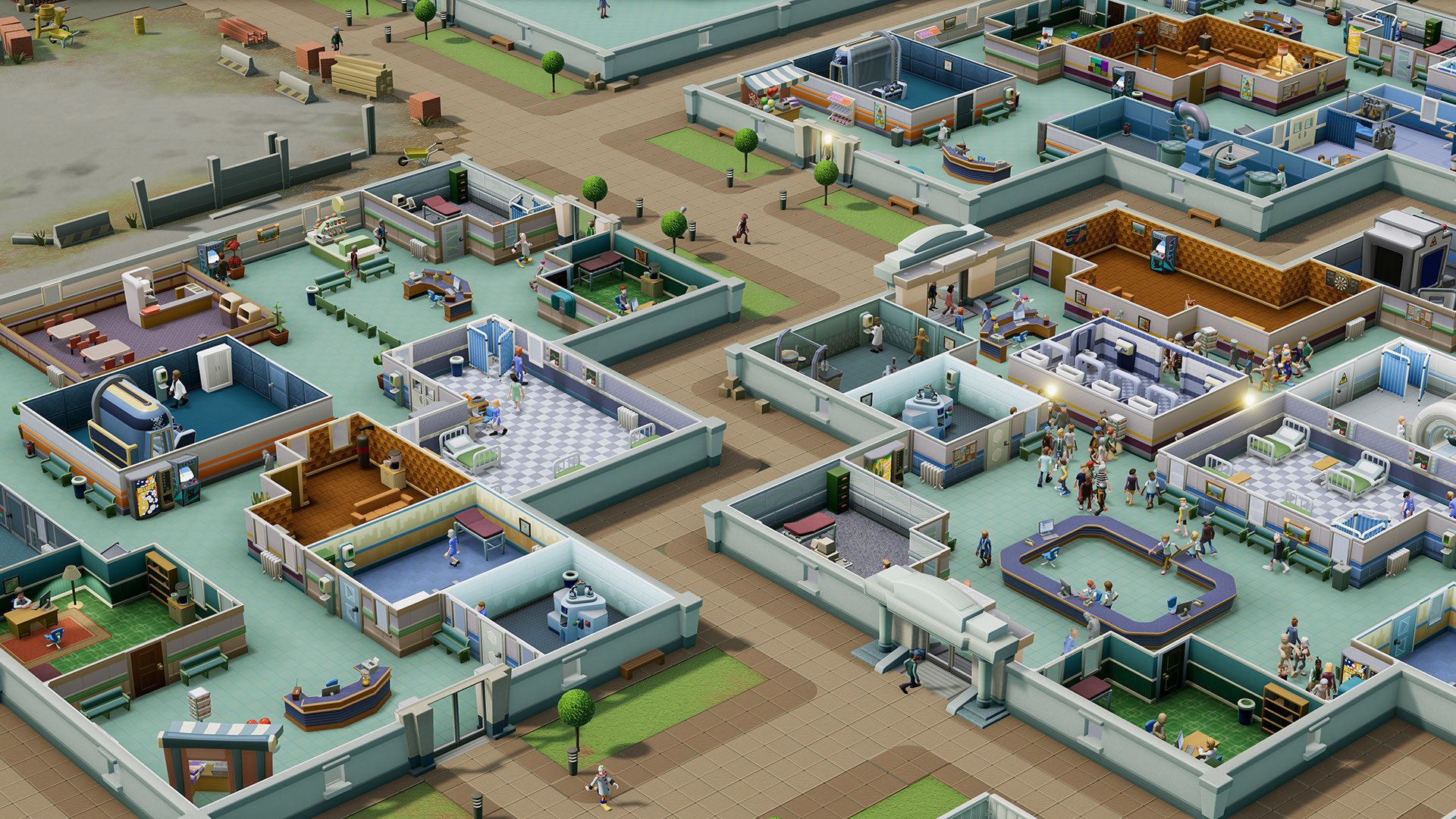
Every hospital has its own peculiar temperament. Some are spacious but packed with complicated conditions. Some hand you an enormous loan while clamping you with strict performance indicators. Some simply treat epidemics and disasters as part of daily life. Through these level differences, the game splits a single set of systems into a variety of distinct gameplay puzzles. One place emphasizes pushing research forward, another rewards high-efficiency turnover, and the next might become an exercise in surviving wave after wave of epidemics.
This variety is the real source of the game's length. The underlying rules never change, but the framing around them does, so the same toolkit feels fresh as you carry it from site to site. You are constantly re-evaluating priorities, and that re-evaluation keeps each new hospital from feeling like a reskin of the last. It is a smart way to stretch a finite ruleset across dozens of hours without padding. The star-rating structure also matters here, because finishing a hospital at one star and returning later to push it to three is a completely different challenge that asks you to refine rather than simply survive. That layered goal system effectively triples the meaningful content in each location for players who care about doing things properly.
Layered unlocks and content pacing
The unlock pacing of illnesses, departments, research projects, and decorations is controlled with real care. You are not buried under a mountain of options at the start. Instead, new toys arrive as new hospitals appear: a new illness brings a strange treatment device, a research project unlocks a more advanced department, and certain decorations even stabilize the hospital's looks and the mood of your staff. This layer-by-layer reveal keeps a steady carrot of novelty dangling just ahead of you.
The pacing advantage is obvious in play, because the game rarely gives you a dead period. You are either busy clearing a queue, staring at a financial report, or suddenly reacting to an epidemic alert, and you are forced to switch between different rhythms constantly. Play for a long stretch and you do feel fatigue, but it is more the tiredness of finishing a marathon than the dullness of having nothing to do. The drip-feed of new departments and conditions is calibrated so that just as one set of toys starts to feel routine, another arrives to reset your curiosity, and that rolling sense of discovery is what carries the campaign across its full length without sagging in the middle.
Expansions and the late-game familiarity
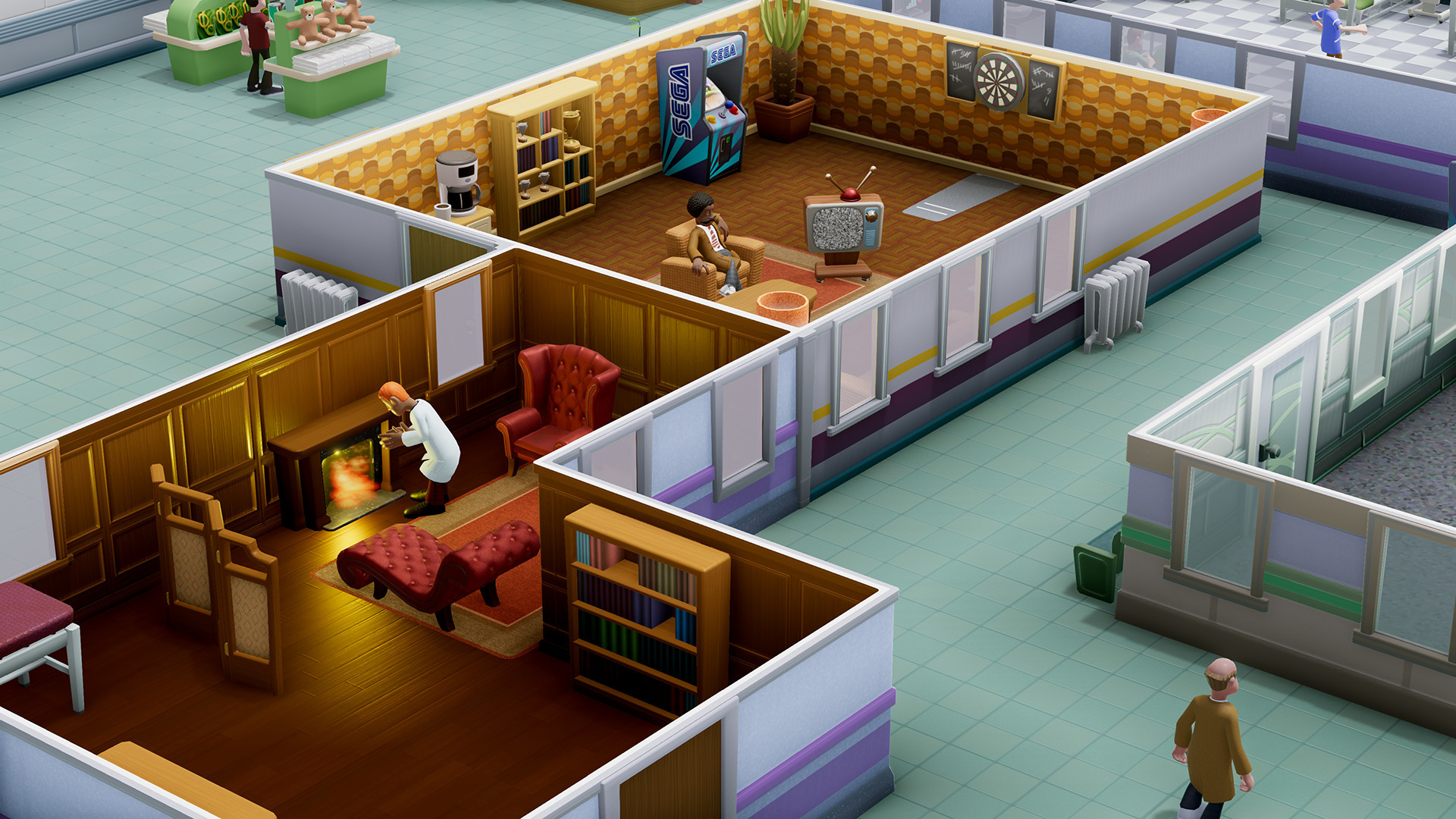
Beyond the base campaign, five DLC expansions push the game into new biomes and themes, from snowy mountains to tropical islands to alien encounters and off-grid living. These add fresh hospitals, new ailments, and new constraints, extending the optimization sandbox well past the original fifteen sites for players who want more. They are a meaningful chunk of additional content rather than token add-ons.
The shortfall is mainly the familiarity that creeps in once you have played a lot. By the mid-to-late game you realize most hospital objectives can be cracked with similar tactics: improve the diagnostic chain, streamline the routing, seize the key bottleneck. The fun is still there, but it shifts from the excitement of discovering something new to the craftsman's satisfaction of doing an old job more elegantly. Whether that trade feels rewarding or repetitive will depend entirely on how much you enjoy the act of optimization for its own sake. For players who genuinely love refining a well-oiled machine, the late game is a comfortable groove rather than a grind, and the expansions exist precisely to feed that appetite with fresh constraints and settings well beyond the base campaign's natural ending point.





Comments 0
Share your game review
Join the discussion and share your review of this game.
No comments yet. Share your thoughts on this review.