






















Opening
The first time I pressed the X button to make the goose honk, a gardener watering flowers got so startled he dropped his watering can. I stood there and pressed it three more times—not to complete any objective, purely because it was fun. That's the first lesson Untitled Goose Game teaches you: the joy of being a menace needs no justification. You're not saving the world, you're not fighting evil forces, you're just a goose, a goose whose sole purpose is to make life difficult for humans. The game does this so purely that you forget you're playing a "game"—you're simply enjoying a meticulously designed prank.
Gameplay | 9.0/10
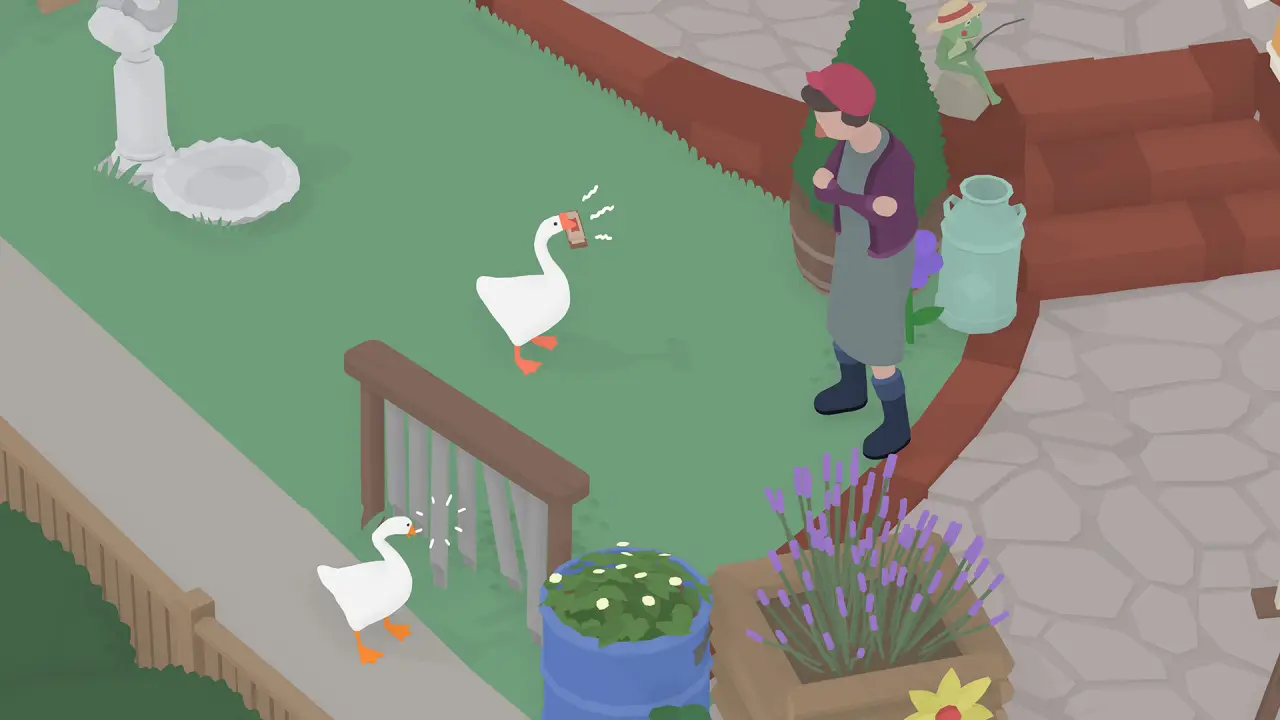
Gameplay: 9/10The controls are so simple that your three-year-old nephew could pick them up. Move, grab things, honk, flap wings—just these four actions, but they combine to create dozens of possibilities. You can lurk in the bushes waiting for the gardener to pass by, then snatch the keys from the table when he's not looking; or you can swagger into a shop and sweep items off the shelves one by one. The game won't tell you the "correct answer"—the to-do list only gives you objectives, and how you achieve them is entirely up to you.
The satisfaction from this freedom is real. Once I needed to get the gardener to wear a sun hat, and I tried three methods: tossing the hat at his feet (he picked it up and put it back), hiding his tools to force him to search (he found them but didn't wear the hat), and finally I stole his radio and threw it in the lake—when he chased me in anger, he happened to pass by the hat and put it on. That "I figured it out" rush feels better than any headshot kill.
What's even better is that the game knows when to stop. Each area has just enough tasks to keep things fresh without becoming repetitive. The main story takes about two hours to complete, but I spent four—because I lingered in every scene, trying out pranks beyond the checklist. This game's "just one more minute" quality is addictive.


Picture Quality | 7.5/10
Graphics: 7.5/10Minimalist style, but not lazy. Every corner of the village is packed with interactive objects—flowerpots, watering cans, glasses, newspapers—they exist not for decoration, but for you to wreak havoc. The goose's walking animation is particularly well done, that wobbly gait paired with the upright neck makes you want to laugh just watching it.
The map design is compact but dense. Backyard, shopping street, pub, garden—each area isn't large, but you can feel the dev team put thought into every square meter. The isometric perspective lets you see both the goose and villagers' reactions simultaneously, and this "god's-eye view" mischief is part of the game experience.
But honestly, the visuals aren't this game's selling point. They're adequate, clear, but you won't take screenshots because they're "beautiful." Their aesthetic value lies in functionality—all visual elements serve the gameplay, not a single frame is superfluous.


Sound Effects | 7.0/10
Audio: 7/10The design of pressing X to honk is genius. Not because the sound effect itself is particularly special, but because it gives you a "proactive harassment" button. You'll find yourself unable to resist pressing it a few extra times in every scene to see how NPCs will react. This kind of interactivity is something many AAA titles fail to achieve.
The background music is improvised piano that changes in real-time based on your actions—the music is soothing when you're sneaking quietly, and the tempo picks up when you're being chased. This dynamic soundtrack wasn't groundbreaking in 2019, but it's perfectly suited to this subject matter. It doesn't steal the show, but it also doesn't feel monotonous.
The only regret is the limited variety of sound effects. The goose's honks are just a few variations, and the sounds of items dropping are fairly uniform. By late game, you'll habitually tune out these sounds—they become background noise rather than feedback signals.
Content | 7.0/10
Content: 7/10Two hours to complete the main story, four hours to unlock all achievements—this amount of content doesn't seem like much by 2024 standards. But the thing is, it's hard to say it's "not enough." Every mischief task is carefully designed, with not a single one feeling like filler. You snatch clothes from a clothesline, and when the gardener chases you, he trips over his own pants—this density of chain-reaction design is higher than many games claiming "a hundred hours of content."
The map is small but packed with explorable details. You'll discover that some items have multiple interaction methods, and some NPCs' reactions change based on your previous actions. I ran around the garden three times with a key in my mouth, and the gardener went from furious to resigned, eventually just sitting on the ground and giving up the chase—this kind of dynamic response keeps replays from getting too boring.
But honestly, the appeal of a second playthrough is limited. The task list is fixed, and NPC behavior patterns are fixed. You can try different completion orders, but you're essentially doing the same things. This game is more like a one-time consumable—the experience is great, but it's not the type that'll have you coming back for more.

Plot | 7.5/10
Story: 7.5/10No dialogue, no cutscenes, not even an explicit "story"—yet you can still read what this goose is thinking. It's not an evil villain, just an animal adapting to the human world. The villagers built gardens, opened shops, erected monuments, and the goose is simply participating in this world in its own way—though that participation happens to make a mess of everything.
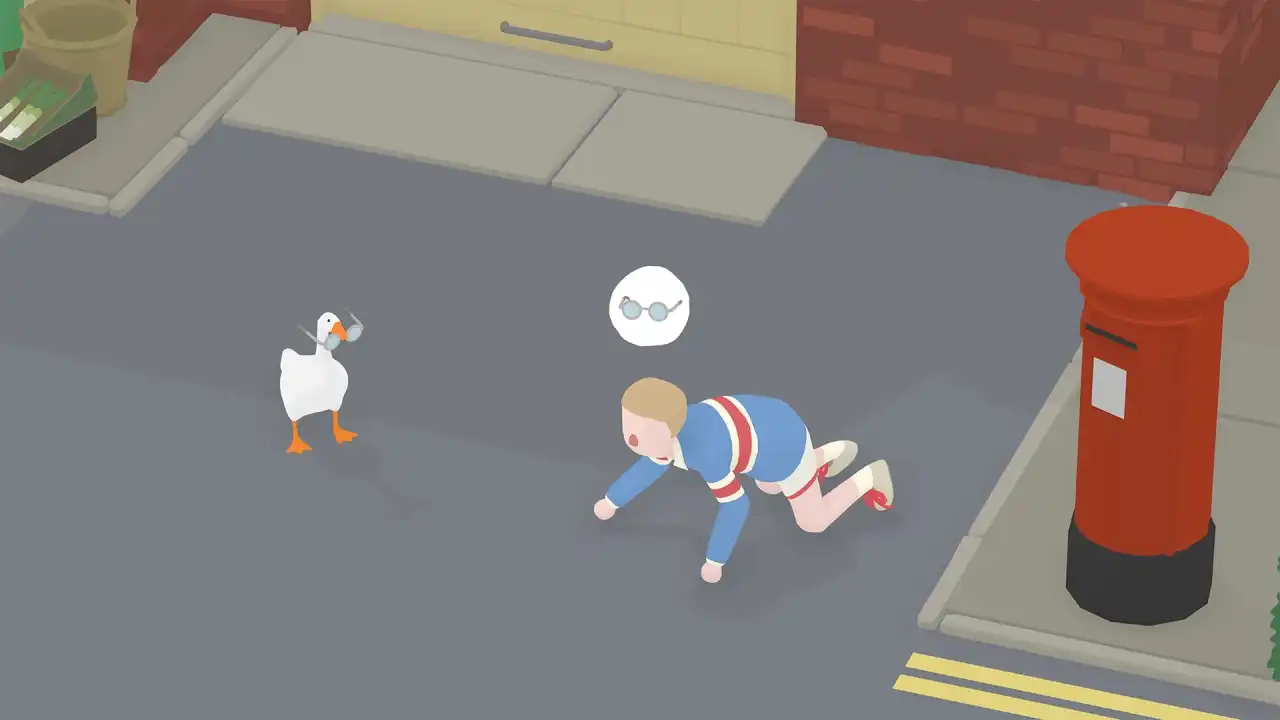
The brilliance of this "silent narrative" is that it makes you fill in an entire web of relationships yourself. That boy whose glasses you stole, that gardener who's always chasing you, that villager drinking alone at the pub—you don't know their names, don't know their stories, but you can feel they're living, breathing people, not quest NPCs.
The only issue is that this narrative approach has limited emotional depth. You'll laugh, you'll find it amusing, but you won't feel much resonance. It's not the kind of art game that makes you contemplate "the relationship between humans and nature"—it's just a lighthearted piece about mischief. There's nothing wrong with that, but it also means its impact is limited to the gameplay experience itself.




Comments 0
Share your game review
Join the discussion and share your review of this game.
No comments yet. Share your thoughts on this review.