



















Opening
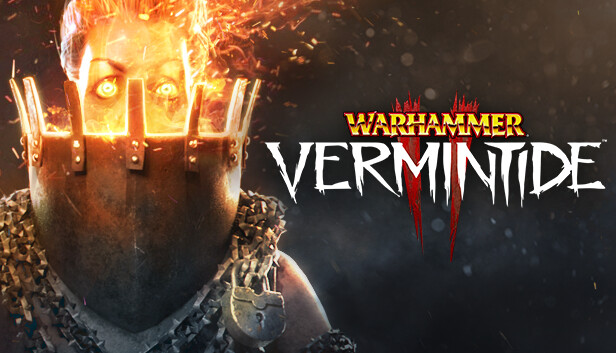
Some co-op games hand you a ranged weapon. Warhammer: Vermintide 2 hands you a warhammer and a tide of screaming ratmen, and dares you to put each one down by hand. It took the Left 4 Dead blueprint — four friends, one level, a desperate sprint from one end to the other — and swapped the trigger pull for a swing. That single substitution is the whole trick, and seven years later nobody has copied the melee weight it produces.
Here is a 2018 game still sitting at 84% positive on Steam, with 25 million lifetime players logged. It is not flawless. The loot boxes are a punching bag, the non-English localisation is stiff, and the story is so thin it is barely a rumour.
None of that matters the instant you brace against a doorway and meet the wave. So let us take it apart dimension by dimension — and figure out whether you are the player it has been waiting for.
Story | 6.0/10
Story: 6/10Let us get the bad news out of the way. If you came for a story, Vermintide 2 will leave you hungry. Narrative is the thinnest plank in this whole experience, and our 6.0 reflects that — not because the writing fails, but because it barely shows up. Yet thin is not the same as absent. Fatshark moved the weight of its storytelling off the cutscene and onto two unlikely places: the levels themselves, and the mouths of its heroes.
The End Times are scenery, not plot — and that gives the slaughter a reason

The setting is the End Times of the Warhammer fantasy world, the era when the old order finally comes apart at the seams. The stage widens from the first game's Ubersreik to the surrounding Reikland. Skaven boil up from below, a Chaos host bears down from the north, and the civilised world is bitten from two directions at once. You play five survivors cutting a path through a land that is already sinking beneath them.
Notice the word: scenery. None of this arrives as a plot you follow. The game will not sit you down and explain the Chaos scheme or unpack what each hero is carrying. You boot up Righteous Stand, a siege map, and you read the story off the burning village and the rats pouring over the wall. You reach Skittergate, the finale, and the lore is the altar and the portal in front of you, nothing more. The trick works because it hands every swing a motive. You are not grinding mobs in a void; you are making a last stand inside a city that is falling, on behalf of a civilisation about to die. Atmosphere carries the motivation, and that is the smartest thing the writing does.
No single-player hook — mood does all the lifting
Here is the blunt version: there is no narrative spine you can sink into solo. You never push forward because you have to see what happens next. Critics across the board flagged it — the plot serves the fighting, never the other way around. If you are used to a story dragging you along by the collar, the hollowness here will be loud, and it will not get quieter the more you play.

That is the real reason the number stops at 6.0. It is not botched; it is barely attempted. Missions are stitched together by a bare-bones Keep and a couple of lines of briefing, and the plot advances essentially nowhere. Walk back into the Keep after a run and, a few new items aside, the world is exactly where you left it. Stack that against an RPG that pours dozens of hours of narrative density into every quest line and the two are not even on the same track. Know what you are buying: a beautifully tuned machine for killing, not a book you will think about after you close it.
The heroes' banter is the bright spot — chatter that keeps the grind fresh
Thin as it is, one thing deserves real praise: the characterisation. The five — Kruber the Empire soldier, Bardin the dwarf ranger, Kerillian the wood-elf, Saltzpyre the witch hunter, Sienna the fire mage — each have a sharp voice, and they will not shut up mid-fight. The dwarf and the elf bicker like an old married couple, the witch hunter mutters about heresy, the mage flirts with her own flames. Run the same map for the fortieth time and it is this chatter, not the plot, that keeps it from going stale, because a different party composition triggers a different stream of lines.
You will replay a single level dozens of times, yet a new crew means new exchanges you have not heard. Using voice density to blunt repetition is a clever bit of judo inside a weak narrative frame. Set it next to its spiritual parent, Left 4 Dead 2 — both lean on mood over plot — and Vermintide 2 actually comes out ahead, because the vast Warhammer setting gives its world-hooks and its character lines more to chew on than an original zombie premise ever offered.
None of this rescues the story to a place it does not belong, and we are not pretending otherwise. The 6.0 stands. But it is worth understanding what kind of thin you are dealing with: not lazy, not broken, just deliberately minimal, with the effort redirected into texture rather than plot. Go in expecting a campaign and you will feel cheated. Go in expecting a slaughterhouse with good company and a believable backdrop, and the writing does exactly the modest job it set out to do.
Audio | 8.0/10
Audio: 8/10Sound is the quietly underrated pillar here. Vermintide 2 does not announce itself with a swelling orchestra; it turns audio into a working tool, something you do not just hear but lean on to stay alive. We landed on 8.0, and the point we docked sits almost entirely on one thing: the voices come in English and English only.
Jesper Kyd's score knows when to shut up
The soundtrack comes from Jesper Kyd, the composer behind some of the most memorable Assassin's Creed and Hitman themes, so the pedigree is not in question. In Vermintide 2 he lays down grim, heavy strings and war drums that press the weight of a sinking world onto your ears. When the going is calm the music recedes almost to nothing — footsteps and ambience and little else. The moment a special spawns and the fight tips into its crescendo, the score surges, drums and brass crashing in together to drive the drowning sensation to its peak.

That restraint is the whole point. Plenty of action games blast music start to finish and numb you to it; here the music breathes, and its rises and falls map straight onto the rhythm of the fight. When the backing track lurches into a new key, your body reacts before your brain catches up — danger is here. The music is not decoration. It is part of the combat read, and after enough hours you stop consciously noticing it and simply trust it, the way you trust a good driver's peripheral vision.
Audio you fight by — learning to hear the threat before you see it
This is where the sound design earns its keep. Almost every special enemy telegraphs itself with a signature cue before it arrives. The Gutter Runner growls low before it pounces. The Packmaster's chains rattle as he closes. The Globadier has a distinct hiss on the wind-up. Veterans read the type and direction of a threat by ear, well before it crosses into view — the thing the community calls fighting by sound.

On the higher difficulties this listening game is close to mandatory. In a churning melee with your eyeline packed full of rats, you simply do not have time to spot the one circling to hook you; the ears do the work the eyes cannot. Wiring audio depth straight into the moment-to-moment read promotes sound from atmosphere to mechanic, and it meshes with the core melee — the harder you commit to a swing, the more attention you have to peel off and aim at the soundscape. New players who never learn to listen tend to plateau hard, and the moment it clicks is one of the game's quiet skill milestones.
Hit feedback lands, the voice track is the gap
The impact audio is just as considered. The wet thud of a weapon sinking home, the crack of breaking bone, the metallic ring of a blunt weapon ricocheting off heavy armour, the shriek of a rat pack going down in a row — these sounds reinforce the slaughter directly, so every swing carries audible weight. Paired with the blood-mist particles on screen, the act of cutting feels physically loud.
There is a subtle craft in how the blunt and bladed weapons sound different from one another, mirroring how they feel different to swing. A mace meeting armour does not sound like a sword finding flesh, and that audio distinction quietly reinforces the loadout choices the gameplay asks you to make.
The voice work itself is strong. All five heroes are fully acted in English, and the banter mentioned above is a genuine highlight. But the gap lives here too: there is no dubbing in any other language. For a non-English player, you are forever hearing accented English over subtitles that are not especially good, and in line-dense stretches the immersion frays. That is why audio stops short of a higher mark — the music is fine and the design is sharp, but the localisation coverage on voice is a visible shortfall, and it bites hardest outside the English-speaking world.
Visuals | 8.0/10
Graphics: 8/10Vermintide 2's visuals are not the showy, benchmark-chasing kind. They are the atmospheric kind. A dense, dark-fantasy realism nails the word "apocalypse" into every single map. We settled on 8.0: the art direction and level design are real strengths, while on raw technical spec it never tries to out-muscle the triple-A blockbusters of its year.
Dirty, dark, oppressive — and unmistakable
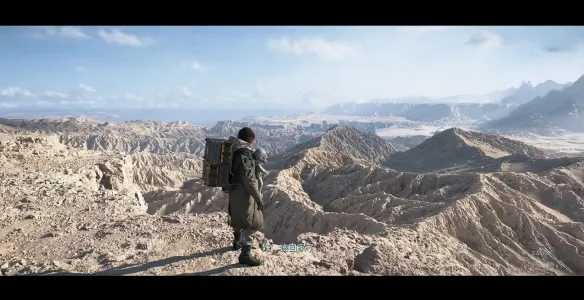
The game runs on Fatshark's in-house Stingray engine, formerly Bitsquid, and the art direction never wavers: grime, gloom, weight. No bright colours, no clean menus. What you see is scorched wheat fields, a warren hollowed out by Skaven, stone walls slick with old blood. That filthy, lived-in decay is precisely the right register for the Warhammer fantasy world — this is no heroic fairy tale, this is an old world rotting in real time.

The payoff of that choice is recognisability. Glance at a screenshot and you can name it as Vermintide 2 and not some other co-op shooter. The lighting sits low, blood mist drifts through firelight, scenery breaks apart in the thick of a fight — small things that together weave the pressure of a civilisation collapsing on camera. It does not win on resolution; it wins on a unified, forceful visual language. Put another way, it took the more durable road: spec sheets age, but art that fits its world does not, which is a big part of why it still does not look cheap seven years on.
The levels are the sequel's biggest visual upgrade
Against the first game, the leap in level design is plain to the eye. IGN reached for the word "sprawling," and it fits. The maps are markedly bigger, more vertical, more branching. You are no longer walking a straight line from A to B; you thread through layered structures, climbing a tower here, dropping into the underdark there.

The landmark design carries real identity, too: the siege grounds of Righteous Stand, the burrow of Into the Nest, the Chaos altar and portal of Skittergate, the interiors of a noble manor. Every map hands you a few scenes you do not forget, rather than an assembly line of identical corridors, and that keeps even the fortieth run from going visually numb. The blood, fire and destruction in each level are both spectacle and service to the core slaughter — you fight inside a space that collapses, burns and sprays, not a sterile firing range. The verticality even pays off tactically: seizing high ground and funnelling the horde through a choke become things the party has to read on the fly.
Platform parity and performance
By the numbers, the three platforms land close together: Metacritic gives Xbox One an 83, PC an 82, PlayStation 4 an 81, with no version visibly dragging. That tells you Fatshark handled the multiplatform port evenly; console players never feel shortchanged.
It is worth sitting with how unusual that parity is. Plenty of co-op titles ship a flagship PC build and treat the console versions as an afterthought, with muddier textures, a wobblier frame rate, or features quietly cut. Vermintide 2 does not play that game. The atmosphere — the low light, the drifting mist, the grime baked into every surface — survives intact whichever box you boot it on, because the look was never leaning on raw horsepower to begin with. When your visual identity is built on art direction rather than polygon counts, it travels well, and that is exactly why the game reads as a single, coherent product no matter where you meet it.
PC is the home turf, the optimisation holds up, and the hardware bar by 2018 standards was not high — which is exactly the foundation that let a Free-To-Keep event pull in millions of newcomers and actually retain most of them. A mid-range box runs it steadily, and for a game that needs four people online at once, that matters: the lower the bar, the easier it is to field a full squad. Granted, by today's lens the tech is no longer cutting edge — no ray tracing, none of the fashionable rendering tricks, and on pure spec it trails the blockbusters of its day. But for a game built on melee feel and co-op mood, a stable frame rate and a coherent art style matter far more than a feature checklist, and both are nailed down tight.
Combat | 9.0/10
Gameplay: 9/10This is the soul of Vermintide 2, and the reason it is still standing seven years on. We gave gameplay a 9.0 — not out of courtesy, but because it genuinely pushed four-player melee co-op to a height its rivals struggle to reach. Here is where the strength lives.
First-person melee that lives in your hands
Start with the core: this is a melee system that demands feel, not a left-click massacre. Every weapon carries a light and a heavy chain, plus a charged attack, a push, a push-attack, a block, and stamina to manage. The horde does not stand still while you chop it. It packs in around you, and you are blocking the front, shoving to buy space, and reading in real time when to sweep the line and when to pick a single target clean.

Stamina is the lever that makes it sing. Your block is not infinite; over-block and the bar empties, and the next hit cracks your guard and your health. That forces you off pure defence and into a rhythm of block, shove, counter. Crank up the difficulty and the demand on that rhythm spikes hard — one stamina miscalculation can be the opening note of a wipe. The depth of this interaction is the first wall that separates it from the action games where you hold the attack button and mow grass.
Weapons with absurdly distinct personalities
If the chains are the skeleton, weapon feel is the flesh, and this is the detail Vermintide 2 is most praised for. Blunt and bladed are two different animals here. Hammers and maces land with stagger and armour-break, but swing slow and clear poorly; swords, axes and falchions cut fast and draw blood, but lack the punch against heavy armour.

It goes further: even two weapons of the same family do not feel alike. A falchion and a one-handed axe both put down a single foe quickly, yet their cadence and reach differ in subtle ways; a two-hander sword and a two-hander hammer both sweep crowds, but one runs fast and the other runs heavy. Pushing "weight" down to the level of the individual weapon turns picking your loadout into an act of expression — your weapon pairing decides your role in the squad. Some players specialise in clearing the line, others in deleting elites, and the loadout layer alone produces wholly different character identities.
Fifteen careers across five heroes
The character system is the other load-bearing pillar. Five heroes, three careers each, fifteen in total, and every one carries its own active skill, passive traits and a full talent tree. This is not a reskin — switching career swaps your entire gameplay logic.
A few examples make it click. Bardin's Ironbreaker is a tank whose passive soaks one hit clean every so often, with an active that taunts the pack and blocks anything for a beat. Kerillian's Shade plays assassin: vanish, and the next strike lands for a fortune, made for elites and specials. Sienna's Unchained converts the damage she takes into her own Overcharge heat to soak hits, a tightrope of heat management.
The roster keeps pushing in directions that play nothing alike. Saltzpyre's Zealot grows stronger the more health he is missing, rewarding reckless in-your-face output. Kruber's Mercenary heals and staggers the whole team, the squad's backbone. The point is that no two careers ask the same thing of you, so a four-stack can field a tank, a burst assassin, a crowd-controller and a self-healing anchor and feel genuinely complementary. Layer item properties and the rare red-quality weapons on top, and the build depth alone is enough to swallow dozens, even hundreds, of hours of tinkering before you have seen what every hero can really do.
Two factions, random difficulty, and why Left 4 Dead loses
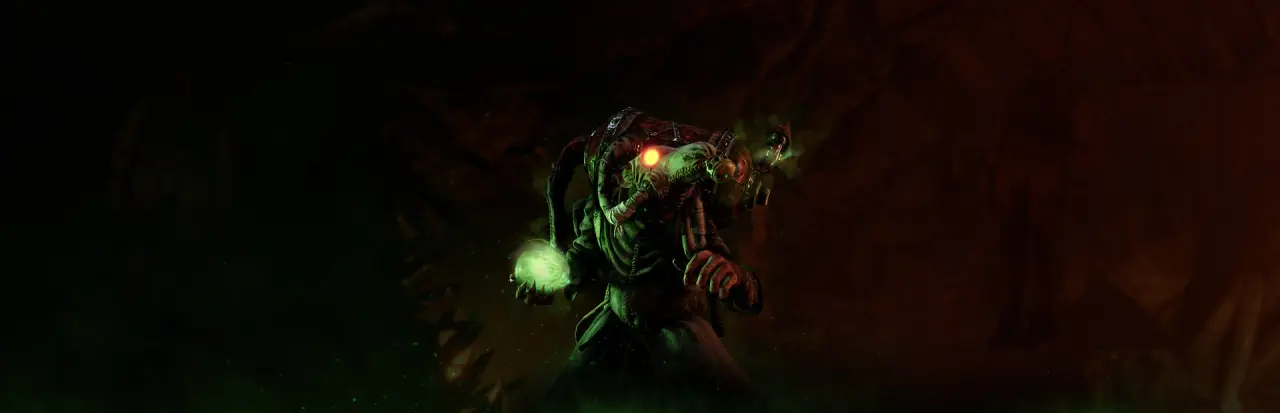
Last, the enemies and the replay. The first game had only the Skaven; the sequel folds in the Chaos host and doubles the bestiary outright. Rats drown you in numbers and specials — Packmasters, Globadiers, ranged shooters, assassins, and the Rat Ogre that swats a hero across the room. Chaos leans on armoured warriors, Northlander berserkers and casters, demanding you break guard head-on and absorb pressure. The two factions behave nothing alike, forcing the squad to flip strategy on the fly.
Specials spawn at random, and with multiple difficulty tiers, Heroic Deeds and Weave modes layered on, no two runs share a rhythm. A horde that crests the same doorway is never quite the same threat twice, because the special mix behind it keeps shifting — one run a ranged shooter pins you while a Packmaster drags off a teammate, the next a Rat Ogre crashes the line just as a Chaos warband closes the back. That randomness is the engine of replay value.
This is exactly where it beats Left 4 Dead 2: that classic leans on ranged shooting, but it has no career progression, no granular weapon feel, no talent branching this deep, so the drive to replay caps out after a while. Vermintide 2 stacks all of that depth on top of the melee, and keeps "one more run" alive across seven years.
Content | 8.5/10
Content: 8.5/10A 2018 co-op game that can still pull hundreds of hours out of you in 2026 is, by itself, proof of content muscle. Vermintide 2 lands an 8.0 on this axis: the long-haul support is startlingly thick, and the only thing dragging it down is the loot-box system that has been roasted for seven straight years.
Campaign length and the grind tail
Beat every base mission and the campaign runs a little over twenty hours — the HLTB median sits around 22. That number badly undersells the real volume. Vermintide 2 is a grind game, and the true tail lives in progression: grinding higher difficulties, grinding better item properties, grinding the rare red-quality weapons, building each of the fifteen careers toward its optimum. Completionists piling time toward the hundreds — the completionist HLTB nears 120 hours — is the norm here rather than the exception, and even that figure keeps climbing once the post-launch modes are folded in.

That grind drive rests on the gameplay depth covered earlier. Because each career runs on different logic, each weapon feels different, and each difficulty tier brings different horde pressure, "one more run" always has a fresh goal attached. You might spend today tuning a tank build for the Ironbreaker, tomorrow chasing the Shade's burst ceiling, the day after climbing a difficulty tier — the targets never dry up. For players who love chewing on builds, it is a hundred-hour playground. For players who do not eat "grind" for breakfast, that same thickness can curdle into a turn-off, which we will come back to.
DLC, free updates, and the Chaos Wastes watershed
Long-haul support is the thing Vermintide 2 most deserves credit for. On the paid line there is Shadows over Bögenhafen, the nostalgia-soaked Back to Ubersreik, and Winds of Magic — the expansion that folded in the Beastmen faction and brought a new difficulty and the Weave mode.
These paid drops were never throwaway cosmetics, either. Each one widened the bestiary, added maps that earn their place in the rotation, and quietly reshaped how the squad plans a run, so the paid tier reads as real content rather than a storefront upsell. That track record is part of why players kept trusting Fatshark to keep the game alive.

But the real flex is the free updates. The 2021 Chaos Wastes is a watershed — a roguelike expedition mode that hands you different blessings and boons each run, letting you cobble together wild, situational power builds across a single trek. That free mode is close to a second game in scope, and it stretched the replay lifespan enormously. After it came the Karak Azgaraz missions, dripped out across 2023 into 2024, and by the 2025 seventh anniversary the game was still adding maps and running double-XP events. A seven-year-old title still pushing free content is a rare kind of generosity in the co-op space.
The loot boxes are the one real wound
Pull out the biggest argument in the content column: the reward system. Finish a run and the game rolls dice to crack open a box, doling out gear by random quality. The trouble is that this Diablo-style randomness leans far too hard on luck — the red-quality weapon you want is brutal to fish for, the unboxing ceremony drags, and too often a hard-won run coughs up a pile of stuff you cannot use.
This is the part nearly every outlet named. Metro flatly wrote that the loot boxes "spoil another potentially classic game," and CD-Action noted the repeated unboxing eventually wears you down. There is no clean "one more run and I'll hit my target" feedback loop; progress is diluted into chance. For a game with a core this solid, that drag of a progression system is a genuine shame. By comparison, the same-era four-player PvE evergreen Deep Rock Galactic runs a far cleaner reward loop, one where effort maps onto progress instead of getting laundered through a slot machine. The saving grace is that almost every review concedes the same thing in the end — the core action and co-op mood are forceful enough to make you swallow the unboxing grief, and most players who push past the early hours simply stop noticing the box-cracking as a price worth paying for what sits underneath it.
Comments 0
We'd love to hear from you
Welcome! Share your take on this game — being first might come with a surprise.
No comments yet — share your thoughts on this review!