

















Opening
There is a moment, somewhere around the campaign's midpoint, when a new Dark Event flashes onto the world map and you do not click "resolve." You just sit there, staring at the Avenger's deck — the research queue, the half-built facility, the supplies you do not have, three resistance contacts all asking for something at once. That pause is where XCOM 2 lives. Long before you squeeze a trigger on the battlefield, the game has already made you afraid to lose.
It takes the cautious, take-your-time rhythm of the first game and twists it into a running escape with no slack in the rope. Timed missions push you forward on the tactical layer. The Avatar clock squeezes you on the strategic one. And the instant a veteran dies, that loss travels back up the chain to your base, quietly eating three turns of margin you were counting on. Few turn-based tactics games make the abstract idea that "every move counts" feel this concrete, and this painful.
So this review is not really about how many systems XCOM 2 stacks or how many hours it holds. It is about how Firaxis used countdowns and one ironclad rule — your soldiers stay dead — to turn a chess match into a guerrilla war you never dare let go of.
Story | 9.0/10
Story: 9/10The premise is a sequel that opens by admitting you already lost
Most sequels assume the hero won. XCOM 2 does the opposite, and it is the smartest thing it does. Back in 2012's XCOM: Enemy Unknown you ran a well-funded UN strike force, fighting a hard but well-supplied defensive war with a whole planet behind you. Wind the clock forward to 2035 and the script flips: the aliens won, humanity folded, and XCOM is now a threadbare resistance hiding at the edges of an occupied world. Your enemy is ADVENT, an occupation government with glossy propaganda playing on every street corner while it runs unspeakable experiments in the dark.
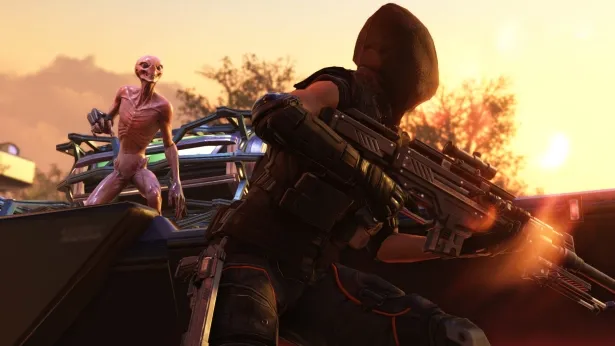
Critics lined up behind this reversal as the sequel's sharpest decision, and it is easy to see why. It skips the triumphant-hero beat entirely and drops you somewhere colder and greyer, where the texture of every choice changes. The question stops being "how do I win cleanly" and becomes "how do I survive the next ten minutes." Resources never stretch far enough. Time is never on your side. The counterattack is not a straight line but a series of nervous, breakable infiltrations, any of which can fall apart on a single bad roll. The fiction is not told to you so much as pressed into you, mission by mission, supply shortage by supply shortage. ADVENT's billboards promising peace and prosperity become a running, bitter joke the deeper you push, because you know exactly what those clinics and gene therapies are really for. It is world-building that lives in the texture of play rather than in a codex you scroll through between fights, and that is why it lands.
The best story is the one your own roster writes
The legends in XCOM 2 are rarely the ones a writer handed you. They are the ones you played into existence. A veteran who somehow walked out of a hopeless ambush. A reckless gamble that, against the odds, did not collapse. A gritted-teeth call to retreat that bought your whole front line one more breath. Those moments land harder than most scripted setpieces, and players have long had a phrase for it: the legend you remember is the one your own soldiers wrote in the dirt.
What makes it work is the iron rule of permadeath. A soldier you carried for twenty hours, promoted to Colonel, gave a nickname — one blown reveal and they are face-down on a procedurally generated map forever. No revival, no reload that feels honest. Because the cost is that real and that final, every name on the roster carries weight, and every hesitation before you commit a soldier means something. The storytelling here is the shaky handheld camera of a war film: not polished, not pretty, but close enough to a human face that you flinch when a pixel-sized trooper goes down.
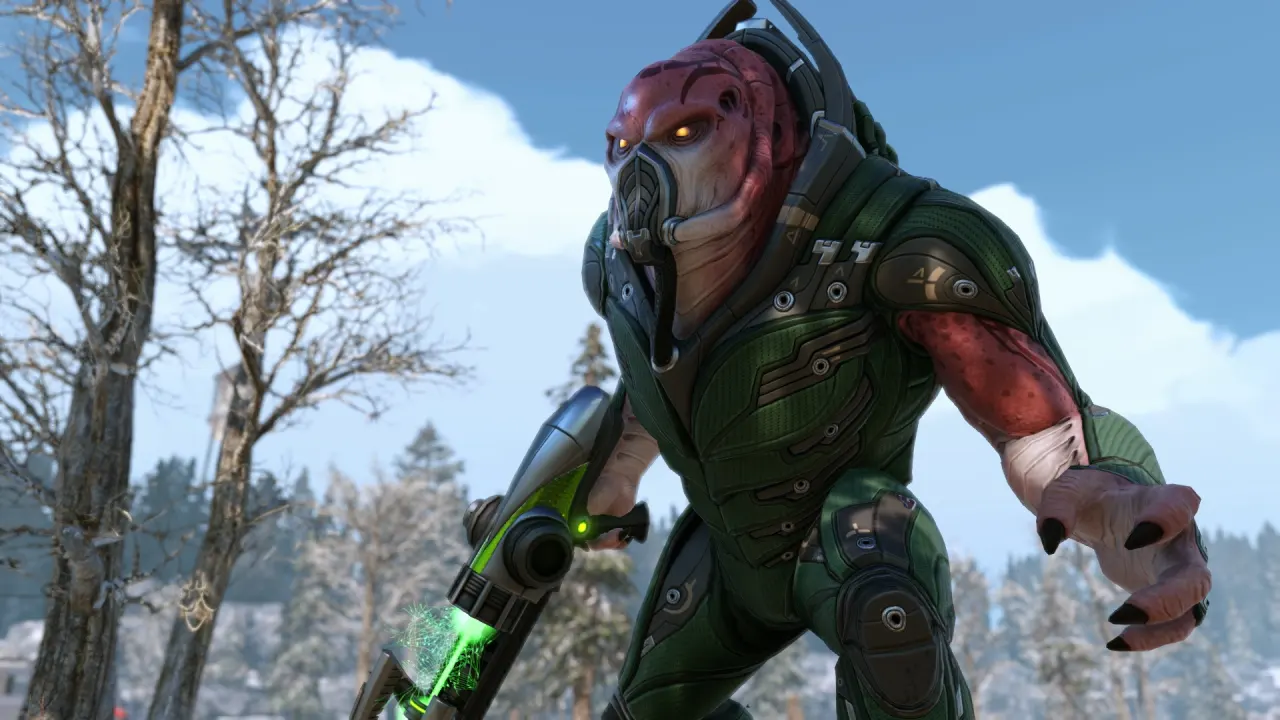
War of the Chosen then leans even harder into this. Its three named nemeses — the Assassin, the Hunter, the Warlock — are not generic elites. They have names, voices, taunts, grudges; they grow stronger as the campaign drags on, remember the trouble you cause them, and will kidnap your soldiers to force you into a desperate rescue. That running hunt smears a clean linear campaign into a tangled web of near-personal rivalry, and because the Chosen learn and adapt, beating one feels less like clearing a boss checkpoint and more like finally winning a long-running argument. By the time the credits roll you have a history with these three antagonists that no cutscene could have manufactured, built entirely out of the times they ambushed you, the soldiers they took, and the moment you finally cornered the one who had tormented you longest. The honest caveat: if what you crave is a cutscene-heavy, character-driven narrative with dense scripted drama, XCOM 2 is not built to satisfy that. Its priority was always what you experienced, never what it told you — a deliberate trade, and one perfectly aligned with its scrappy underdog spirit. The game hands you the pen and trusts the war itself to write the chapters, and across a campaign that gamble pays off far more often than a tighter script would have.
Audio | 6.5/10
Audio: 6.5/10A score built to tighten your shoulders, not stick in your head
Tim Wynn handles the music here, stepping in for Michael McCann of Enemy Unknown to become lead composer for the rebooted series; he had already scored Red Alert 3, so dread-soaked sci-fi was familiar ground for him. The XCOM 2 original soundtrack runs 29 tracks across 67 minutes, folding full orchestral themes into synth-heavy sci-fi atmosphere — brooding and low one minute, suddenly surging the moment a firefight tips white-hot. It is competent, atmospheric work that knows exactly what job it is doing, and it does that job without ever once stepping on the gameplay's toes or demanding the spotlight for itself.
Reviewers, though, were measured about it. The praise tends to land on the sound design and the audio as a whole rather than on the melodies themselves. The point is that the sound here serves the tension: the crack of gunfire, the dense rattle of suppressing fire, the dull thud of an alien unleashing a power — all of it stacks the battlefield with a smell of danger, of being watched, of a situation that is forever one bad turn away from spiraling out of your hands entirely.
Why that service role still matters in a tactics game
In a turn-based game, sound is no garnish. It quietly raises the psychological stakes in the half-second you spend agonizing over a 75% shot, and it does so below the level of conscious thought. You can hear how bad a position is before the math on screen ever confirms it, and that pre-verbal tension does real, measurable work on how you play. It is the difference between coldly clicking through a spreadsheet of probabilities and actually feeling the floor tilt under your squad as a pod activates. In a genre this cerebral, that bit of visceral dread is worth more than another hummable theme would have been. Consider the alternative: a soundtrack you whistle on the way to work but that does nothing while you actually play. Wynn's score does the harder, quieter job. It reads the state of the battle and reflects it back at you, swelling when a pod activates, thinning to almost nothing when the map goes still and you are creeping a Ranger toward an unseen objective. That reactivity is easy to overlook precisely because it is doing its work on you rather than performing for you, and a flashier, more self-announcing score would almost certainly have served this particular game worse.
The flat spot: no hook to push the feeling one level higher
The trouble is that, set against how sharp the systems are and how grim the world feels, the music and voice work never form a memory hook on the same tier as the rest. You will struggle to hum a single theme after the credits roll, or to point at one performance and say with conviction that was the one. That is the main reason this dimension scores lower than the others — not a stumble, certainly not an error, just a missing handle that could have nudged the emotion up one more notch.
There is a platform gap too. The Switch XCOM 2 Collection, boxed in by handheld horsepower, takes a hit across visuals, loading and the overall listen, landing at a 77 on Metacritic against the PC's 88. The saving grace on PC is an official music modding system that lets players swap combat and ambient tracks for their own, and with Wynn scoring War of the Chosen as well, the series at least keeps a consistent sonic identity across its full run. For a game built on the long replay, that openness becomes a small but genuinely useful plus. Capable, in short — just a single breath short of unforgettable.
Visuals | 7.5/10
Graphics: 7.5/10The art exists to be read in a firefight, not framed on a wall
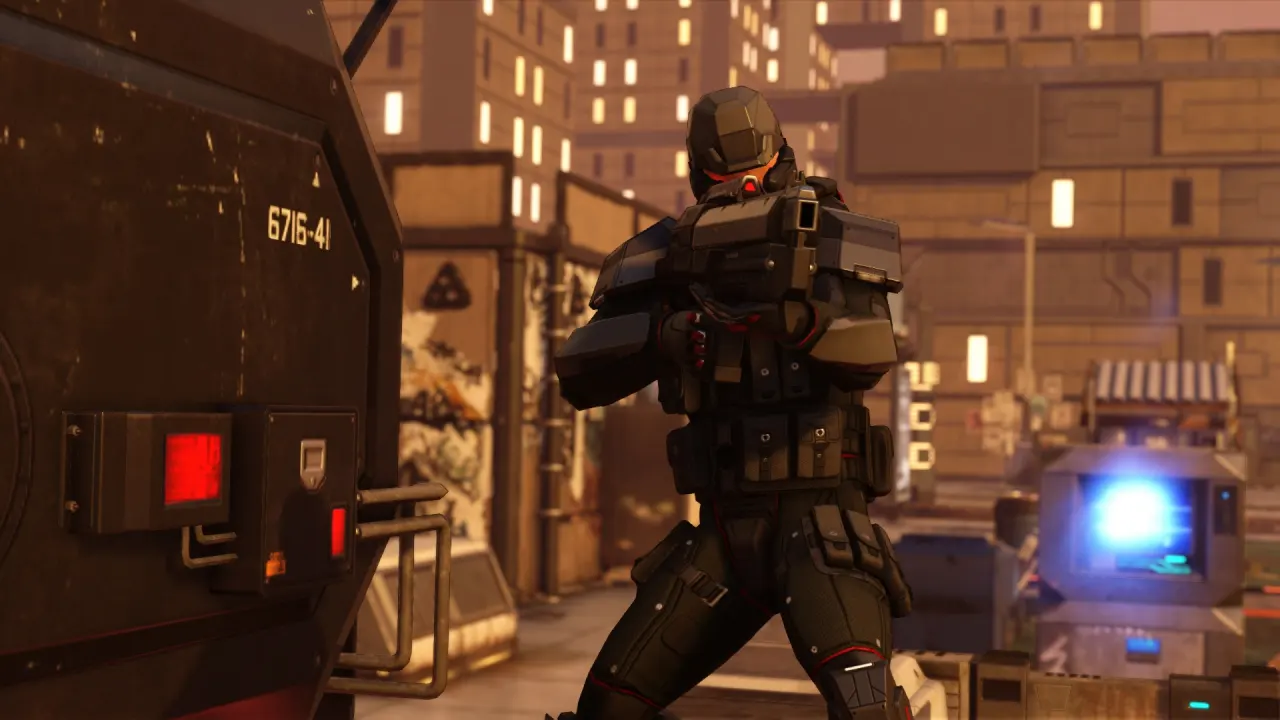
Some games look impressive without ever needing the technology to floor you. XCOM 2 is one of them. Its art direction is unambiguous: the smothering pressure of alien occupation laid over cold sci-fi metal, so that every deployment feels like slipping into a city the enemy has already taken to steal back a breath that was never yours. ADVENT propaganda hangs over the streets, and the slicker the billboards look, the more wrong the whole place feels — that contrast is the visual thesis.
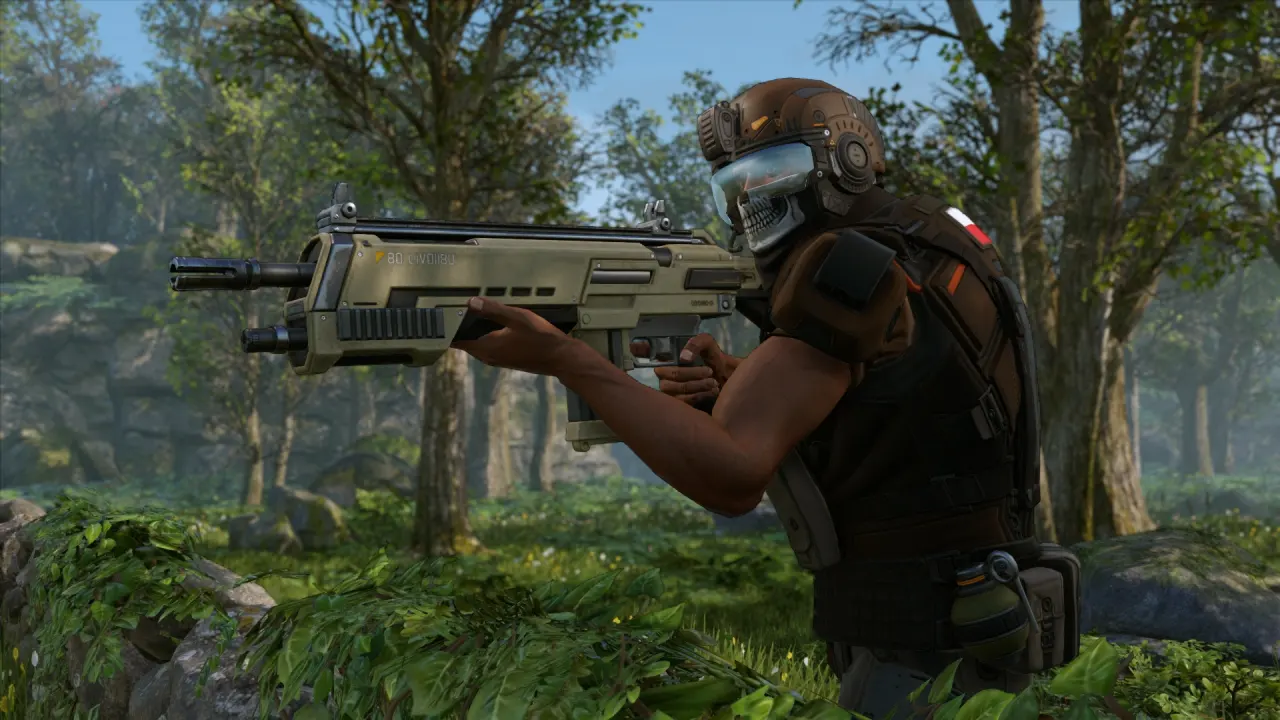
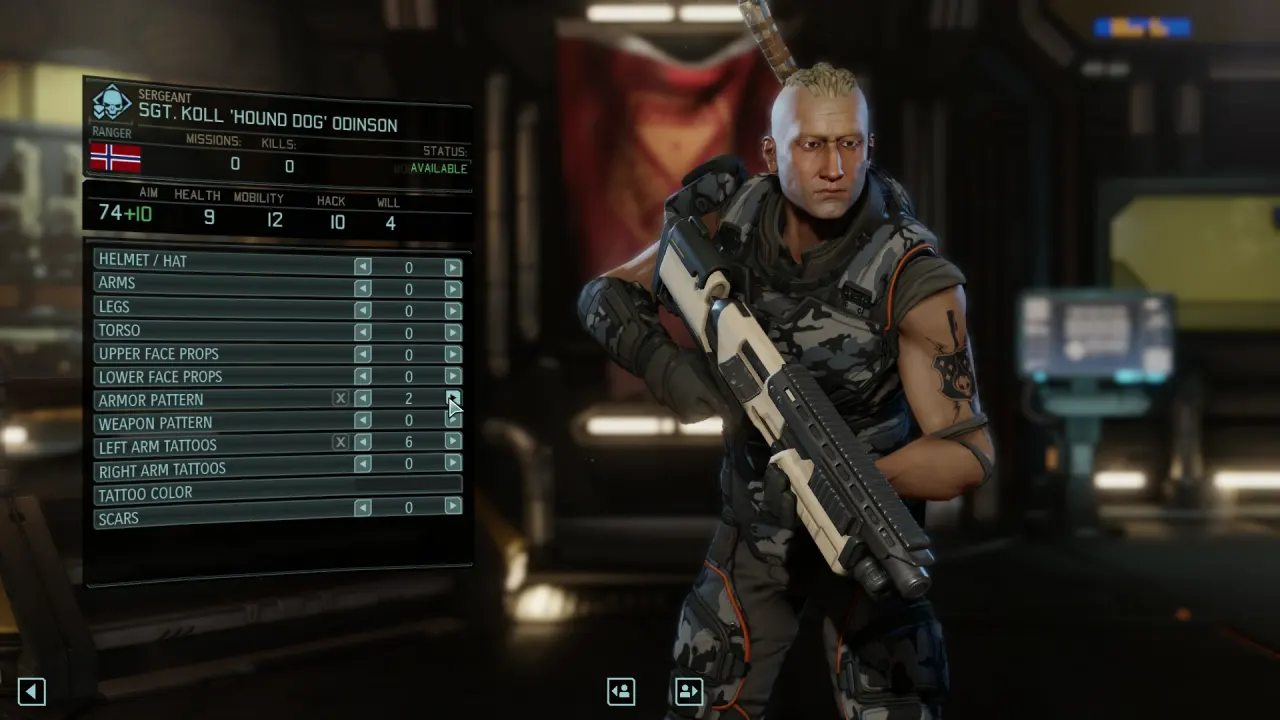
Its real strength is tactical legibility. Relative positions, the height and facing of cover, the live hit-chance read, where a shot will land and what it will splash — all of it stays clear in the exact half-second you are most strung out. That sounds like a modest virtue, but it is the lifeblood of a turn-based tactics game: if you cannot see, you cannot calculate, and if you cannot calculate, someone on your roster dies. Firaxis spent a budget that could have gone to spectacle on making sure you make the right call instead. The destructible-cover system, flagged by Western and Chinese outlets alike, is the showpiece here — cover is not a static decal but a real structure that grenades blow apart and gunfire chews through. A wall that shielded you for three turns can collapse under one Grenadier shot, dumping the alien who felt so safe behind it into the dead center of your firing line. The combat camera plays its part too: hits, crits, kills and advances all carry a dramatic snap, and when a hulking mechanical alien lumbers toward you the camera drops low and pushes in, shoving the threat into your face. It is not cinematic posing; it is the raw visual pressure of "deal with this now or the turn goes wrong," and it feeds directly into your next move. Even the soldier customization feeds this — the troopers you dress up and nickname read clearly on the battlefield, so the art is constantly reinforcing the attachment the permadeath rule depends on.
Optimization is the scar it cannot hide
Now the honest part: technically it is far from flawless. It runs on a heavily modified Unreal Engine 3.5 that was already showing its age, so at launch nearly every PC review called it out — frame drops, hitching, loading screens long enough to make you want to throw the keyboard, all of it unavoidable even on hardware that easily met spec. That mismatch where the frame counter reads fine but the game stutters under your hands was the thing players griped about most.
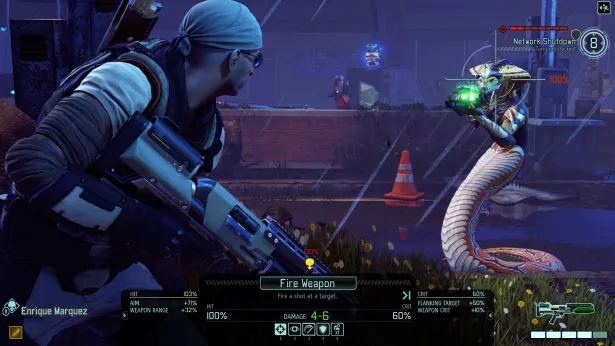
In practice you rarely stop to admire a scene for its own beauty. The game is more a knife that sits well in the hand — sharp, sufficient, with a little menace to it — than an exhibit behind glass. Worth noting that War of the Chosen later attacked the problem hard, cutting those notorious map loads to roughly half a second. The Switch version's visual compromises, though, stay obvious, and it sits at a 77 on Metacritic. So yes, this dimension loses points, and they are not unfair points, but none of it cuts to the bone — because what you actually remember is never how crisp a single frame was. It is that wall you blew apart, and the alien left standing in the open behind it, suddenly out of cover with your Sharpshooter already lined up. Here the visuals are always the servant of the fight, never the show-off star, and on the rare occasions the engine does stumble, it stumbles in service of an art direction that knows exactly what it is for. The destructible cover alone does more for the moment-to-moment drama than a layer of ray tracing ever could, because it changes what you can do rather than merely how the scene looks while you do it. That is the trade XCOM 2 makes everywhere — fidelity where it would only impress, clarity and reactivity where it actually shapes a decision — and once you internalize it, the dated edges stop bothering you and the readable, reactive battlefield becomes the thing you praise instead.
Combat | 9.5/10
Gameplay: 9.5/10Two clocks, one ambush trick, and a game that never lets you settle
Concealment is its cleverest new trick, and it reshapes how every mission opens. On most deployments your whole squad starts hidden — the enemy genuinely does not know you are there. So you can take your time sliding troopers into ideal ambush spots, line up cover and overlapping firing arcs, and when the first shot lands it triggers a full round of free Overwatch fire from everyone in position. Set it up right and you can wipe half the map clean in a single turn, and the rush of springing a trap you spent five careful minutes building is genuinely intoxicating. But it cuts both ways, hard. Break concealment in the wrong spot at the wrong moment and the whole plan can implode in an instant — a pod of aliens you never got a clean look at activates all at once and shreds the formation you just spent so long arranging. The game keeps you permanently torn between "creep one more tile for a nastier angle" and "quit while you're ahead," and that gnawing, restless trade-off is where its tactical pull actually begins.
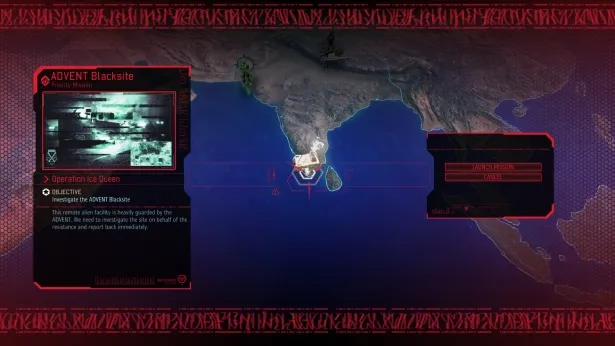
Then the cautious cover-camping that carried the first game — outlast the enemy with sheer patience — gets choked off here by two systems working in concert. One is the tactical-layer timer: many Guerrilla Ops impose a turn cap to hack a console, blow a target or extract a VIP, so you can no longer inch forward one Overwatch step at a time, forever. The other is the strategic-layer Avatar Project, that lurid red bar on the Geoscape filling as ADVENT builds facilities; let it top out and a countdown begins, and when it hits zero the aliens win and your campaign is simply over. Together those two clocks form a pressure cooker. Hold the line, or push to beat the timer? Save the downed trooper, or destroy the target about to spawn reinforcements? Bet on the 75% shot, or pray the enemy does not move first next turn? That is exactly why timed missions are the single most divisive thing in the whole game — one of the earliest hit mods just strips or stretches the turn limits, and the people who love it and the people who loathe it are frequently the very same crowd.
Five classes, and a machine where everything pulls on everything else
The tactical depth lands on five soldier classes, each with a clear and irreplaceable role. The Ranger closes the gap and slashes with a blade, the Sharpshooter perches high and reaps wounded enemies from range, the Grenadier lobs ordnance built to shred armor and cover, the Specialist flies a Gremlin drone to heal at range or hack enemy machines, and the Psi Operative wields a Psi Amp for mind control, stasis and soulfire. How you compose that four-to-six-soldier squad — who opens, who cleans up, who stays back in overwatch — is its own constantly shifting puzzle, and no single composition solves every map.
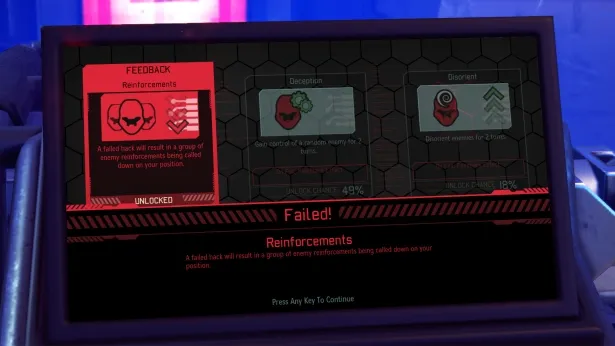
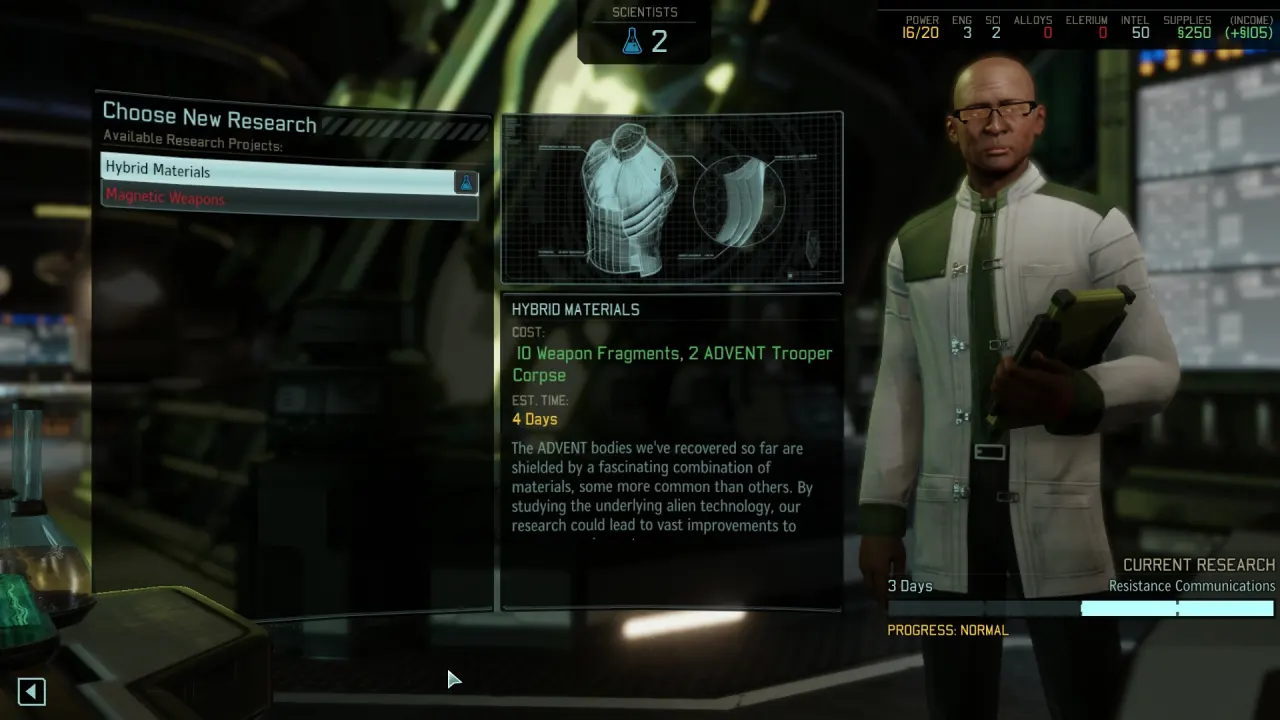
What makes it genuinely hard to copy, though, is the meshing of the tactical and strategic layers. The research queue, the facility builds, the supply juggling and the resistance contacts aboard the Avenger are all lashed tight to every move you make on the ground. Fall a step behind on research and your next mission lacks a key counter; misallocate supplies and your margin for error quietly drains away beneath you. Set against Enemy Unknown, the evolution is not thicker enemy health bars — it is that sacrifice, risk and reward finally, fully hook into one another, so a death on the battlefield ripples all the way back to your base economy. Turn-based tactics taken this far is no longer merely fun. It has grown teeth, and it bites. The result is a campaign where you are never just resolving an encounter in isolation; you are spending a soldier's career, a research slot and a slice of the clock all at once, and the game makes you feel every one of those costs as you pay it, turn after turn, mission after mission, until the whole campaign feels like a single long-held breath.
Content | 9.0/10
Content: 9/10Thirty-odd hours a run, but the content is layered, not padded
This is not a game you finish once and shelve. Stick rigidly to the missions and a single campaign runs around 32 hours; chase every extra toward 100% completion and it stretches comfortably to roughly 72. But the raw hour count matters less than the way it builds. The global map, facility construction, the research tree, the black market, resistance contacts — none of it is filler. It stacks, layer onto layer, and you feel the shift: the first ten hours you are learning what each system does, and somewhere after that you start scheming about order of operations — expand the map or shore up a weakness first, chase a frontier tech or save a position that is quietly slipping.
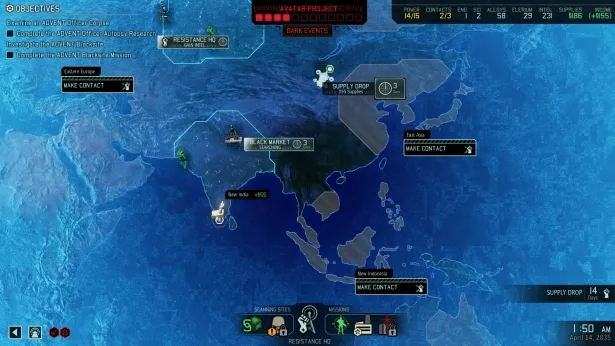
The density creeps up like a stock left on a low simmer: ordinary on the first sip, richer the deeper you go. And what keeps relighting all of it is variance. Procedurally generated maps, randomized Dark Events, and the divergent growth of individual soldiers shatter one underlying framework into wholly different campaigns. IGN and GameSpot both singled this out — it is the procedural machinery, concretely, that carries the replay value. The pressure chain you face is never the same twice: one run it is a supply crunch, the next a manpower hole from back-to-back losses, the one after that a strategic rhythm knocked sideways by a cascade of events. The replay does not come from a map stuffed with checklist busywork; it comes from the honest pull of "start again, and this time the whole situation will be different." The base game moved over half a million digital copies on Steam in its first week, outpacing its predecessor's launch — players being willing to spin up run after run is the hard proof of how well that loop works.
War of the Chosen is not DLC; it is the finished form
You cannot talk content without War of the Chosen. That $39.99 expansion, worth roughly another 40 hours, is so thorough that the community and press settled on calling the package "XCOM 2.5." It piles on three flesh-and-blood Chosen nemeses, three resistance factions each with their own hero units, a Bond system pairing two soldiers, and the swarming zombie-like Lost. It effectively rewrites the base campaign and, almost as an afterthought, drags the much-maligned optimization into far better shape. It took Best Expansion at PC Gamer's 2017 Game of the Year Awards. If you are meeting this game for the first time today, there is barely a reason not to bring it along from the start.
Beyond that sit three smaller DLCs: the cosmetic-leaning Anarchy's Children, plus Alien Hunters and Shen's Last Gift, which add new story missions. And on PC the thing that truly stretches the lifespan is the mod ecosystem — overhauls led by LWOTC can blow a campaign of a few dozen hours out to well over a hundred. For a strategy game that lives on replay value, that is the difference between a shelf life of a handful of evenings and one measured in years. Workshop integration shipped with the game on day one, and the modding SDK opened the door to thousands of cosmetic packs, balance reworks, new enemies and entire conversions, so two players can describe wildly different versions of the same title. It is the rare case where the official content and the community content reinforce each other instead of competing, and where the base campaign is genuinely just the starting point rather than the whole of the offer. Add the three smaller packs, the expansion, and the Workshop on top of a 32-hour core, and the value proposition stops being "how long is this game" and becomes "how long do you want it to be," which is a far healthier question for a strategy title to invite. Very few games from its era can still credibly answer "as long as you like," and fewer still can do it without asking you to pay for an endless live-service drip feed of seasonal content. XCOM 2 simply hands you the tools and the variance and steps back, which is why it has stayed in rotation for so long.




Comments 0
Share your game review
Join the discussion and share your review of this game.
No comments yet. Share your thoughts on this review.