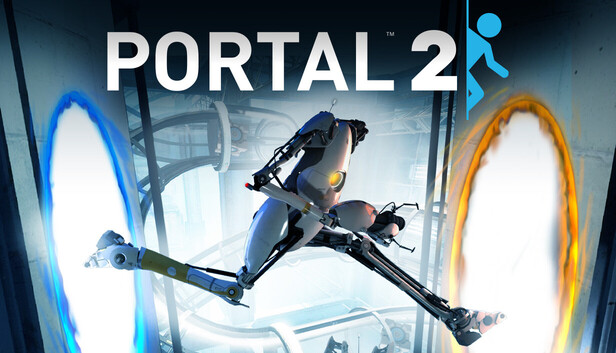




The Top 3 in 30 Seconds: Start with Portal 2 if you want clear, escalating chambers where portals make position and movement part of the puzzle, or a separate cooperative campaign built around coordination. Pick Viewfinder to turn photographs and other images into pieces of the world. Choose Superliminal if you want optical illusions that make perspective and apparent depth the puzzle.
Why These Made the List #
These games make spatial reasoning the point of play. Their puzzles ask you to notice how movement, viewpoint, gravity, scale, connected spaces, or cause and effect can change what a room allows. We ranked the games by how strongly their spatial rules shape the puzzles, how much each game develops those rules, and which players are most likely to enjoy them.
The list moves from chamber-based systems and image manipulation to gravity, topology, recursive scale, and changes to objects and architecture. Viewfinder uses photographs and other images as spatial elements, while Superliminal makes forced perspective and optical illusions central. Manifold Garden and Antichamber challenge assumptions about gravity and connected space. Other picks build structured rooms around portals, reversing time, changing dimensions, or manipulating architecture.
First-person movement and visual changes can be uncomfortable for some players. Falling, shifting gravity, changing viewpoints, and unstable-looking spaces affect games across this list in different ways. Taking a break or adjusting the available display or control settings may help, but no setting prevents discomfort for everyone.
Top Picks #
1. Portal 2 #
 GAMIVO$1.40Steam $1.40Vedi il prezzo →
Portals make position, momentum, reach, and line of sight practical tools rather than background details. As the chambers progress, you learn to read how surfaces and physics fit together. The single-player campaign stands on its own, while the separate two-player cooperative campaign has its own story, characters, and test chambers, and asks you to coordinate rather than simply share the solo experience.
| Aspect | Explanation |
|---|---|
| Why It's Ranked Here | Its portal rule is easy to read and broad enough to support varied, carefully structured chambers. Physics make space an active part of solving each puzzle. |
| Who It's For | Ideal for an escalating solo campaign, or for a dedicated cooperative experience with another person. |
| Key Selling Points | The two campaigns offer distinct ways to solve puzzles. A level editor and Steam Workshop support provide additional player-created content. |
2. Viewfinder #

 GOG$4.05-71%Steam $4.05Vedi il prezzo →
In Viewfinder, an image can become part of the physical world. Photographs are the core idea, but paintings, sketches, screenshots, and postcards can also reshape how you read paths and boundaries. Multiple hub worlds give the puzzles room to support both direct progression and deeper exploration.
| Aspect | Explanation |
|---|---|
| Why It's Ranked Here | Its image-based rule has a distinctive identity and extends beyond a single visual trick. Placing images into the world changes how you interpret space. |
| Who It's For | Best for players who enjoy visual experimentation, solo puzzles, and optional exploration. |
| Key Selling Points | Images become spatial elements, and multiple hub worlds offer related but varied exploration. The game supports both approachable puzzle progression and deeper discovery. |
3. Superliminal #
 Kinguin$4.62-75%Steam $4.62Vedi il prezzo →
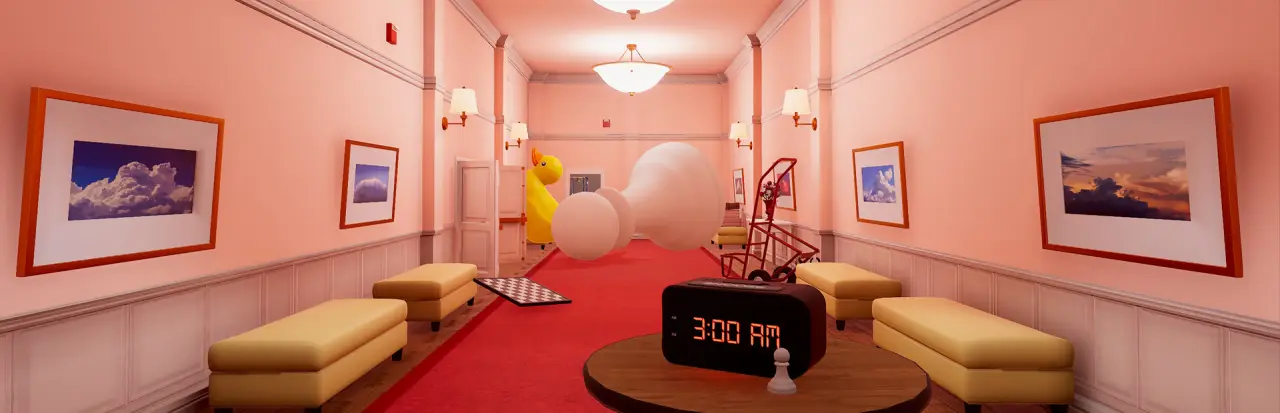
Superliminal puts your viewpoint to work. Forced perspective and optical illusions make apparent size and depth part of the puzzle, with a surreal dream world that challenges what you think you are seeing. Alongside its single-player campaign, Superliminal includes challenge mode and experimental Workshop support. Steam also lists multiplayer and online cooperative categories, though those options are worth checking before you buy.
| Aspect | Explanation |
|---|---|
| Why It's Ranked Here | Its perspective rule stays closely tied to the act of looking. Unlike Viewfinder, it focuses on optical interpretation rather than bringing photographs into the world. |
| Who It's For | A good fit for players who enjoy surreal environments and reasoning through visual illusions. Players looking for multiplayer should note the multiplayer and online cooperative categories listed on Steam. |
| Key Selling Points | Forced perspective defines the puzzle language. Challenge mode and Workshop support offer alternatives to the main progression, and developer commentary provides additional context about the game. |
4. Manifold Garden #

 CDKeys$1.56-93%Steam $1.56Vedi il prezzo →
In Manifold Garden, gravity changes which surfaces you can walk on, while the architecture repeats infinitely in every direction. Falling returns you to where you began, turning movement and orientation into a system to learn as you explore. Restoring vegetation and life opens new paths.
| Aspect | Explanation |
|---|---|
| Why It's Ranked Here | Gravity and repetition shape movement, orientation, and the way you understand connected space. Its rules are more abstract than Portal 2, but they give the world a distinct spatial identity. |
| Who It's For | A strong choice for expansive architectural exploration and puzzles that reward reorienting your view rather than looking for a conventional route. |
| Key Selling Points | Gravity changes your walking surfaces, and repeated architecture links falling with returning. Exploration, puzzles, and restoring vegetation are connected. |
5. Antichamber #
 GAMIVO$19.50Steam $19.50Vedi il prezzo →
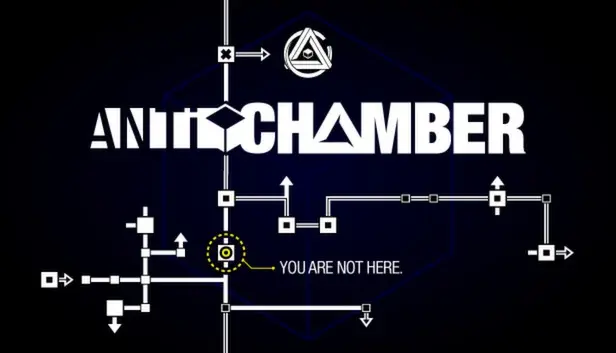
Antichamber treats the structure of the world as a puzzle. Hallways can wrap around each other and spaces can reconfigure, so familiar expectations about how rooms connect are not always reliable. A tool lets you create, destroy, and manipulate matter, adding a practical way to interact with the strange architecture.
| Aspect | Explanation |
|---|---|
| Why It's Ranked Here | Topology and expectation are its main puzzle materials. Unlike Manifold Garden, which changes gravity and orientation, Antichamber makes the world’s connections themselves uncertain. |
| Who It's For | Best suited to players who enjoy open-ended spatial discovery and learning rules through observation and experimentation. |
| Key Selling Points | Its hallways challenge ordinary assumptions about space, and matter manipulation adds another way to engage with the world. Unexpected behavior can be useful information. |
6. The Talos Principle 2 #
 GOG$4.05-75%Steam $4.05Vedi il prezzo →
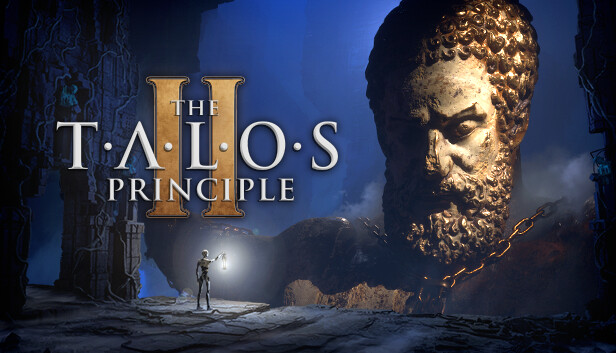
The Talos Principle 2 combines first-person puzzles with environmental exploration and a philosophical story. Gravity manipulation and mind transference expand its puzzle toolkit, while metapuzzles connect separate challenges into larger reasoning tasks. A range of difficulty levels lets you choose between moving forward and pursuing more demanding challenges.
| Aspect | Explanation |
|---|---|
| Why It's Ranked Here | Its strength is breadth rather than one defining spatial trick. New abilities expand an established puzzle foundation, and metapuzzles add connections between individual challenges. |
| Who It's For | Pick it for a substantial puzzle adventure with varied difficulty, optional mastery goals, exploration, and a thought-provoking narrative. |
| Key Selling Points | Gravity manipulation and mind transference broaden the challenges. Metapuzzles add larger reasoning tasks, and the game combines puzzle solving with a philosophical interactive story. |
7. The Entropy Centre #
 Kinguin$0.62-98%Steam $0.62Vedi il prezzo →
The Entropy Centre makes an object’s past part of the current room. Its ASTRA device scans an object’s timeline and moves it through earlier states, turning the puzzle into a question of how cause and effect shaped the present arrangement. Sequential rooms carry this system through an adventure set on a space station.
| Aspect | Explanation |
|---|---|
| Why It's Ranked Here | Time reversal makes each room a question of cause and effect: where an object is now matters, but so do the earlier states that shaped the room. |
| Who It's For | A natural fit for players who enjoy structured rooms, reasoning backward through cause and effect, and an adventure story. |
| Key Selling Points | Objects can be rewound through their timelines. The central tool handles structural repairs and smaller object changes, while sequential rooms connect puzzles to progression through the space station. |
8. Maquette #
 CDKeys$4.59-78%Steam $4.59Vedi il prezzo →
Maquette makes scale recursive. Buildings, plants, and objects can be tiny and huge at once, so their usefulness depends on where you stand in the nested world. Its puzzles connect changing distance and proportion with the setting of a modern-day love story.
| Aspect | Explanation |
|---|---|
| Why It's Ranked Here | Recursive scale gives the game a clear spatial identity. Its central idea is more focused than the broader systems in higher-ranked picks, but it makes scale part of the puzzle language rather than mere spectacle. |
| Who It's For | Consider it if you enjoy nested spaces, spatial metaphors, and a puzzle adventure framed by an emotional story. |
| Key Selling Points | Objects change how you understand their size and distance as you move through the world. Scale directly shapes puzzle progression and connects to the story. |
9. Quantum Conundrum #
 Kinguin$1.45-86%Steam $1.45Vedi il prezzo →
In Quantum Conundrum, the Interdimensional Shift Device changes how objects behave as you navigate a complex mansion. Different dimensions can alter properties such as weight or the direction objects move, making each room a problem of choosing which physical rules to apply. The adventure follows a goal of rescuing an absent uncle.
| Aspect | Explanation |
|---|---|
| Why It's Ranked Here | Dimension switching gives the rooms a clear cause-and-effect structure, but its spatial identity is more focused on room-by-room physical properties than the larger transformations in higher-ranked games. |
| Who It's For | A playful first-person puzzle adventure for players who like switching the rules of a mansion room by room. |
| Key Selling Points | The device changes environmental rules in real time. Dimensions can alter weight and the direction objects move, while sequential mansion puzzles carry the adventure forward. |
10. Q.U.B.E. 2 #
 Kinguin$1.11-96%Steam $1.11Vedi il prezzo →
Q.U.B.E. 2 makes architecture interactive. Using manipulation gloves, you change the structure of a maze-like monolith and work through varied environments among the ruins of an ancient alien landscape. Its puzzle progression sits alongside a story about purpose and the origins of the structure.
| Aspect | Explanation |
|---|---|
| Why It's Ranked Here | Its manipulation tools give each chamber a clear spatial logic, even if the idea is less radical than the perspective, gravity, topology, time, and scale mechanics elsewhere on the list. |
| Who It's For | Best for players who prefer guided puzzle areas, a defined tool, and a narrative mystery. |
| Key Selling Points | Manipulation gloves let you reshape the architecture. Sequential areas combine environmental puzzles with story-driven exploration and questions about purpose and the origins of the structure. |
Comparison Table #
| Game | Genre | Why It's Ranked | Play Structure |
|---|---|---|---|
| Portal 2 | First-person physics puzzle adventure | Portals make position and movement practical tools across varied chambers. | A substantial solo puzzle campaign, a separate cooperative campaign, and additional player-created content. |
| Viewfinder | First-person perception puzzle adventure | Photographs and other images become spatial elements. | A solo puzzle adventure with exploration and optional world discovery. |
| Superliminal | First-person perspective puzzle game | Forced perspective and optical illusions make looking part of the puzzle. | A focused dreamlike puzzle experience with challenge play, commentary, and multiplayer-related modes listed on Steam. |
| Manifold Garden | First-person gravity and space puzzle exploration game | Gravity and repeating architecture change movement and orientation. | An expansive solo exploration and puzzle experience with environmental progression. |
| Antichamber | First-person non-Euclidean exploration puzzle game | Reconfiguring spaces make connected architecture uncertain. | A seamless exploration experience with open-ended spatial discovery and tool-based experimentation. |
| The Talos Principle 2 | First-person philosophical puzzle adventure | A broad puzzle toolkit and metapuzzles support varied reasoning. | A broad solo adventure with varied difficulty, optional mastery, exploration, and narrative progression. |
| The Entropy Centre | First-person time-reversal puzzle adventure | Reversing object timelines brings cause and effect into the room. | A structured puzzle adventure with sequential rooms and space-station progression. |
| Maquette | First-person recursive scale puzzle game | Nested worlds make size and distance part of the puzzle system. | A focused solo puzzle narrative with nested environments and story progression. |
| Quantum Conundrum | First-person dimensional physics puzzle adventure | Dimension switching changes how objects behave in each room. | A solo mansion adventure with sequential puzzles and real-time dimension switching. |
| Q.U.B.E. 2 | First-person architectural puzzle adventure | Manipulable architecture gives its puzzle areas a defined spatial system. | A guided solo adventure with sequential areas, environmental manipulation, and story-driven exploration. |
How to Pick the Right One #
| Preference | Recommended Games |
|---|---|
| Choose perspective and image manipulation → | Viewfinder, Superliminal |
| Choose changing gravity and strange room layouts → | Manifold Garden, Antichamber, The Talos Principle 2 |
| Choose chamber-based causal systems → | Portal 2, The Entropy Centre, Quantum Conundrum, Q.U.B.E. 2 |
| Choose recursive scale → | Maquette |
FAQ #
Which selected games are best for learning one spatial rule at a time? #
Portal 2 is a strong starting point because its chambers make portal relationships and physics increasingly readable. Choose The Entropy Centre if you want to focus on reversing object timelines across sequential rooms. Q.U.B.E. 2 offers a guided route through architectural manipulation with a defined tool and distinct puzzle areas.
Which games are most focused on perspective rather than conventional physics? #
Viewfinder centers on bringing photographs, paintings, sketches, screenshots, and postcards into the world as spatial elements. Superliminal focuses on forced perspective, optical illusions, and ambiguity about depth. These games ask you to reconsider what an image or viewpoint means in a room, unlike the gravity and object-property systems in Manifold Garden or Quantum Conundrum.
Which games suit cooperative or multiplayer play? #
Portal 2 has a dedicated two-player cooperative campaign with its own story, chambers, characters, and gameplay, separate from the solo campaign. Superliminal lists multiplayer, player-versus-player, online player-versus-player, cooperative, and online cooperative categories on Steam. Approach the other selected games primarily through their listed structures, and check each title for cooperative or multiplayer support.
Can first-person spatial puzzles cause motion discomfort? #
Yes. First-person movement, rapid viewpoint changes, falling, forced perspective, gravity shifts, and visually unstable architecture can be uncomfortable for some players. Superliminal, Viewfinder, Manifold Garden, Antichamber, and Maquette place particular emphasis on changing visual relationships, while Portal 2 and other chamber-based games also use first-person movement and spatial transitions. Taking breaks and adjusting the available display or control settings may help, but no setting prevents discomfort for everyone.





Commenti 0
Ci interessa la tua opinione
Partecipa alla discussione e condividi la tua opinione su questo gioco.
Ancora nessun commento. Scrivi il primo.