
















Opening
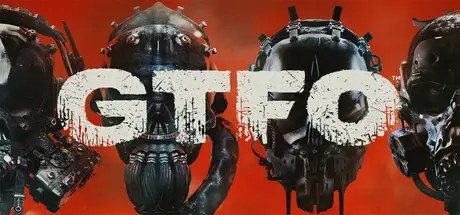
GTFO is a hardcore four-player co-op horror shooter that absolutely nails panic under pressure, and if you’ve got a real squad with mics, yeah, it’s worth it.
But that “if” is doing a lot of work. This is not the game you casually boot up with randoms while half-watching something on another screen. GTFO wants four people moving like one brain. You’re syncing doors, splitting tools, reading rooms, whispering callouts, and trying not to wake the things breathing in the dark.
And here’s the thing: shooting in GTFO feels good, but the game treats it like a failure state. You scan with the bio-tracker, you creep through the dark, you bonk Sleepers in silence, and one bad swing can turn a clean run into a screaming wipe in about five seconds.
That’s the part that flips the whole genre. Left 4 Dead 2 lets you survive chaos with firepower. GTFO makes you earn the right not to fire.
That’s why it has an 86% Very Positive rating on Steam and still scares off a ton of players. It explains almost nothing. Solo is miserable. Random matchmaking is a coin toss from hell. But with three steady teammates? GTFO is one of the sharpest, meanest, most satisfying co-op games on PC.
Story | 6.0/10
Storia: 6/10The Warden Gives Orders, But Don’t Expect A Campaign
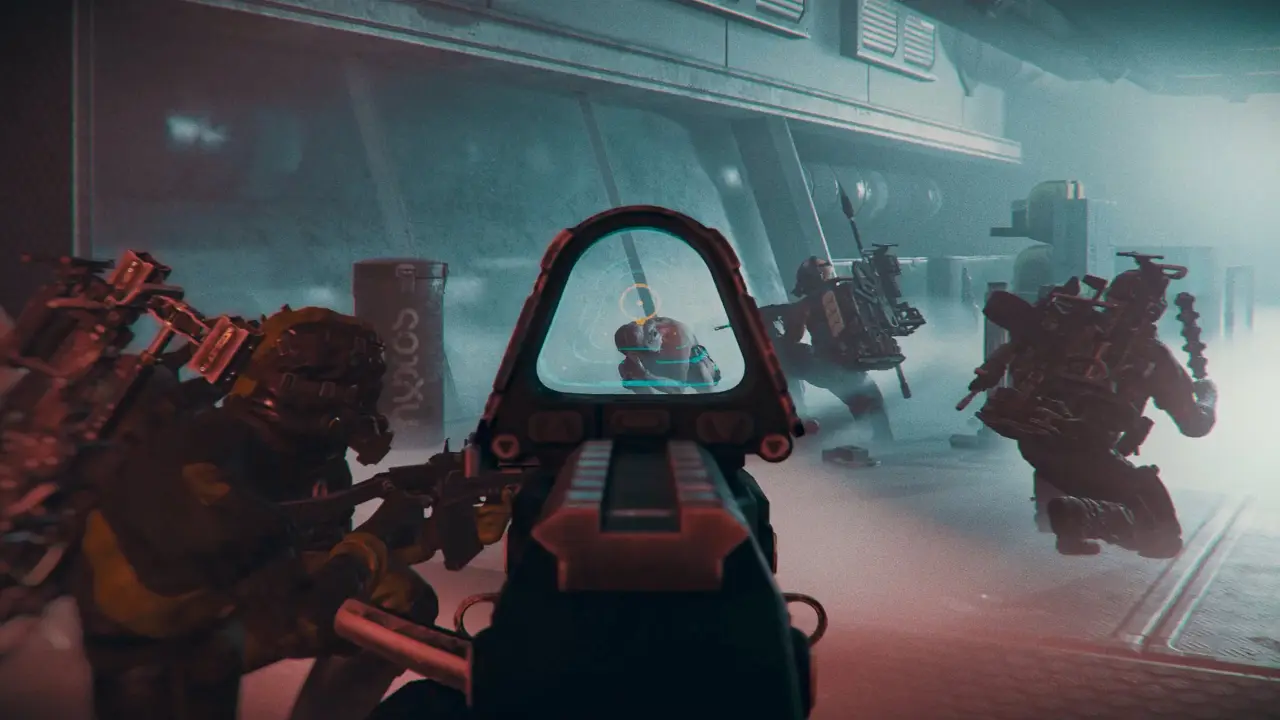
GTFO has a story, but I’m gonna be blunt: it is not the reason you play GTFO. The setup is strong in a nasty, simple way. You’re prisoners, you get dropped into this massive underground facility called The Complex, and The Warden sends you down there to recover things, activate systems, survive whatever job he throws at you, and probably die trying. That’s a good horror premise. It’s clean. It’s cruel. It tells you exactly what kind of game this is.
But the actual main narrative structure is thin. There’s no traditional campaign where you’re moving from big character moment to big character moment. There’s no big safe-room banter carrying you through the plot like Left 4 Dead 2. There’s no emotional arc where the squad learns to trust each other, or some big villain scene where The Warden steps out of the shadows and monologues at you. Most of the time, The Warden is basically a pressure system. He gives the order. You obey. The Complex waits.
And honestly, that works for the kind of game GTFO is, but it also caps how high I can score the story. The narrative is mostly connective tissue between expeditions. It gives the rooms a reason to exist. It gives the terminals and objectives a little extra weight. But it rarely takes the wheel. You’re not pushing through because you need to see the next cutscene. You’re pushing through because your team spent forty minutes crawling through dark rooms, you’re out of ammo, someone’s carrying the objective, and the alarm door is about to ruin your night.
Side content is handled the same way. There are logs, terminals, scattered hints, Warden commands, and bits of background that let you piece together what happened in The Complex. Some of that stuff is genuinely creepy. It has that cold, “something went very wrong here” energy. But density-wise, it’s not generous. This isn’t a lore buffet. You don’t get tons of side stories with memorable NPCs and clean payoffs. You get scraps. Sometimes sharp scraps, sure, but scraps.
So for story, I land around a 6 out of 10. Not bad. Not empty. Just very clearly secondary. GTFO knows atmosphere matters more than plot here, and it commits to that. The catch is, if you came in wanting a proper narrative campaign, you’re gonna be left staring at terminals and wondering where the actual story went.
Rundown 8.0 Ends Four Years Without Turning Into A Drama
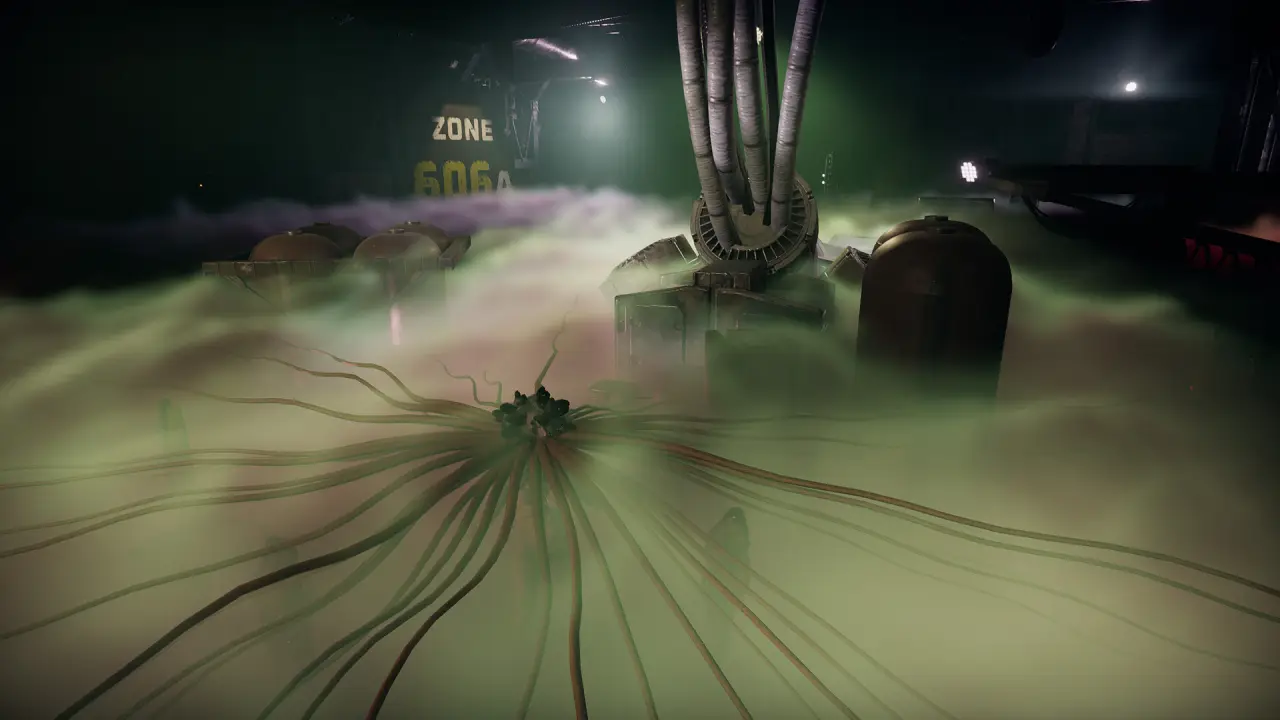
Rundown 8.0, “Duality,” is important because it finally locks the whole GTFO package into its completed form. After years of rotating Rundowns, the final version keeps the full set of 80-plus challenge levels available permanently. That matters a lot for gameplay, and it matters for the story too, because now you can actually see the shape of what 10 Chambers built over time instead of watching pieces vanish and rotate out.
But even with that final chapter, GTFO still doesn’t suddenly become a character drama. “Duality” gives the four-year arc a finish line, but the landing is still mood, mystery, and dread. It’s not built around emotional catharsis. It’s not trying to make you cry over a companion. It’s trying to make you ask what the hell The Warden really wants, what The Complex really is, and why every answer feels like it opens another locked door.
That’s where the comparison to Left 4 Dead 2 is useful. Left 4 Dead 2 also has a pretty light story. You know the survivors, you know the infection happened, and the campaign structure is mostly an excuse to move through awesome set pieces. But Left 4 Dead 2 has personality. It has jokes, character chemistry, and that road-trip-through-the-apocalypse vibe. GTFO goes the other way. It strips the human warmth out and replaces it with uncertainty, silence, and pressure. Less “grab a weapon and run to the chopper,” more “don’t breathe, don’t shine the flashlight, and for the love of God, don’t wake the room.”
There aren’t meaningful choices or branching story paths either. You’re not deciding who lives, choosing factions, or altering the ending through dialogue. Your “choices” are operational. Which door do we open first? Who takes the bio-tracker? Do we risk a noisy clear, or do we spend five more minutes bonking Sleepers in silence? That’s not branching narrative in the classic sense, but it does create tension better than a lot of actual choice systems.
And key character work? Again, thin. The Warden is the standout because he’s more function than person: distant, controlling, and creepy because he never feels fully reachable. The prisoners themselves aren’t deeply written personalities. Voice actors like Edward Bosco, Jude Akuwudike, Ronan Summers, Jamie Ballard, and Erik Braa give the game texture, but GTFO is not asking you to fall in love with these characters. It’s asking you to survive as them.
The Best Stories Are The Ones Your Squad Screams About Later
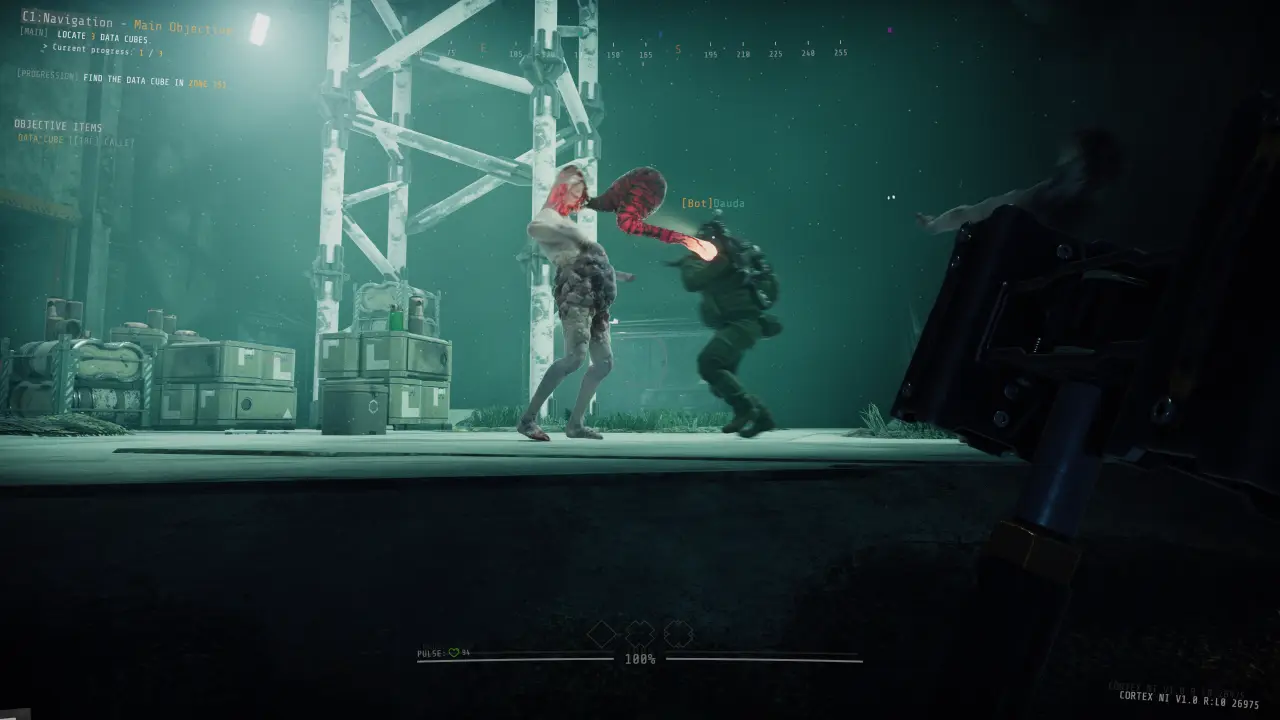
Here’s where GTFO secretly gets good as a story game: the written story is only half the point, maybe less. The real narrative is the one your squad creates by failing over and over until one run finally clicks. That sounds like a dodge, but in GTFO’s case, it’s true. The game’s best “plot twists” are not cutscenes. They’re when one teammate misses a melee timing, a Sleeper wakes the room, the alarm starts, and suddenly your careful forty-minute plan turns into four people yelling directions in voice chat.
That’s why the community joke of “come do prison time with the boys” fits so well. GTFO is built around shared suffering. Four players have to move like one body. You sync up on security scans, split tools properly, call out targets, map rooms with the bio-tracker, and treat shooting as the last resort. One person panics, and the whole expedition can collapse. That creates stories you actually remember. Not because the script told you they were important, but because you were there, and you barely made it out.
This is also why the story works better for the exact audience GTFO is aimed at. If you’ve got three regular teammates, everyone’s on voice, and you enjoy grinding against brutal co-op missions until the win finally happens, the lack of a traditional narrative hurts less. Your squad fills the gaps. Your mistakes become recurring jokes. Your cleanest clears become legends. The game gives you the prison, the monsters, The Warden, and the objective. You bring the panic.
But if you’re a solo player, or you rely on random matchmaking, or you want a chill horror shooter you can hop into after work, the story won’t save it. There’s no single-player campaign to carry you. No PvP mode to distract you. No big character-driven arc to pull you through the frustration. GTFO lives and dies on co-op tension, and the narrative is built to support that, not replace it.
So yeah, as a written story, GTFO is limited. Fragmented logs, terminal crumbs, Warden orders, and a lot of unanswered dread. As a machine for creating squad war stories, though, it’s way stronger. That’s the trade. The script is thin. The atmosphere is thick. And the stuff you and your team survive together is the part you’ll actually talk about.
Audio | 8.5/10
Audio: 8.5/10Simon Viklund makes the dark feel like it’s breathing

GTFO is one of those games where the audio isn’t just there to make the room spooky. It’s part of the rules. Simon Viklund’s work here is nasty in the best way: low, mechanical, cramped, and always making you feel like the underground prison is a few seconds away from waking up and chewing your squad in half.
Most co-op shooters use music to hype you up. GTFO does the opposite. It makes you afraid to make noise. You’re creeping through black industrial rooms, checking corners, listening for Sleepers, and the soundtrack hangs back just enough to let every little sound bother you. The hums, the distant metal groans, the wet creature noises — all of it tells you, “Don’t get comfortable.” And when things finally go loud, the contrast hits hard. One second it’s almost dead silent. The next, a security alarm is screaming, doors are locking, weapons are barking, and your whole team is yelling over each other because one tiny mistake just became a full-room disaster.
The best trick is the Sleepers’ pulse. That little light-and-sound rhythm is both a warning and a threat. You hear it, you freeze. You wait. You move when the room lets you move. It’s a detection cue, sure, but it’s also horror design. It turns patience into stress. And honestly, that’s where GTFO separates itself from something like Left 4 Dead 2. Left 4 Dead 2 is brilliant because it’s fast, messy, and fun to blast through. GTFO makes shooting feel like you’ve already failed. The soundscape teaches you that before any tutorial does.
The real soundtrack is four people trying not to panic

Here’s the thing: GTFO’s best audio moments don’t always come from the game itself. They come from your squad. This is a four-player co-op horror shooter from 10 Chambers, and it basically assumes you’re on voice chat with people who can listen, shut up, call targets, and not sprint into disaster. When that works, voice communication becomes part of the horror.
You’re whisper-planning even if you’re not literally whispering. “You take the left one.” “Wait for the pulse.” “Bio-tracker says two more behind the door.” “Don’t move.” Then somebody clips a Sleeper, the room wakes up, and suddenly the calm tactical chatter turns into pure panic. “Back up, back up, sentry down, reload, close the door!” That shift is the game. The tools only work because the people using them are synced. The bio-tracker, mines, sentries, foam, melee timing — none of it matters if one player drifts off and does their own thing.
That’s also why the voice acting is more texture than centerpiece. Edward Bosco, Jude Akuwudike, Ronan Summers, Jamie Ballard, and Erik Braa are in the cast, but GTFO is not leaning on character drama to carry the experience. The story is thin connective tissue between levels, and if you’re here for a strong campaign narrative, this is not your game. The real performances are your friends trying to keep it together after the plan breaks.
Compared with Phasmophobia, the voice-chat tension lands harder. Phasmophobia uses your voice to make you feel exposed, like the ghost might be listening. GTFO uses your voice as a survival tool. You talk because if you don’t, the team dies. And with Steam sitting at 86% Very Positive across 45,472 reviews, plus Metacritic at 78 and OpenCritic at 78.4, it’s pretty clear the people who click with that pressure really click with it. I’d land the audio side at 8.5 out of 10, because when GTFO is firing, it makes silence, sound, and squad comms feel like one big trap closing around you.
Visuals | 7.5/10
Grafica: 7.5/10The Darkness Is Doing Half The Work Here

GTFO is not a pretty game in the “stop and admire the wallpaper” kind of way. It’s pretty in a much meaner way. 10 Chambers builds almost everything around darkness, dead industrial spaces, and tiny slices of visibility. You’re not walking through big heroic sci-fi vistas. You’re crawling through an underground prison where the flashlight feels less like a tool and more like a liability.
And honestly, that works. The art direction knows exactly what game this is. Rooms are close, dirty, and hard to read at a glance. Your vision gets squeezed by black corridors, foggy corners, blinking lights, and the bio-tracker. That’s the whole visual trick: the game doesn’t want you comfortable. It wants you asking, “Wait, did something move over there?” every three seconds.
Compared to something like Deep Rock Galactic, which also loves caves and darkness, GTFO is way less playful and way less readable on purpose. Deep Rock uses color, silhouettes, and big shapes to keep chaos fun. GTFO uses darkness to make your team slow down and whisper. That’s the difference. Deep Rock says, “Explore.” GTFO says, “Don’t wake the room.” For a hardcore co-op horror shooter, that’s the right call.
Unity, PC Only, And A Look That’s Stronger Than Its Tech
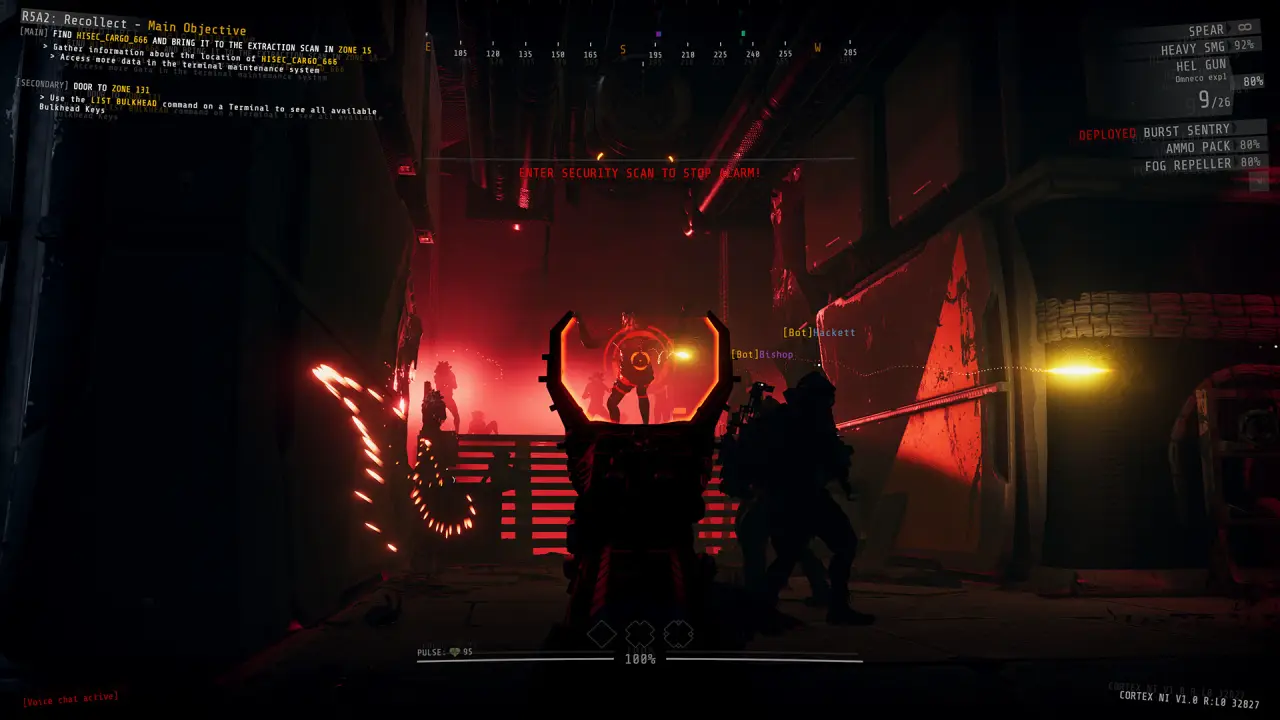
Here’s the thing: GTFO is not some bleeding-edge graphics showcase. It runs on Unity, it’s PC only, and the visual punch comes more from lighting, atmosphere, and restraint than from flexing every modern rendering feature under the sun. If you’re hunting for a big ray tracing or DLSS poster child, this isn’t really that conversation. The game’s strengths are mood, shadows, flashlights, and panic.
The lighting does a lot of heavy lifting. Flashlights cut through the black just enough to make you nervous, not enough to make you safe. The best-looking moments aren’t huge explosions or glossy surfaces. They’re those dead-quiet seconds where four players are standing still, watching a Sleeper pulse in the dark, trying not to breathe wrong. That’s where the visuals click.
Since it’s PC only, there’s no console version to compare, and that’s both clean and limiting. You’re not dealing with some compromised last-gen version, but you’re also not getting a broad platform spread. The upside is that the game feels focused. The downside is obvious: if you don’t play on PC, you’re out. And even on PC, the game’s look can feel plain when the lights are up. It needs the darkness. Without it, some rooms look more functional than impressive.
Sleepers And Scouts Are Simple, But You Read Them Fast
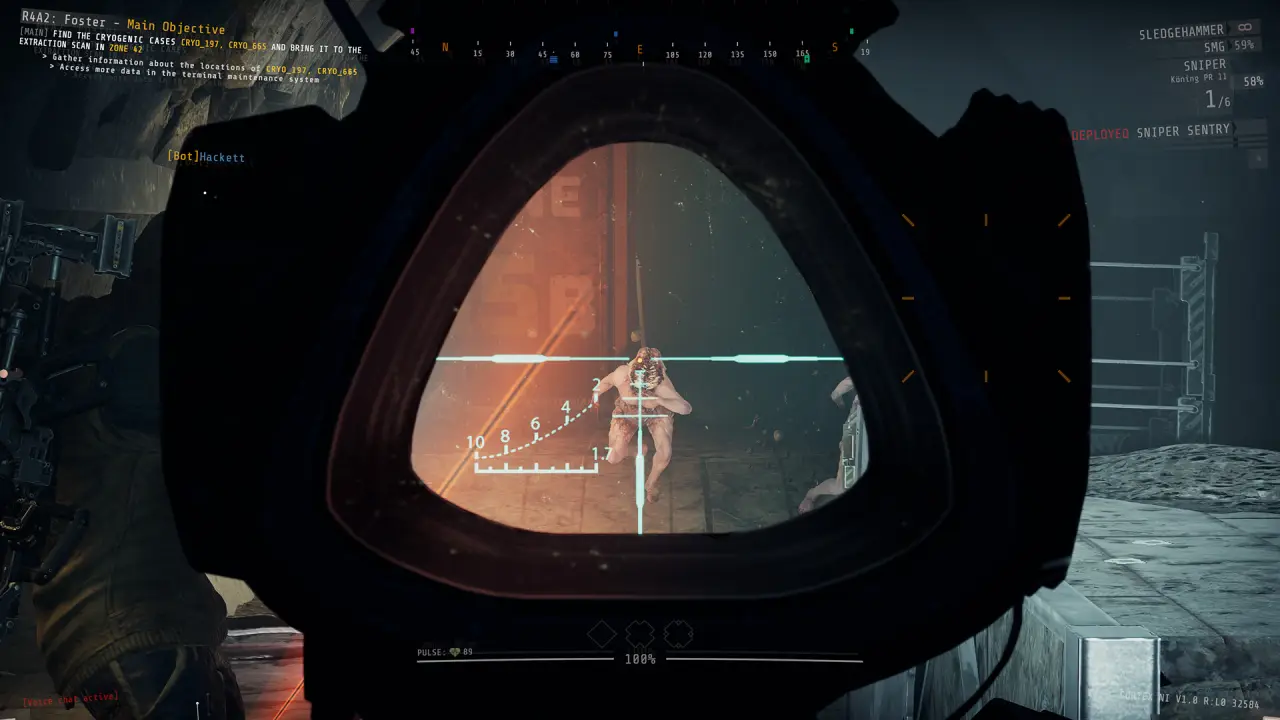
The monster design in GTFO is smart because it’s readable under pressure. Sleepers are not overloaded with visual detail, and that’s a good thing. You learn their body language. You learn the light pulse. You learn the moment where the whole room might go bad because somebody moved too soon. The visual design ties directly into the stealth rules, and that matters more than having the fanciest monster models.
Scouts are even better as threat design. You see one and the entire mood changes. The game doesn’t need a cutscene, a giant health bar, or a big warning banner. Your team just knows: if this thing gets alerted, the run can collapse fast. That kind of visual identity is huge in a co-op game where everyone has to react together.
Are the creatures iconic in the broader horror-game sense? Not really. I don’t think GTFO has monsters that stick in pop culture the way the biggest horror games do. But in the moment, in the mission, they do their job brutally well. You recognize them, you fear the mistake they represent, and you understand why shooting should be the last resort. That’s good visual design serving the actual game.
The UI Helps The Squad, But New Players Get Left Outside
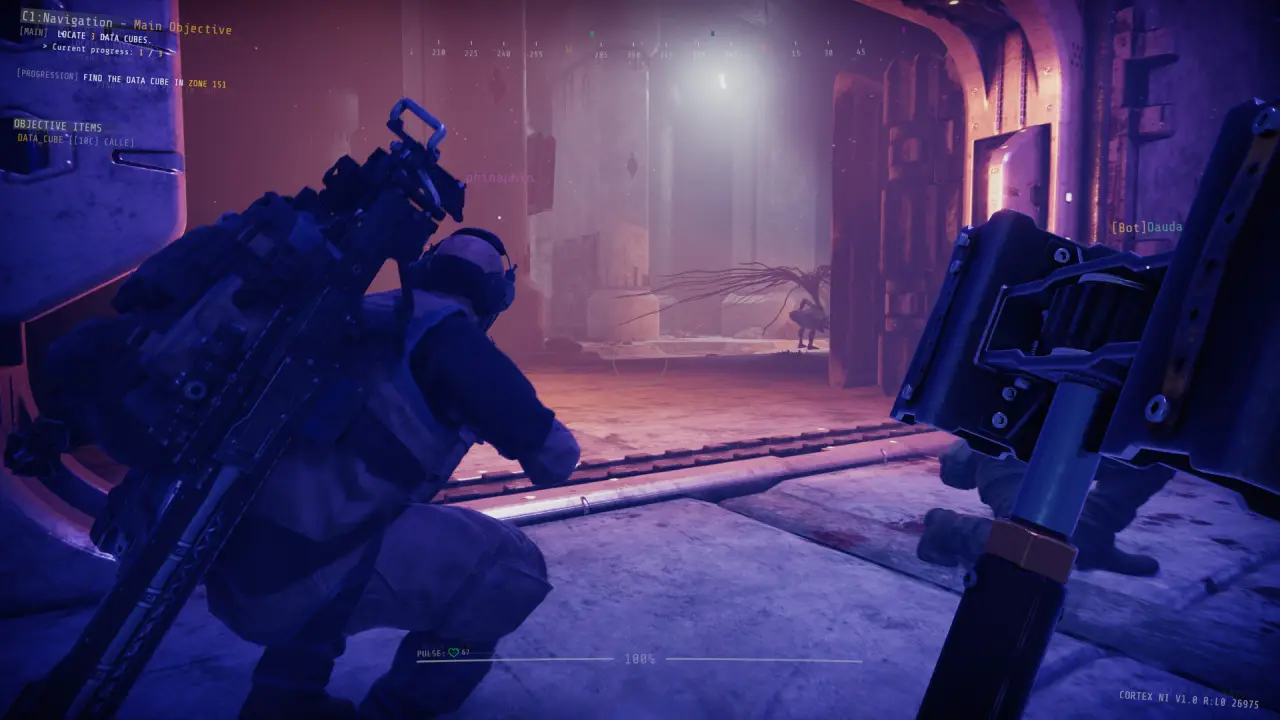
The UI is at its best when it supports teamwork without babying you. The bio-tracker interface is a great example. It gives one player a clear role, it lets the squad map danger before committing, and it makes information feel physical. You’re not just staring at a minimap. You’re trusting a teammate to call movement while everyone else waits in the dark.
Security door scans also look clear enough when the action starts. You understand where to stand, you see progress, and the visual pressure builds because everyone needs to move together. That’s GTFO’s whole thing: four players acting like one person. The interface reinforces that. It doesn’t just decorate the screen; it pushes the team into sync.
But the weak spot is guidance. GTFO explains very little inside the game, and that hurts the presentation more than people admit. A clean UI doesn’t mean much if new players don’t understand what the tools actually mean without trial, failure, or outside guides. For veterans, that harshness is part of the appeal. For everyone else, it can feel like the game locked the front door and told you to figure out the key.
So for graphics, I’m at a 7.5 out of 10. GTFO is not gorgeous all the time, and it’s not a tech monster. But when the lights are low, the scanner is ticking, and a Sleeper pulses in front of your squad, the visual direction absolutely does its job.
Combat | 9.0/10
Gameplay: 9/10GTFO makes firepower feel like the panic button, not the plan
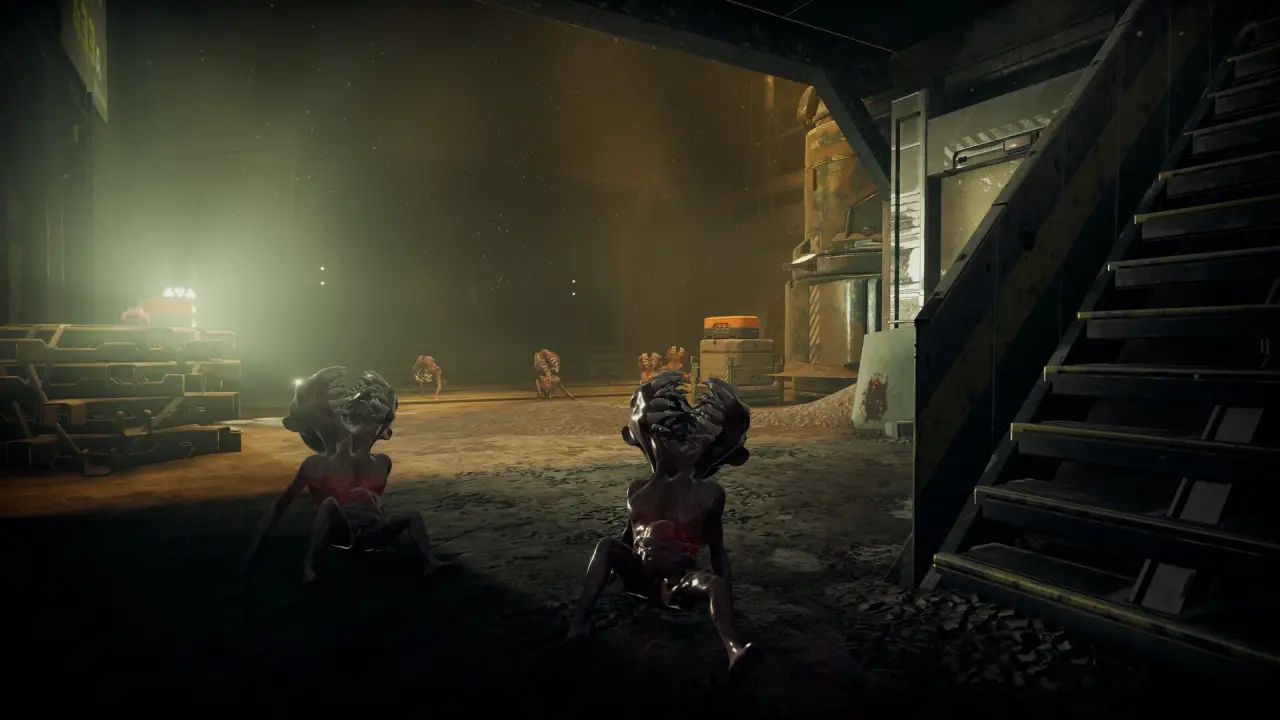
Here’s the thing with GTFO: if you treat it like Left 4 Dead 2 with worse lighting, you’re dead. Fast. The whole game is built around the idea that shooting is what happens when the plan has already gone wrong. You creep into rooms, you listen, you watch the Sleepers pulse in the dark, and you use the bio-tracker to figure out what’s waiting before anyone even thinks about pulling a trigger.
And that’s what makes it so nasty in the best way. The Sleepers aren’t just enemies standing around waiting to be cleared. Their little light pulses are basically a horror metronome. You move when they’re calm. You stop when they twitch. You charge melee together. You count it down. One person swings too early, one person panics, one flashlight comes on at the wrong time, and suddenly the whole room wakes up and your run starts falling apart.
The shooting itself is solid, but GTFO’s smartest move is making bullets feel expensive emotionally, not just mechanically. When the weapons come out, it’s loud, messy, and usually desperate. That’s a huge difference from Left 4 Dead 2, where the joy is in the flow of blasting through a horde with your team. Left 4 Dead 2 is still the cleaner power fantasy. GTFO is not trying to give you that. GTFO wants you hunched over in voice chat whispering, “Don’t move, don’t move, don’t move,” while the room breathes around you.
That tension is why the gameplay deserves a 9.0 for the right player. Not everyone. Absolutely not everyone. But if you’ve got the stomach for it, this is co-op horror with teeth. Simon Viklund’s sound work does a lot of heavy lifting here too, because the underground prison feels cramped, wet, and hostile even before the first alarm goes off. The audio doesn’t just decorate the stealth. It makes you scared to break it.
The security doors turn four players into one nervous machine
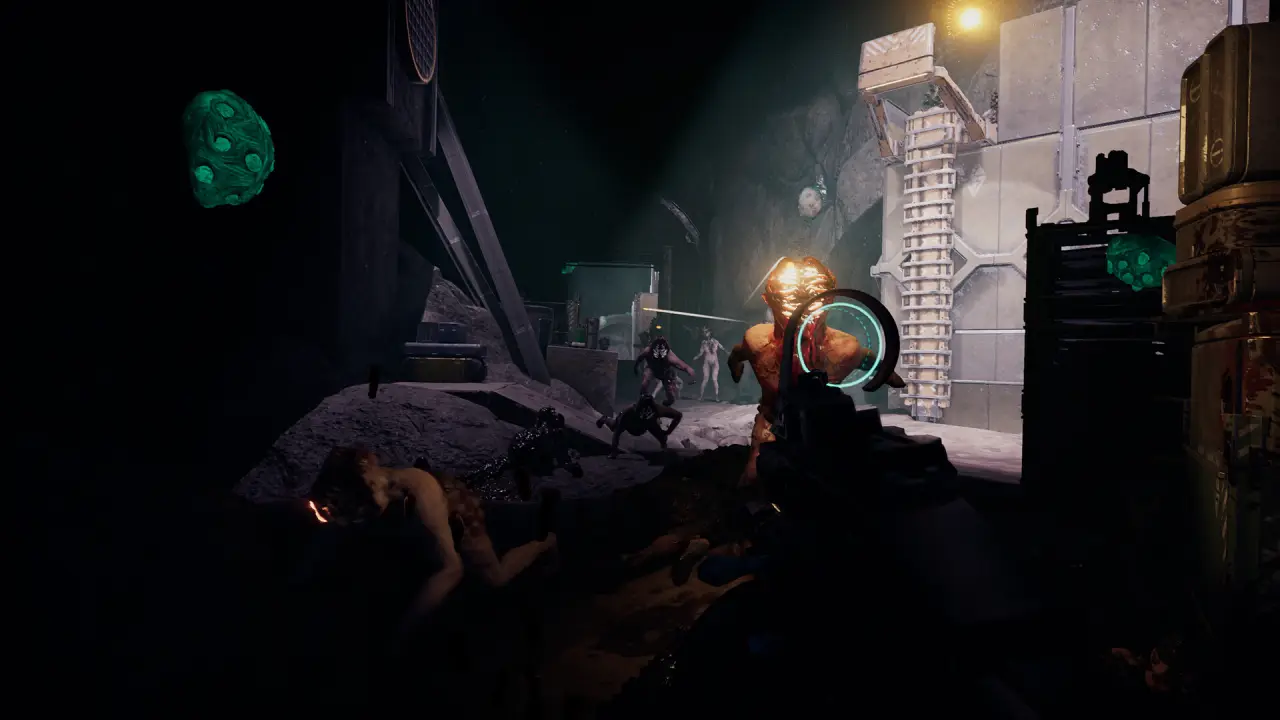
The best thing GTFO does is force teamwork in ways most co-op shooters only pretend to. Those security doors are the big example. You don’t just press a button and move on. The game makes the squad gather up, stand in scan zones, cover angles, and commit together. Nobody gets to wander off and play hero. Nobody gets to be “the guy looting over there” while the rest of the team handles the objective. If the door says everyone scans, everyone scans.
That sounds simple, but in practice it changes the whole rhythm of the game. Every door becomes a group decision. Do we have enough ammo? Who has the tool charge? Where are the mines going? Is the sentry watching the right lane? Did someone bring the C-Foam Launcher, or are we about to regret that? The loadout matters because the tools have to complement each other. Mines, fog repellers, C-Foam, sentries, suppressed weapons, the bio-tracker — you don’t just pick your favorite toy and vibe. You build a team plan.
And when that plan works, it feels incredible. You’ve got one player calling targets with the bio-tracker, another locking down a door with foam, another placing mines, another watching the flank with a sentry, and everyone is talking. Constantly. That’s the magic trick. GTFO makes four people feel like one stressed-out organism.
But the catch is brutal: if you don’t have that group, the experience drops hard. Solo is not the point. Random matchmaking can work, sure, but this game clearly wants a fixed four-player crew on voice chat. If your team won’t communicate, GTFO doesn’t bend around that. It just punishes you until someone quits.
The learning curve is less a curve and more a concrete wall
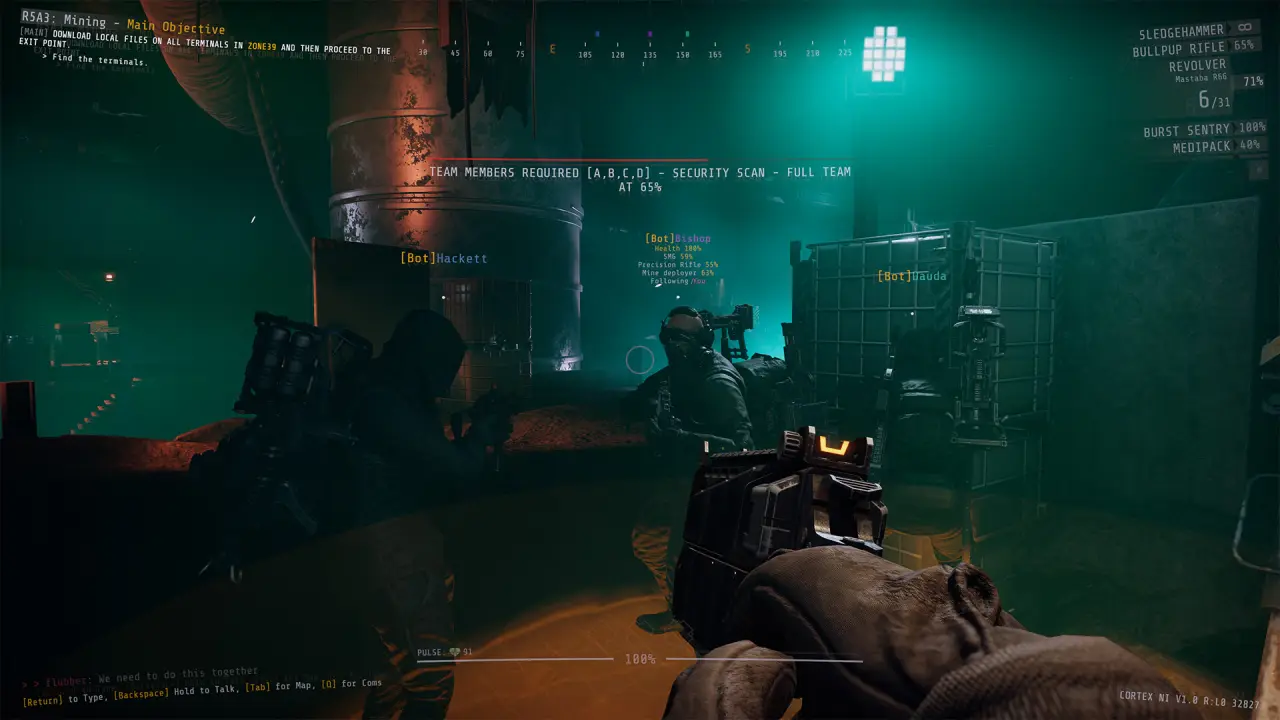
I’ll be blunt: GTFO is terrible at easing you in. Almost zero hand-holding. The game does not care if you understand its tools, its alarms, its stealth timing, or why your team just got erased. You learn by failing, by asking better players, or by looking things up. That’s part of the appeal for hardcore players, but it’s also the reason a lot of people bounce off this thing in the first hour.
The punishment is severe because one mistake can wipe the squad. Not “oops, we lost a little health.” I mean one bad swing, one bad shot, one bad scan setup, and the whole expedition collapses. That can feel unfair when you’re new, especially because GTFO doesn’t package its systems in a friendly campaign wrapper. There’s no single-player story mode carrying you along, no PvP side dish, no casual mode that turns it into a weekend shooter. It’s PC-only, co-op-first, and the story is mostly thin connective tissue between the runs.
But for the audience it’s actually aimed at, that harshness is the hook. If you have three regular teammates, if you’re all willing to use voice, if you enjoy smashing your face into a hard level until the plan finally clicks, GTFO is ridiculously sticky. The Steam rating tells you that split pretty clearly: 86% Very Positive across 45,472 reviews, with two Steam Awards “Best Game You Suck At” nominations. People don’t love this because it’s welcoming. They love it because it makes them earn every inch.
And now that Rundown 8.0 “Duality” keeps the 80-plus challenge levels permanently available, jumping in today means you’re getting the most complete version of GTFO. That matters. This isn’t some tiny experiment anymore. It’s a full, mean, highly specific co-op machine from 10 Chambers, and when it clicks, there really isn’t another shooter with this exact depth of synchronized stealth panic.
Content | 8.0/10
Contenuti: 8/10Rundown Chapters Keep Dragging You Back In
GTFO doesn’t really feel like a normal campaign. It feels like a gauntlet. You push through its Rundown structure one brutal chapter at a time, and that format is a big reason the game sticks. It’s not about breezing through a story and moving on. It’s about learning a room, failing it, coming back better, and then doing that again with three other people who actually know what they’re doing. That’s the hook. And honestly, that’s also the filter. If you want something loose and casual, this is not your game.
The early controversy around time-limited Rundowns didn’t come out of nowhere either. When content can disappear, people get nervous, because nobody wants to feel rushed in a game that already demands a ton of practice. But the final shape of the game answers that complaint pretty cleanly. Rundown 8.0, “Duality,” keeps the 80-plus challenge levels permanently. You buy in once, and the whole thing stays there. That matters a lot, because GTFO is built around mastery, not one-and-done clears. The game wants you to sit with it, not sprint past it.
And the pacing matches that idea. The best runs are slow, tense, and methodical until they suddenly explode. You’re mapping rooms with the bio-tracker, quietly dropping Sleepers, and trying not to wake the whole hive. Then one mistake turns the whole plan into noise and panic. That stop-start rhythm is what gives GTFO its identity. It’s not constant action. It’s pressure, silence, then disaster. If you like games where every inch forward feels earned, this structure is basically the whole meal.
Free Updates, Permanent Challenges, and the Long Tail
The rollout matters here, because GTFO didn’t just show up finished and sit still. It moved from early access in 2019 to full release in 2021, and then kept going until the final chapter arrived in 2023. That slow, free-update cadence gave the game a weirdly long runway for a co-op shooter. A lot of games like this burn bright and vanish. GTFO kept adding layers, and that’s a big part of why the player base stayed engaged. People weren’t just buying a snapshot. They were buying into an evolving set of raids, basically.
That also explains the replay value. GTFO is a game that rewards stubborn groups. You don’t just clear content once and move on. You grind hard missions, swap tactics, and go hunting for the cleaner route through the same brutal spaces. A lot of the game’s long life comes from the community building guides, sharing route knowledge, and figuring out the exact timing that lets a four-player team move like one organism. It’s not a game that explains itself well at all, so the community ends up carrying a huge part of the onboarding and the afterlife.
That’s where the comparison to Deep Rock Galactic gets interesting. Deep Rock has way more room for casual co-op longevity. You can jump in, dig, shoot, laugh, and still feel like you had a good run. GTFO is harsher. It’s less forgiving, less flexible, and way more dependent on voice chat and trust. But the tradeoff is that GTFO’s cooperation goes deeper. In Deep Rock, the fun usually comes from the chaos. In GTFO, the fun comes from discipline. If your crew clicks, the game has serious staying power. If it doesn’t, the whole thing falls apart fast.
Four-Player Commitment Is the Real DLC
If you’re asking whether GTFO has meaningful extra content, the honest answer is that the whole game already behaves like premium co-op DLC for the right crowd. The value isn’t in a bloated checklist of side modes. It’s in how much harder the game gets the more you push into it. The optional stuff is basically “do you and your squad want more punishment?” If yes, there’s plenty here. If no, you’re probably done before the game ever really opens up. That’s not a flaw by accident. That’s the design.
The catch is that GTFO’s content ecosystem only works if you have the right crew. A fixed four-player team, voice comms, and a willingness to fail over and over again are not optional in practice. That’s why the game lands so hard for the right people and bounces off everybody else. The content has real length, but it’s not padded length. It’s the kind of length that comes from learning, coordination, and repetition. That’s also why the 86% Very Positive Steam rating matters. The people who get it tend to stay with it.
So yeah, if you want a co-op game that respects your time by being brutally clear about what it is, GTFO has real legs. It’s thin on story, thin on hand-holding, and way too punishing for random matchmaking, but the long tail is built into the design. The permanent Rundown 8.0, the free update path from 2019 to 2023, and the sheer amount of hard content all add up to a game that doesn’t just survive on hype. It survives because a certain kind of player keeps dragging their friends back into the prison.





Commenti 0
Ci interessa la tua opinione
Partecipa alla discussione e condividi la tua opinione su questo gioco.
Ancora nessun commento. Dicci cosa pensi di questa recensione.