


















Opening
Library of Ruina is a brutal single-player RPG strategy card battler about turning people into books, it absolutely nails tying deck growth to story, and yeah, if you can handle the wall of text and the pain curve, it’s worth it.
Here’s the hook: you don’t just beat enemies and loot better cards. You beat guests, read their lives as books, then use their combat pages yourself. That’s nasty. That’s elegant. And it makes every win feel like you didn’t just clear a fight — you swallowed somebody’s whole tragedy and filed it on a shelf. If you’re coming from Slay the Spire, don’t expect the same clean, fast dopamine loop. Ruina is slower, meaner, and way more obsessed with context. Speed dice, Stagger, Light, Emotion Level — the game throws a lot at you, and the first five to ten hours can feel like being handed a rulebook during a knife fight.
But if you’re the kind of player who wants dense, character-driven dark storytelling, Roland and Angela have you covered. ProjectMoon built a weird, horrifying machine here, backed by roughly 80 tracks from Mili and Energy Imagination Music, and Steam’s 94% Very Positive rating from 38,346 reviews isn’t some accident. It’s just not trying to be friendly.
Story | 8.5/10
Storia: 8.5/10The story starts with Roland walking into Angela’s machine for making the perfect book

The setup is simple, and honestly, that’s why it works. Roland walks into the Library, meets Angela, the head librarian, and gets pulled into this brutal little machine where guests come in, fight the librarians, lose, and get turned into books. Angela wants to gather enough books to reach the one singular, perfect book. That’s the spine of the whole thing. It’s not subtle. It’s not cute. It’s a meat grinder with shelves.
And because Angela comes straight out of Lobotomy Corporation, this isn’t just some random haunted library story. It’s ProjectMoon dragging you deeper into the City, this nasty, broken world where human life gets measured, traded, archived, and used. The Library doesn’t feel like a dungeon. It feels like a court, a theater, and a slaughterhouse all stacked on top of each other.
Here’s what I really like: the game doesn’t treat the main plot like a reward you get between fights. The plot is the fights. Every invitation brings in people with their own baggage, their own reasons, their own tiny disaster already in motion. You beat them, they become books, and then you burn those books to read what they were. That’s bleak. That’s also the smartest story hook in the game.
The catch is, this is not a branching RPG where you’re making big moral choices every ten minutes. The story is mostly linear. Your agency is in how you survive the receptions, how you build your floors, and how much you’re willing to read. If you need dialogue wheels and alternate endings to feel involved, this probably won’t scratch that itch. But if you like a fixed tragedy told with confidence, Library of Ruina knows exactly where it’s dragging you.
Burning a book means stealing a life, and that makes deckbuilding feel nasty in the best way

This is the thing Library of Ruina does that most deckbuilders don’t even try. In Slay the Spire, you draft cards because the run needs power. It’s clean, fast, and beautifully readable. In Library of Ruina, you win against a group of guests, turn them into books, burn those books, read their lives, and then equip their combat pages as your own. That is deck growth welded directly onto the story. Not taped on. Welded.
And yeah, mechanically, it’s still cards, dice, resources, clashes, all that good crunchy stuff. But narratively, it changes the taste of everything. You’re not just unlocking a new attack. You’re taking the remains of someone who had a name, a job, a fear, a reason to walk into the Library in the first place. The game keeps reminding you that power comes from processed people. That sounds melodramatic when I say it out loud, but in the moment, it lands.
The side stories are dense because every set of guests is basically a short story walking into a boss arena. Some are stronger than others, sure. With this much text, not every conversation hits with the same force. But the overall effect is wild. The Library grows because you keep consuming other people’s lives, and the more you learn about them, the less clean your victories feel.
That’s also where the game earns its horror tag more than you might expect. It’s not just monsters jumping at you. It’s the slow realization that the system is calm, polite, and completely monstrous. The combat happens “as if it were on a stage,” and that stage framing makes every reception feel like a performance where the ending has already been sold to you as inventory.
Roland and Angela carry the text wall, but wow, it is still a wall

Roland and Angela are the reason I stuck with the story even when the game was absolutely drowning me in systems. Their dynamic gives the campaign a pulse. Roland comes in as this worn-down outsider with a casual mouth and a lot more going on under the surface. Angela, meanwhile, is cold, controlled, and visibly shaped by everything that came before. Because she ties back to Lobotomy Corporation, she also works as the bridge between this game and the wider ProjectMoon universe.
The fully voiced, visual novel-style dialogue does a lot of heavy lifting here. This is a character-driven story, not just lore dumped into a menu. The big themes are grief, survival, exploitation, and the value of one life in a place that keeps putting prices on people. When Library of Ruina is at full tilt, it feels less like “card game with story scenes” and more like a hundred-hour dark novel that happens to punch you in the mouth with strategy battles.
But I’m not going to pretend it’s easy to get into. The first five to ten hours can feel like fog. You’re learning speed dice, Stagger, Light, Emotion Level, page types, floor progression, and a whole new pile of City terminology while people are talking at length between fights. If you’re tired, impatient, or just looking for a quick card-game snack, this thing will shove a brick of text into your hands and say, “Read.”
And that’s the trade. The content is huge, the character work is strong, and the way it ties narrative to progression is genuinely special. But it also asks a lot. Maybe too much, depending on your tolerance. If you want clean runs and instant momentum, Slay the Spire is still the sharper pick. If you want a grim, fully voiced, character-heavy strategy epic where every new card feels like it came from somebody’s corpse, Library of Ruina is doing something you don’t get anywhere else.
Audio | 9.0/10
Audio: 9/10The Soundtrack Doesn’t Just Back the Fight, It Starts Chewing the Scenery

Library of Ruina has the kind of soundtrack where, yeah, I get why people buy the OST separately. Mili and Studio EIM are credited here, and across roughly 80 tracks, the game keeps finding ways to make a card battle feel like theater. Not “epic music slapped over menus.” I mean the fight actually feels staged. Guests walk in, the librarians answer, dice clash, someone breaks, and the music knows exactly when to twist the knife.
The big trick is how each of the 10 floors has a three-part battle theme tied to Emotion Level. So as the fight heats up, the music doesn’t just get louder. It climbs. It opens up. It pushes toward these vocal peaks that make a comeback turn feel ridiculous in the best way. You’re sitting there, half-dead, one bad clash away from losing the whole reception, and then the track kicks into that final phase like the Library itself just decided, “No, this scene matters.”
And that’s where Ruina separates itself from something like Slay the Spire. Slay the Spire gives you that fast, clean deckbuilding high. Draw, calculate, win or die. Ruina is slower, messier, and way more dramatic. When the music hits during a high-difficulty reversal, it can feel less like you solved a card puzzle and more like you survived the finale of a stage performance. Sometimes it’s almost too much. But honestly, that’s the point. This game wants every big fight to leave a bruise.
Fully Voiced Pain Makes the Library Feel Crowded in the Best Way

The voice work matters more here than it would in a cleaner, lighter card game, because Ruina is drowning in text. I don’t mean that as a cheap insult. This is a dense, character-driven story about people walking into the Library, getting beaten, turning into books, and having their lives read and repurposed into your deck. That loop is cold. It’s cruel. And the fully voiced guests and librarians are a huge reason it lands instead of just sounding like lore homework.
Roland and Angela carry a lot of that weight. The campaign pushes deeper into the City after Lobotomy Corporation, and if you’re here for dark, character-heavy writing, the performances give you something to hold onto while the systems are trying to bury you alive. Because let’s be blunt: the first five to ten hours can be a fog. Speed dice, Stagger, Light, Emotion Level, page loadouts, all of it hits fast. The acting helps pull you through that wall because the people on screen don’t feel like quest dispensers. They feel tired, bitter, funny, scared, and broken.
The catch is, if you hate long dialogue, this will not convert you. Ruina talks. A lot. It wants you to sit with these people before you turn them into tools. But if you’re the kind of strategy player who wants mechanics welded to story, not just sitting next to it, the voice work is doing serious labor. It makes the Burn system feel nasty in a way a silent deckbuilder never could.
The Dice Hits, Page Burns, and Quiet Rooms Sell the Horror

The sound design is less flashy than the vocal tracks, but it’s doing important work. Ruina is side-view, single player, and tagged with horror for a reason. It’s not jump-scare horror. It’s the sound of a place where violence has become procedure. Pages flip. Attacks snap. Dice clashes land with enough bite that even a simple exchange feels like a formal argument turning into a murder.
That matters because the combat is built around risk. Speed-dice clashes and the Stagger system make every turn feel like you’re gambling with someone’s spine. When a hit connects, when a stagger opens somebody up, when a page effect fires at the right second, the audio gives you that little jolt of confirmation. It’s readable without being clean or sterile. You feel the math, but you also feel the impact. The Library itself also benefits from restraint. Between the bigger musical moments, the quieter textures keep the mood tense instead of empty. This isn’t a cozy archive. It’s a machine that processes people into books. The soundscape supports that idea without screaming it in your face. And when the UI gets sluggish or the page management starts feeling fiddly, yeah, the audio can’t fix that. But it does keep the whole thing from collapsing into spreadsheets. It keeps reminding you that every deck upgrade came from someone who lost.
Visuals | 6.0/10
Grafica: 6/10Candlelight, Dark Wood, and a Stage That Feels Uncomfortably Alive

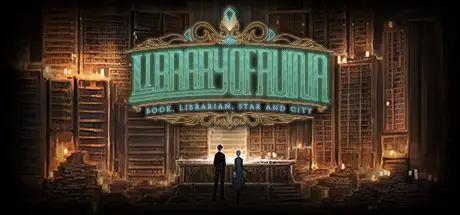
My take? The art direction is doing a lot of the heavy lifting here, and it’s the reason the game sticks in your head. Library of Ruina wraps everything in this gothic fairytale look: dark wooden shelves, warm yellow candlelight, and these cold, theatrical spaces that feel less like a battle map and more like a performance. That stage-like setup matters, because every fight feels like someone’s stepping into a spotlight and getting judged in front of an audience. It’s elegant, but also creepy in a way that never lets up.
The big win is the character art. That’s the real knockout. Every guest looks like they came from a different idea, a different story, a different kind of damage. Nobody blends together. You can tell just from a silhouette or a face that this world cares about design as storytelling, not just decoration. And that fits the whole premise perfectly: when you beat someone, you don’t just move on, you absorb what they were. The visuals sell that whole ruthless, literary vibe without needing to shout.
When the Bookshelves Fight Back, the UI Starts Getting in the Way
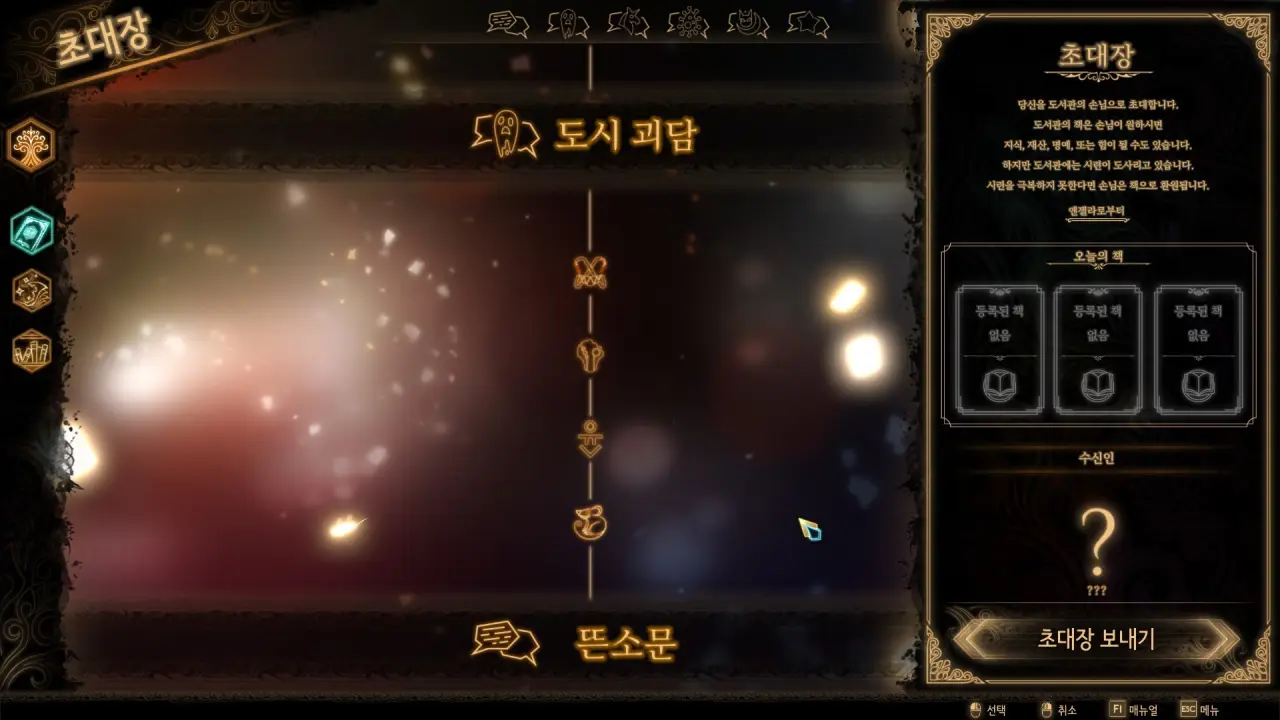
Here’s the catch: the game’s presentation is gorgeous, but the interface is a pain. I’m not talking about style. I’m talking about all the little systems piled on top of each other until the menus start feeling heavier than the battles. Page management and library search are dense, fiddly, and way too eager to bury you in information. That’s a problem in a game where the whole point is building your deck through what you learn from each fight. If the game is asking you to think hard, the UI shouldn’t also make you wrestle the screen just to do basic planning.
And honestly, that friction shows up fast. This is not a gentle onboarding curve. It throws speed dice, Stagger, Light, Emotion Level, and all the rest at you like you’re supposed to already know the language. So when the menus feel sluggish on top of that, it just makes the early hours rougher than they need to be. The art sells the fantasy, sure, but the UI is the part that reminds you this is still a very busy strategy game with a lot of moving pieces. That’s fine if you’re in the mood to dig. If you aren’t, it’s exhausting.
PC Is the Way to Play; Switch Takes the Hit
If you care about how the game actually feels to play, PC is the version I’d point you to without hesitation. It’s the cleanest way to see the art, read the text, and deal with all the system-heavy menu work without the experience getting dragged down. On PC, the game’s strong visual identity and side-view combat presentation land the way they’re supposed to. The whole thing feels deliberate and sharp, which matters a lot when the game is already asking for so much attention.
The Switch version is where things get messy. The visual quality takes a hit, performance is uneven, and that combo hurts a game that relies on clarity and pacing. That’s part of why the reception splits so hard: Steam sits at 94% positive with 38,346 reviews, while the Switch side of the story dragged the Metacritic media average down to 55. That’s a massive gap, and it says a lot. The game’s art direction is strong enough to survive a lot, but not everything. If the port stumbles, you feel it right away.
Combat | 9.0/10
Gameplay: 9/10Speed Dice Turn Every Fight Into a Knife Fight
The combat in Library of Ruina is brilliant because it doesn’t just ask you to build a deck — it asks you to read the room every single turn. Speed dice decide who acts first, and once the turn order is out there, every clash becomes this little gambling problem you can actually influence instead of just praying over. Attack dice slam into defense dice head-on, and that means you’re not just picking cards, you’re picking fights. You’re deciding which enemy action you want to delete, which one you can safely eat, and which one is going to wreck you if you get cute.
The real kicker is Stagger, or if you want to call it what it feels like, the game’s “break them and then punish them” button. When you knock an enemy’s stagger gauge down, they don’t just lose momentum — they get shut down and start taking maximum damage. That turns every smart clash into a setup, not just a trade. So yes, the game looks like a card battler, but the actual brain of it is way more tactical than that. You’re managing tempo, reading dice, and looking for the turn where you can crack somebody wide open. That’s what makes the hard fights so satisfying. You’re not brute-forcing them. You’re engineering a collapse.
And then there’s Light and Emotion Level, which are the two systems that keep the whole thing from feeling flat. Light refills every round, so you’re constantly deciding when to spend now and when to hold back for a stronger line later. Emotion Level builds over time and unlocks stronger effects, so longer fights don’t just get harder — they get more explosive if you’ve survived long enough to scale. That’s a huge part of why the game feels so tense. It keeps layering systems on top of systems, but when it clicks, you start seeing the shape of each encounter instead of just the chaos.
Burning Books Is How You Grow Stronger
Here’s the most interesting part of Library of Ruina: progress is baked straight into the story. You beat guests, turn them into books, and then use those books to unlock new battle pages and key pages. So your deck doesn’t grow in some abstract, game-y vacuum. It grows because you won a fight, read someone’s life, and turned that victory into actual power. That’s such a sick idea, and honestly, it’s the main thing this game does that most deckbuilders don’t even try to do. The buildcraft isn’t just mechanical progression — it’s narrative consumption. You’re literally taking people apart and wearing the result.
That also means the game’s identity is way darker than something like Slay the Spire, even when the two games are fighting over the same deckbuilder shelf. Slay the Spire is all about randomness and clean card draw momentum. Library of Ruina is different. It leans into dice groups, turn-by-turn clashes, and systems you can actually manipulate instead of just hoping the right card shows up. You still get variance, sure, but it feels more controlled, more surgical, and way more tied to the enemy in front of you. You’re not just playing a hand. You’re contesting every action like it matters, because it does.
That’s why the game’s depth lands so hard for the right player. If you want a strategy game where the build, the combat, and the story all feed each other, this is catnip. If you just want a chill run where the systems explain themselves in ten minutes, no chance. Library of Ruina wants you to pay attention, and then it wants you to keep paying attention for a very long time.
The First Ten Hours Are Rough, Then the Wall Hits Harder
I’m not gonna sugarcoat it: this game is a mess if you’re not ready to wrestle with it. The learning curve is nasty. Speed dice, stagger, Light, Emotion Level, page management — the game throws all of that at you early, and the first five to ten hours can feel like trying to learn a language while somebody is yelling combat math at you. Even when you understand the basics, the menus and library management can still get in the way. There’s a lot of fiddly overhead, and you feel it every time you’re swapping pages or digging through systems that should be cleaner.
Then the difficulty curve starts flexing for real. Once you get past the Urban Nightmare tier, the game stops being polite. The jump in challenge is sharp, and by the time you’re dealing with Urban Nightmare and above, especially Urban Nightmare and Star of the City territory, this is one of the hardest strategy games out there. The fights demand that you actually know what your pages do, how dice interact, and when you can force a stagger instead of just hoping for good rolls. It’s exhausting, but it’s also what gives the game its identity.
That’s why this isn’t for everybody. If you want something light, quick, and immediately readable, this is going to feel like a brick wall. But if you’re the kind of player who likes dense text, dark character-driven storytelling, and a strategy game that makes you earn every inch, then this is exactly the kind of nightmare you came here for. It asks a lot. A lot. But when it starts clicking, it’s hard to go back to safer, simpler deckbuilders.
Content | 8.5/10
Contenuti: 8.5/10Sixty Hours Is Just The Warm-Up Act
Library of Ruina is not a quick card-game snack. It’s a full-on commitment, and honestly, that’s both its biggest flex and one of its biggest warnings. HowLongToBeat puts the main story around 60 hours, but if you’re actually digging into the challenge fights, cleaning up books, and pushing the optional stuff, you’re looking at over 100 hours. For an indie strategy RPG card battler, that’s wild. Not “oh, there’s filler everywhere” wild. More like, “I hope you cleared your calendar” wild.
The pacing works because the game doesn’t just throw random battles at you forever. You climb through reception tiers, moving from the lower City ranks up toward Star of the City, and every step unlocks more of the Library, more enemies, more pages, and more ways to ruin your own day with a bad deck. That ladder gives the whole campaign a brutal sense of escalation. You’re not just getting stronger. You’re inviting worse people into your house and stealing the pieces that made them dangerous.
And that’s the hook that makes the length feel earned. You beat a group of guests, burn their books, read what their lives were, and then turn their combat pages into your own tools. Deck growth is literally welded to the story. Slay the Spire gives you that clean, addictive random-card rush. Library of Ruina says, “Cool, but what if every card came from someone you just destroyed?” That’s nastier, slower, and way more personal.
The Grind Hurts, But The Books Keep Calling
Here’s the catch: this game can absolutely wear you down. After Urban Nightmare, the difficulty spikes get nasty, and farming the right books or pages can start to feel like homework. Page management is fiddly. Searching through your Library can be a pain. The UI is not your friend. When people bounce off Library of Ruina, I get it. The first five to ten hours already dump Speed dice, Stagger, Light, and Emotion Level on you like you signed a contract you didn’t read.
But the long tail is real. Burning books to complete page sets gives the game a collector’s loop that actually matters, because those pages aren’t cosmetic junk. They change how your floors fight. They open up builds. They can unlock hidden receptions. And because each set of guests comes with their own story weight, you’re not just grinding a spreadsheet. You’re digging through the City’s wreckage and asking, “Okay, what horrible little tool can I steal from this tragedy?”
That’s why the value lands so hard with the people this game is made for. The Chinese community has praised the sheer amount of text and content for the price, and yeah, I see why. ProjectMoon’s serial-development style gives this thing a huge, dense script, with Roland and Angela carrying a fully voiced campaign that keeps expanding the City lore from Lobotomy Corporation. If you want light, clean, instantly readable strategy, run. If you want a dark, character-driven monster that asks you to chew through walls of dialogue and earn every win, this is exactly the kind of punishment you came for.
Even The Soundtrack Feels Like A Separate Meal
The DLC situation is refreshingly simple: the soundtrack is sold separately, and it actually has weight behind it. We’re talking roughly 80 tracks from Mili and Studio EIM, not some tiny bonus folder with a few loops and menu themes. And in-game, the music isn’t just sitting there looking pretty. Each floor’s battle theme escalates in three parts as your Emotion Level climbs, so the soundtrack tracks your momentum, your panic, and your slow realization that this turn might explode in your face.
That matters because Library of Ruina is a long game, and long games live or die on repetition. You’re going to hear these fights for dozens and dozens of hours. If the music were weak, the grind would feel twice as heavy. Instead, the soundtrack helps sell the stage-play vibe from the official premise: guests and librarians clashing like performers, then the defeated turning into books as the Library grows. It’s theatrical, creepy, and weirdly beautiful when it all clicks. So yeah, as a content package, this thing is stacked. It’s not flawless, though — the grind, the menu friction, and the brutal onboarding absolutely drag it down. And if you’re on Switch, the weaker visuals and uneven performance are a real stain. But on the core question — “Does this game give hardcore strategy players enough meat to chew on?” — the answer is stupidly yes. It’s too dense for some people. It’s too long for others. But if it gets its hooks in you, Library of Ruina doesn’t just give you a campaign. It gives you a whole shelf of scars.




Commenti 0
Ci interessa la tua opinione
Partecipa alla discussione e condividi la tua opinione su questo gioco.
Ancora nessun commento. Dicci cosa pensi di questa recensione.