



















Opening
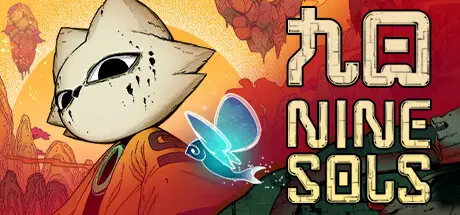
Nine Sols is a hand-drawn 2D action-platformer that basically asks, “What if Sekiro’s parry duels got shoved into a brutal metroidvania?” and yeah, if that sentence lights up your brain, this thing is absolutely worth your time.
The big hook is the combat. You’re not just dodging around and poking bosses until they fall over. You’re standing your ground, deflecting, building Qi, slapping talismans on enemies, and cashing out damage like you earned it. When it clicks, it feels incredible.
Not easy. Not gentle. Incredible.
And the world? RedCandleGames went from horror into this wild Taopunk mix of Taoist myth, sci-fi decay, ancient alien ruins, and tragedy, and somehow it works. The art is gorgeous, the music blends erhu and guzheng with electronics, and the story actually has weight instead of just lore wallpaper.
But look, this is not the chill pick. Bosses are fast, parry windows are tight, and you can get deleted in two or three hits. If you hate hard deflection combat and don’t want to touch assist options, Nine Sols may just bully you. For everyone else, there’s a reason it’s sitting at 94% on Steam with over 37,000 reviews.
Story | 8.5/10
Storia: 8.5/10Yi’s revenge story works because the world keeps making it messier

The story setup in Nine Sols sounds simple at first: Yi wakes up angry, grabs his blade, and goes after the 9 Sols, the rulers sitting on top of this dead, rotten realm. That’s clean revenge-game fuel. You know the shape. Find the boss, learn why they suck, cut them down, move on.
But the reason this lands harder than a basic hit list is the setting. RedCandleGames calls this whole vibe Taopunk, and yeah, that’s actually a useful word here. You’ve got Taoist ideas, eastern mythology, old ritual spaces, immortal rulers, and then all of that is smashed together with biotech, screens, tubes, labs, and cold sci-fi machinery. It’s not just “ancient temple but neon.” The game keeps asking what happens when spiritual language gets used to justify technological control. That gives the world a nasty little edge.
Yi is also not some blank revenge puppet. He’s bitter, proud, and clearly carrying more guilt than he wants to admit. The main story is built around him hunting the Nine Sols one by one, but every major kill peels back more of what this place really is. You start with righteous anger. Then the game starts feeding you documents, environmental clues, quiet flashbacks, and cutscenes that make the whole thing feel less clean.
That’s the key: Nine Sols doesn’t dump a lore encyclopedia in your lap and call it storytelling. It hides important truth in rooms, files, conversations, and background details. If you only sprint from boss to boss, you’ll still understand the revenge arc. But if you actually read, look around, and connect the pieces, the story gets much sadder. And honestly, that’s where it earns its 8.5 out of 10 for me. The plot isn’t huge in the “twenty factions yelling proper nouns at you” way. It’s focused. It’s restrained. And when it wants to hurt, it usually knows exactly where to press.
Eigong turns the plot from revenge into a horror story about immortality

The best part of the main narrative is how it slowly moves away from “kill the evil rulers” and into something more personal, especially once Eigong and the Tianhuo virus become the center of the conflict. Eigong isn’t just there to be the final big bad with a cool design. She represents the ugliest idea in the game: the obsession with survival after survival has already stopped being noble.
The Tianhuo virus gives Nine Sols its real tragic spine. This world isn’t broken just because a few tyrants got greedy. It’s broken because an entire system tried to cheat death, preserve power, and treat other lives like material. That’s where the sci-fi side and the Taoist side actually lock together. The game keeps circling around immortality, nature, decay, rebirth, and the arrogance of trying to force the universe to obey you.
And Eigong works because she’s not cartoonishly evil in the boring way. She’s frightening because her logic has a shape. You can see how someone gets there. You can see the intelligence, the desperation, the refusal to stop. That makes her a much stronger anchor than a generic final villain. She gives the story its philosophical bite without turning every scene into a lecture.
The side material helps a lot here. The optional writing isn’t all equally essential, but it does real work. Some documents fill in the history of the Solarians. Some rooms quietly explain what happened before you arrived. Some character moments make Yi feel less like “cool fox man with sword” and more like someone trapped between rage, shame, and responsibility. The density is good, not exhausting. You’re rewarded for digging, but the game doesn’t make you feel like you need a notebook just to follow the emotional point.
The two endings are simple, but the true ending is the one that actually says something

Nine Sols has two major endings, and this is one of those cases where the split really matters. The normal ending, Home Sweet Home, gives you one version of closure. It’s not pointless, and it fits if you’ve mostly followed the main road. But the true ending, Shooting Star, is the one that makes the story click into place.
The big difference is Yi’s final choice. The true ending pushes his arc past revenge and into sacrifice. He doesn’t just kill his way through the Nine Sols and call it justice. He gives himself up for the future of the apemen, a people who are not his own. That detail matters. A lot. Because the story starts with Yi as this furious survivor of a collapsing world, but it ends by asking whether he can care about a future he won’t get to own.
That’s why the true ending hits. It reframes the whole journey. The violence, the guilt, the old world trying to preserve itself, Eigong’s obsession with immortality — all of it gets answered by Yi choosing the opposite. Not control. Not eternal life. Not another selfish escape plan. Just one final act that gives somebody else a chance.
Now, I do think the branching is more emotional than mechanical. Don’t come in expecting some giant choice-and-consequence RPG where every side character has five outcomes. This is still a single-player, side-view action-platformer with a tight story path. The endings are the main split, and outside of that, the game is more about discovery than decision-making. You piece together truth, you don’t constantly rewrite it.
But for this game, that works. A bigger branching system might’ve made the story feel looser. Nine Sols is better when it’s controlled, bitter, and pointed. Its tragedy depends on momentum. The true ending doesn’t feel like a bonus cutscene slapped on for completionists. It feels like the version of the story the game has been quietly aiming at the whole time.
The writing is heavy, but it rarely gets in the way of the action

Here’s the thing I respect: Nine Sols is lore-rich, but it still remembers you came here to play an action game. This is RedCandleGames, the studio known for horror before this, and you can feel that background in how they build unease. They don’t need constant jump scares or endless monologues. They’re good at making rooms feel wrong. They’re good at making a beautiful place feel sick underneath.
That restraint helps the pacing. The main story gives you enough direct scenes to understand Yi, the Nine Sols, Eigong, and the disaster around the Tianhuo virus. Then the rest is layered into exploration. That’s a smart fit for a 2D Metroidvania structure. You’re already checking corners, opening paths, and revisiting areas, so the story becomes something you uncover with your hands, not just something you watch between fights.
The weaker side is that some players will miss a lot of the texture if they don’t like reading documents or paying attention to environmental clues. And because the game doesn’t use waypoint navigation, late-game cleanup can mean backtracking through places you already know. That can make lore hunting feel a little less elegant than the writing deserves. The story is strongest when discovery feels natural. It’s less strong when you’re wandering around trying to remember which locked path you forgot three hours ago.
Still, as a story package, Nine Sols has a rare flavor. Sekiro has the sharper 3D duel fantasy, sure. But Nine Sols brings hand-drawn 2D art, talisman-driven combat identity, and this mournful eastern sci-fi tragedy that feels very much like its own thing. If you care about hard action and you also want a world with real emotional weight, this one delivers. If you just want light platforming and a chill map-clearing romp, no — this story is too heavy, and the game around it is too demanding. But if you meet it on its terms, Yi’s journey sticks.
Audio | 9.5/10
Audio: 9.5/10Seventy-two tracks, and somehow it never feels like wallpaper

Nine Sols has one of those soundtracks where you don’t just go, “yeah, the music’s good.” You start noticing how often the same emotional idea comes back wearing a different mask. Across 72 original tracks, the score keeps circling its main themes, twisting them depending on where you are, who you’re fighting, and how much of this ruined world you’ve started to understand.
What I love is that it doesn’t treat “Eastern sci-fi” like a costume. You get erhu, guzheng, gongs, those familiar traditional textures, but they’re not just sprinkled on top for flavor. They’re fused with electronic beats, rock pressure, and orchestral weight. So when the game wants mystery, it can sound ancient and empty. When it wants violence, it can hit like machinery waking up under a temple floor.
And the boss music? That’s where it really locks in. The electronic pulse starts pushing your heart rate up, then the traditional instruments cut through it, and suddenly the fight feels like a duel, a ritual, and a system failure all at once. That fits Nine Sols perfectly. This is a hand-drawn 2D action-platformer with Sekiro-style deflection combat, but the music keeps reminding you that this isn’t just “2D Sekiro.” It’s its own strange, tragic, Taopunk thing.
The quiet tracks sell the loneliness better than another lore dump ever could

Here’s the thing: Nine Sols is packed with lore, but some of its best storytelling happens when nobody’s explaining anything. When you’re exploring, the music pulls back. You get these distant strings, these hollow spaces, and that feeling of walking through the leftovers of a civilization that was brilliant, cruel, and already doomed before you got there.
That matters because the game’s world could’ve easily become too dense. Ancient alien race, eastern fantasy, science fiction, revenge quest, nine rulers to kill — on paper, that’s a lot. But the quieter music gives it room to breathe. It lets the ruins feel sad instead of just “cool.” It gives the tragedy some oxygen.
The voice performances sit in that same lane. They don’t bulldoze the mood. They’re controlled, often understated, and that’s the right call for a story about vengeance, sacrifice, and people carrying more guilt than they say out loud. I wouldn’t call the acting the loudest part of the presentation. It’s not. The music and art do more of the heavy lifting. But the voices don’t break the spell, and in a game this mood-driven, that’s a win.
That perfect parry “clang” is half the reason combat feels this good

The sound effects in Nine Sols are doing serious work. Everybody talks about the deflection system — and yeah, they should, because the parry-build-Qi-talisman loop is nasty in the best way — but that loop would not feel this addictive without the audio feedback. A perfect deflect gives you that sharp, clean “clang,” and your brain instantly goes, yes, that was it, do it again.
That’s so important in a game this demanding. Bosses are fast. The parry windows are tight. You can get deleted in two or three hits if you’re sloppy. So the sound can’t be mushy. It has to tell you, immediately, whether you were early, late, or locked in. Nine Sols nails that. The hits have bite. The counters have snap. The talisman rhythm has this dangerous little pause before the payoff, and the audio sells that tension every time.
And because this is 2D, you don’t have a camera fighting you like you can in some 3D action games. That means your ears become even more important. You’re reading animations, listening for impact, feeling the beat of the duel. Compared to Sekiro, the 3D sword fights are still the sharper pure duel fantasy. But Nine Sols adds talismans, skills, hand-drawn style, and this incredible soundscape. For this side of the game, I’m at a 9.5 out of 10 without blinking.
Visuals | 9.0/10
Grafica: 9/10Hans Chen’s hand-drawn New Kunlun is doing the heavy lifting here

Nine Sols looks expensive in the way that actually matters. Not “look at our pores and puddles” expensive. I mean it looks authored. It looks like somebody cared about every wall panel, every robe, every shrine, every nasty little machine bolted into this place. Hans Chen leads the hand-drawn 2D art direction, and you can feel that human hand all over it. This is not asset-pack sci-fi. This is a world with a point of view.
The big win is the mix. You’ve got Taoist symbols, eastern architecture, ritual spaces, old-world silhouettes — and then RedCandleGames jams all of that into cold cyber-metal, glowing screens, tubes, labs, and machinery. That “Taopunk” identity could’ve been a gimmick. It isn’t. New Kunlun feels ancient and futuristic at the same time, like a temple got swallowed by a biotech facility and both sides are still fighting for control.
And because this is a side-view 2D action-platformer, the art has to read instantly. You don’t have a camera swinging around to sell scale. You get layered backgrounds, strong shapes, clean foregrounds, and mood. Nine Sols nails that. The areas feel distinct without turning into theme-park levels. They’re pretty, yeah, but they also feel heavy. Lived-in. Wrong. Like you’re walking through a place that had rules long before you showed up.
The comic-style cutscenes help a lot too. They don’t feel like filler between “real” gameplay. They carry the same visual DNA as the stages, and they give the tragedy room to breathe. Red Candle already had a strong eye coming out of Detention and Devotion, but this is a wild pivot. Different genre, same artistic confidence. You can tell this studio understands mood better than most.
The bosses don’t just fight well — they look like they belong in a nightmare myth

The enemy design is where Nine Sols really earns that 9 out of 10 from me visually. Bosses and elite enemies aren’t just bigger health bars with flashier attacks. They have presence. They’re staged like events. Their silhouettes are sharp, their animations are readable, and their designs stick in your head after the fight is over. That matters a lot in a game built around Sekiro-inspired deflection, because you’re staring these things down for a long time.
Look, when a boss can drop you in two or three hits, the animation has to be clean. If the art gets too noisy, the whole combat system falls apart. Nine Sols mostly avoids that. The attacks have snap. The tells are stylish, but they’re not buried under effects vomit. You can admire the art and still understand what’s about to ruin your life. That balance is hard, and this game gets it right more often than not.
The best fights feel like animated illustrations that suddenly decided to murder you. Robes, masks, blades, machinery, talismans, strange body language — it all feeds into the same eastern fantasy and science fiction blend. Nothing feels randomly cool for the sake of being cool. The visual design supports the world, the lore, and the combat rhythm at the same time.
And honestly, compared to Sekiro, the tradeoff is interesting. Sekiro’s 3D duels are more intense in terms of spatial pressure, sure. But Nine Sols gets to dodge camera problems completely. You always know where you are, where the threat is, and what the screen wants you to read. For a hard deflection game, that’s a huge visual advantage.
Don’t come here for ray tracing checkboxes — come here for art direction that survives without them

Here’s the thing: Nine Sols is not a tech-demo game. If you’re looking for a graphics segment where I gush about ray tracing, DLSS, or some massive engine flex, this isn’t that conversation. The game’s visual strength is traditional craft. Hand-drawn 2D art, strong composition, expressive animation, clean effects, and a very specific aesthetic identity. That’s the show.
On Steam, where the game launched on May 29, 2024, it doesn’t need a pile of modern rendering buzzwords to look great. The image works because the art direction is strong before any tech gets involved. Lighting is used for mood, color is used to separate spaces, and effects are used to punch up combat without turning the screen into soup. That’s way more important here than whether a reflection is physically accurate.
I’m also not going to pretend there are meaningful platform-by-platform visual differences to break down if I don’t have verified data in front of me. Based on the Steam version, this is the kind of game where the core look should live or die by resolution, performance, and display quality, not by platform-exclusive graphical features. The assets themselves are the appeal. The linework, the backgrounds, the comic panels, the enemy animation — that’s what you’re buying into.
And that’s why the visuals age well. A lot of “high-end” games look dated the second the next lighting trick shows up. Nine Sols doesn’t have that problem. It has taste. It has a strong identity. It knows exactly what it wants to be, and it commits.
The UI stays quiet, which is exactly what a brutal parry game needs

The UI in Nine Sols deserves credit because it mostly knows when to shut up. That sounds like a small thing, but in a game this demanding, it’s huge. You’re watching enemy posture, your own positioning, incoming attacks, parry timing, Qi management, talisman opportunities, platform hazards — there’s already a lot happening. If the interface were bulky or overdesigned, it would actively make the game worse.
Instead, the presentation keeps the focus on the character and the enemy. The combat feedback is sharp enough that you can feel the rhythm without needing the screen to scream at you. Deflections pop. Hits land with clear visual impact. The talisman loop is readable. You’re not digging through visual clutter just to understand whether you played well or got cooked.
Menus and map readability are a little more complicated. The UI is clean, but the game does not give you waypoint navigation, and that affects how the world feels late-game. When you’re cleaning up collectibles, the lack of direct guidance means more backtracking and more staring at map spaces, trying to figure out what you missed. That’s not a visual disaster, but it is friction. The art makes the world memorable; the navigation tools don’t always make cleanup painless.
Still, for the actual moment-to-moment play, the UI does its job. It supports the fight instead of competing with it. And with a game sitting at 94% positive on Steam across 37,191 reviews, plus an 88.2 IGDB media average from 4 outlets, I’m clearly not alone in thinking the presentation lands. Nine Sols looks beautiful, yes — but more importantly, it looks playable. For this kind of precise, punishing action game, that’s the difference between stylish and genuinely great.
Combat | 9.0/10
Gameplay: 9/10The parry isn’t a bonus here — it’s the whole conversation

Nine Sols lives or dies on one question: do you enjoy standing your ground when a boss is trying to erase you? Because this is not a game where dodging around like a nervous little bug is the main plan. You can do that sometimes, sure, but the real meat is the deflection. RedCandleGames took that Sekiro-style “meet the blade at the exact moment” idea and shoved it into a hand-drawn 2D action-platformer, and honestly, it works way better than it has any right to.
The feel is the big win. A good parry in Nine Sols has that sharp, clean snap to it. You hear it, you see it, and your brain gets that little hit of, “Yeah, I meant to do that.” Bosses don’t just wait around for you either. They press you hard, they chain attacks, and they expect you to learn the rhythm instead of brute-forcing your way through. That’s where the Hollow Knight comparison makes sense, not because the combat is the same, but because the game asks for that same kind of precision. You’re reading patterns, managing spacing, and trying not to panic when the screen gets busy.
But here’s the thing: Nine Sols is more aggressive than a lot of 2D metroidvania combat. It wants you in the pocket. It wants you close enough to get punished. And when you start matching a boss hit for hit, deflect for deflect, the fights stop feeling like platformer bosses and start feeling like duels. That’s the Sekiro DNA, plain and simple. Sekiro still has the more extreme 3D sword-fight intensity, no question. But Nine Sols dodges one of Sekiro’s headaches by being side-view. There’s no camera fighting you. No wall eating your lock-on. No “what just happened behind me?” nonsense. You see the exchange cleanly, and when you die, most of the time, yeah, that one’s on you.
That also means the game is not casual-friendly by default. Bosses are fast, the parry windows are tight, and getting killed in two or three hits is very much on the table. If you hate parry-heavy games, Nine Sols is not going to magically convert you in the first hour. The game does have adjustable assist options, and I’m glad they’re there, because more people should be able to see this world and this story. But if you’re playing it straight, you need to accept that the learning curve has teeth.
Qi turns defense into payback, and that’s where Nine Sols gets nasty
The smartest part of Nine Sols’ combat is that parrying isn’t just survival. It’s how you build your offense. You deflect, you generate Qi, and then you stick talismans onto enemies to cash that pressure out with explosive damage. That loop is so satisfying because it turns defense into a weapon. You’re not just blocking until it’s your turn. You’re banking power, choosing your opening, and then making the enemy pay for every swing they threw at you.
That’s also what keeps the combat from feeling like a flat Sekiro copy. Sekiro is cleaner and more brutal as a pure duel game, but Nine Sols gives you more build flavor through talismans and skills. You can feel the game nudging you to think about how you want to fight, not just whether your timing is good enough. That extra layer matters a lot over a full single-player run, because parry-based combat can get repetitive if all you ever do is tap the same button at the right time. Here, your deflections feed into a larger rhythm: defend, charge Qi, plant the talisman, escape, detonate, reset.
And then there’s the internal damage system, which is quietly evil in the best way. When you mistime certain defensive actions, the game doesn’t always just slap you with clean damage and move on. It can leave that red damage hanging over you like debt. And the way you deal with that debt is by fighting back. So instead of teaching you to turtle up when you’re scared, Nine Sols says, “No. Get back in there.” That’s a huge part of why the combat feels so tense. You’re constantly balancing fear and momentum. Back off too much, and you lose control. Rush in stupidly, and the boss deletes you.
The talisman system also makes regular encounters more interesting than they could’ve been. In a weaker version of this game, small enemies would just be speed bumps between bosses. Here, because Qi and positioning matter, even basic fights train the same habits you need later. You’re learning timing, spacing, recovery, and when to commit. That kind of consistency is why the combat lands so hard. It’s not just a gimmick saved for the boss room. It’s the language of the whole game.
This is built for Sekiro and Hollow Knight sickos, not chill map cleaners
Let’s be blunt: Nine Sols is aimed at players who like getting tested. If you bounced off Sekiro because the game demanded parries, or if Hollow Knight’s sharper boss fights made you want to uninstall, this one is going to push the same buttons. Maybe harder. This is a 2D action-platformer with metroidvania exploration, but the combat identity is hardcore action first. You don’t just cruise through pretty rooms and occasionally slap something. You have to execute.
The difficulty curve can be rough, especially early on while you’re still trying to unlearn safer habits from other side-scrollers. A lot of games let you dodge, poke, retreat, repeat. Nine Sols lets you try that, and then it shows you why that’s not enough. The bosses are built around rhythm and nerve. You need to stay calm when a combo starts. You need to recognize what can be deflected, what needs movement, and when it’s safe to cash in your Qi. That sounds simple until you’re one hit from death and your hands are suddenly doing nonsense.
Exploration has its own bite too. The game doesn’t rely on waypoint navigation to drag you around by the nose, and I respect that. But the catch is, late-game cleanup can mean a lot of backtracking. If you’re the kind of player who wants every collectible neatly signposted, this can get tiring. Some optional platforming challenges are also mean enough to make you question your life choices. I like that the game has confidence, but yeah, there are moments where the friction is real.
Still, that friction is part of the pitch. Nine Sols is not trying to be a breezy, low-stress adventure. It’s for players who want precision, pressure, and a world worth pushing through. Steam players seem to agree pretty loudly, too: it’s sitting at 94% positive across 37,191 reviews, with a Very Positive label, and IGDB’s media average is 88.2 from 4 outlets. Numbers don’t make a combat system good by themselves, but in this case, they line up with the feeling: this thing connects.
So for gameplay, I’m at a 9 out of 10. Not because it’s easy to recommend to everyone. It isn’t. It’s demanding, sometimes punishing, and not built for players who just want to relax and clear a map. But if you want Sekiro-style deflection in a 2D metroidvania shell, with Qi, talisman detonations, real build texture, and no camera nonsense getting between you and the duel, Nine Sols absolutely delivers.
Content | 6.5/10
Contenuti: 6.5/10The main run has real meat, but it’s not built for endless grazing
Nine Sols is a single-player, hand-drawn 2D action-platformer, and honestly, that matters for how you should judge its content. This isn’t a live-service treadmill. It’s not trying to be the game you log into every night forever. It’s more like a sharp, demanding, story-heavy Metroidvania run that takes around twenty to thirty hours if you’re mostly pushing the main path, learning bosses, opening routes, and not getting completely lost in cleanup mode.
And that length feels right for what RedCandleGames is doing here. The combat asks a lot from you. This is that Sekiro-inspired deflection loop moved into a side-view format, where you’re parrying, building Qi, sticking talismans on enemies, and trying not to get folded in two or three hits. If this game were fifty hours of mandatory boss walls, I think it would wear people down. At twenty-something hours, the pacing has enough room to let the world breathe without turning the whole thing into homework.
The catch is, the content lives and dies on whether you enjoy precision. If you love Hollow Knight-style exploration and Sekiro-style duels, there’s plenty to chew on. If you want a breezy map-clear where you zone out and watch numbers go up, no. Nine Sols does not hand you that kind of comfort. Even basic progress can feel expensive because the game keeps asking, “Did you actually learn the timing?” And if the answer is no, it will make that very clear.
Optional rooms, upgrades, and boss cleanup give it depth, not bloat
The best extra content in Nine Sols isn’t just “here’s another hallway.” It’s the stuff that makes you better, tougher, or more curious. Optional high-difficulty areas, treasure chests, upgrades, and side discoveries all feed back into the main loop. You’re not just collecting junk for a checklist. You’re chasing tools, survivability, bits of lore, and sometimes just the satisfaction of proving you can get through a nasty little gauntlet without falling apart.
That’s where the game earns a lot of its staying power. The talisman and skill options give combat more flexibility than you might expect from a game so openly inspired by Sekiro. Sekiro’s 3D duels are still cleaner and more intense in that very specific samurai showdown way, sure. But Nine Sols has its own thing going on. The 2D view cuts out camera nonsense, and the build layer gives you more room to shape how you approach fights over time.
But I’m not going to pretend every optional bit is equally fun. Some platforming challenges are harsh in a way that can feel more exhausting than satisfying, especially when you’re already dealing with bosses that demand tight parries and fast reactions. Still, as optional content, it mostly works. The game gives hardcore players more pain to chase, while players who just want the story can leave some of that stuff on the table, assuming they’re willing to accept being less upgraded.
The second run is for the true ending and the lore sickos, not for infinite replay value
Nine Sols does give you a reason to come back after the credits, but let’s be real about what kind of reason it is. This is mostly a one-and-done single-player game, unless you’re the kind of player who wants the true ending, wants to fill in the lore, or just wants another shot at mastering the combat. And that’s fine. Not every game needs to become a lifestyle. But if we’re talking pure content value, that does cap the long tail.
The strongest pull for a second run is the world and story. The whole Taopunk setup — eastern fantasy, science fiction, an ancient alien race, rulers called the 9 Sols, and a vengeful hero walking into a tragedy bigger than himself — gives the game more weight than a lot of action-platformers. RedCandleGames came from horror, and you can feel that restraint in the storytelling. It doesn’t drown you in exposition every five steps. It lets the setting sit with you.
So yeah, if you’re into the narrative, replaying to chase the true ending and pick up missed context makes sense. If you’re only here for fresh mechanical surprises, the second run is less convincing. The fights are still good. The deflection system is still spicy. But once you’ve seen the major beats, the replay value is mostly about execution and completion, not radically new content. That’s why I’d call this content package strong, but not bottomless.
Cleanup gets messier than it should, even with all the good reasons to explore
Here’s my biggest content complaint: the late-game cleanup can become a slog because there’s no waypoint-style navigation guiding you cleanly through what you missed. In a Metroidvania, backtracking is part of the deal. I’m not allergic to it. The whole genre is built on “remember that door you couldn’t open six hours ago?” But Nine Sols sometimes makes the cleanup phase feel more like commuting than exploring.
That hurts because the world itself is worth revisiting. The hand-drawn art is gorgeous, the side-view environments have a strong identity, and the music blend — traditional strings like erhu and guzheng with electronics — gives the whole place this haunted, ancient-tech mood. I wanted excuses to stay in that world. I just didn’t always want to spend that time retracing routes while squinting at the map and trying to remember which path had the thing I couldn’t reach earlier.
This is also where the 6.5 out of 10 content score lands for me. Not because the game is thin. It’s not. With a twenty-to-thirty-hour main run, optional challenges, upgrades, lore cleanup, and true-ending motivation, there’s a proper package here. But the structure doesn’t always make the extra content pleasant to finish. The highs are high, especially when exploration feeds back into combat. The lows are those late stretches where the game asks for patience more than skill.
Being on PC, Switch, PlayStation, and Xbox makes the package easier to recommend
One thing that helps Nine Sols a lot is availability. With PC, Switch, PlayStation, and Xbox in the mix, this isn’t some niche PC-only thing you have to bend your setup around. That matters for a game like this, because different players are going to want to meet it in different ways. Some people want the cleanest input setup possible for tight parries. Some want to chip away at exploration handheld. Some just want it on the box under their TV.
And because this is a focused single-player game, that wider platform spread gives it a healthier long tail than it would’ve had otherwise. You’re not depending on multiplayer population. You’re not waiting for seasonal content. You buy it, you learn it, you suffer through it, and if it clicks, you probably become one of those people telling everyone else, “No, seriously, push past the first few hours.”
There’s no big DLC value conversation to hang the recommendation on here. The value is the base game: the main route, the optional areas, the upgrades, the lore, the true ending chase, and the combat mastery curve. With a 94% Very Positive Steam rating across 37,191 reviews and an 88.2 IGDB media average from 4 outlets, clearly a lot of players felt that package delivered. I’m a little cooler on the content structure specifically, because cleanup and replay value have limits. But as a complete run? Yeah, it’s absolutely got enough to justify the time if you’re the right kind of masochist.





Commenti 0
Ci interessa la tua opinione
Partecipa alla discussione e condividi la tua opinione su questo gioco.
Ancora nessun commento. Dicci cosa pensi di questa recensione.