






















Opening
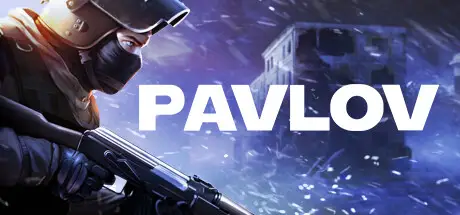
Pavlov is a VR multiplayer shooter that absolutely nails the feeling of handling guns with your own hands, and if you’ve got the stomach, the rig, and people to play with, yeah — it’s still worth it.
The thing Pavlov does better than almost anyone is make the gun matter. You don’t press R and watch an animation. You grab the mag, slam it in, rack the bolt, clear the mess when you screw it up, and suddenly every reload under pressure feels personal. Pistols, rifles, shotguns — they all ask something different from you.
And then it drops that into one-life, Counter-Strike-style Search and Destroy, where your hands are shaking because you’re the last one alive and everyone’s watching. That’s the magic. VR makes the old team shooter formula feel dangerous again.
Add TTT, Zombies, Gun Game, cross-play across PC, Quest, and PSVR2, plus a Workshop and mod.io scene that just never seems to run dry, and you get why it’s sitting at 88% positive across 37,815 Steam reviews.
But don’t mistake this for a friendly little VR starter kit. There’s no campaign. It’s demanding. The install is chunky, weak performance can make you feel genuinely sick, and if your region’s quiet or your friends aren’t around, Pavlov can go from legendary to lonely real fast.
Story | 5.5/10
Storia: 5.5/10Pavlov Has No Campaign, And It Doesn't Pretend Otherwise

Let's get the blunt part out of the way first: if you're here for a story campaign, Pavlov gives you almost nothing. No main plot. No voiced hero. No big villain. No carefully paced mission chain where the game drags you from set piece to set piece. This is not Half-Life: Alyx, and honestly, it would be unfair to judge it like it is. Alyx is built around authored single-player tension. Pavlov is built around people, guns, panic, and whatever nonsense happens when a lobby starts arguing.
So for story, I'm landing around a 5.5 out of 10. Not because Pavlov fails at something it promised, but because this category just isn't where the game spends its money. The official pitch is a multiplayer VR shooter with realistic reloading, fast combat, and community features, and that's exactly what it is. Vankrupt Games is not hiding a secret narrative masterpiece in here. The Steam tags say action and indie, the modes cover single player, multiplayer, and co-op, but the real pulse is competitive and social play.
That also means the “side content” question gets weird. There aren't side quests in the usual sense. What Pavlov has instead is a giant community well: Steam Workshop, mod.io, Zombies, Gun Game, custom maps, and endless server chaos. Village and Manor can keep a game night alive for hours, but not because they're telling written side stories. They work because players bring the drama with them.
And there are no meaningful narrative choices or branching paths either. Your decisions matter round to round, sure, but not in a story-tree way. You choose whether to push, hide, lie, bait, reload under pressure, or trust the guy swearing he isn't the traitor. That's not authored branching. That's live, messy, player-made consequence.
TTT Is Where Pavlov Accidentally Becomes Theater

Here's where Pavlov gets interesting for story, though: TTT basically replaces scripted writing with social pressure. Instead of a plot twist written by a designer, you get someone standing right in front of you in VR, looking guilty as hell, saying, “No, no, it wasn't me.” And because this is VR, that lands harder. Flat-screen social deduction is fun, but VR makes lying feel personal. You're not just hearing a voice in Discord. You're watching hands move, bodies flinch, guns come up, and the whole room decide whether somebody gets executed in public.
That is Pavlov's best “character writing,” if we can even call it that. The characters are the players. The paranoid detective. The terrible liar. The friend who always gets shot first because nobody trusts them anymore. The guy who says “I'm innocent” while slowly backing toward a shotgun. None of this is scripted, but it creates better stories than a lot of throwaway shooter campaigns, because the embarrassment and the double-crosses are happening live.
TTT also gives Pavlov a kind of branching system, just not a formal one. Every accusation splits the scene. Every body discovered changes the room. Every bad call creates a new grudge. You don't get dialogue options, but you do get social options: deny, frame, confess, run, shoot first, or talk your way out. That's where Pavlov earns some story credit.
The catch is, this only works if the lobby works. If nobody's talking, if the server is dead, if you're playing off-peak, or if your region has thin matchmaking, the magic evaporates. Pavlov has cross-play across PC, Quest, and PSVR2, and that helps a lot, but the experience still lives or dies on population and chemistry. No friends, no good lobby, no story.
Search And Destroy Turns One Bullet Into A Plot Twist

Search and Destroy is the other mode that gives Pavlov its version of narrative, and it's much colder than TTT. This is the Counter-Strike skeleton pulled straight into VR: one-life rounds, 5v5 pressure, bomb-site tension, and no second chance if you peek at the wrong moment. There isn't a cutscene, but there is a clear dramatic arc. The round starts loud, gets quiet fast, and then suddenly one gunshot decides the whole thing.
That tension works because Pavlov's gun handling is so physical. You don't press R and wait for an animation. You grab the mag, seat it, rack the bolt, and hope your hands don't betray you. Pistols, rifles, and shotguns all ask for different muscle memory. So when you're the last player alive and you botch a reload, that becomes the story. Not in a “written lore” way. In a “everyone saw you panic and now you're never living it down” way.
This is where Pavlov separates itself from Onward, too. Onward leans harder into military realism, and for some players that's the whole appeal. But it's more niche, more focused, and the community content doesn't feel as bottomless. Pavlov is less pure as a sim, but it has more ways for a night to turn into something memorable. Search and Destroy gives the competitive spine. TTT gives the social madness. Workshop maps keep feeding both.
Still, let's not oversell it. A one-life round can create suspense, but it can't replace a real campaign if that's what you want. There are no key supporting characters to follow, no emotional payoff, no written finale. Pavlov's best stories are the ones you tell your friends afterward, usually because somebody lied badly, clutched a round, or reloaded like a drunk raccoon under fire.
Half-Life: Alyx Wants To Tell You A Story; Pavlov Wants You To Cause One

The cleanest comparison is Half-Life: Alyx, because it shows exactly what Pavlov is not trying to do. Alyx is authored. It controls pace, space, fear, character beats, and reveals. Pavlov does the opposite. It gives you guns, rules, rooms, servers, and other players, then steps back. One is a crafted single-player ride. The other is a competitive and social sandbox where the drama depends on who shows up.
That difference matters if you're buying Pavlov for “story.” If you want a polished solo narrative, don't talk yourself into this. The game is demanding, the install is roughly 70 GB, and weak rigs can drop frames hard enough to make VR nausea very real. If you're motion sensitive, playing alone, or just looking for a traditional campaign, this is the wrong target. Pavlov is for hardcore VR players who want to use both hands, actually operate weapons, and get pulled into team play and lobby politics.
But if you're wired for that, Pavlov can be weirdly unforgettable. Its 88% Very Positive Steam rating across 37,815 reviews makes sense because the thing it does well is still hard to replace. Manual gun handling, Counter-Strike-style one-life competition, and a deep community map ecosystem all in one place — nobody has really matched that full mix.
So, story score? Middle of the road. The written narrative is basically absent. The character work is whoever joins your lobby. The branching is social, not scripted. But the VR presence gives every double-cross, panic reload, and last-second headshot a kind of live drama flat games struggle to touch. Pavlov doesn't tell you a story. On a good night, it traps you inside one.
Audio | 7.5/10
Audio: 7.5/10The Guns Do Most of the Talking Here

Pavlov’s audio lives and dies by the guns, and honestly, that’s exactly how it should be. This isn’t a story shooter trying to sweep you up with a big emotional score. It’s a VR shooter from Vankrupt Games where the sound is there to tell you what’s happening, what went wrong, and whether you’re about to get punished for it.
The reloads are the star. You hear the mag come out, you hear the new one seat, you hear the bolt get racked, and because you’re doing all of that with your actual hands in VR, those little sounds matter way more than they would on a flat screen. Pistols, rifles, and shotguns don’t just feel different mechanically. They sound like different habits. A panicked reload in Pavlov has a rhythm to it. Clack, slap, rack, breathe. Miss one step, and the silence after the trigger pull is brutal.
The shooting itself is punchy enough to sell the fight without turning into audio soup. That’s important, because Pavlov moves fast. In Search and Destroy, where the Counter-Strike-style one-life rounds are the whole point, a gunshot isn’t just noise. It’s information. What fired, where it came from, how close it was, and whether you should swing the corner or back off. That’s the kind of sound design that actually affects your play, not just your mood.
And yeah, there’s music, but it’s not the focus. Pavlov isn’t leaning on a soundtrack to tell you how to feel. It barely cares about that. The audio is built for competition first, atmosphere second. If you want a dramatic campaign score or big cinematic themes, you’re in the wrong place. Pavlov’s theme is basically this: listen carefully, reload cleanly, and don’t get caught flat-footed.
Footsteps, Voice Chat, and the Panic of Being Heard

The more serious you get with Pavlov, the more you realize footsteps are basically a weapon. In Search and Destroy, sound can decide the round before anyone fires a shot. You’re listening for a shuffle around the corner, a sprint across a lane, a reload behind cover. And because the mode caps out at 5v5, every tiny bit of audio matters. There aren’t twenty people stomping around hiding the signal. If someone gets sloppy, you can hear it.
That’s where Pavlov separates itself from a lot of VR shooters. Onward goes harder on military realism, and sure, that has its own appeal. But Pavlov’s faster, messier, more social, and usually better at keeping the night alive. The audio supports that. You’re not just tracking enemies. You’re tracking people. Someone breathing on comms. Someone whispering a callout. Someone getting way too quiet right before they turn on you in TTT.
And TTT is where voice chat becomes the whole game. There’s no fancy voice acting carrying this thing, because the players are the cast. The lies, the accusations, the “no, no, I swear it wasn’t me,” all of that happens through VR voice chat, and it hits harder because you’re not reading a text box. You’re standing in front of somebody while they try to talk their way out of getting executed in public. That’s not polished narrative audio. It’s better than that when the lobby is good. It’s human chaos.
The catch is, public lobbies can be hit or miss. Pavlov has an 88% Very Positive rating on Steam across 37,815 reviews for a reason, but the experience still depends on people showing up and not ruining the room. Off-peak hours, weaker regions, and the odd cheater can hurt it. But when the voice chat clicks, especially with friends, the audio turns into the social glue.
Spatial Audio Helps, But Bad Performance Can Wreck the Whole Thing

Because Pavlov is VR, good positional audio isn’t a bonus. It’s part of the control scheme. You turn your head toward sound. You angle your body based on what you heard. You pre-aim because a footstep landed behind a wall. On platforms like PSVR2, spatial audio and haptic feedback can add a lot to that sense of being inside the fight, especially when the gun in your hand isn’t just making noise but kicking back at you too.
That said, Pavlov is not gentle on your setup. The install is roughly 70 GB, and the game can be demanding. If your rig is mid-range, you may need to tune settings by hand. If your performance tanks, the audio doesn’t get to save the experience, because frame drops in VR can make you feel genuinely sick. That’s the ugly truth. Great gun sounds and clean directional cues don’t matter much if your stomach is filing a complaint.
Still, for the right player, the sound mix does exactly what it needs to do. It keeps the battlefield readable. It makes manual gun handling feel physical. It gives Search and Destroy that tense, sweaty silence between bursts of violence. And it gives TTT the one thing it absolutely needs: people talking, lying, panicking, and making terrible decisions out loud.
So no, Pavlov doesn’t have memorable themes, big performances, or a campaign full of voiced characters. That’s not what it’s chasing. Its audio is practical, sharp, and built around the stuff that makes Pavlov hard to replace: physical reloads, one-life team fights, and community-driven chaos that can run for hours on maps like Village and Manor. For audio, I’d put it at a 7.5 out of 10. Not beautiful, not cinematic, but when it matters, it works.
Visuals | 8.0/10
Grafica: 8/10Pavlov Looks Best When the Gun Is Two Inches From Your Face
Here’s the honest graphics take: Pavlov is not the prettiest VR shooter if you judge it like a flat-screen blockbuster. But that’s also the wrong test. This game looks good where it actually matters, which is right in your hands. The weapon models are the star. Pistols, rifles, shotguns — they’ve got enough weight, shape, and readable detail that your brain buys into the whole manual reload fantasy. You grab the mag, seat it, rack the bolt, and the gun looks solid enough that the motion feels convincing instead of toy-like.
The effects help a lot, too. Muzzle flashes pop hard in VR. Shell casings kicking out of the weapon give firefights that extra bit of physical chaos. Smoke and explosions aren’t some mind-blowing tech demo, but they do the job. They fill space, block vision, and make a Search and Destroy round feel messy in a way that fits the Counter-Strike-style pacing. You’re not stopping to admire a wall texture. You’re trying to read silhouettes, listen for footsteps, and not fumble your reload while someone swings the corner.
Scene design is more uneven. Some community maps look rough. That’s just the cost of having a bottomless workshop scene. But when Pavlov hits a good layout — especially the classic-style bomb maps, Village, or Manor — the art direction supports the match instead of getting in the way. It’s clean, readable, and built around quick decisions. That matters way more here than cinematic clutter. In VR, too much visual noise can be a problem. Pavlov usually understands that. It keeps sightlines readable and lets the guns, hands, smoke, and bodies carry the moment.
PC Pavlov Has the Visual Edge, But You Pay for It
The PC version is where Pavlov has the most room to breathe. Compared with a lot of Quest-first shooters, the materials and lighting are just a tier above. Surfaces have more depth, weapons look less flat, and the whole image has a stronger sense of presence. It’s not a ray tracing showcase, and I wouldn’t sell this as some fancy DLSS tech parade. The point is simpler than that: on PC, Pavlov looks fuller, sharper, and less stripped back than the standalone VR stuff it often gets compared to.
But the catch is, Pavlov is heavy. Around a 70 GB install for a VR shooter is not nothing, and the performance demands are real. On a strong rig, it can look crisp and feel immediate. On a mid-range setup, you’re probably going into the settings and tuning things by hand. And in VR, that’s not just nerd tweaking. Frame drops here are brutal. On a monitor, bad frame pacing is ugly. In a headset, it can make you feel sick. That means performance is not a bonus feature in Pavlov. It’s the floor the whole game stands on.
This is also where the platform you buy on really matters. PC, Quest, and PSVR2 are all part of the same wider Pavlov conversation, and cross-play helps keep the player pool alive, but the visual ceiling is not the same across all three. Quest gives you access and convenience, but it has to make bigger cuts. PC gives you the best version if your hardware can handle it. PSVR2 sits in its own lane, and your experience depends heavily on what you expect from the headset. Same game, very different visual limits.
The UI Stays Out of the Way, Which Is Exactly What It Should Do
Pavlov’s UI is not flashy, and honestly, good. VR shooter UI should be boring in the best way. You don’t want giant menus floating in your face while you’re trying to manage a one-life round. The important stuff is readable, quick, and practical. Server browsing, mode selection, and workshop-style content access are doing a lot of heavy lifting because this game lives and dies on multiplayer population, community maps, and getting into the right lobby without wasting half your night.
In-game, the interface mostly understands the fantasy. Pavlov’s whole appeal is that your hands are the interface. Reloading isn’t a button prompt. Your ammo management isn’t just a number in the corner. You’re physically checking, grabbing, swapping, and racking. That’s why the simpler HUD approach works. The less the game shouts at you with overlays, the more your attention stays on the gun, the room, and the person lying to your face in TTT before someone gets executed in public.
There are still rough edges. Public servers can be messy, and when you’re waiting for a lobby during off-peak hours or in Asian regions, the front-end experience starts to feel less slick. That’s not purely a graphics issue, but presentation matters. A clean UI can’t hide the fact that the game depends on people being online. Still, for the visual side, Pavlov gets the big call right. It doesn’t chase spectacle over usability. It gives you readable spaces, convincing weapons, solid effects, and enough clarity to keep competitive VR from turning into visual soup. For graphics, I’d land it at an 8.0 out of 10: not gorgeous across the board, but strong exactly where Pavlov needs to be strong.
Combat | 9.0/10
Gameplay: 9/10The reload is the whole game, and that’s why it works
Pavlov’s best trick is that it makes reloading feel like something you actually do, not something the game politely does for you. You grab the mag, seat it, rack the bolt, and keep moving. That sounds small until you’re in the middle of a fight and your hands are the difference between staying alive and eating dirt. There’s no lazy button press that saves you when you panic. If you fumble, you pay for it. That’s the point, and honestly, that’s what makes the gunplay feel so sharp.
And it doesn’t stop at one weapon class. Pistols, rifles, shotguns, pump actions, bolt-actions — they all have their own little hand motions and quirks, so you’re not just learning “how to shoot” once. You’re learning a bunch of different manual of arms, and that’s where the skill ceiling comes from. The game isn’t trying to be a mil-sim that buries you under homework, but it also doesn’t hand you a fake VR toybox version of shooting. It lands in a really good spot: hard enough to respect, readable enough to actually learn.
That balance matters, because this is where Pavlov beats a lot of the more rigid VR shooters. Compared with Onward, Pavlov is faster and easier to get into without turning into a watered-down mess. Onward goes harder on the slow, realistic military angle, but it’s also more niche and less welcoming. Pavlov keeps the tension, keeps the manual weapon handling, and still lets you click with it fast enough that you don’t feel like you need a training manual just to join a server.
One-life rounds, social chaos, and a community that never seems to run dry
My blunt take is this: Pavlov stays alive because it gives you a ton of different reasons to keep loading it up. Search and Destroy brings that Counter-Strike-style one-life pressure into VR, and that’s a huge deal. It changes everything. You can’t just spray your way out of a bad round, and every move feels heavier because your life matters to the team. The catch is that competitive SnD caps at 5v5, so if you’re the kind of player who likes huge lobbies and messy battlefield chaos, you’re going to feel that limit right away. Still, for tight team play, it’s nasty in the best way.
Then you’ve got the rest of the rotation: Team Deathmatch, Zombies, Gun Game, and TTT. That last one is pure social grease fire. TTT turns a normal session into a room full of liars accusing each other while everyone pretends they’re innocent, and that’s exactly why it works. Village and Manor help too, because they’re the kind of maps that can keep a group hanging around for hours instead of bouncing after one match. This isn’t a game with one good mode and a bunch of filler. It’s a whole hangout space.
The real trump card, though, is the community ecosystem. Modkit, Steam Workshop, and mod.io open the floodgates, and suddenly you’re not just playing what Vankrupt shipped — you’re digging through thousands of player-made maps and modes. That’s why the content well feels bottomless. Add cross-play across PC, Quest, and PSVR2, and the player pool actually has a chance to stay healthy. Sure, the install is huge at around 70 GB, the game is demanding, and weak hardware can make frame drops nasty enough to trigger nausea. But if you’ve got the rig, the crew, and the stomach for it, Pavlov is still the VR shooter I’d point to when someone asks what this space can really do.
Content | 8.5/10
Contenuti: 8.5/10Pavlov Doesn’t Have a Campaign, So Your “Playtime” Is Basically Your Friends List
Here’s the blunt version: if you’re coming to Pavlov for a big single-player campaign, you’re in the wrong store page. There’s single player listed, sure, but this game lives and dies as a VR multiplayer shooter. The real loop is not “finish the story.” It’s log in, find a lobby, run rounds, talk trash, miss reloads under pressure, and queue up again because your buddy swears that last death was lag.
And honestly, that’s why it works. Search and Destroy gives Pavlov its backbone. It takes that Counter-Strike-style one-life tension and puts it into your actual hands. You’re not pressing R to reload. You’re grabbing a mag, seating it, racking the bolt, and hoping you didn’t fumble while someone is pushing the corner. That makes the pacing way sharper than most VR shooters. Rounds can be short, but they feel loaded because one bad reload, one bad peek, one bad callout, and you’re watching from the sidelines.
The catch is, the format has limits. Competitive Search and Destroy caps at 5v5, and if you’re playing off-peak, or in a quieter region, especially parts of Asia, finding the right lobby can take patience. Public servers can also have the odd cheater, which stings more in VR because the whole thing feels more personal. But when the server is good and the teams are talking, Pavlov hits a rhythm that barely anything else in VR matches. That’s why I’m comfortable with an 8.5 here. The content isn’t traditional, but the replay loop is nasty in the best way.
TTT Is Where Pavlov Turns From Shooter Night Into Full-Blown Chaos Night
If Search and Destroy is Pavlov’s serious face, TTT is the mode that keeps people hanging around way longer than they planned. Trouble in Terrorist Town just works differently in VR. Lying to someone over voice chat is already funny. Lying to someone while they’re standing in front of you, physically holding a gun, looking at your hands, watching where your barrel points? That’s where Pavlov gets weirdly brilliant.
The maps matter a lot here. Village, Manor, and Asylum all have their own crowds, but Village is the one people keep coming back to for a reason. It has the right kind of social space. Enough corners to scheme, enough open areas for public executions, enough little routes for someone to vanish and come back acting innocent. Manor has that tense house-party murder vibe, and Asylum leans into the messier horror energy, but Village is the best stage because it lets the drama breathe.
And this is the part that a trailer can’t really sell: Pavlov’s optional content isn’t “side quests.” It’s game-night fuel. TTT, Zombies, Gun Game, custom maps, goofy modes with friends — that’s the side content. Some of it is polished, some of it is janky, and some of it feels like someone made it at 3 a.m. after losing a bet. But VR is better when people are doing silly, memorable stuff together, and Pavlov understands that better than most of its competition.
No Paid DLC, Free Updates, And A Map Pool That Refuses To Run Dry
Pavlov’s content value is pretty simple: you buy the game, and the long tail comes from the community. There’s no paid DLC structure hanging over it. Updates have kept coming for years, the game is past Update 30, and the full 1.0 release landed in 2024. That matters because Pavlov doesn’t feel like a shooter chopped into little paid packs. It feels like a platform that the community keeps feeding.
The Steam Workshop and mod.io support are the big deal. Once you’re tired of the official maps, there are thousands of community maps waiting. Some are serious competitive layouts. Some are nostalgia bait. Some are total nonsense. But that’s the point. The content well is effectively bottomless, not because Vankrupt Games is hand-building a new season every few months, but because the player base keeps finding new places to shoot, betray, panic-reload, and argue.
This is also where Pavlov pulls ahead of Onward for me. Onward is the more realistic military sim, and if that’s your lane, I get it. It’s tighter, slower, and more niche. But its modes are narrower, and the community content doesn’t have the same gravity. Pavlov is messier, louder, and way less disciplined, but it keeps people around because there’s always another map, another lobby, another mode, another reason to drag friends back in. With 88% positive across 37,815 Steam reviews, that isn’t just theory. That’s a whole PC VR crowd voting with their playtime.
The Long-Term Catch: Pavlov Needs People, Hardware, And A Little Patience
I don’t want to oversell it like Pavlov magically solves VR content forever. It doesn’t. The long-term fun depends on two things: community-made content and having people to play with. If your friends aren’t into VR shooters, and your local server scene is thin, Pavlov can feel way colder than its reputation suggests. This is not a cozy solo game you chip away at after work. It’s a social shooter first, and if the social part isn’t there, the whole thing loses heat fast.
It’s also not light on your setup. The install is roughly 70 GB, and the game can be demanding. On a strong PC, great, you’re in business. On a mid-range rig, you may need to tune settings manually. On weaker hardware, frame drops aren’t just annoying. In VR, they can make you feel physically sick. That’s a real barrier, especially for casual players who just want to jump in and mess around.
So yeah, Pavlov’s content score is high, but it comes with conditions. If you want a solo campaign, skip it. If you’re motion-sensitive, be careful. If you’ve got no one to squad up with, expect a bumpier ride. But if you want hands-on gunplay, competitive team rounds, social chaos, cross-play across PC, Quest, and PSVR2, and a community map scene that keeps mutating, Pavlov is still one of the hardest VR shooters to replace.





Commenti 0
Ci interessa la tua opinione
Partecipa alla discussione e condividi la tua opinione su questo gioco.
Ancora nessun commento. Dicci cosa pensi di questa recensione.