























Opening
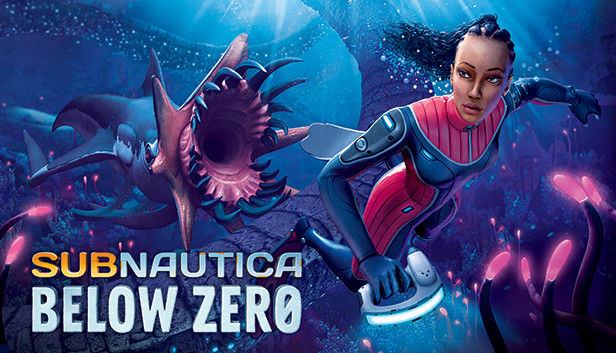
A sequel has no business being this tender. Unknown Worlds Entertainment shipped Subnautica: Below Zero into Early Access in early 2019 and let it surface as a 1.0 release on 2021-05-13, and somewhere in those two years the studio quietly rewrote what a Subnautica game is allowed to feel like. The original earned its cult status by stranding you in silence and daring you to learn the ocean alone. Below Zero hands you a missing sister, a talking alien riding along inside your scanner, and a frozen world the color of bruised ice — then asks whether you can still feel that old dread when the game is finally willing to talk back.
The numbers say the gamble landed. Roughly 95,779 Steam reviews hold a 90 percent positive rating, IGN stamped it a 9.0 under the headline of a small-but-gorgeous expansion, and the work picked up a BAFTA narrative nomination on its way through 2022. That is a strange resume for what is, on paper, a half-sized standalone follow-up — a map about half the original's footprint, an ocean roughly half as deep. Yet density papers over the shrinkage more often than not, and the Arctic seas of planet 4546B carry an identity the tropical reef never had.
What follows is a six-dimension teardown built around one question: why is Below Zero the narrative-driven entry point into the Subnautica universe, and which door — returning veteran or total newcomer — should you walk through. The crystal caves, the purple vents, the blizzard-swept mountains, the philosophy lessons delivered by an alien named AL-AN — all of it earns scrutiny. So does the map that runs out, and the Sea Truck that split the fanbase down the middle. Below Zero is the warmer, sadder, talkier Subnautica. Whether that is an upgrade or a step backward is exactly the argument worth having.
Story | 8.5/10
Storia: 8.5/10A double helix of grief and ancient history

The original Subnautica told its story by refusing to tell you anything. Below Zero does the opposite, and it braids two strands that pull in opposite directions until they meet. The near strand belongs to Robin Ayou, a scientist who comes to the polar reaches of 4546B chasing her vanished sister Sam, an Alterra researcher who died on a secret assignment. You piece Sam together the way the series has always asked you to — audio logs, work journals, the leftover clutter of a life — and what you assemble is bleaker than anything the first game attempted. Sam found Alterra running a covert program around an alien pathogen, the Kharaa, tried to blow the whistle, and was silenced by the corporation for it.
That single thread does more emotional damage than the entire first game. When Robin finally reaches the truth of Sam's death, her breaking voice is one of the most genuinely wounded moments any 2021 script produced, and it anchors a strain of anti-corporate anger the franchise had never carried. This is no longer a story about a ship that fell out of the sky. It is a story about who gets buried so a quarterly report stays clean, and the polar setting — beautiful, indifferent, lethal — keeps the sentiment from curdling into a lecture.
The far strand reaches back a thousand years. Somewhere in the ice you find AL-AN, a consciousness belonging to the Architects, the species that deliberately released the Kharaa to study how a plague crosses between worlds and then lost control of the experiment, sterilizing the planet. Tracking AL-AN's scattered temples and records to rebuild his body layers a deep-time science fiction onto Robin's very human errand. One story is a sister you can still mourn; the other is a civilization that mourned itself out of existence. They rhyme, and the rhyme is the point — Robin's small private loss and the Architects' planetary one keep handing each other meaning, so that finishing one strand without the other would leave the whole thing feeling unbalanced and thin.
The talking alien, and the argument about talking at all

AL-AN is the headline. As an alien mind sharing space with a human host, he speaks to you the whole way through — explaining unfamiliar technology, debating Architect philosophy, offering flat clinical observations about human behavior, and occasionally drifting into something close to awe about the rules of the universe. The performance is delicate enough to lift him past the usual robot-sidekick register into a personality with weight, and the player base settled on a consensus quickly: best supporting voice of any 2021 release. His register shifts on purpose. Hard science arrives in a precise academic tone; civilization, death, and responsibility arrive in slow poetry; small bewilderments — why do humans cook food at all — arrive with a dry warmth. Across a roughly 25-hour main path he never wears out his welcome.
He is also the fault line. The first Subnautica had no dialogue and no characters; you taught yourself the world through scanned objects and recovered logs, low on information and pure on discovery. Below Zero adds a full plotted campaign, voice work, conversation, a companion who never quite shuts up, and a protagonist with a rich interior monologue. One camp calls that the correct evolution. The other camp says it traded away the lonely, unscripted dread that made the original singular. Both are right, which is the honest thing to say about it.
The ending hands the choice to you: help AL-AN leave 4546B, or let him stay bound to Robin. Both endings come with full cinematics and a closing philosophical beat, and both make you complicit in a civilization's survival rather than a witness to it. Stack that against the field — the original stays mute, Sons of the Forest commits to a campaign but lives on land, The Long Dark freezes you beautifully but starves its plot of density — and Below Zero owns the narrative-driven undersea lane outright. That is why story lands at 8.5. It clears the original by a full tier without ever reaching the script craftsmanship of a top-shelf RPG, and for a sandbox survival game, that middle altitude is already the upper end of the genre.
Audio | 8.3/10
Audio: 8.3/10A score that haunts the narrative, not the deep

Ben Prunty and Simon Chylinski split the soundtrack, and the result leans into ambient electronic synthesis braided with cold polar orchestration. The cues sit where the story needs them. Robin's theme threads under her interior monologue and slowly builds your attachment to a woman you mostly know through other people's recordings. The Crystal Caves cue trades melody for a deep violet drone and a low, persistent pulse that presses down on the chest. The AL-AN material pairs sparse strings with a thin synth wash, giving his philosophy somewhere to float. And the frozen-Leviathan motif lands the hardest — it swells the first time you see that enormous corpse sealed in a wall of ice at the Phi excavation site, and it turns a piece of environmental storytelling into a gut punch.
The catch is honesty about the ceiling. Measured against the original's score — that unkillable engine of open-water terror — Below Zero chooses emotional atmosphere over dread, and it never produces a hook that escaped the game the way the first soundtrack did. The original got chopped into a thousand thalassophobia videos. Below Zero never earned that kind of viral memory, and pretending otherwise would be dishonest. This is the wall the audio dimension cannot climb past.
Where the sound design actually wins

Underwater acoustics are the real triumph. Sound propagation delay smears anything distant, so inside a dense kelp forest you can roughly place a creature without ever pinning it exactly — close enough to feel watched, vague enough to keep you guessing. Leviathan roars carry genuine 3D space; you can read distance and bearing in the open deep, right up until the current reflects the sound and convinces you the thing is on every side at once. Even the Sea Truck participates: the engine note thickens as you bolt on more modules, so the vehicle's growing burden is something you hear before you feel it in the handling.
The signature trick is the Leviathan warning system. Cross into the territory of a Shadow Leviathan or a Chelicerate and the music drops mid-phrase to a low, heartbeat-like pulse, and the message lands in your spine before your brain catches up: an apex predator is close. The horror here never leans on a jump scare; it builds pressure with sound until you instinctively slow down, kill your vehicle lights, and hold your breath in the dark. It is a textbook case of audio-driven tension.
The localization is the rare bonus. Below Zero is one of the few independent sandbox survival games with official simplified Chinese voice acting, and it is good — Robin carried by a professional cast, AL-AN's delivery keeping his philosophical poise and clinical calm intact, the supporting roles fully covered, with free toggling between Chinese and English tracks. Domestic players crowned AL-AN the best Chinese-voiced AI character of 2021. That full localization is precisely why audio lands at 8.3 rather than lower, and it is the kind of access most genre peers never bother to fund.
Visuals | 8.5/10
Grafica: 8.5/10Translucent ice and the art of a colder ocean

Below Zero runs on the same Unity foundation the original used, upgraded rather than reinvented. The water rendering carries refraction, reflection, and scattered light, so the surface shifts hue with depth; every creature gets its own skeletal rig and behavior loop; an ocean-density system lets depth bend the lighting and drain color saturation; the polar weather stack delivers blizzards, drifting floes, and aurora; and voxel terrain keeps the seabed diggable and locally destructible. The tech is stable rather than fashionable — no ray tracing, no DLSS, no FSR. A 30-series card runs 1080p at 60 comfortably, while 4K at 60 wants a 40-series part. After the original's notoriously rough Early Access performance, that stability is itself a visible upgrade.
The art direction is where the game stops borrowing and starts speaking. The original's gold coral reef gives way to a palette of glacial blue, violet, and teal. Shallow ice fields read pale blue and white; the purple vents go deep violet over black rock streaked with red life; the Crystal Caves drown in dark purple, blue crystal, and pure shadow; the snowy surface is white plain and grey stone; the lilypad islands bloom enormous and green. Every region carries a fully distinct visual signature, and that legibility is the core of the game's impact. Where the original sold warm dread, Below Zero trades it for a cold despair. The shift is not just a recolor; it changes how the ocean reads emotionally. Tropical water invites you in and then turns on the welcome, while polar water never pretends to be friendly in the first place, and that honesty gives the frozen world a steadier, more mournful kind of beauty.
Seven Leviathans and the spectacle of the frozen dead

The seven Leviathan-class organisms are the graphical headline. The Glow Whale runs thirty meters of gentle giant, casting soft blue light across the deep. The Chelicerate hunts with a pincer-shaped maw. The Shadow Leviathan camouflages itself almost completely, given away only by faint bioluminescent dots. The Ice Worm erupts from beneath the surface in an ambush from the cold. And the Frozen Leviathan, killed by Kharaa infection and sealed in the ice wall at the Phi excavation site, delivers the single strongest visual in the game — you can just make out the silhouette of an enormous body through the ice, and the research-station corridors built around the corpse let you stand inside the historical scene of a catastrophe and feel its scale.
The land segments are the first time the studio brings this craft above water, and they show their newness. The white plains and grey crags of the snowy surface gain real atmosphere from blizzard particles, and the Pengling — a penguin-shaped charmer — became one of the most beloved creatures in the community, while the Snowstalker gives the surface a genuine survival edge. But the land plainly underperforms the water: a decade-plus of undersea craft against a first attempt shows in thinner vegetation, looser snow physics, and aurora that never matches the polish below the waves. That gap is exactly why graphics settles at 8.5 rather than higher.
Minimal HUD and the platform spread

The interface keeps the original's austerity: the HUD shows only health, oxygen, food, water, and temperature, with no quest list, no minimap, no hotbar. You navigate on memory and read your position off the environment. That minimalism is a gift to immersion, but the first three hours still ask newcomers to make peace with unguided open-world exploration. The visibility system rewards the patience — water turbidity varies by region, the Crystal Caves go near-total dark and force you onto vehicle lights, and the shallows scatter sunlight into moving caustics that keep the game easy on the eyes well into 2026.
Platform coverage is a quiet strength: native on Windows, macOS, PS4, PS5, Xbox One, Xbox Series, and Switch at 30fps, with Linux via Proton — a rare full sweep for an independent sandbox survival title. The one regression is the loss of VR. The original let you sink into the ocean in headset; Below Zero, weighed down by land exploration and the temperature layer, judged the complexity too high and dropped it. For a game this committed to atmosphere, that is the visual feature most worth mourning.
Combat | 8.0/10
Gameplay: 8/10The Sea Truck, and the fight it started

The single largest design change is the Sea Truck, a modular submarine that replaces the original's pairing of the nimble Seamoth and the epic Cyclops with one extendable spine. You bolt on six classes of module — storage, an aquarium for moving live creatures, a fabricator so you can craft far from base, a sleeper for expeditions, a teleporter to snap home, and a docking bay for the Prawn Suit. Each runs about five meters, you can stack several, and at full length you are hauling a seven-or-eight-car underwater train. It does tricks the old vehicles could not: the front cab detaches to slip down narrow passages alone, the full chain crawls when towed so you weigh speed against capacity, it parks as a mobile base far from home, and it threads light puzzles that demand you separate and re-dock through tight gaps.
It is also the most contentious choice in the game. The fans love the flexibility and the mission-shaped versatility; the detractors mourn the Cyclops. That original sub ran forty feet, you walked its three interior decks, you felt like a captain on a bridge — and split into detachable modules, the Sea Truck trades that whole-vessel grandeur for a tow speed that drags and a docking rhythm that never quite flows. Whether you forgive it depends entirely on what you wanted the vehicle to be.
In practice the divide is less about features and more about fantasy. The Cyclops sold a power trip: a moving fortress you commanded and defended, lights blazing into the black. The Sea Truck sells a logistics puzzle: what do I bolt on tonight, what do I leave behind, how slow am I willing to crawl for the cargo I want. Both are legitimate survival pleasures, and the game is plainly built around the second one. The friction is real for anyone who arrived wanting the first.
Survival pressure, the cold, and the case for running

Underneath the vehicle sits the familiar survival stack — oxygen capping your dive time, food from fish and kelp and cooking, water from purifiers, plus stamina and health — now joined by temperature. The cold is the new lever: exposed on the surface you lose heat fast, you need insulated gear and a campfire or a base to recover, and the land segments end up more stressful than the dives because of it. The Prawn Suit returns and expands, carrying four modules — a drill for mining, a defense arm for fending creatures off, jet thrusters for leaping and gliding, and a grappling claw — plus a new cold-resistance upgrade for the deepest freezes. It is the one vehicle that can actually trade hits with a Leviathan, and even then, running stays the smarter math.
The seven Leviathans each demand their own answer. The passive Glow Whale is harmless enough that you can drift into its halo; the Sea Monkey gardens are placid translucent giants you can swim inside. The aggressive ones rewrite the rules: the Chelicerate rules the Tree Spires and must be slipped past on stealth, the Shadow Leviathan in the Crystal Caves is near-invisible and reads as the scariest thing in the game, the Ice Worm strikes from below on the surface where open-water combat is off the table and a sonic decoy is your only out, and the Brute Shark greets early players in the Twisty Bridges as their first real scare.
Stripped-down combat is the series signature and the heart of the tension. A survival knife and a perimeter charge push small creatures off; medium ones you simply flee; Leviathan-class threats are effectively unbeatable, Prawn Suit included; and your real toolkit is repellents, perimeter fields, and the route you choose. Every Leviathan encounter becomes a question — punch through, or take the long way around — and that choice is the genre's purest tension. Set against the field, where the original skips a real plot, Sons of the Forest lives on land, and Oxygen Not Included is management without exploration, Below Zero owns its lane. That is why gameplay lands at 8.0: the innovation is obvious, and the Sea Truck argument is the ceiling holding the score down.
Content | 5.5/10
Contenuti: 5.5/10The map that runs out

The playtime curve offers three honest tiers: a rushed critical path lands around 25 hours on a first run, the main path plus the meaningful side content and exploration stretches to roughly 40, and a completionist sweep — every collectible, every build, every creature scanned — runs about 60. Set that against the original's 30-hour spine and 80-hour platinum, and Below Zero is plainly the shorter game. That brevity is the whole reason it wears the standalone-expansion label rather than a full sequel's: there is simply less of it.
The shrinkage is the dimension's defining wound. The original's open ocean sprawled across eight major biomes you could roam between; Below Zero offers seven, each smaller, over an ocean about half as deep, and somewhere past the 30-hour mark you feel the edges of the world close in — the unmistakable sense that you have already seen all of it. The studio's counter-philosophy is density over volume: interest points cluster tighter here, more to find per square meter, and it genuinely helps. It just never fully offsets the gut feeling of a map that contracted. This is the core of why content sits at a stark 5.5. Density is a real virtue, and a tighter world can feel more intentional than a sprawling one — but volume is also a survival pleasure in its own right, the simple comfort of an ocean too big to exhaust, and that is the pleasure Below Zero cannot offer. No amount of careful curation fully replaces the feeling of a frontier that keeps going.
Seven biomes, no paywall, and a modest mod tail

What the seven biomes lack in size they make up in identity. The shallow ice fields teach the basics; the purple vents host Penglings and the vent gardens; the Tree Spires field the Chelicerate as a mid-game threat; the Crystal Caves hide the Shadow Leviathan as the apex predator zone; the frozen undersea caverns hoard late resources; the snowy surface runs the land segment with Ice Worms and Snowstalkers; and the lilypad islands close things out with the Glow Whale. Each carries its own palette, fauna, and resource map, so the 25-hour spine keeps finding new textures even as the borders tighten.
The economics are clean. Below Zero ships as the original's standalone expansion with no paid DLC of any kind — every update has been a free patch, small fixes and quality-of-life passes since the 2021 launch — and it keeps the series promise of a complete box with no upsell hanging over it. That is rare friendliness for the genre. The mod tail is more modest: Steam Workshop never supported the game, but Nexus Mods accumulated a real library of Reshade and ENB visual passes, 4K texture swaps, difficulty rebalances, vehicle customizers, and community Chinese patch packs. Unity's structure blocks new biomes or new Leviathans, so the mods polish rather than expand — enough to give the PC version a longer tail than console, landing the game's malleability squarely mid-pack among independent survival sandboxes.
A franchise moving on, and what it costs you to enter

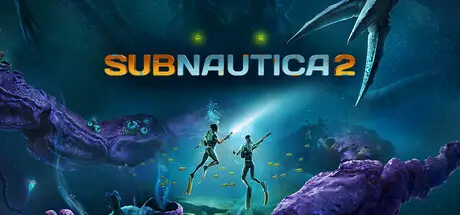
Unknown Worlds has since turned toward the next thing. Subnautica 2 opened into Early Access in 2025, and Below Zero has settled into a maintenance phase — critical bug fixes only, no more major content drops. Community attention drifted partly to the follow-up and player activity softened, yet the 89 percent positive rating has held steady, which tells you the base of the experience aged well. On pricing, the full version lists around the equivalent of a mid-tier indie tag, routinely halves in seasonal sales, and bottoms out lower still at its historic floor — friendly closure for veterans completing the AL-AN arc, and a genuinely low cost of entry for newcomers.
Sixty hours of full experience, measured against the original's eighty and the in-development Subnautica 2, keeps the per-hour value high in the upper band of independent survival sandboxes. For anyone on a tight budget, this remains one of the cheapest doors into the Subnautica universe, and the creator community keeps churning out guides and playthroughs that keep the ecosystem warm even with the studio officially in maintenance. The content score is the franchise's honest self-assessment: less game than the original, priced and structured to admit it.

Commenti 0
Ci interessa la tua opinione
Benvenuto! Raccontaci cosa pensi di questo gioco: chi arriva per primo potrebbe avere una sorpresa.
Ancora nessun commento. Dicci cosa pensi di questa recensione.