Notizia
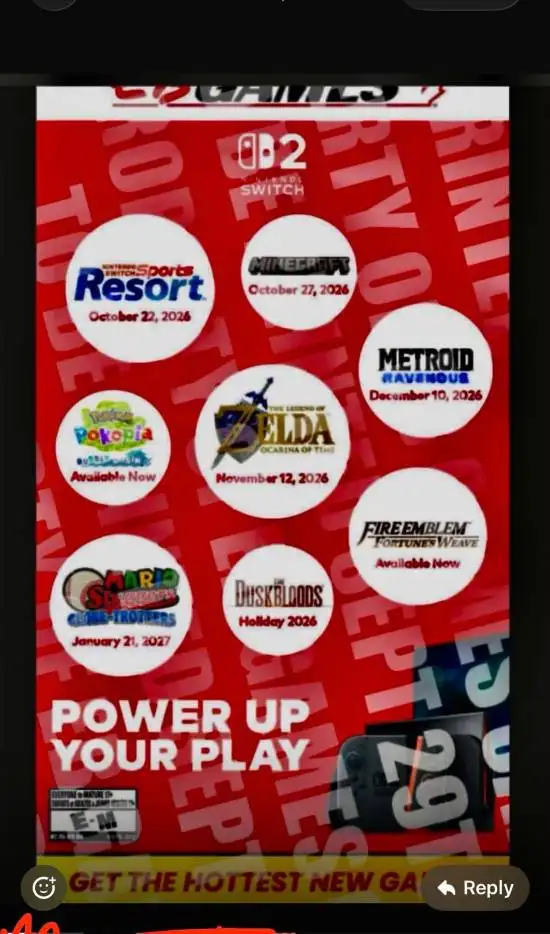
EB Games Leak Reveals Ocarina of Time Remake Release Date
A Reddit user claims an EB Games poster leaked several Switch 2 release dates, though the listing remains unverified. Ni
















The beginning of a game is an empty backpack: a few unremarkable squares lying there quietly. You pick a sect, click “next,” and martial arts, weapons, and internal skills are tossed in like clothes casually thrown into a suitcase, piled together in a mess. At that moment it suddenly feels less like the start of an RPG and more like the opening of a road movie that’s just powered on: the character hasn’t decided where to go yet, but the luggage is already half full.
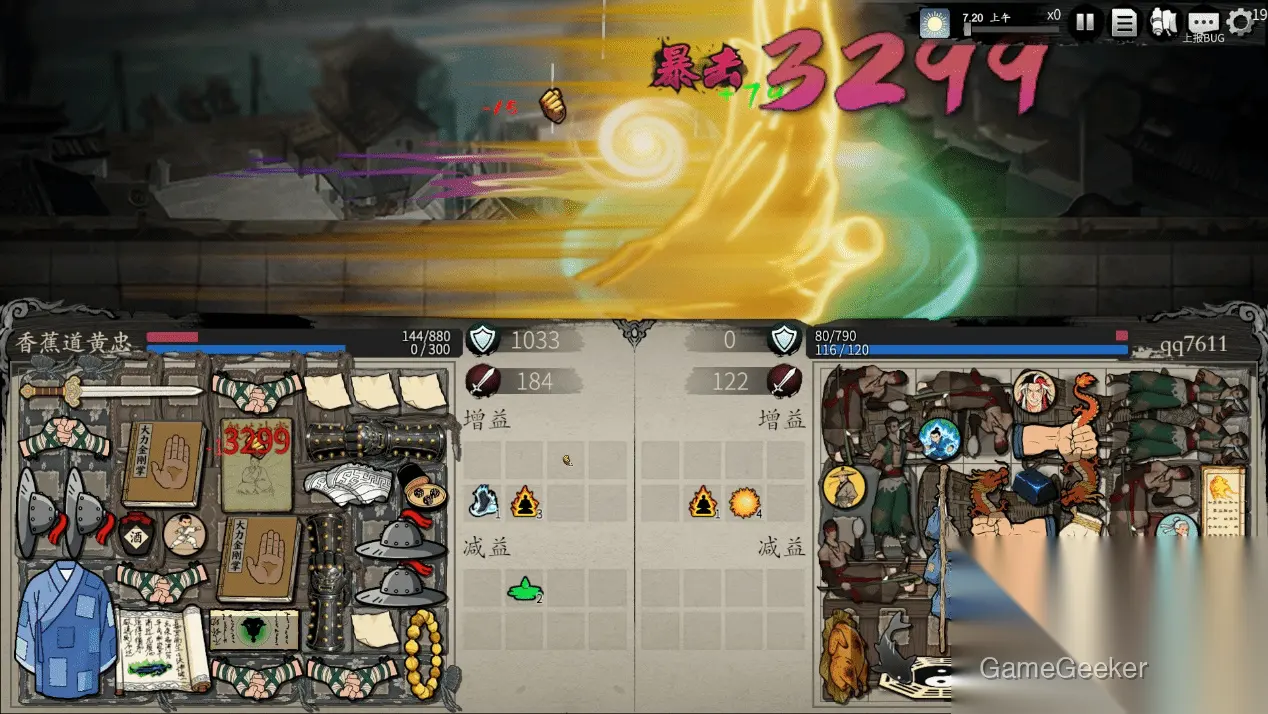
From the premise alone, Backpack Hero: Wuxia can easily be summed up in one line as “inventory management + Wuxia roguelike.” But once you actually start moving each item around between those little squares, you’ll find its temperament is closer to a martial arts film broken up into turns. You’re using the pause key to arrange the shots and rehearse your positioning, trying to make the choreography of the next fight more elegant, rather than merely squeezing out a bit more damage on the numbers. The ten stylistically distinct sects are like ten different protagonist templates: some are born for fast, close combat, others are destined to rely on internal cultivation and attrition. Every adjustment you make in the backpack is, in essence, answering one question: how exactly is this character choosing to live?
On the narrative level, this “jianghu” isn’t built through long dialogues and cutscenes, but through a journey pieced together from nodes and branching paths. You move along the overworld map, and each time you encounter a shop, a battle, or some other event, it’s like pushing open a door labeled “possibility,” and your playstyle is rewritten along the way. The randomness here is not about indulging chaos; it uses a roguelike “battle royale” tempo to force you to make choices amid regret: do you give this slot to a powerful weapon, or save it for an internal skill you might find later? Every moment of “there’s no more room” quietly shapes a martial arts story that is inherently flawed and a bit obsessive.

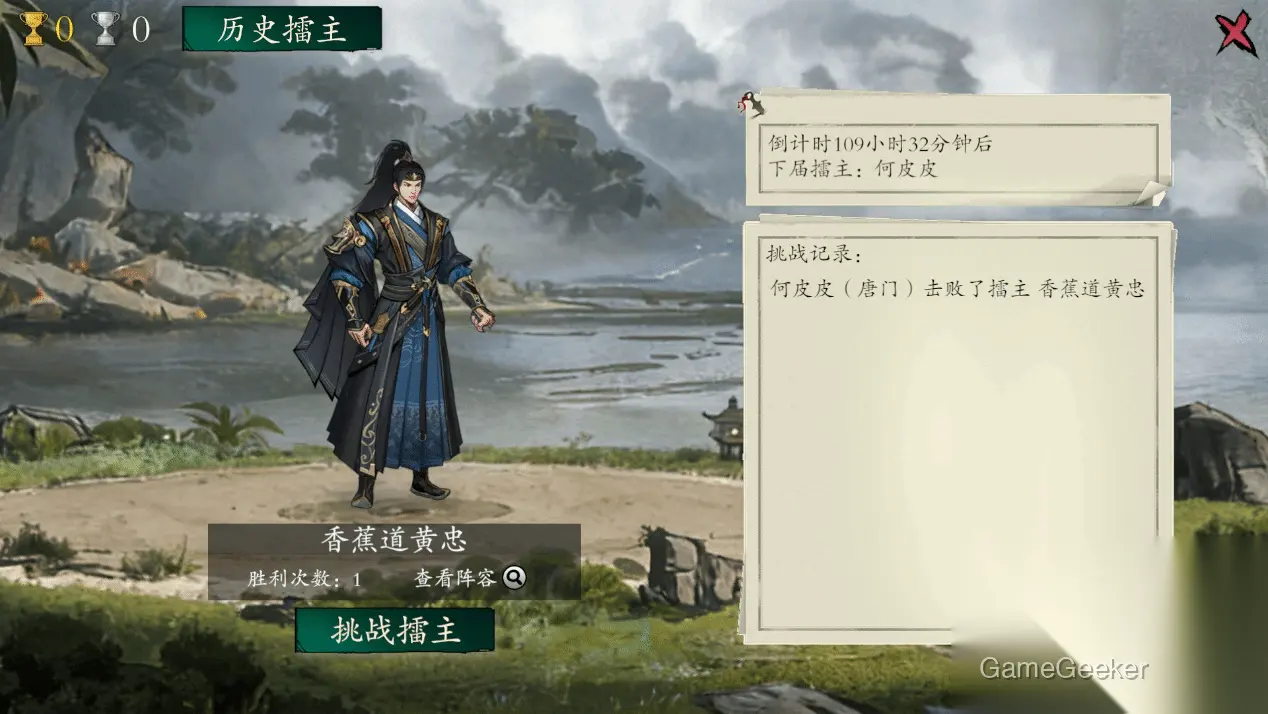
From another angle, the asynchronous battles and “loot stealing” mechanics are where this “martial arts film” comes closest to an ensemble drama. You’re not facing formulaic AI, but mirrored snapshots left behind by other players at certain moments. Their neatly arranged items are like little treatises on their techniques. Scouting their backpack before a fight feels like leafing through the jianghu résumé of an unfamiliar master. And when you win and pick trophies from their backpack to claim as your own, there’s a trace of harsh realism: titles and reputations in the martial world may be forgotten, but effective weapons and tactics will be inherited by the next traveler. The arena mode elevates this ensemble to a more theatrical level. Each week’s champion stands on a small stage under a spotlight; those who remain standing are often not the ones with the highest damage, but the ones with the most stable builds and the fewest weaknesses.

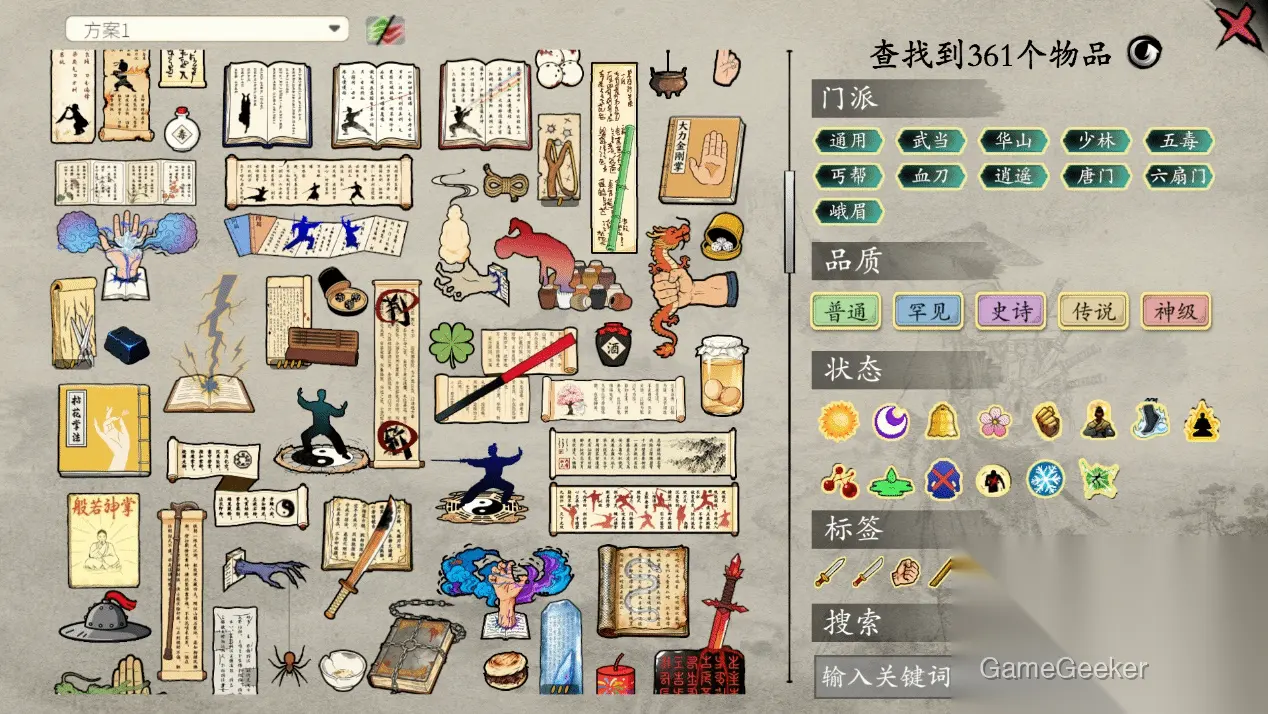
Behind this design you can sense the ambition of the development team—they’ve explicitly said they want to make a game that truly requires players to “think” and “make trade‑offs.” This doesn’t feel like an exaggeration in practice, because once the more than 300 items in the compendium gradually unlock, it’s hard to keep treating it as a simple power‑grinding system; it feels more like a constantly expanding Unofficial History of the Martial World. Every internal skill, technique, and elixir implies a possible build story. From a character‑building standpoint, though, this ambition currently remains mostly at the level where “the moves are the protagonists.” The differences in temperament between sects have already been sketched out, but if you’re expecting fully realized martial heroes with complete arcs and personality turns, things are still a bit thin for now, which is a slight pity.
In terms of purchase advice, Backpack Hero: Wuxia’s current launch price on Steam is not high. With a 15% discount in the first two weeks, it comes to 39.1 RMB. For a single‑player title focused on strategic deck‑building, while also supporting asynchronous battles and arena competition, its scale and price are fairly well matched. More importantly, it elevates “inventory management”—something usually treated as just a functional menu—into a component of narrative expression. Repeated failures and restarts are no longer merely numerical grind runs, but feel like constantly rewriting the fate of the same wandering swordsman. If you’re used to treating games as stories to be read, and you enjoy endlessly fine‑tuning those little grid squares, then this small backpack may offer you a journey through the jianghu that lingers longer on the palate than you might expect.





Commenti 0
Ci interessa la tua opinione
Benvenuto! Raccontaci cosa pensi di questo gioco: chi arriva per primo potrebbe avere una sorpresa.
Ancora nessun commento. Scrivi il primo.