
Notizia
007 First Light Drops to $24.69 in Its First-Ever Sale, Beating the Previous Low
007 First Light gets its first discount, with Green Man Gaming stacking an extra 18% off the 20% official price cut plus
















Just a couple of days ago, I was thinking that for a game like Crimson Desert, which centers on open-world exploration, the biggest fear isn’t that the map is too large—it’s that the moment you reach the border, the system shuts the gate in your face. For players using Intel Arc graphics cards, those first few days after launch felt exactly like that: the world was right in front of them, yet they couldn’t get in.

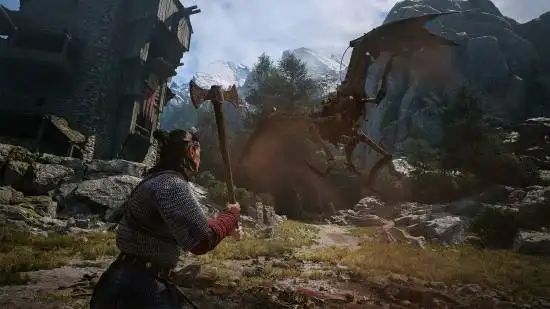
The whole story isn’t actually that complicated. Developed by Korea’s Pearl Abyss, Crimson Desert is an open-world action-adventure game that officially launched on PC, PS5, and XSX on March 20. But after release, quite a few Intel Arc users reported that the game would not run properly. The developers later acknowledged that Intel Arc graphics cards were not supported at this stage, and also opened a refund channel. At the very least, that response clearly put up the signpost first.
Seen from that angle, today’s update can be regarded as reopening that previously blocked path. In the “FAQ” section of the update announcement, the development team has now explicitly stated that Crimson Desert is currently playable on Intel Arc graphics cards. For Arc users who had been waiting on the sidelines, that is unquestionably genuine good news.

But beyond the map itself, there is an even more important line: support is one thing, optimization is not fully there yet. The official statement also explains that optimization for Intel Arc is still ongoing, and that depending on different hardware and software environments, players may still encounter frame rate drops or instability during gameplay. In other words, it’s more like “you can finally get on the road,” but not yet at the point of “feeling confident enough to head out on a long journey.”

What this really shows, in the background, is an old problem with PC platform optimization: at launch, mainstream GPU vendors usually get support first, while relatively more niche hardware ecosystems are often left to be addressed later. Intel had previously responded as well, saying that over the past several years it had contacted Pearl Abyss multiple times in hopes of helping the developer optimize for its hardware. As for why Arc support was not enabled at launch, Intel’s stance was also very direct: ask Pearl Abyss.
If you are considering buying Crimson Desert, my advice is simple. For PC players using Intel Arc graphics cards, it can now go back onto your wishlist, but it is still not quite the right time to jump in expecting a “fully complete launch version.” It would be better to first look at player feedback after the update, confirm stability in the environment you normally use, and then decide whether to buy it. If you have already requested a refund, this is also worth continuing to watch as future patches arrive.
For an open-world game that emphasizes immersion, being able to enter smoothly and explore reliably is just as important as whether the map itself looks good. Discovering a new region after crossing a mountain is certainly exciting; but if the game starts dropping frames or crashing the moment you leave the village, then even the largest map feels like an unfinished travel brochure that never fully loaded. Crimson Desert has finally brought Arc players to the starting line—what really matters next is when it will finish paving that road completely smooth.




Commenti 0
Ci interessa la tua opinione
Benvenuto! Raccontaci cosa pensi di questo gioco: chi arriva per primo potrebbe avere una sorpresa.
Ancora nessun commento. Scrivi il primo.