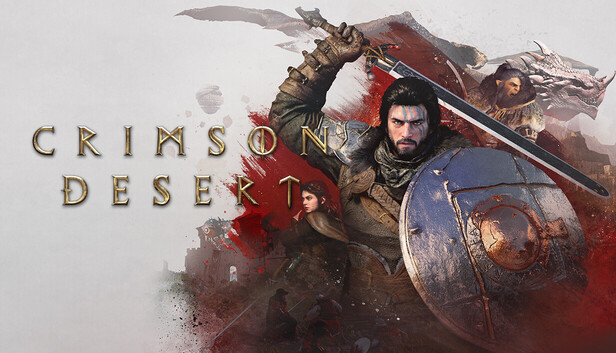
 Crimson Desert EnhancedFetching price~ 69,99€
Selezioni popolariVedi tutto
123456789101112
12 Best Mystery Games on PC (2026)
12 Best Space Sim Games on Steam (2026)
12 Best Story-Rich Games to Play (2026)
12 Best Turn-Based Tactics Games on Steam (2026)
12 Best Puzzle Games on Steam (2026)
12 Best Games to Play with Friends on PC (2026)
12 Best JRPGs on Steam (2026)
12 Best City Builder Games on Steam (2026)
12 Best Zombie Games on Steam (2026)
12 Best Free Indie Games on Steam (2026)
12 Best Short Indie Games to Try (2026) — Done in One Evening
12 Best Cozy Games on Steam (2026)
Giochi simili popolariVedi tutto
Games Like PowerWash Simulator - 12 Best Relaxing Cleaning and Restoration PicksGames Like ARC Raiders - 12 Best Extraction and Co-op Survival ShootersGames Like PEAK - 12 Best Co-op Climbing and Survival PicksGames Like R.E.P.O. - 12 Best Co-op Horror PicksGames Like Clair Obscur: Expedition 33 - 12 Best Turn-Based RPG PicksGames Like Path of Exile 2 - 12 Best Action RPG and Loot PicksGames Like Road to Vostok - 12 Best Hardcore Survival Shooter PicksGames Like Mina the Hollower - 12 Best Top-Down Action and Zelda-Like PicksGames Like Slay the Spire 2 - 12 Best Roguelike Deckbuilders to Play NextGames Like Resident Evil Requiem - 12 Best Survival Horror PicksGames Like Baldur's Gate 3 - 12 Best CRPGs and Turn-Based RPGsGames Like Monster Hunter Wilds - 12 Best Co-op Hunting and Action RPG PicksGames Like Hollow Knight: Silksong - 12 Best Metroidvania Picks (2026)Games Like Dead by Daylight - 12 Best Asymmetric & Co-op Horror PicksGames Like Final Fantasy VII Rebirth - 12 Best Action RPG & JRPG PicksGames Like Forza Horizon 6 - 12 Best Open-World Racing & Driving Picks (2026)Games Like Solarpunk - 12 Best Cozy Survival and Crafting GamesGames Like 007 First Light - 12 Best Stealth and Spy GamesGames Like Subnautica 2 - 12 Best Underwater and Alien-World Survival GamesGames Like Hell Let Loose - 12 Best Tactical Milsim Shooters
Recensioni popolariVedi tutto

Hades II — Recensione

Clair Obscur: Expedition 33 — Recensione

Katana ZERO — Recensione

The Long Dark — Recensione

Shift At Midnight — Recensione

Middle-earth™: Shadow of Mordor™ — Recensione

The Mermaid Mask — Recensione

Killing Floor 2 — Recensione

The Outlast Trials — Recensione

American Truck Simulator — Recensione

Voidling Bound — Recensione

Go-Go Town! — Recensione

Desktop Explorer — Recensione

Dead as Disco — Recensione

Crushed In Time — Recensione

Beastro — Recensione
"Red Desert" Lockpicking Is Absurd — Is This Design Really Fun?
Crimson Desert, developed by Pearl Abyss, is an open-world action-adventure game launching on PC, PS5, and XSX on March 20. As the game officially releases, players and guide writers have begun digging deep into the experience, and it turns out that a seemingly minor system has sparked the first major controversy: lockpicking.
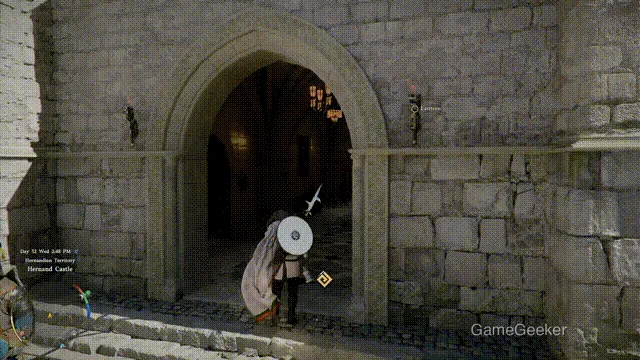
PC Gamer writer Sean Martin specifically criticized the game's key system, even calling it one of the most absurd mechanics he has seen in his career. The core issue is not complicated: there are a large number of ordinary locked doors in the game, but instead of “one key per door,” they all consume a single universal key type. As long as the player walks up to a door and tries to open it, if it happens to be locked, a key is immediately deducted from the inventory.
What makes it even more frustrating is that the game provides no way to anticipate this. In other words, before interacting with a door, players have no way of knowing whether it is locked or not—they can only test it themselves. That makes the whole process feel less like puzzle-solving or resource planning, and more like a random attrition mechanic in a sandbox: you are not making meaningful decisions, you are simply using your actions to find out whether the system will suddenly eat one of your keys.

Sean Martin mentioned that the first time he encountered this, he thought it was a problem with keyboard-and-mouse controls. He even reloaded a save and switched to a controller to test it again, only to get the same result. And Crimson Desert has already been noted for having some keyboard-and-mouse issues, which only further increases the cost of accidental inputs. As long as you are carrying keys, taking a slightly wrong step in a hallway and bumping into a locked door can cause your resources to vanish instantly. He personally wasted keys at least twice on relatively unimportant doors, such as storage rooms.
If this were a system built around hardcore survival-style management, players could at least theoretically avoid the risk through storage chests or mount inventory. But according to the article, Sean Martin did not find any similar storage system during his 50 hours with the game. Nearly all items have to be carried on the player, and keys cannot be stored on horseback either. While it is possible to drop keys on the ground, he was not sure whether the system might eventually despawn them. As a result, the entire resource-management logic feels awkward: the game pushes you to expand your inventory through quests, while also designing keys as a consumable that becomes risky simply by being carried.

From a sandbox perspective, a good open-world system should encourage players to make choices, not create informationless attrition. Keys are not especially rare—you can buy them or loot them—which suggests the design was probably not intended to strictly limit resources, but rather to create a kind of uncertain door-access interaction. The problem is that randomness is not the same as fun, especially when, by the time you actually need to open an important door, you may already have wasted your keys on trivial side rooms.
For players preparing to jump in, my advice is straightforward: do not treat keys as something you should always carry in the early game; restock only before entering areas packed with buildings. When moving through hallways and inside villages, try to avoid brushing too close to doors to reduce accidental interactions. If community feedback continues to build, Pearl Abyss will likely have to prioritize adjusting this system—at the very least by adding a prompt indicating whether a door is locked, or by changing it so a key is only consumed after confirmation.

Sean Martin even ended by suspecting that this mechanic feels less like an oversight and more like an intentional attempt by the developers to turn every door into a gamble. The problem is that players may be willing to gamble on treasure chests, loot, or exploration routes, but very few people want to gamble on “I just wanted to push open a door.” This controversy, it seems, is only just beginning.
Crimson Desert EnhancedFetching price~ 69,99€




Commenti 0
Ci interessa la tua opinione
Benvenuto! Raccontaci cosa pensi di questo gioco: chi arriva per primo potrebbe avere una sorpresa.
Ancora nessun commento. Scrivi il primo.