
Notizia
007 First Light Drops to $24.69 in Its First-Ever Sale, Beating the Previous Low
007 First Light gets its first discount, with Green Man Gaming stacking an extra 18% off the 20% official price cut plus
















When the first 10 hours of a game feel like a new recruit handling a full set of gear for the first time—with too many buttons, too many systems, and feedback that still doesn’t feel quite intuitive—it’s really no surprise when word of mouth takes a hit first. The recent review turnaround of Crimson Desert is a very typical example of this.

In discussions on March 23, the most critical set of data came from Steam’s real-time analysis: players with 1 to 10 hours of playtime gave it a 69% positive rating; once playtime exceeded 10 hours, the positive rating rose to 82%. A swing like that is no longer just a simple case of “it grows on you the more you play.” It’s more like a complex tactical system finally clicking into place after a period of adjustment, with the whole unit at last able to fight in coordination.
In terms of how accurately this reflects the situation, the rebound in reputation isn’t because the game suddenly changed, but because players gradually adapted to its systemic logic. Available information suggests that early negative reviews were mainly focused on system complexity, friction-heavy controls, and general discomfort during the opening hours. What games like this fear most isn’t difficulty itself, but teaching and guidance that aren’t linear enough, causing many players to leave negative reviews before they’ve even figured out how things work. Strictly speaking, that doesn’t necessarily mean the game has poor fundamentals, but the early experience design really can be off-putting.

The media response is interesting too. IGN previously described Crimson Desert as a “Frankenstein’s monster stitched together from masterpieces.” The meaning is pretty clear: it brings to mind The Witcher 3 and Zelda, yet it doesn’t fully conform to mainstream industrial design templates. I think that phrasing is a bit harsh, but it does at least point to the core issue—it isn’t a standardized product that feels effortlessly smooth at first glance, but something with obvious seams and a distinct personality. If done well, that’s called ambition; if done poorly, it can easily come off like an awkward overhaul.
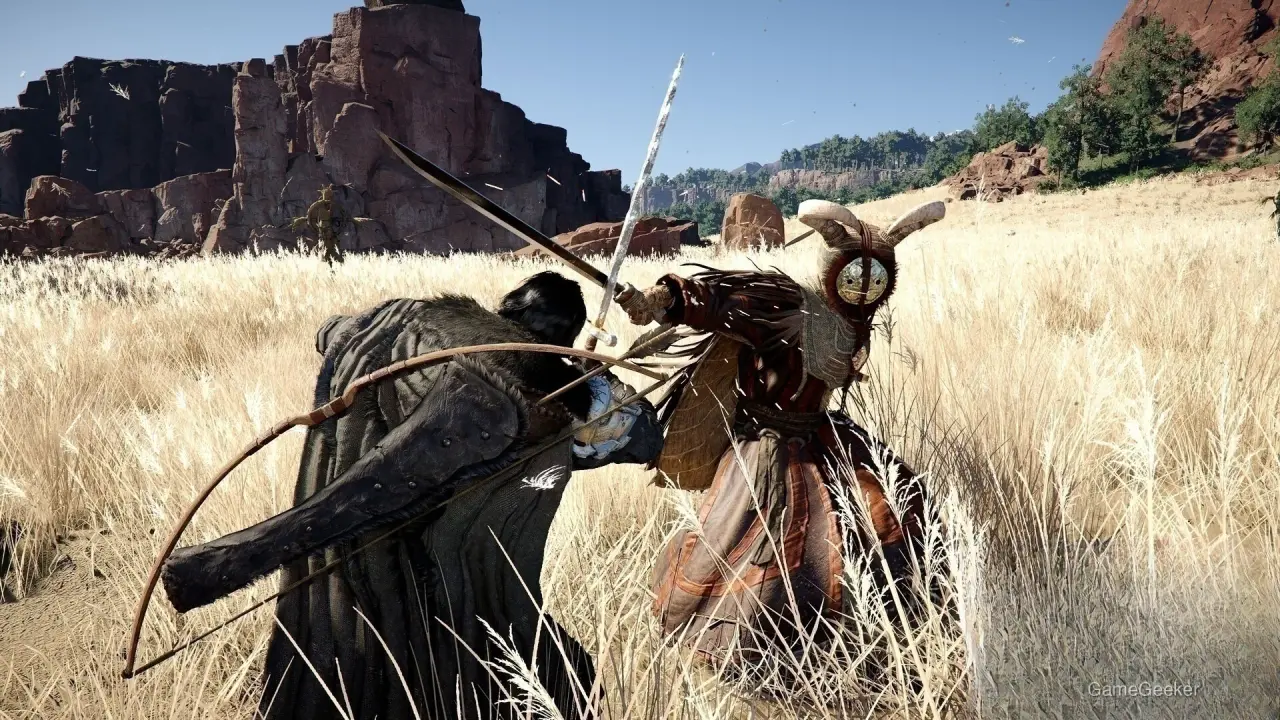
On the tactical level, the judgment from a PC Gamer reviewer after 75 hours of play is even more worth considering: this game isn’t suited to a “wolfing it down” style of progression, but is better savored slowly. In other words, its appeal may not lie in the first wave of firepower, but in the lasting momentum that comes after you gradually learn its rhythm. That also echoes the line: “Time is the key to unlocking this game’s charm.”
For ordinary players, my advice is straightforward: if you already dislike high system density and want the first two hours to feel instantly exhilarating, then Crimson Desert is probably not the kind of game you should force yourself through at launch; but if you can accept an adjustment period and treat it as a game that requires building operational habits and a framework of understanding, then waiting until after 10 hours to form a conclusion may be the more rigorous approach. The current polling around it is essentially discussing exactly this—whether you’re willing to endure a frontline-drill-like adaptation period in exchange for that “lasting payoff.”

My view is that this review turnaround for Crimson Desert shows that it is at least not just an empty gimmick dressed up to look impressive. Its problems lie in the pacing and barriers of the early game, while its strengths may be hidden in how the mid-to-late game unfolds. A game like this may not be for everyone, but as long as more players make it through those first 10 hours, its review curve will probably keep climbing.




Commenti 0
Ci interessa la tua opinione
Benvenuto! Raccontaci cosa pensi di questo gioco: chi arriva per primo potrebbe avere una sorpresa.
Ancora nessun commento. Scrivi il primo.