Notizia
"Red Desert" Plot Criticized as Thin: Can Gameplay Depth Really Mask the Flaws?
Red Desert Actors Respond to Story Criticism, State Gameplay Compensates for Shortcomings, Backgroun















At the beginning, I recalled Alec Newman’s remark: he compared the process of recording Crimson Desert to acting in a TV series whose center of gravity keeps shifting, with that drifting feeling of “new character setup every season, new direction every episode.” That actually illustrates how this game has long wavered in its narrative, while the protagonist, Clive, feels like he’s trapped in the cracks of a script that’s endlessly revised and never finalized, forced to piece together fragmented scenes into a single, coherent human being.

Looking back at the development information and tracing this timeline, you find that Crimson Desert’s story started out overburdened from the very beginning. It was originally conceived as an MMO prequel to Black Desert: the worldview and faction structure were erected first like an empty city, while the actual plot only began to slowly take shape about two years after voice recording had already started. This means that when the voice actors first entered the booth, all they had in hand were the world-setting documents and faction briefs, knowing almost nothing about the characters’ fates or the direction of the main story. This “shell first, heart later” sequence planted a kind of innate sense of detachment into the narrative from the outset.
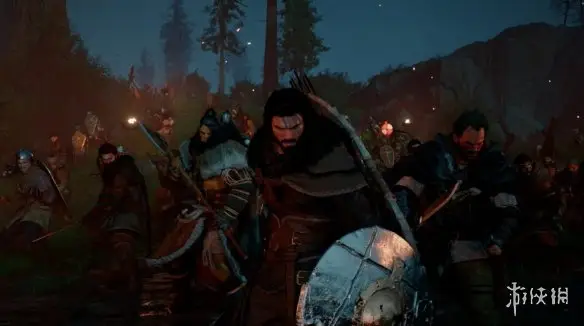
From another angle, turning an online prequel into a single-player title was in itself an ambitious pivot, like forcibly pulling a long, single-take character film out of what was meant to be a large ensemble piece. The problem is that when the focus shifts from “world first” to “character first,” the script very clearly arrived too late. It was only two and a half years into development that the team decided to emphasize the “family bonds” theme of the “Grey Mane Mercenaries.” This decision feels like a last-minute emotional throughline added in the editing room: not an inner logic that grows out of the very first scene, but more like a mid-production realization that the audience needs an emotional handhold, prompting the team to hurriedly go back and plant a few “family” foreshadowing moments in earlier sections.
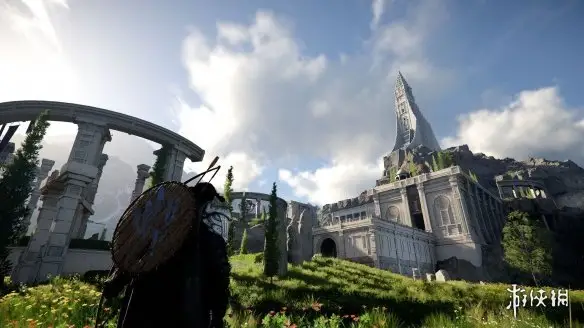
On the narrative level, this kind of remedial strategy is not entirely impossible; some films do find their true soul in reshoots. Crimson Desert’s situation, however, is a bit more delicate, because the developer has also emphasized that the real core of the work is still the open world itself. They acknowledge players’ criticism of the story, and thus consciously shift the weight back to gameplay and long-term immersion. This creates a slightly awkward tension: on one side, the newly added warmth and humor trying hard to turn the Grey Mane Mercenaries into a flesh-and-blood “wandering family”; on the other side, a strategic admission that what players may ultimately remember is still the endless map markers and scenic zones, rather than some campfire conversation between this character and that one.
The deeper problem is: when the creative process itself is so wavering, how are the characters supposed to be shaped? The materials Newman received early on were mainly about factions and world background rather than a clear story arc. That means many of Clive’s early lines were likely recorded while he was in a kind of “half-finished personality” state, then retroactively reshaped by the later-added “family bonds” and humorous tones. This inverted growth path makes the protagonist feel like a traveler who “grows up” in the editing room: his personality doesn’t unfold naturally along the events, but is pulled back for rewrites over and over by design meetings, and finally spliced into what we see now. That patchwork quality is something sensitive players will inevitably pick up on in the game.
From a player’s perspective, if what you care about most is narrative completeness and the coherence of character arcs, you’ll need to lower your expectations for Crimson Desert a bit. Think of it as a road movie with gorgeous scenery whose script is still being reworked—that might feel a little more comfortable. If, on the other hand, you came for the open world and systemic gameplay, treating this red land as a theme park you can linger in for a long time, and the Grey Mane Mercenaries as travel companions for roadside banter rather than characters in the serious literary sense, then that posture might be closer to the kind of “immersion” the dev team actually wants now. It’s just that, for a player like me who comes from a literary perspective, there’s still a faint sense of regret: this world clearly had the capacity to carry a story that was more solid, and more thoroughly thought through from the very beginning.
Commenti 0
Ci interessa la tua opinione
Benvenuto! Raccontaci cosa pensi di questo gioco: chi arriva per primo potrebbe avere una sorpresa.
Ancora nessun commento. Scrivi il primo.