Notizia
Did Brain Massage Really Turn an Actual Brain Into a Controller?
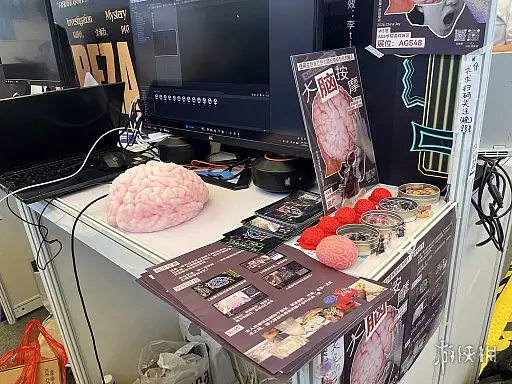
Brain Massage appeared at ChinaJoy2026 with a silicone brain controller built from a ShanghaiTech so















EndeavorRx Ride has been approved under Japan's public health insurance system, making it the country's first digital therapeutic for ADHD patients under 18. According to the report, doctors can issue a game download code at clinics, the cost is covered by insurance, and the product comes from Japanese pharmaceutical company Shionogi.
The key question is whether it has real medical value. EndeavorRx Ride is straightforward on paper: players control a vehicle along a route, avoid obstacles, and tap characters of a specified color that appear randomly on the track. In practice, that makes it a form of dual-task training, asking children to steer, monitor, and respond at the same time.

The idea behind that training is to activate the brain's prefrontal cortex, the area tied to attention, judgment, and impulse control, and an area where ADHD patients tend to show weaker function. For families, that distinction matters. If training fits into a routine children will actually stick with, it may be easier to sustain than constant reminders alone.
There is also a practical compliance benefit. ADHD treatment specialist Dr. Akihiro Yasumoto said some children resist medication because of its bitterness or side effects. Swapping that out, at least in some cases, for a download code and a game-based training session is, at least on paper, easier to accept than constant pressure to take medicine.
The clinical data is the most important part. According to figures released by Shionogi, 164 Japanese children with ADHD took part in the clinical trial, and the group treated with the game saw a symptom improvement rate three times that of the group receiving only standard treatment. That is a striking result, but it supports the idea of meaningful therapeutic value, not the claim that every conventional treatment should suddenly be replaced.

Japan's health insurance system agreeing to cover it is, by itself, a powerful signal. This is not the kind of approval a game usually gets. It reflects clinical evidence, the intended patient group, and cost in the real world. If EndeavorRx Ride can enter the system as a prescription alternative, it has already moved beyond being a curious experiment and closer to becoming a standard treatment tool.
That matters on a practical level for families. A digital therapeutic that once might have required extra out-of-pocket spending can now be prescribed by a doctor through a download code, with the cost covered by insurance. That lowers the barrier to trying it, which is crucial in a medical setting where wasted money also means wasted time and effort for the child.
The bigger point is straightforward: the most important part of this news is not how much EndeavorRx Ride resembles a conventional game, but that a game-based system has now been formally recognized as a therapeutic tool within Japan's insurance system. It will not fit every patient, and it does not mean any educational mini-game is about to enter hospitals. But it does point to something concrete: if a more approachable interactive format can improve adherence to training, that may be far more valuable than simply demanding more time.


Commenti 0
Ci interessa la tua opinione
Benvenuto! Raccontaci cosa pensi di questo gioco: chi arriva per primo potrebbe avere una sorpresa.
Ancora nessun commento. Scrivi il primo.