
Notizia
Grab two free PC games before Epic's clock runs out, while Undertale and Divinity: Original Sin 2 are 75% off
Astral Ascent and LUFTRAUSERS are free to keep today, while two of PC gaming's most celebrated RPGs cost less than $14 c
















The moment I opened the livestream recording, what caught my eye wasn’t the spec sheet or the material of the mouse feet, but that hint of helplessness on the streamer’s face—the kind of expression a Chinese teacher wears when grading a wildly off-the-rails essay: shaking their head while forcing themselves to keep reading. That’s probably the truest reflection of Geekerwan’s mood when talking about Logitech’s marketing fiasco this time.

From the way Geekerwan’s Yunfei describes it, we can piece together a very familiar scene: e-commerce operations holding the brand’s budget, confidently stuffing memes into videos and copywriting, convinced they’ve grasped the “traffic formula,” yet completely clueless about real user sentiment. That’s how you end up with a combo of calling customers dogs, putting dog paws on the store page, and adding “kneeling in thanks to my lady boss” for sending peripherals. It’s like forcing a family melodrama to be shot as a comedy, only to leave the audience with nothing but secondhand embarrassment. Yunfei mentioned that these operations are “heavily affected by information cocoons,” soaking in content circles like Xiaohongshu all day, taking that closed-loop gender discourse and self-entertaining memes as some kind of consensus that can be seamlessly transplanted to the entire peripherals market. This sense of misalignment is, in itself, a rather theatrical narrative.
The truly interesting part is that if we treat this crash as a satirical narrative game called “Buying Peripherals,” it has quietly completed a reverse storyline: the brand originally hoped to gain goodwill through a “pleasing one side” plot branch, but instead triggered a hidden ending of collective anger on the other end. Meanwhile, the players—i.e., potential consumers—suddenly realize that in this play they’re merely side characters being casually mocked, with no lines written for them at all. All that’s left are self-deprecating choices like “whoever buys is the clown” hanging in the poll, and even if only two people have voted so far, it still serves as a small emotional weathervane. Looked at another way, this is essentially a failure of character building: the brand as a character was never written as a “person” with boundaries, but as a puppet cobbled together from bits of operations jargon, so of course there’s no emotional resonance to speak of.
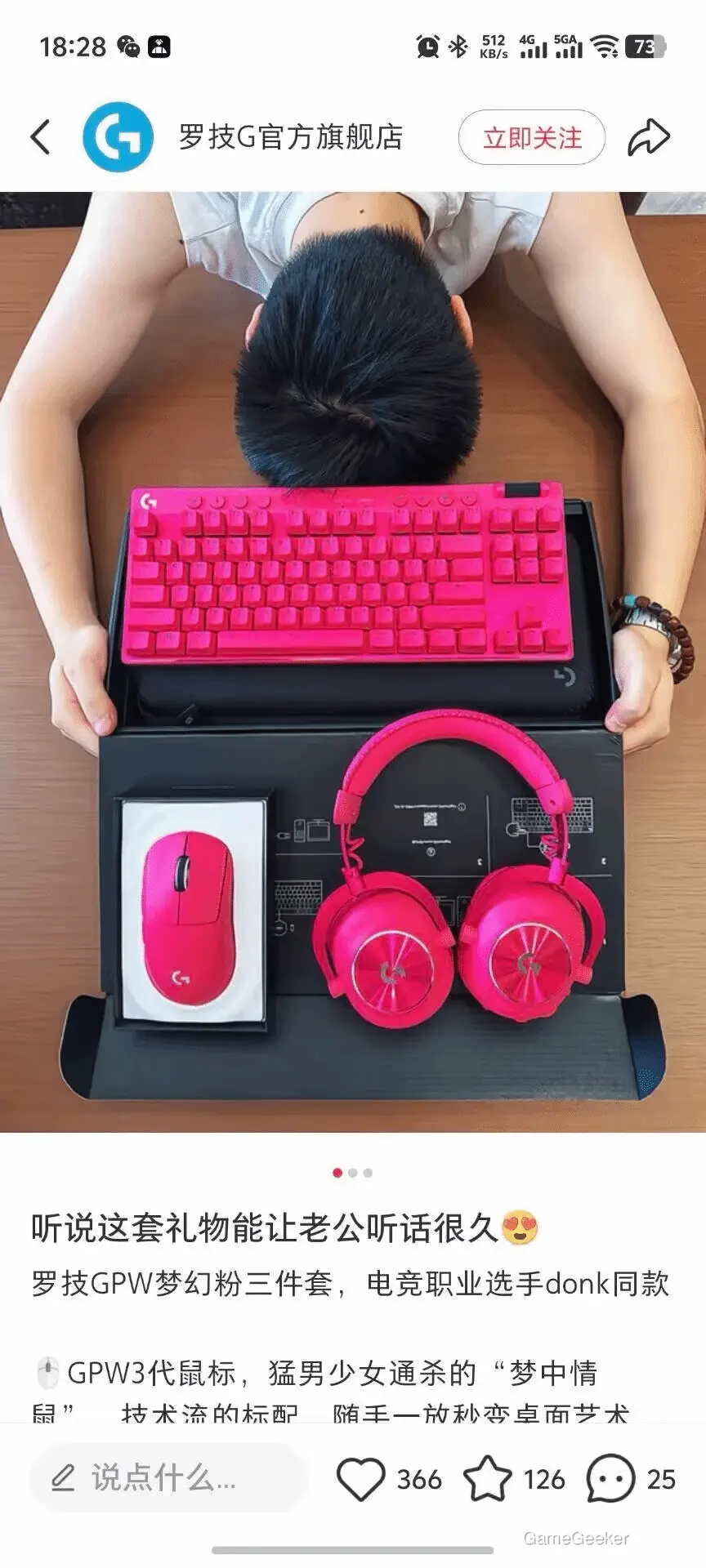
On the narrative level, the issue isn’t just that the copy is “unpleasant” or “vulgar,” but that the content fundamentally lacks basic perspective awareness. The creative team forgot what kind of audience community they’re facing, treating users merely as a set of labels to be arbitrarily classified, even insulted and objectified. This perspective would come across as crude and disrespectful in any type of work. Yunfei’s comment about operations who “say whatever they want” essentially describes a creative impulse that refuses editing: no editor, no readers, only the laughter looping within their own small circle. When this stuff is pushed into a larger public space, the conflict inevitably surfaces—like taking a bad joke that should’ve stayed in the crew’s internal chatter and writing it straight into the final cut of the film.
If we talk about some practical advice from the standpoint of actual purchasing decisions, it probably comes down to this somewhat cool-headed stance: whether a peripheral is good to use is still the hard metric, of course. But when a brand repeatedly portrays itself in public narratives as dismissive of users and obsessed with inside jokes, then when you pay, you’re effectively renewing the budget for the next season of that same narrative. That will naturally make many people “vote with their feet.” With hardware becoming increasingly homogeneous, brand storytelling has already become part of the product. And what this incident reminds us of is a very real trend: companies that write users as characters, rather than as punchlines, are more likely to stay on players’ desks for the long haul; those that treat players as memes will sooner or later lose their audience in their own self-written, self-directed farce.





Commenti 0
Ci interessa la tua opinione
Partecipa alla discussione e condividi la tua opinione su questo gioco.
Ancora nessun commento. Scrivi il primo.