
Notizia
Grab two free PC games before Epic's clock runs out, while Undertale and Divinity: Original Sin 2 are 75% off
Astral Ascent and LUFTRAUSERS are free to keep today, while two of PC gaming's most celebrated RPGs cost less than $14 c
















What is most unsettling at night is not necessarily the sound of footsteps coming from outside the door; sometimes it is just that glance at the balance in front of the bank counter. The feeling is like pushing open an old door in Silent Hill—there are no monsters inside, only the air suddenly turning cold and a chill creeping down your spine. In many places, elderly people’s savings have been taken by their underage granddaughters to tip streamers. What truly cuts deep is not the amount itself, but the fact that this money was bearing the weight of an entire family’s livelihood and illness.
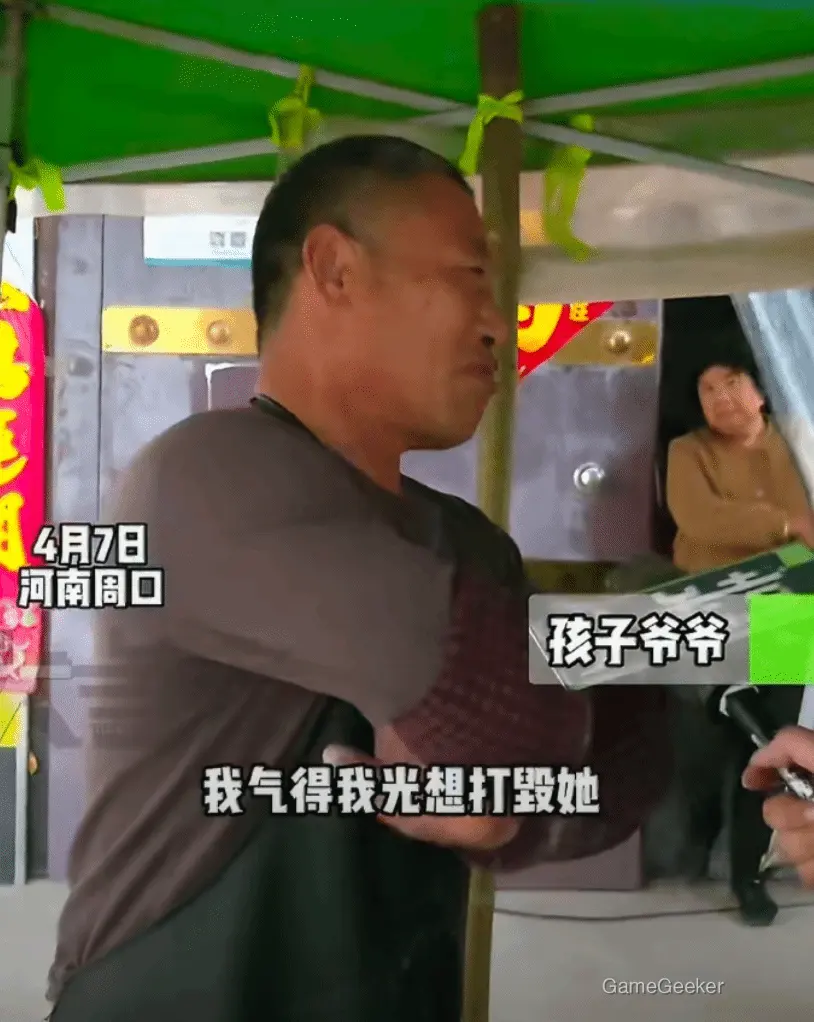
That elderly man in Zhoukou, Henan, makes a living selling shaobing, and he is also in poor health, with steel rods still in his leg. His monthly medicine expenses run into the thousands of yuan. He does not usually check his mobile banking, and only when he went to deposit money at the bank did he discover that 16,000 yuan was missing from his card. Only later did the family figure out that this money had been secretly spent by his 16-year-old granddaughter over the course of more than a month on tipping streamers in livestream rooms. Selling one shaobing brings a profit of only about 1 yuan—so what does 16,000 yuan mean? It means he has to stand back at the stall again and bake 16,000 shaobing one by one before he can fill this hole.
What is even more disturbing is that this is not an isolated case. Mr. Wang, 66, from Baicheng, Jilin, had originally planned to withdraw money to buy fertilizer, only to discover that more than 60,000 yuan was gone from his bank card. That was the entirety of a year’s income he had saved from farming and selling grain. It was later confirmed that, once again, the money had been used by his 15-year-old granddaughter Keke to tip streamers. The report mentioned that the child’s parents were divorced and that she had lived with her grandparents since childhood. Her reason for tipping was not complicated—she simply found the streamers interesting, liked watching them dance and chat, and when they shouted for gifts during PK battles, she sent the money out.

When you come back to your senses, you realize that the most frightening thing here is not how persuasive some streamer may be, but the oppressive feeling of an entire mechanism working like a frog slowly being boiled in warm water. Livestream rooms turn gifts into instant feedback—special effects, rankings, guest connections, PK battles—all of it is designed to provoke emotional decision-making in minors. Even adults may not be able to withstand the psychological manipulation of being “called out,” “thanked,” and “noticed,” let alone children whose judgment has not yet fully matured. To put it bluntly with a cold laugh, this is even cheaper than a low-grade jump scare, because it does not frighten you once—it slowly hollows out the foundation of an entire family.
An even heavier case happened in Kaifeng, Henan, where an elderly couple’s nearly 300,000 yuan in retirement savings, accumulated over a lifetime, was also entirely tipped away by their granddaughter to a male streamer. Reading one such news story after another creates a powerful sense of déjà vu: this is not simply a matter of a few families “failing to watch the phone” well enough. Rather, somewhere in the multiple layers of defense—platforms, guardianship, payment verification—there is always a leak. The family of the elderly man in Zhoukou has already contacted the platform to request a refund and is currently waiting for the review result. But the word “review,” when it falls on the elderly, feels like a dim lamp hanging overhead, keeping people in constant unease.
If I were to frame this in terms often used in gaming communities, I would rather see it as a kind of “loss of control in anti-immersion design.” Good interactive content draws people in; bad mechanisms do nothing but constantly induce spending, and they specifically target those with weaker cognition. My view is very straightforward: when it comes to tipping by minors, platforms should make facial recognition, secondary confirmation, daily spending limits, and high-frequency abnormal activity alerts much stricter, instead of dumping all responsibility onto the elderly and parents. Otherwise, the next thing to disappear may not be a save file in a game, but a family’s last remaining sense of security.





Commenti 0
Ci interessa la tua opinione
Partecipa alla discussione e condividi la tua opinione su questo gioco.
Ancora nessun commento. Scrivi il primo.