Notizia
Is Phantom Blade Zero Coming? ASUS May Have Claimed the First Spot
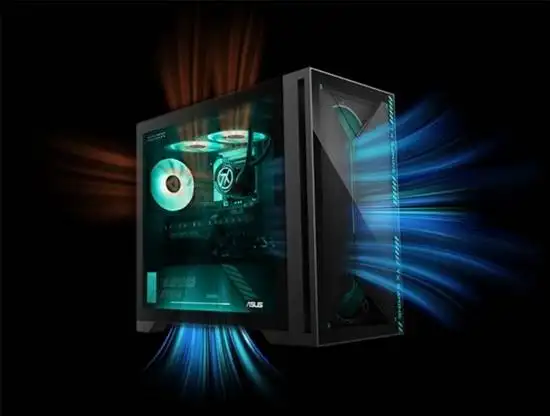
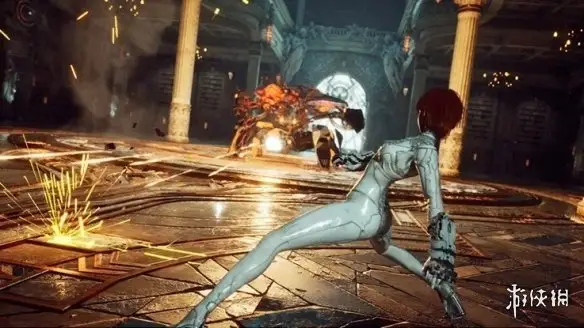
ASUS has unveiled the Tianxuan 7X gaming PC, pitching action titles like Shadow of the Blade Zero an
















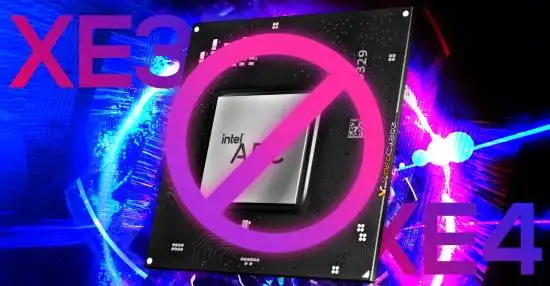
When the first label attached to a graphics card is no longer frame rates, but 160GB of LPDDR5X VRAM and large-model inference, gamers can actually read from that narrative detail in advance who it is meant for—and who it is leaving behind. On April 16, leaker Jaykihn shared a very clear message: Intel’s next-generation Xe3P graphics architecture will launch discrete GPUs codenamed Crescent Island, but the spotlight in this generation is no longer reserved for Arc gaming cards. In other words, at least in the Xe3P cycle, players waiting for a new generation of Intel gaming GPUs will probably have to learn to accept an absence first.

From a product segmentation perspective, Intel’s approach this time is quite straightforward. Xe3P has written only two roles: one is Crescent Island for AI inference, and the other is Crescent Island Workstation for professional scenarios. The former is more heavily configured, even offering 160GB of LPDDR5X VRAM, with a target clearly not traditional game rendering but new battlegrounds such as large-model inference; the latter has slightly lower specifications and is meant for professional graphics and rendering workloads. Judging by the original wording, “Intel’s next-generation Xe3P graphics architecture will launch discrete GPUs codenamed Crescent Island, but the product line will focus only on AI inference and professional workstations, with no Arc gaming discrete GPU currently planned.” That already makes the direction almost completely clear.

On the narrative level, this is actually a turn that is not entirely unexpected, yet still somewhat regrettable. Intel’s current gaming discrete GPUs are still stuck at the Battlemage-based Arc B580 and B570. Any imagination of something more high-end had originally been pinned on the rumored B770, but that line was later canceled as the focus shifted toward professional cards such as the Arc Pro B70. Combined with the recent strong push of Arc Pro B50, B60, B65, and B70 in the AI and workstation fields, the company now feels like it is in the middle of an industrial film whose script was rewritten halfway through, suddenly deciding to replace the protagonist from “challenging the gaming market” to “serving productivity needs.”

From another angle, this contraction is not a loss of composure at all, but rather quite pragmatic. The original text mentions that the gaming GPU market is fiercely competitive, while Intel’s share is below 1%. In such a situation, continuing to chase the high-end gaming GPU segment is like a commercial film with a limited budget insisting on going head-to-head with an established franchise—the risks are far greater than the rewards. AI and workstations at least give Intel a clearer landing point: demand is growing, and the product positioning is also easier to differentiate. That is far more realistic than continuing to use new products to experiment in the gamer market.
But the deeper issue is that Intel has never truly built a distinct identity for Arc gaming cards. It once gave players hope for “a third GPU maker,” but for hope to become an identity, it cannot rely only on specification sheets and price gaps; it also has to be backed by products appearing generation after generation, and delivering consistently. Now that Xe3P is directly bypassing gaming cards, this perceived break in continuity will further weaken Arc’s presence in the gaming community. Although Wccftech believes Intel may not completely abandon gaming cards in the future and could still release one or two more products, that sounds more like an unsigned letter of comfort—capable of soothing emotions, but very unlikely to rebuild confidence.
If you are an average gamer, the most practical advice right now is actually very simple: do not include Intel’s next-generation gaming discrete GPUs in your short-term PC build plans, because based on the information currently available, Xe3P will not give you any new options; if what you care about is local AI inference, professional graphics, or rendering work, then Intel’s shift this time is instead worth continuing to watch. Unfortunately, for players who had hoped for one more true competitor in the GPU market, this round of the story did not build toward a climax. Instead, just as the protagonist had barely found its footing in the frame, the camera had already cut to an exit shot.



Commenti 0
Ci interessa la tua opinione
Benvenuto! Raccontaci cosa pensi di questo gioco: chi arriva per primo potrebbe avere una sorpresa.
Ancora nessun commento. Scrivi il primo.