
Notizia
Kingdom Come Deliverance Gets a New Release, but Xbox Controllers Are First to Change
Five industry headlines include Microsoft cutting back its controller and a leaked Valve headset, al
















Joe, a one-armed PC player, reportedly lost his right arm in a traffic accident and could no longer use keyboard and mouse together after leaving the hospital. According to foreign media coverage and his public updates, he first built a workable prototype by combining a Razer Tartarus one-handed keypad with a side-mounted mouse, then used key remapping and straps to handle movement, aiming, and firing. Now his ERCHAM MK1 is largely finalized, with a crowdfunding push for mass production planned within this year. The report also cites accessibility examples from Elden Ring and Super Mario 64.
My first reaction is that this is practical design, not spec-sheet theater. The project starts from “can this person play at all?” rather than performance bragging, and that’s backed by Joe’s path: make existing hardware usable first, then rebuild it as a complete product. For many regular players, comfort and low friction matter more than chasing top-tier rank, because people keep playing when the setup doesn’t fight them.

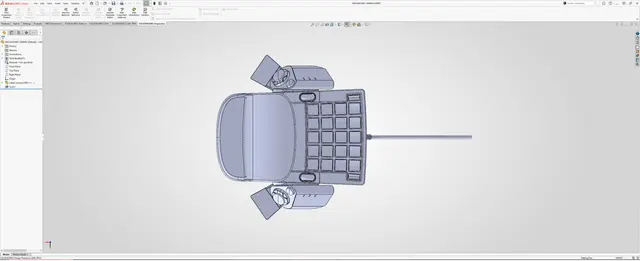
ERCHAM’s redesign also moves in the right direction: a symmetrical layout plus a built-in mouse sensor. In practice, that means no external mouse bolted onto the side, a cleaner desk setup, and less learning overhead. It also adds dual 360-degree sticks and a clickable scroll wheel, specifically to place high-frequency actions—movement, camera control, and shooting—into a single-hand workflow.

The harder challenge for this kind of device is not building one unit, but delivering stable production over time. Joe says he is still waiting for a new prototype and will publish a real demo video afterward, which is a key milestone. Players have seen plenty of concepts that look great on paper but fail in real use, so the demo should be judged on three basics: latency, accidental inputs, and hand fatigue over a continuous one-hour session.
Still, the community context is encouraging. We’ve already seen a player clear Elden Ring using their chin, and another use eye-tracking software to stream runs of Super Mario 64. The demand has been there; reliable tools have not. If ERCHAM’s crowdfunding succeeds, this becomes more than an inspiring personal story—it marks a step from one-off workshop solutions toward standardized accessibility hardware. It also hints at a broader pattern for everyone: many interaction improvements may begin as niche necessities, then become default design because they simply feel better to use.

Commenti 0
Ci interessa la tua opinione
Benvenuto! Raccontaci cosa pensi di questo gioco: chi arriva per primo potrebbe avere una sorpresa.
Ancora nessun commento. Scrivi il primo.