Notizia
Bunny Garden 2 Adds Twin-Tail Lolita Roro in New Update
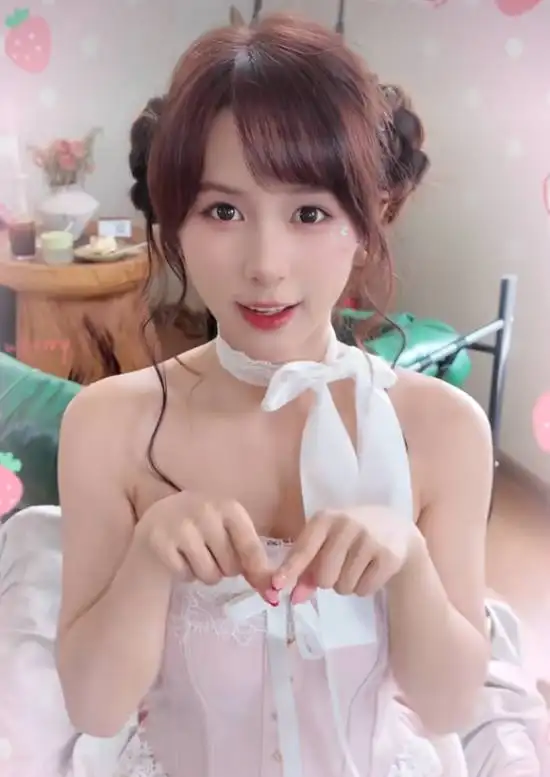
Bunny Garden 2's new 10-second trailer shows a twin-tailed lolita character in a sweet-yet-cutting promo. With six heroi













Compared with many major linear narrative titles, B社’s high-freedom open-world formula has always felt like a much tougher track to run on. In a recent Firezide Chat interview, former Bethesda Softworks publishing head Pete Hines once again put this issue front and center: players are used to judging the finished product directly, but rarely look back at just how massive the systems engineering behind this kind of game really is.

Hines’ role is actually important here. He oversaw publishing at B社 for many years and left in 2023. Seen from another angle, this isn’t just some ordinary industry insider backing up a former employer, but someone who spent a long time positioned between projects, the market, and player feedback, reflecting on why B社’s games are always able to deliver that kind of experience where “you can run off and do whatever you want, and the systems still have to hold up.” He specifically praised Todd Howard, saying that Todd may not be the strongest programmer, nor the strongest designer, but when it comes to coordination and overall leadership, almost no one can outmatch him.
That statement is actually easy to understand if you compare it with similar games. For many open-world titles, the challenge lies in having a huge map and lots of content; what makes B社’s games more troublesome is that quests, exploration, interaction, and player behavior are all tightly entangled. You can interrupt the main quest halfway through, veer off to pick up side quests, or progress through content at a completely different pace. By contrast, quite a few games that seem larger in scale still have a clearer “director’s track” underneath, guiding the player along.
In the interview, Hines also used Red Dead Redemption 2 as an example, and his core point was very straightforward: not every team is willing to take on the job of making a game like B社’s, where you can go anywhere at any time, do all kinds of things, and still have quests keep stacking up without the logic falling apart. This isn’t to say Red Dead Redemption 2 isn’t excellent, but that the design priorities of these two kinds of open worlds are simply different. The former is more like high-precision orchestration; the latter is more like a high-risk sandbox. The difficulty doesn’t even exist on the same level.
Hines also mentioned that one of the most frustrating situations during his time at B社 was seeing people casually dismiss the results without understanding how difficult the development process actually was. That attitude is not uncommon in player communities. Especially with games that have complex systems and a huge number of variables, players tend to remember Bugs, quest blockers, and awkward mechanics more easily; meanwhile, those moments of “I can actually play this way, and the system really acknowledges it” often don’t get discussed with the same weight.
From an industry perspective, what Hines said wasn’t just about speaking up for Todd personally. What he emphasized should be respected is the entire team willing to take on complex design challenges, and that matters more than simply praising some star producer. The interview also touched on the strengths of the Creation engine, as well as his reasons for leaving back then, and the full content has already been published on Firezide Chat. Compared with open-world templates that are easier to standardize and replicate, the path B社 has chosen is costly to develop and leaves little room for error, but when it works, what players get really is a completely different kind of immersion in terms of density.
If you already prefer open worlds that let you experiment freely and generate your own stories, then Hines’ remarks are actually very easy to understand; if, on the other hand, you care more about smooth progression and stable presentation, then you’ll most likely continue to pick at B社’s games. Both preferences are valid. It’s just that if you use different measuring sticks to score the same category of game, the conclusions you end up with will often be distorted.




Commenti 0
Ci interessa la tua opinione
Partecipa alla discussione e condividi la tua opinione su questo gioco.
Ancora nessun commento. Scrivi il primo.