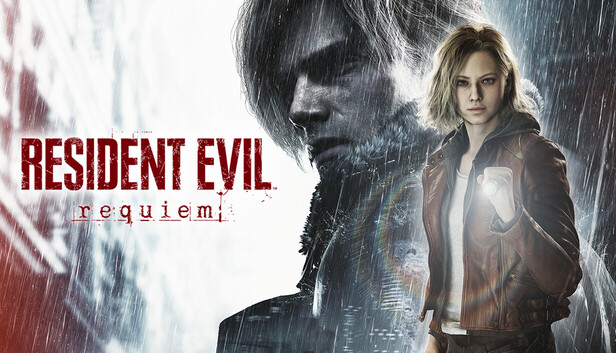
 Resident Evil Requiem~ PLN 146.17Prezzo nella valuta di origine ~ $37.28Caricamento delle offerte dei negozi
Selezioni popolariVedi tutto
123456789101112
10 Best Single-Player Monster Taming Games in 2026
10 Best Immersive Sim Games on Steam (2026)
10 Best Mech Games on Steam (2026)
10 Best Single-Player Pirate Games on Steam (2026)
10 Best Steam Autumn Sale 2026 Games by Budget and Play Style
10 Best Rhythm Games on Steam (2026)
10 Best RTS Games on Steam (2026)
10 Best CRPGs on Steam (2026)
10 Best 4X Strategy Games on Steam (2026)
10 Best Platformer Games on Steam (2026)
10 Best Metroidvania Games on Steam (2026)
10 Best FPS Games on Steam (2026)
Giochi simili popolariVedi tutto
Games Like PowerWash Simulator - 12 Best Relaxing Cleaning and Restoration PicksGames Like ARC Raiders - 12 Best Extraction and Co-op Survival ShootersGames Like PEAK - 12 Best Co-op Climbing and Survival PicksGames Like R.E.P.O. - 12 Best Co-op Horror PicksGames Like Clair Obscur: Expedition 33 - 12 Best Turn-Based RPG PicksGames Like Path of Exile 2 - 12 Best Action RPG and Loot PicksGames Like Road to Vostok - 12 Best Hardcore Survival Shooter PicksGames Like Mina the Hollower - 12 Best Top-Down Action and Zelda-Like PicksGames Like Slay the Spire 2 - 12 Best Roguelike Deckbuilders to Play NextGames Like Resident Evil Requiem - 12 Best Survival Horror PicksGames Like Baldur's Gate 3 - 12 Best CRPGs and Turn-Based RPGsGames Like Monster Hunter Wilds - 12 Best Co-op Hunting and Action RPG PicksGames Like Hollow Knight: Silksong - 12 Best Metroidvania Picks (2026)Games Like Dead by Daylight - 12 Best Asymmetric & Co-op Horror PicksGames Like Final Fantasy VII Rebirth - 12 Best Action RPG & JRPG PicksGames Like Forza Horizon 6 - 12 Best Open-World Racing & Driving Picks (2026)Games Like Solarpunk - 12 Best Cozy Survival and Crafting GamesGames Like 007 First Light - 12 Best Stealth and Spy GamesGames Like Subnautica 2 - 12 Best Underwater and Alien-World Survival GamesGames Like Hell Let Loose - 12 Best Tactical Milsim Shooters
Recensioni popolariVedi tutto

Hades II — Recensione

Clair Obscur: Expedition 33 — Recensione

Katana ZERO — Recensione

The Long Dark — Recensione

Shift At Midnight — Recensione

Middle-earth™: Shadow of Mordor™ — Recensione

The Mermaid Mask — Recensione

Killing Floor 2 — Recensione

The Outlast Trials — Recensione

American Truck Simulator — Recensione

Voidling Bound — Recensione

Go-Go Town! — Recensione

Desktop Explorer — Recensione

Dead as Disco — Recensione

Crushed In Time — Recensione

Beastro — Recensione
Resident Evil's 30-Year Finale: Leon Infected with Virus, Making a Last Stand—Can Requiem Live Up to This?
In 1996, a dog that suddenly lunged at me from a corridor in the Raccoon City Police Department sent me flying out of my chair. Thirty years later, I can still picture that dog with crystal clarity.
So when Capcom announced Resident Evil: Requiem as the closing chapter of the series' 30th anniversary, I stared at the word "Requiem" for a long time. A requiem for whom? Played for whom?

This is the canonical sequel that Resident Evil 7 director Koshi Nakanishi spent six years crafting — a heartfelt look back at veteran fans' formative memories and a new pinnacle of next-generation survival horror. Six years is no casual figure. In that same span, many a AAA franchise has gone from launch to sequel. Betting six years on a single IP's final chapter is no small wager.
Dual Protagonists, Leon's Infection Countdown

The game's biggest innovation is its fully differentiated dual-protagonist narrative. Leon, the rookie cop who walked out of Raccoon City, is now a battle-hardened senior DSO operative, returning to the nightmare's birthplace as a seasoned veteran. His chapters carry on the satisfying action style of RE4, adding a battle axe that can be polished and upgraded — capable of blocking chainsaw rushes from frenzied zombies, executing stylish finishing moves, and even snatching an enemy's chainsaw to turn it against them.
What's most unsettling, however, is that Leon will once again contract an unknown virus. Black marks spreading across his neck serve as a constant countdown to mutation. Whether his custom Porsche Cayenne Turbo GT can break the series' curse of "every vehicle must explode" sits at the heart of the adventure's suspense.
Semi-Open Raccoon City, Where Day and Night Change Everything

As for the game itself, its biggest structural leap is the semi-open design of Raccoon City's ruins. Streets, sewers, and abandoned hotels interconnect, shattering the constraints of linear progression, with freely explorable areas packed with secrets.
A dynamic day-night and weather system forms the core mechanic — daytime ruins offer scarce clues but relative safety, while darkness brings more ferocious enemies and hidden paths that only emerge at night, with certain areas requiring later-unlocked items to access.

The zombies here are no longer mere killing machines — they retain habits from their former lives and speak in fragmented language, giving them a disturbing sense of personhood. A new creature called the "Wailer" has no visual perception but is acutely sensitive to sound; the thud of running footsteps or the click of a reload can bring death, forcing players to slow down and tread carefully. The game also supports seamless switching between first-person and third-person at any time — first-person maintains the suffocating close-quarters tension of RE7, while third-person provides better situational awareness.
RE Engine Evolved: Series-First Full-Path Ray Tracing

On the technical side, this is the first RE Engine title to implement full-path ray tracing, with global illumination, reflections, refractions, and shadows all running simultaneously in real time, dramatically enhancing natural lighting and the atmosphere of dread. Under 4K ray tracing, the decaying texture of zombie skin and the damp, moldy environments are rendered in vivid detail, driving the horror straight to the gut.
The game launches with support for NVIDIA DLSS 4 Multi Frame Generation technology, and paired with NVIDIA Reflex effectively reduces latency while maintaining exceptionally high, stable frame rates even at 4K.


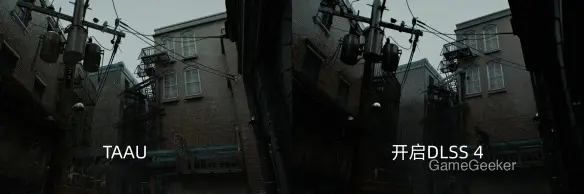
The comparison screenshots make it clear that DLSS 4 Frame Generation uses AI to accurately fill in frames, significantly reducing hardware load at high resolutions and quality settings.
Hands-On Testing: 87 FPS Native at 2K, Surging to 223 FPS with DLSS 4x


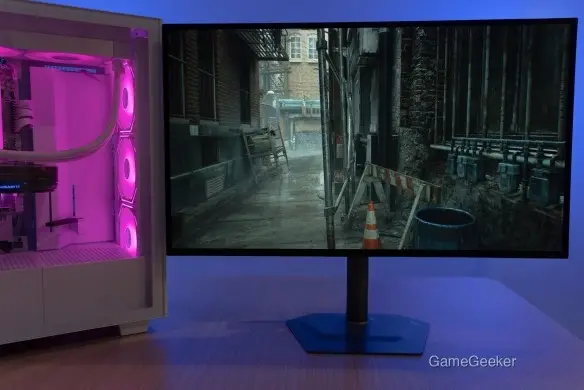
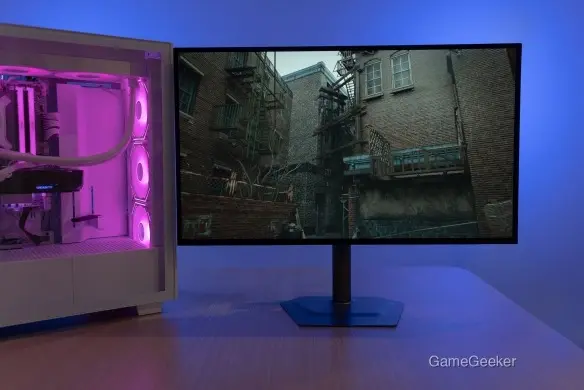
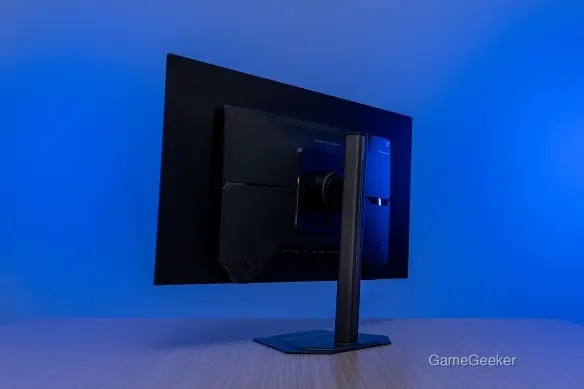
The test platform was a Ryzen 9 800X3D + RTX 5060 Ti 16GB GDDR7, paired with a 27-inch 2K 280Hz OLED gaming monitor — representing a mainstream high-end gaming build.
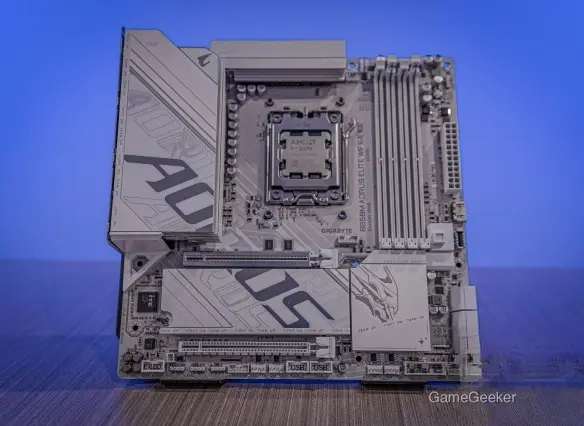

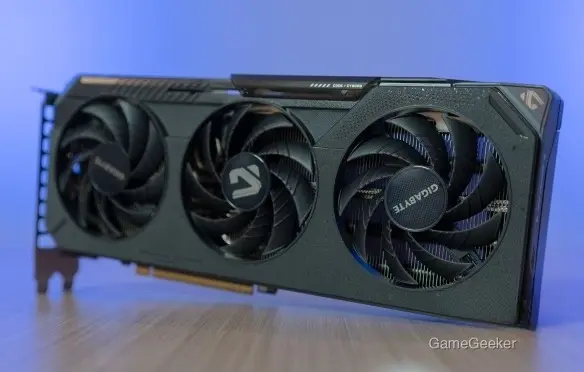
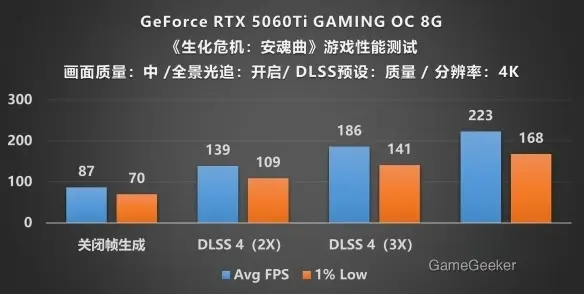
At 2K resolution with native rendering and DLSS 4 disabled, the game achieved 87 FPS — a commendable level of optimization. Enabling DLSS 4 at the 2x Frame Generation setting pushed that to 139 FPS with a corresponding improvement in 1% lows; switching to 4x Multi Frame Generation broke the 200 FPS barrier, landing at 223 FPS — a 256% improvement over native rendering.
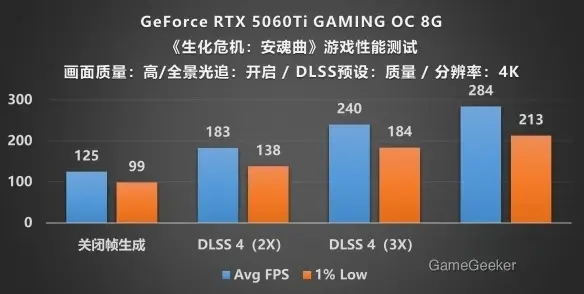
At 1080p, the baseline with DLSS 4 off was 125 FPS. Enabling 2x Frame Generation jumped that to 183 FPS, and 4x Multi Frame Generation reached 284 FPS — input response felt completely effortless.
Beyond the Nostalgia: A Clear-Eyed Look at This Final Chapter

Stepping back and looking at it coolly, Resident Evil: Requiem is undeniably ambitious: differentiated dual-protagonist storytelling, a semi-open Raccoon City ruin, the series' first full-path ray tracing, and day-one DLSS 4 support. Six years of refinement are embedded in these features, and on paper, Capcom is taking the word "final chapter" seriously.
"Requiem" is a weighty name. Thirty years of legendary main-series history deserve a worthy send-off. Whether the final answer lives up to that promise is something only Leon's footsteps through those ruins can tell us.

Resident Evil Requiem~ PLN 146.17Prezzo nella valuta di origine ~ $37.28Caricamento delle offerte dei negozi In offertaResident Evil 7 Biohazard
 Resident Evil 4~ PLN 20.77Prezzo nella valuta di origine ~ €4.74Caricamento delle offerte dei negozi
 In offertaResident Evil (1996)
 In offertaResident Evil 2 (1998)





Commenti 0
Ci interessa la tua opinione
Partecipa alla discussione e condividi la tua opinione su questo gioco.
Ancora nessun commento. Scrivi il primo.