Notizia
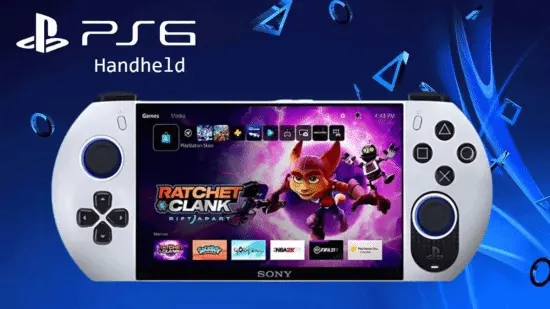
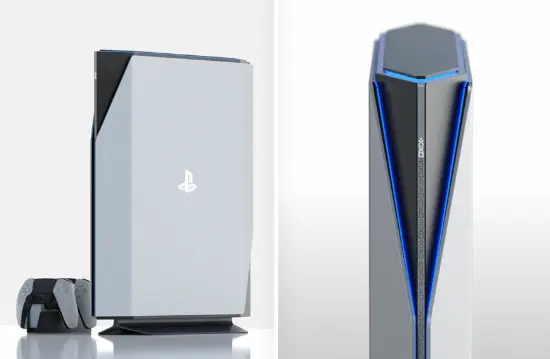
Fresh PS6 handheld leak suggests Sony may be aiming higher this time
A new leak claims Sony could launch both the PS6 console and a handheld in 2027, signaling a possibl
















When a screen lights up in the palm of my hand, the first thing I care about has never been the spec sheet, but whether the image has the power to make me stop in my tracks. On the subway, by the bed late at night, on a rainy afternoon outside the window—if a device can fold the familiar world back into my hands, it feels like slipping the last light of dusk into a coat pocket, ready to unfold wherever I go. Seeing this latest leak about the “PS handheld,” my first reaction wasn’t whether its performance is strong, but this: can those grand scenes that once belonged to the living room really be taken away?

Let’s start with the key information. This news comes from tech insider Moore’s Law Is Dead. According to him, the new portable device Sony is preparing is built around a custom APU codenamed “Kanes.” Its direction is not simply to make a handheld that can run small games, but to aim for a “multimedia center.” More importantly, Sony’s internal documents reportedly mention that the goal of this architecture is very clear: to give the device full backward compatibility, covering PlayStation 4, PlayStation 5, and even future PlayStation 6 games as part of the plan.
If this ultimately becomes reality, its significance will actually carry more weight than the three words “new handheld.” Because what many players truly cannot bear to put down is not a particular machine, but the game library they have built up over many years, the account ecosystem they are already used to, and the save-file experience of wanting to continue progressing somewhere else after stopping halfway through. The leak also mentions that developers are already creating texture and graphics asset kits adapted for low-power modes for existing popular PS5 games. This step is realistic and crucial, because it determines just how far apart “can run” and “runs smoothly” really are.
Returning to the games themselves, there is another point I care about in particular: ray tracing. The report says this device supports ray tracing, and can even handle games that force ray tracing on PS5 and do not allow the effect to be turned off. For atmosphere-focused players, this is not just a term on paper—it is something that genuinely translates into how the game feels. Puddles at night, a layer of cold light along an indoor windowsill, reflections gently brushed across metal edges by strips of light—once these details are preserved, the game world will not easily collapse into a “downsized set.”
Beyond the visuals, however, Sony also clearly seems to be putting “power saving” near the front this time. The leak mentions that the device uses an RDNA5 architecture with an optimized design and adds an energy-efficient media playback mode, with one of its goals being to meet strict energy consumption standards, including those in the EU region. This line of thinking feels very much like the shift the hardware industry is collectively facing now: the wind is no longer blowing only toward more power, but also toward greater stability and endurance. A handheld is not fireworks on a spec poster; battery life, heat, and power consumption are the realities that truly press against the palm.

If you ask me whether it is worth getting excited in advance, my judgment is that it is fine to look forward to it, but don’t pull out your wallet too early. The reason is simple: for now, all of this is still just leaked information. There is no release date, no price, and no official final word from Sony. But judging from the trend, the continued extension of console experiences to portable devices is no longer just a conceptual slogan. Whoever can twist performance, compatibility, and power consumption into one solid thread is more likely to capture the next stage of time outside the living room.
For veteran players, the most appealing part of this kind of device is not “playing new releases,” but “moving back into old worlds.” If PS4, PS5, and even future PS6 content can truly continue on the same machine, that would be a very complete ecological loop. For someone like me, who cannot help looking for the right angle to take screenshots whenever I see a beautiful scene, whether a handheld is worth buying ultimately comes down to that same old standard: will I want to stay a little longer in the world it opens up?
Commenti 0
Ci interessa la tua opinione
Benvenuto! Raccontaci cosa pensi di questo gioco: chi arriva per primo potrebbe avere una sorpresa.
Ancora nessun commento. Scrivi il primo.