
Notizia
Bunny Garden 2 Adds Twin-Tail Lolita Roro in New Update
Bunny Garden 2's new 10-second trailer shows a twin-tailed lolita character in a sweet-yet-cutting promo. With six heroi
















Generative AI has entered the gaming industry, and over the past year it has already moved from conceptual discussion to limited real-world testing. In this context, Valve’s latest news looks more like an internal trial than a formal market-facing shift.
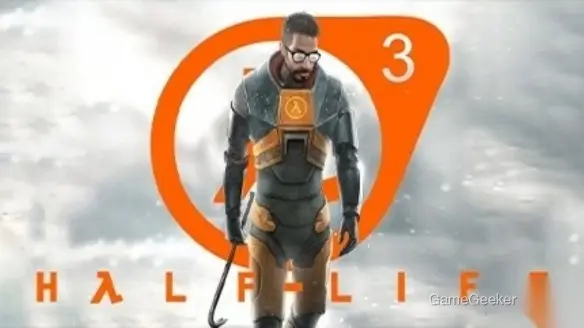
The news comes from Eric Wolpaw, writer of the Portal and Half-Life series. In a recent podcast, he mentioned that he and a small number of developers inside Valve are exploring the use of generative AI to handle content such as text and audio. However, he repeatedly added that this is not a company-wide project, does not represent official strategy, will not replace human creative work, and is not being used for unreleased projects like Half-Life 3 or Portal 3.
That boundary is drawn very clearly, which shows that Valve’s current stance is not aggressive. Objectively speaking, this is more like an experimental prototype ahead of a second-generation product: first verify the value of the interaction, then decide whether to continue investing, rather than immediately using AI to compress content production costs.
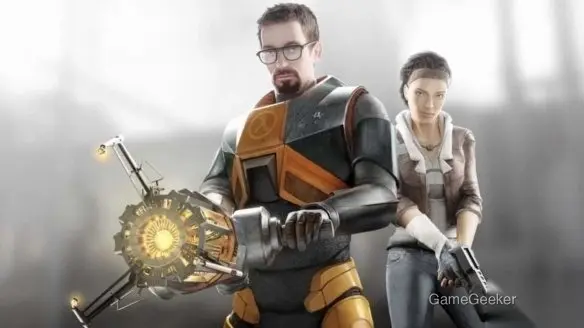
From a design perspective, Wolpaw’s judgment is actually quite pragmatic. He explicitly stated that AI will not be able to take over creative writing in the short term, especially when it comes to humor and truly memorable expression, where it is still relatively weak. In other words, AI is currently not well suited to handling the content layer of works like Portal, which rely heavily on text quality, but it may be suitable for another task: enabling NPCs to respond to player behavior in real time.
This happens to be the part where traditional scripting is most expensive and most likely to reveal its limitations. In open-world games, when players create chaos, NPCs usually have only a few fixed lines and preset actions; if they could respond dynamically based on what is happening on the spot, immersion would improve significantly. It may not raise the “ceiling” of storytelling, but it could raise the “floor” of moment-to-moment experience, offering better cost-performance than many gimmicky AI features.

The controversy is just as straightforward. Some players remain strongly resistant to AI-generated content, worrying that it will ultimately slide toward cutting costs by replacing people; others care more about the outcome, and as long as it does not harm core creative work, they are willing to accept it in service of gameplay. Wolpaw’s own stance is also very clear: he has “no interest whatsoever” in using AI to reduce costs, and his focus is on improving the actual player experience.
What is most worth watching right now is not whether Valve will fully embrace AI, but that the industry is shifting AI from “replacing creation” to “enhancing interaction.” The former easily provokes backlash, while the latter at least offers clear gameplay benefits. Given Valve’s usual product cadence, this kind of experimentation looks more like technical groundwork in the short term than a selling point for a new release.
So, this news has little to do with Half-Life 3 and much more to do with the future of NPC design across the industry. For players, there is no need to overreact at this stage, nor to take sides in advance. It would be more in line with the judgment of a mature review to wait until it truly reaches a playable, perceptible level of interaction before evaluating whether it is worth accepting.





Commenti 0
Ci interessa la tua opinione
Partecipa alla discussione e condividi la tua opinione su questo gioco.
Ancora nessun commento. Scrivi il primo.