



The Top 3 in 30 Seconds: SOLAS 128 is the strongest choice for rhythmic pulses, color interactions, and puzzles that affect one another across a connected world. Choose Archaica: The Path of Light for focused laser-and-mirror boards, or The Talos Principle 2 if you want light puzzles inside a larger first-person adventure with exploration, story, and other abilities.
Why These Made the List #
This list covers games where directing light, managing illumination, handling color, or avoiding shadow is central to solving puzzles. The ranking considers how important light manipulation is to the main loop, how distinctive each game's devices and constraints are, and how clearly it communicates the available decisions.
The selection also covers different kinds of play. Some games present focused boards with mirrors and lasers, while others use pulse timing, logic gates, movable blocks, open-ended experiments, or first-person movement through spaces where light determines what is safe.
Top Picks #
1. SOLAS 128 #
 KinguinCN¥1.49-98%Steam CN¥1.49価格を見る →
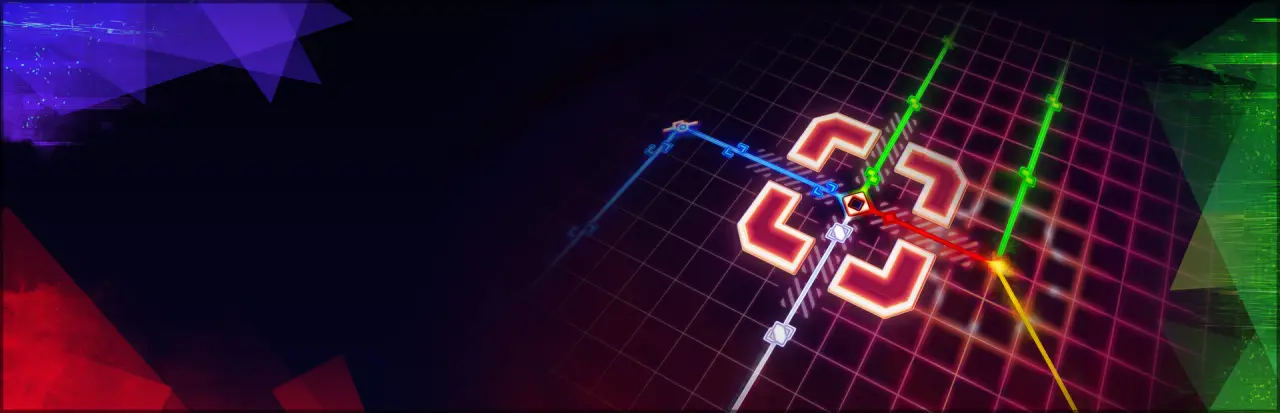
SOLAS 128 makes light manipulation the entire puzzle system. You rotate and reposition mirrors to connect sources, while rhythmic pulses move to the beat, collide, combine into new colors, split apart, and interact with components such as prisms, filters, and glitches. Changes in one room can affect later rooms, giving the connected world more consequence than a series of isolated boards.
| Aspect | Explanation |
|---|---|
| Why It's Ranked Here | It ranks first because its pulses, colors, collisions, timing, and interconnected rooms create the broadest set of distinctive light-based decisions in the list. |
| Who It's For | It suits players who want light-path puzzles with timing, color interactions, hidden areas, and consequences that carry through a connected world. |
| Key Selling Points | The pulses always move to the beat, and their shapes and contrast settings support play that does not depend only on color. |
2. Archaica: The Path of Light #

 Steam¥48.00価格を見る →
In Archaica: The Path of Light, lasers and mirrors define the puzzle experience. Each board presents a separate light-path idea as you follow the Path of Light through an ancient world, revive mysterious artifacts, and uncover optional story details through scattered hieroglyphs.
| Aspect | Explanation |
|---|---|
| Why It's Ranked Here | It places second because lasers and mirrors define the puzzles, while each board presents its own puzzle idea and atmospheric presentation. |
| Who It's For | It is for players who prefer focused mirror boards with an atmospheric setting and optional worldbuilding. |
| Key Selling Points | The board format keeps decisions centered on constructing paths, while the hieroglyphs add context without replacing the puzzle core. |
3. The Talos Principle 2 #

 GOGCN¥27.00-75%Steam CN¥27.00価格を見る →
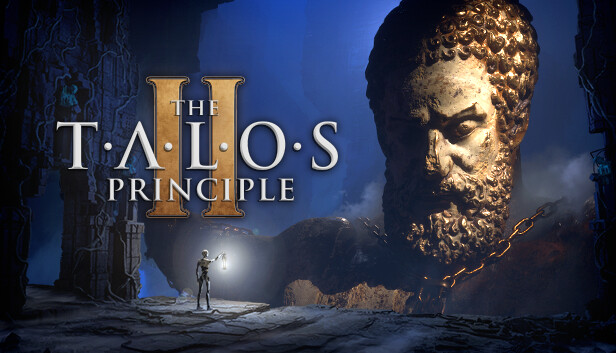
The Talos Principle 2 puts beam-based puzzles inside a larger first-person adventure. Its challenges include energy-beam connectors, a mixer that converts input colors into a third color, gravity manipulation, mind transference, metapuzzles, and Gold puzzles. You can explore more than a dozen environments, skip some puzzles, or pursue complete mastery.
| Aspect | Explanation |
|---|---|
| Why It's Ranked Here | It ranks above narrower optics games because it gives light-related decisions a substantial spatial adventure context, although light is only part of its wider rule set. |
| Who It's For | It suits players who want beam puzzles alongside exploration, story, secrets, multiple difficulty layers, and other abilities. |
| Key Selling Points | The game combines established beam mechanics with gravity manipulation and mind transference across optional puzzles, metapuzzles, and Gold puzzles. |
4. LIT: Bend the Light #
 Steam¥40.00価格を見る →
LIT: Bend the Light treats light as an open-ended construction problem. You place mirrors and glass pieces to reflect and refract a beam, then test arrangements within the stated rules. Its physically accurate light behavior and multiple possible solutions make experimentation more important than following one prescribed arrangement.
| Aspect | Explanation |
|---|---|
| Why It's Ranked Here | It ranks highly because reflection, refraction, and free placement give players a wide space for constructing solutions. |
| Who It's For | It is aimed at players who enjoy testing physical light behavior and finding more than one arrangement for a puzzle. |
| Key Selling Points | Mirrors and glass pieces provide two clear light behaviors to combine, and the open-ended structure supports alternate solutions. |
5. ReThink #
 KinguinCN¥1.64-98%Steam CN¥1.64価格を見る →
ReThink takes a broader first-person logic approach inside a government-controlled correctional facility. Its puzzles vary in size, type, and difficulty, giving logical problem solving a varied spatial setting tied to the player's effort to prove readiness to return to society.
| Aspect | Explanation |
|---|---|
| Why It's Ranked Here | It sits in the middle because it establishes a varied first-person logic framework but gives less specific light-device detail than the dedicated optics games above it. |
| Who It's For | It fits players who want varied first-person logic puzzles in a contained science-fiction setting. |
| Key Selling Points | The puzzles vary in size, type, and difficulty, giving the game a broader format than a single board-based light system. |
6. Lightmatter #
 KinguinCN¥2.83-98%Steam CN¥2.83価格を見る →
Lightmatter makes shadow a lethal environmental hazard. You use lights, beams, platforms, and lightmatter to cross spaces where only illuminated areas are safe, examining your surroundings and finding routes through hazards that behave more like a floor of lava than a mirror board.
| Aspect | Explanation |
|---|---|
| Why It's Ranked Here | It ranks below the direct beam games because light supports navigation and hazard management rather than serving as a pure mirror-board construction system. |
| Who It's For | It is for players who want environmental problem solving, dangerous shadows, and movement through spaces where illumination determines safety. |
| Key Selling Points | Lamps and beams shape the route, while the first-person format makes safe light an immediate condition for movement. |
7. Optika #
 Steam¥21.00価格を見る →
Optika offers one of the broadest optical toolkits here, with 14 devices used to guide colors to receivers. Lenses, mirrors, prisms, magnets, and other components support several kinds of light manipulation, with puzzles inspired by real-world physics.
| Aspect | Explanation |
|---|---|
| Why It's Ranked Here | It ranks well for device variety and clear receiver goals, though its broad toolkit is less focused than games built around one defining constraint. |
| Who It's For | It suits players who want structured puzzles with many optical devices and color-based targets. |
| Key Selling Points | Lenses, mirrors, and prisms create different ways to redirect or decompose light, while the receiver provides a clear objective. |
8. Lazors #
 Steam¥21.00価格を見る →
Lazors keeps the main decision immediately readable: drag blocks to reflect lasers and hit every target. Different blocks interact with the beam in different ways, including mirrors and portals, while the challenge grows from easier distractions to harder boards. Hints can move a block into its correct position without revealing the full solution.
| Aspect | Explanation |
|---|---|
| Why It's Ranked Here | It ranks lower because its rules are deliberately straightforward, but that clarity makes it one of the most accessible choices. |
| Who It's For | It is a strong choice for beginners and casual puzzle players who want readable laser boards with optional assistance. |
| Key Selling Points | Dragging blocks makes the puzzle state easy to understand, and hints provide targeted help without solving the entire board. |
9. Prelogate #
 Steam¥18.00価格を見る →
Prelogate turns laser routing into a formal logic problem. You redirect and mix beams, then control their behavior with logic gates across its chapter-based puzzle structure. Planning how beams and gates interact is central to solving its challenges.
| Aspect | Explanation |
|---|---|
| Why It's Ranked Here | It earns its place through its distinctive gate-based structure, but its appeal is narrower than the broader optics and exploration games. |
| Who It's For | It is for players who prefer formal logic and laser systems controlled through gates. |
| Key Selling Points | Beam mixing adds a rule beyond simple redirection, while logic gates make planning how the laser system interacts central to each puzzle. |
10. LightRay #
 Steam¥18.00価格を見る →
LightRay presents more than 40 top-down puzzles in a peaceful setting. Lasers, light behavior, and colors create the problems, while easy-to-understand mechanics and varied environments keep the focus on accessible logical thinking.
| Aspect | Explanation |
|---|---|
| Why It's Ranked Here | It ranks tenth because its clear light-path format is gentler and more straightforward than the complex devices or unusual constraints found in the other entries. |
| Who It's For | It fits players who want approachable top-down laser puzzles with color mechanics and a low-pressure setting. |
| Key Selling Points | The top-down view keeps paths easy to inspect, and its casual structure still gives logical thinking a clear role. |
Comparison Table #
| Game | Genre | Why It's Ranked | Play Structure |
|---|---|---|---|
| SOLAS 128 | Casual strategy puzzle | Rhythmic pulses, collisions, colors, and connected consequences make light manipulation unusually broad. | Single-player progression through interconnected puzzle screens with hidden areas and secrets. |
| Archaica: The Path of Light | Atmospheric board-based adventure puzzle | Laser-and-mirror boards provide focused challenges with separate puzzle ideas. | Single-player board progression with optional story discovery and exploration. |
| The Talos Principle 2 | First-person adventure puzzle | Beam puzzles gain breadth from exploration, story, metapuzzles, and other abilities. | First-person progression with optional puzzles, Gold puzzles, secrets, and multiple story outcomes. |
| LIT: Bend the Light | Open-ended physics puzzle | Free placement, reflection, and refraction support multiple possible solutions. | Single-player experimentation with mirrors and glass pieces. |
| ReThink | First-person logic puzzle | Varied puzzle sizes, types, and difficulties create a broad first-person logic framework. | Single-player progression through puzzles in a contained facility. |
| Lightmatter | First-person environmental puzzle | Safe illumination and lethal shadows turn light into a navigation condition. | First-person environmental progression using movement, observation, light, and hazards. |
| Optika | Optics device puzzle | A 14-device toolkit supports varied routing and color problems. | Level-based progression built around combining optical devices. |
| Lazors | Casual laser-and-block puzzle | Dragging blocks, portals, and hints make its laser boards especially readable. | Single-player drag-based boards that grow from easy challenges to harder ones. |
| Prelogate | Laser logic puzzle | Logic gates and beam mixing create a formal system for planning laser routes. | Chapter-based progression with increasing difficulty and 64 levels. |
| LightRay | Top-down casual logic puzzle | Accessible laser and color puzzles provide a low-pressure entry point. | Single-player progression through top-down puzzles in varied environments. |
How to Pick the Right One #
| Preference | Recommended Games |
|---|---|
| Choose structured light paths → | SOLAS 128, Archaica: The Path of Light, Optika, Lazors, Prelogate, and LightRay. |
| Choose device experiments → | LIT: Bend the Light and Optika. |
| Choose first-person spatial puzzles → | The Talos Principle 2, Lightmatter, and ReThink. |
| Choose pulse timing and collisions → | SOLAS 128. |
| Choose light-versus-shadow navigation → | Lightmatter. |
| Choose accessible casual logic → | Lazors and LightRay. |
FAQ #
Which games focus on mirror boards, and which focus on first-person exploration? #
Archaica: The Path of Light, Optika, Lazors, and LightRay present top-down or board-based light-path problems with mirrors, devices, blocks, or lasers. The Talos Principle 2 and Lightmatter use first-person exploration, where movement and the surrounding environment are part of the puzzle experience. Lightmatter is specifically about navigating safe illuminated space while shadows act as a lethal hazard, rather than being a pure mirror-board game.
How does SOLAS 128 use timing? #
SOLAS 128 uses rhythmic pulses of light that move to the beat at all times. The pulses can collide, combine into new colors, separate, and interact with components whose timing affects the route through interconnected puzzles. This makes it a timing-and-pulse puzzle game, not a reflex rhythm game.
Which games are the clearest choices for beginners? #
Lazors offers intuitive draggable blocks, easier challenges at the start, and hints that move a block toward its correct position. LightRay uses easy-to-understand mechanics and keeps its puzzles on the casual side while still providing varied challenges. Optika introduces a wider device set, while LIT: Bend the Light supports experimentation with mirrors and glass pieces.
Which games use light and shadow in different ways? #
Lightmatter makes shadows lethal and asks players to use lamps, beams, platforms, and lightmatter to cross safe illuminated space. LIT: Bend the Light combines light and darkness with mirrors and glass pieces that reflect and refract a beam. Lightmatter therefore makes safe light a navigation condition, while LIT: Bend the Light makes light behavior the construction problem.
Are all of these games optics simulators? #
These games use different rule systems rather than one shared physics simulation. LIT: Bend the Light describes physically accurate light behavior, and Optika says its puzzles are inspired by real-world physics. SOLAS 128 focuses on rhythmic pulses and collisions, Prelogate adds logic gates, Lightmatter uses deadly shadows, and The Talos Principle 2 combines beams with broader first-person abilities and exploration.






コメント 0
ご意見をお聞かせください
このゲームについての感想や評価をお寄せください。
コメントはまだありません。最初の一件をどうぞ。