






















Opening
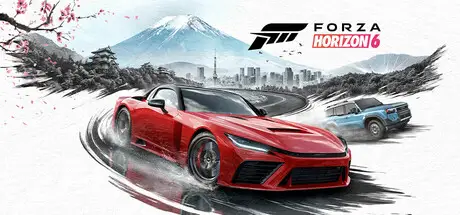
For the first time in the series, an entire country is the star. Forza Horizon 6 drops the festival into Japan — roughly 21 miles of Kantō, Chūbu and Kansai stitched into one map, double the size of Horizon 5 — and the place earns every mile. Ray tracing and dynamic weather turn rain-slick neon Tokyo into something people genuinely mistake for photographs, and the new touge battles finally make braking points and weight transfer the thing that wins a downhill run, not just the throttle. It is, hands down, the best-looking and best-driving Horizon yet, with over 550 real cars at launch and a garage that leans hard into JDM royalty: the R34 GT-R, the RX-7, the Supra A80.
The catch is that the brilliant idea mostly stops at the idea. There's no underground racing scene and no deeper touge progression to keep you chasing the mountain once the novelty cools; wheel support still trips over USB and force-feedback gremlins; and for all the tweaks, drifting stays comfortably arcade. Underneath the new coat of Japanese paint, this is still very much the familiar Horizon framework.
So aim it at the right person. If you want a stunning, wide-open playground and you've got a soft spot for Japanese mountain roads and JDM metal, you'll be hooked the second you floor it. If you're after the cold, knife-edge danger of a hardcore sim, you'll feel the arcade bite right away — and that's a different game entirely.
Story | 6.5/10
ストーリー: 6.5/10From Zero to Legend: The Festival Growth Loop Returns
Here's the thing about Forza Horizon 6's story — there isn't really one, at least not in the way you'd expect. Playground Games stripped out the Mexico festival arc from Horizon 5, with its characters and scripted drama, and went back to the original 2012 formula: you show up as a nobody, you earn your reputation through races and challenges, and you become a Horizon legend. That's it. No cinematic cutscenes, no rival racer who's secretly sabotaging you, no voice-acted drama. The narrative structure is essentially a growth loop, and honestly, that works for what this game is trying to do.
The "Discover Japan" progression system ties your advancement to actual exploration of the map. As you drive through Kantō, Chūbu, and Kansai, you unlock regional events, car meetups, and themed challenges tied to specific areas. It's a smart move because it makes the Japan setting feel like more than just scenery — you're learning the geography and culture through the gameplay itself. Drive through Hakone enough times, and you start to understand why touge racing matters there culturally. The game rewards curiosity with progression, which gives the open world some narrative weight even without traditional story beats.
The trade-off is that veterans looking for narrative depth will feel the absence. Horizon 5 at least attempted character moments with its festival crew. Here, the story is functionally nonexistent beyond "race more to become legendary." If you're the type who needs a reason beyond the driving itself, you'll be relying on your own imagination to fill the gaps.

Anna's Voice and the Absence of Real Characters
The virtual assistant Anna handles most of the voice-over narration, guiding you through events, praising your drifts, and occasionally dropping lore about locations you're passing through. She's fine — her Japanese-accented English adds flavor, and her comments during Auto Drive create a kind of ambient storytelling where you're listening to a podcast about the area while your car handles the mountain pass. It's a low-key nice touch that makes the world feel inhabited even when you're not actively racing.
But here's the catch: Anna is basically the only character in the game. There's no cast of Horizon staff, no rival drivers with personalities, no festival manager giving you missions. The touge battle events throw you against "boss drivers" with names and car setups, but they're challenge content, not characters. You beat them, you get rewards, you move on. No cutscene after where they admit you're the better driver, no rivalry that builds across multiple encounters. It feels like a missed opportunity — Japan has such rich car culture to draw from, and the game mostly uses it as decoration rather than source material for actual characters.
For a game this big, with 550 cars and a map double the size of Horizon 5, the narrative emptiness is noticeable. The emotional resonance that Horizon 5 got from its Mexican setting and quirky cast just isn't here. Japan looks stunning and drives beautifully, but it doesn't tell you a story — it just waits for you to explore it. If you're coming in expecting narrative payoff beyond "you got faster," you'll want to adjust your expectations accordingly.

Audio | 8.0/10
サウンド: 8/10Horizon Radio Gets a Japanese Soul

Let's talk about the audio, because this is where Forza Horizon 6 really surprised me — and I'm not just talking about the engine sounds. The radio system is back, but Playground Games went all-in on Japanese culture this time around. You've got your usual mix of mainstream hits, but the standout stations lean heavily into city pop, synthwave, and what I can only describe as Tokyo at 2 AM energy. Compare that to Horizon 5, which had some great Latin vibes but felt like it was borrowing from everywhere at once — FH6 commits to a vibe. The Japanese electronic and lo-fi stations give the whole experience this cohesive cultural identity. It's not just background noise; the music is part of the tourism pitch for this map. When you're cruising through neon-soaked Tokyo streets or hitting the touge passes at dusk, the soundtrack sells the fantasy hard.
Anna Talks You Through the Chaos

Now here's a feature I didn't expect to love: the virtual assistant Anna. She narrates your races, gives you tips, and — this is the clever part — when you flip on Auto Drive, she basically tells you to sit back and listen. And that's when you realize how much work went into the environmental audio. Rain hitting different car bodies sounds different. Snow crunching under tires has this satisfying crunch that actually changes your driving feel. In touge battles, you can hear the brake temperature rising, the tires losing grip before you feel it through your controller. It's not just decoration — skilled players use audio cues to time their braking points on those Initial-D style descents. On PC and Xbox Series X, spatial audio is punchy and detailed. You can hear cars approaching from behind in the rain before you see them in your mirrors. The seasons get their own sonic signature too: cherry blossoms drift past in near silence, summer downpours hammer the roof, and autumn wind rattles through the mountain passes, so each season sounds as distinct as it looks. It's not revolutionary for the series — let's be real, audio has always been a Playground Games strength — but it's refined to the point where it supports the gameplay instead of just filling silence, and it never once feels like an afterthought.
Visuals | 9.5/10
グラフィック: 9.5/10Rain-Slicked Neon: How Ray Tracing Redefines Tokyo at Night

Ray tracing in Forza Horizon 6 doesn’t just add sparkle; it fundamentally changes the vibe of Tokyo’s rain‑soaked streets. When the rain starts falling on the neon‑lit district, every puddle becomes a mirror that bounces light from glowing billboards, traffic signals, and the city’s endless stream of cars. Players on forums have said the screenshots look so real they could pass for photographs, and I’m not surprised—ForzaTech’s ray‑traced reflections capture the way light scatters in wet asphalt far better than any previous Horizon. The result is the best‑looking Horizon yet, a visual jump that feels less like a checklist of features and more like a completely different mood.
PC is where the power shows, but you pay for it. Cranking ray tracing at 4K pushes even a RTX 4080 to its limits, and the card will thank you for turning on DLSS to keep frame rates from tanking. On a mid‑range GPU you’ll still get a gorgeous image, just without the full‑fat reflections that make the rainy night scenes sing. Compare that to Horizon 5’s bright Mexican sun, and the difference is night and day—literally. The Tokyo nightscape is dense, vertical, and alive with moving light, while the Mexico map felt wide and washed out in comparison.
What really sells it is the verticality. Streets in Tokyo are packed tight, buildings tower over you, and neon signs hang low. Ray tracing picks up every glow on the wet pavement, turning a simple drive into a genuine visual showcase of atmosphere. You can feel the city’s pulse because the engine doesn’t just render objects—it renders how light interacts with a living, breathing metropolis. That’s why the 9.5 I give this segment is earned, and it’s why the graphics alone are worth the price of admission.
Seasons in Motion: Dynamic Weather and the Japanese Landscape

The four‑season cycle and dynamic weather aren’t window dressing—they reshape the visual identity of every mile you drive. In the rainy season, Tokyo’s streets turn into rivers of reflected neon; in winter, the mountain passes around Chūbu get a soft blanket of snow that changes the texture of the road and the way headlights scatter. Spring brings cherry blossoms that flutter across the windshield, and autumn paints the countryside in warm oranges and reds. Each season feels like a different game, not just a filter over the same map.
Horizon 5’s weather was a novelty—sunny deserts and occasional storms—but Forza Horizon 6’s dynamic system reacts to the environment in real time. When it rains, the raindrops hit the windshield and the ground reflections shift instantly; when snow falls, the tire tracks look different and the car’s handling adjusts. The engine tracks temperature and moisture, so a cold mountain pass in winter looks and feels distinct from a warm summer night in Tokyo. The visual feedback loop between weather and world is tight, making you notice the changes even if you’re just cruising.
Performance stays solid across the board, too. Even with dynamic weather on, PC players report stable frame rates thanks to ForzaTech’s DLSS integration and a UI that’s been streamlined for accessibility. Color‑blind modes, adjustable UI scaling, and a clean HUD mean you won’t sacrifice readability for visuals. The game manages to keep the world looking alive while keeping the experience smooth—a delicate balance that many open‑world racers fumble.
From City to Mountain: The Visual Geography of Japan

The sheer vertical density of Tokyo’s streets alongside Japan’s sweeping mountain passes makes this map the most visually varied Horizon yet. The map stretches roughly 21 miles north‑to‑south, covering Kantō, Chūbu, and Kansai in one seamless world—double the size of Horizon 5’s Mexico. That size isn’t just about distance; it’s about visual contrast. One minute you’re threading through narrow alleys lined with ramen shops and glowing signs, the next you’re powering down a touge pass with snow‑capped peaks on either side. The engine renders both environments with the same fidelity, so you never feel like one area is “lesser.”
Ray tracing plays a big role in this contrast. On the city streets, the neon reflections on wet asphalt are razor‑sharp; on the mountain passes, the sun hits the snow and creates crisp, high‑contrast highlights that feel almost photographic. The camera follows the road’s elevation changes, showing off the verticality of Tokyo’s skyline and the sweeping curves of Japan’s touge roads. The result is a sense of place that feels authentic, not just a backdrop. You’re not just driving through a map—you’re exploring a living country with its own visual rhythm.
Even with all that detail, the UI and performance stay on point. PC players see stable frame rates thanks to smart DLSS implementation, and the UI is responsive and easy to navigate, which means you spend more time soaking in the scenery and less time fighting menus. The game’s ability to keep this massive, visually rich world running smoothly shows the work Playground Games put into the engine. In short, Forza Horizon 6 delivers a visual feast that justifies its 9.5 graphics rating, and it does so without compromising the gameplay experience you expect from the series.
Combat | 9.0/10
ゲーム性: 9/10Touge Battles: The Real Deal on Mountain Passes

If you’ve ever dreamed of threading an Initial‑D‑style downhill pass where a split‑second brake tap decides whether you live or die, FH6 finally gives you that. Touge Battles aren’t just a flashy name tacked onto the festival; the game measures braking points, throttle lift, and weight transfer with enough granularity that the difference between a clean run and a wall‑tap is visible in the results screen. The new drift‑weight system pushes the car’s momentum onto the rear tires sooner, letting you snap a slide exactly when you want, then snap back out without losing the line. That balance is what separates this from a simple “press X to drift” mode. It feels rewarding, not forgiving.
Look at the Japanese map—Kantō, Chūbu, and Kansai stitched together—roughly 21 miles north‑to‑south, double the size of Horizon 5. Those winding mountain passes are now core content, not just scenery. The AI opponents actually respect brake points, so you can’t just mash the throttle and hope for the best. You have to read the road, feel the car’s weight shift, and time your inputs. For players who crave a little danger without the punishing realism of Assetto Corsa, this is the sweet spot. It’s arcade‑level risk with just enough consequence to keep you on edge.
Auto Drive: A Scenic Crutch, Not a Shortcut
Auto Drive exists for one reason: to let you sit back and soak in the view while the car does the driving. You hit the button, the AI takes over, and you can watch the neon rain‑lit streets of Tokyo scroll by as if you’re in a high‑end travel vlog. That’s the whole pitch, and honestly, it works exactly as advertised. The system isn’t designed to cheat your way through a race; it won’t give you a faster lap, and it won’t unlock any shortcuts. It’s purely for those moments when you want to take a screenshot, answer a quick message, or just enjoy the landscape without worrying about a hairpin turn.
What’s clever is that the game still logs every metric—speed, corner entry, brake pressure—so you can’t just skim through a race on autopilot and claim a trophy. If you want to stay engaged, you still have to steer, even if the throttle is handled for you. The feature feels like a safety net, not a replacement for skill. It’s perfect for the scenic routes that wind through the Japanese countryside, where the real pleasure is the view, not the lap time. So if you’re expecting Auto Drive to hand you an easy win, you’ll be disappointed. If you’re after a chill mode that lets you breathe while you cruise, it’s a welcome addition.
Car Mastery Skill Tree: Unlocking Permanent Boosts
Car Mastery isn’t just a gimmick to pad out the UI; it’s a real progression system that gives you a reason to keep grinding after the first lap. You earn Skill Points from drifts, clean corners, and near‑misses, then spend them on permanent upgrades that stick with each car. We’re talking about things like increased brake bias, extra downforce, or hidden engine swaps that you’d otherwise have to buy in the store. For the garage‑heavy player who wants to personalize every ride, this is a goldmine.
The system ties directly into the launch roster of over 550 real cars, including JDM icons like the GT‑R R34, the RX‑7, and the Supra A80. As you invest points, you unlock those hidden variants—say, a race‑prepped R34 that you can’t just buy off the lot. It adds a layer of discovery that the previous Horizon entries lacked. And because the upgrades are permanent, you feel the payoff every time you hop back into that car. No more “do I upgrade this car or save for a newer one?” — you can make any car yours for the long haul.
Handling Model: Trail Braking and Momentum Management for Everyone
The handling model in FH6 finally bridges the gap between “easy to pick up” and “deep enough to master.” Trail braking—where you tap the brakes just before the apex to rotate the car—now works on both controller and wheel, and the feedback is subtle but noticeable. Momentum management, the act of shifting weight from front to rear to set up a corner, is more intuitive, letting newer drivers get a feel for it without feeling overwhelmed. It’s not a full‑on simulation like Assetto Corsa, but it’s a huge step up from the rubber‑band feel of the previous horizon titles.
Wheel users will notice the improvement in force‑feedback tuning, though the USB compatibility issues are still a headache if you’re running a high‑end rig. The game’s arcade DNA still shows: drifting is forgiving, and the risk of catastrophic loss of traction is low compared to a pure‑sim title. That’s by design. For players who want a challenge without the punishing realism of a title like Assetto Corsa, FH6 strikes a comfortable middle ground. You can still push the car to its limits and feel the consequences of a bad line, but you won’t end up in a wall after a single misstep.
Multiplayer & EventLab: 12‑Player CO‑LAB Creations
Horizon CO‑LAB takes the old EventLab and crams it into a 12‑player sandbox, and the result is a playground that actually feels alive. Prop stamping lets creators drop custom objects into the world—think of a neon‑lit tunnel, a drift pad, or an obstacle course—while Free Drive mode lets you cruise through those creations with friends. The limit of 12 players might seem tight, but it’s enough to run a full‑blown drift meetup or a custom race series without the chaos of larger lobbies.
Compared to The Crew Motorfest’s more sprawling, open‑world approach, FH6’s CO‑LAB feels tighter and more purposeful. The Japanese map’s cultural weight—touge passes, neon cityscapes, mountain roads—gives the creator tools a richer backdrop to work with. You can build a custom rally stage through the hills of Chūbu or set up a street race under Tokyo’s rain‑lit lights, and the game’s ray‑tracing makes every neon glow pop. The system isn’t perfect; the prop library still has gaps, and the UI for sharing creations could be smoother. But for a game that wants to keep players engaged long after the campaign ends, this is a solid step forward. The peak concurrent of 181,775 players during Premium early access tells you the hype is real, and the CO‑LAB is part of why.
Content | 9.0/10
ボリューム: 9/10A Map Twice the Size of Horizon 5 — and That's Just the Start
If you're worried about running out of things to do, relax. Horizon 6 throws roughly twenty-one miles of Japanese countryside at you from the word go, and it spans three major regions — Kantō, Chūbu, and Kansai — stitched together into one massive playground. That's double the footprint of Horizon 5, and it actually feels double. Getting from one end to the other takes real time, not just a thirty-second highway jaunt. The map isn't just big for the sake of being big either — each region has its own vibe, its own events, its own hidden corners. Kantō's neon-soaked Tokyo at night is honestly one of the best-looking cityscapes the series has ever produced, and once you throw in the dynamic weather system with ray tracing on, rainy nights look so real I had viewers in chat asking if I was streaming real footage or screenshots. The touge passes alone — those Initial-D-style downhill runs — add an entire vertical dimension to the open world that Horizon 5 never had. You can't just mash throttle through these. Braking points and weight transfer actually decide whether you win or eat a guardrail.
But here's the thing — and I'll be blunt about it because that's my job — the mountain pass idea stops just short of going deep. There's no real underground racing scene or progression tied to touge that gives you a reason to master it beyond the initial novelty. You run a few passes, you win some events, and then it kind of sits there. That said, the core content stack is still massive. Beyond the main festival races, you've got Horizon Rush, the Valley Estate to uncover, treasure cars scattered across the map, and the seasonal championships that keep pulling you back. The rhythm of the game — how it dangles new content in front of you every few hours so you're never just grinding without a hook — is genuinely well done. You're looking at sixty to eighty hours easily if you want to chase everything, and that's before you touch the creator content.
EventLab Evolved, Seasonal Drops, and the Long Tail Nobody Talks About
Now let's talk about where this game lives after launch day, because that's honestly where Horizon 6 gets interesting. EventLab has evolved into Horizon CO-LAB — and the key upgrade here is that it now supports twelve players instead of a handful. They've added prop stamping, Free Drive mode, and a bunch of other creator tools that actually make the workshop feel like a proper sandbox. The result is that you're going to have custom events, championships, and full-on open world scenarios rolling out for months after release, probably years if the community sticks. Super7 is still in there too, so the arcade creator content hasn't gone anywhere. This is the long tail that keeps Horizon games alive long after the initial hype dies down, and FH6 has the biggest creator toolkit the series has ever seen backing it up.
On the DLC side, you've got the Car Pass as the main expansion hook. At launch you're working with 618 cars total — that's a series record — and the Car Pass keeps that garage growing with seasonal updates. If you're the type who needs every JDM machine from the GT-R R34 to the RX-7 and Supra A80 in your garage, the pass is basically mandatory. The seasonal content drops add new events, new challenges, and new cars on a regular rotation, so there's always something fresh pulling you back. The catch is that if you bought FH5, none of this feels revolutionary — it's the same framework, just with Japan instead of Mexico. For veterans, that's comfortable but not exactly reinventing the wheel. For new players coming in, you've got the most complete Horizon package the series has ever shipped. The concurrent peak of 181,775 players during Premium early access proves the hype is real and that the audience is there. Whether you're in for the long haul or just want to rip through the main campaign, FH6 delivers. The content ecosystem is huge, the creator tools are the best they've ever been, and the map size alone gives you room to breathe. Just don't expect the touge system to carry you past the first twenty hours — that potential is real, but it's not fully tapped yet.




コメント 0
ご意見をお聞かせください
このゲームについての感想や評価をお寄せください。
まだコメントはありません。このレビューへの感想をぜひどうぞ。