

















Opening
Here is the test. Did you ever, honestly, make somebody a tape? Sit on the carpet, pull records off the shelf, agonize over what goes first and what closes side A, then hand the whole nervous artifact to a person who mattered? If yes, Mixtape was built for the exact shape of your nostalgia. This is not a game you grind. It is a thing you put on late, headphones in, lights off, and let it walk you back to being seventeen.
It comes from Beethoven and Dinosaur, the small Melbourne studio behind The Artful Escape, and it is published by Annapurna, who keep finding the strange and the tender. It launched on May 7, 2026, on everything, and it dropped onto Game Pass on day one. The premise is tiny. Three misfit teenagers spend one last night together before one of them leaves their town for New York. That is the whole plot. And it earned the first perfect ten of the year from IGN.
Let me say the unglamorous part now, before you buy it and feel cheated. This is not a heavy game in the way that word usually means weight. There are almost no puzzles, your choices do not bend the ending, and you will roll credits in three or four hours. Everything it is betting, it bets on the music, the look, and the raw ache of being young. Hold that thought, and let us talk.
What follows runs through story, sound, visuals, gameplay, and content before it lands on a verdict, and every dimension gets an honest number with the reasoning laid bare. I will not paper over its flaws, and I will not wave away the parts that genuinely move you.
A game that scored a perfect ten at IGN while a wedge of players called it not-a-game in the first place is exactly the kind of thing worth pulling apart slowly. By the end you should be able to call it cleanly for yourself: whether this one night of being young is a night you want to live through too.
Story | 9.0/10
ストーリー: 9/10Stacey, Van and Cassandra — three kids who only ever had each other

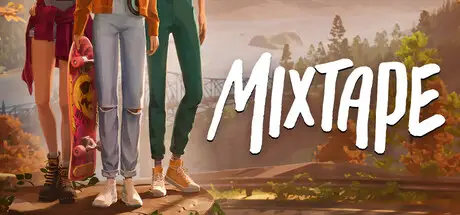
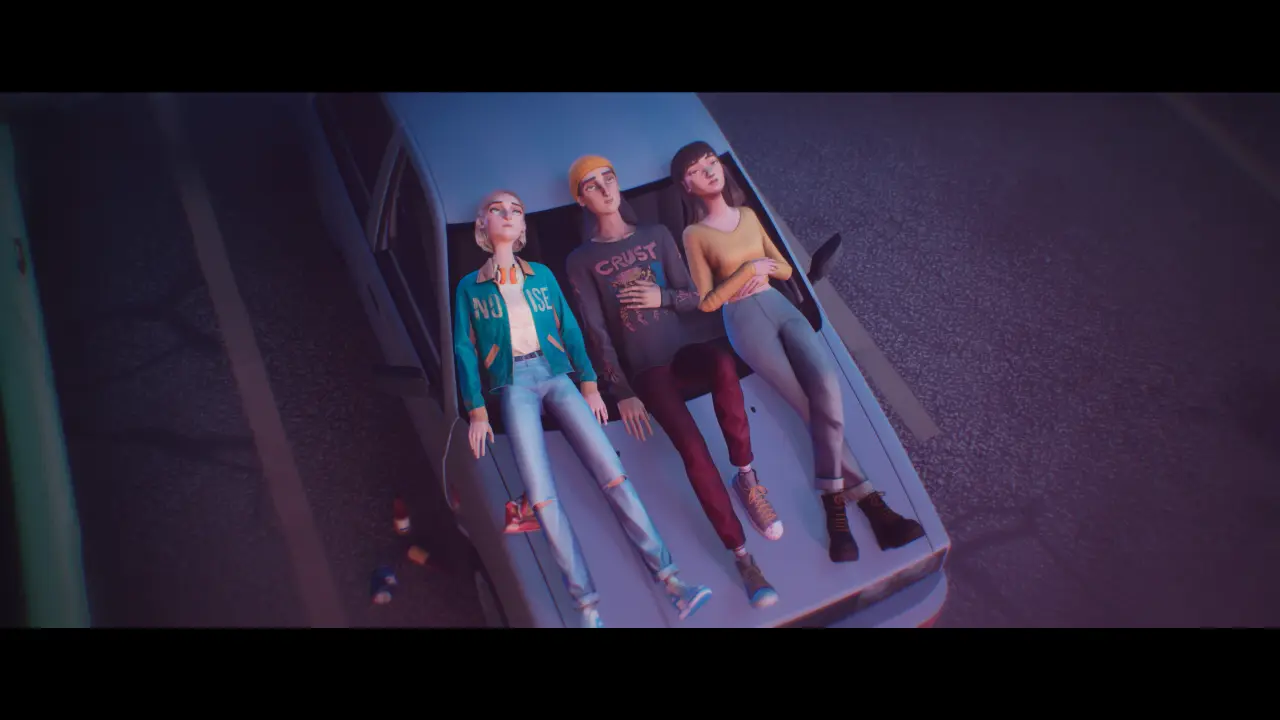
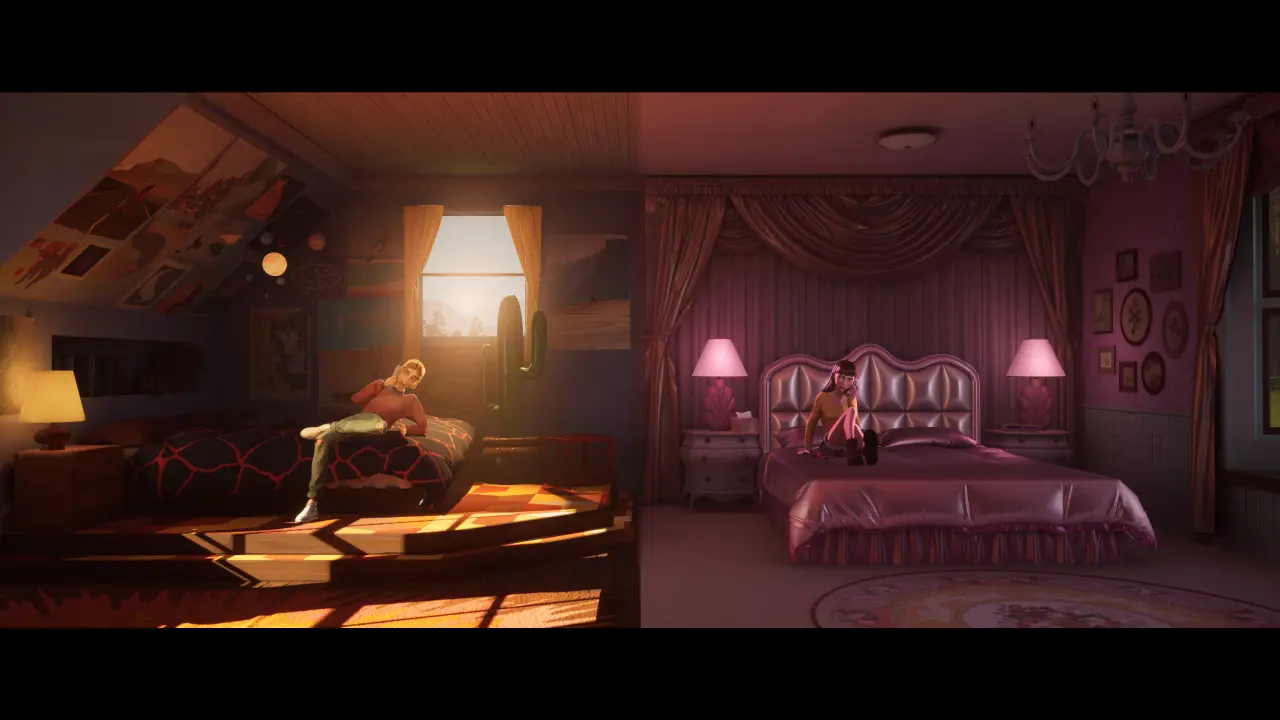
The cast is three people: Stacey, Van and Cassandra. They are the textbook outsiders, the ones who never slotted into any clique and so became a clique of their own. What makes this night different is that Stacey is leaving. She got a shot at a music career in New York, and she goes in the morning. So the three of them decide to burn the last evening down to the wick — the abandoned amusement park, the lake, anywhere they can still be together — and do every reckless little thing they never got around to.
That setup sounds too thin to carry a game, and that thinness is exactly what holds it up. It needs no villain and no world to save. It only needs you to believe these three are real friends, and that tomorrow is real. Once you buy that, the small stuff that follows — one round of fireworks, an hour wasted in the back seat — all of it gains weight. It is the particular weight of youth: a night that felt ordinary while you lived it, and unrepeatable the moment it was gone.
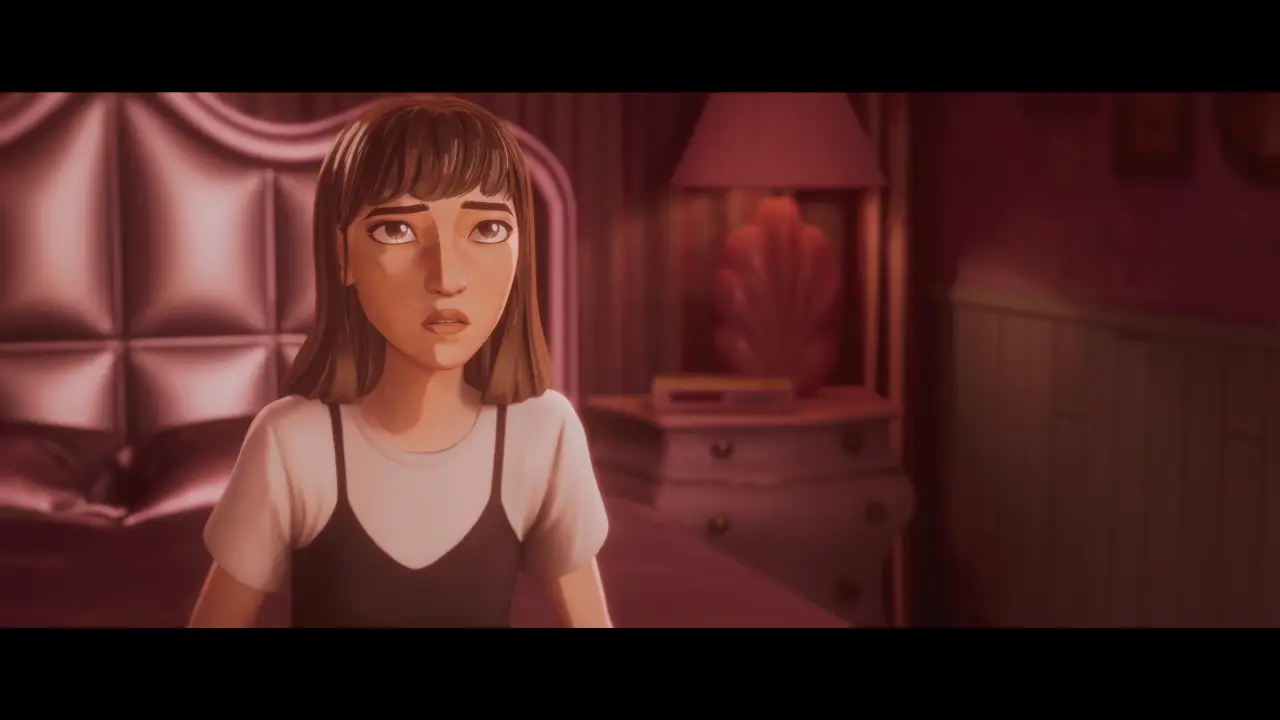
The three of them are drawn with real dimension. Stacey is the one with a dream and the nerve to leave, all coiled excitement and the jitters of a kid about to outgrow her town. Van reads as the friend who will not say he is gutted and is gutted anyway. Cassandra keeps her feelings furthest down. The game does not stop to explain who they are in paragraphs of dialogue; it lets you assemble that bond out of fragments, until you feel a thing between them that nobody quite names and everybody recognizes. That show-don't-tell restraint convinces far more than any narrator could. This is not the story of one hero. It is the story of an "us three" — and almost everyone has had an us three of their own.
Thirty songs, not one straight line

The way it tells the story is its real trick. The whole thing is cut into roughly thirty chapters, each one a song and a memory. You do not march forward through time. You move the way you move through a tape somebody else sequenced for you — one track ends, you flip the side, and the next song yanks you sideways into another piece of the past. A few critics reached for Joyce and Ulysses, a single day holding a whole life, and the comparison fits. On the surface it is one night. Underneath it is the slow record of how these three became themselves.
The upside of that fragmentation is pace. Nothing drags. Each chapter is its own small feeling, one song long, just enough to land and let you breathe. The cost is the missing tension of a story that ratchets. You would struggle to name a chapter that peaks higher than the others. It runs like a calm river of mood rather than a mountain of drama, and anyone who wants to be dragged by a plot may find it diffuse.
Do not expect your choices to rewrite anything
Set your expectations honestly here. Mixtape is not Life is Strange, where a choice genuinely reaches forward and changes what comes next. It hands you some interaction and a few decisions, but those are texture, not branches. The thirty chapters are a carefully arranged line of memory, the ending is the only ending, and a second run walks the same road.
I do not think that is a flaw you have to dock points for, but you should know what you are buying. The goal was never to let you command a fate. It was to let you live one again.
Unlike the studio's first game, which used psychedelic spectacle to talk about self-expression, this one plants both feet on the ground and tells the plainest story there is: friendship, and the way the people around you quietly shape who you turn out to be. That plainness is exactly what made IGN write that it sets a new bar for coming-of-age storytelling in the medium.
Audio | 9.5/10
サウンド: 9.5/10Not a great score — an actual, licensed, paid-for record collection
Start with the hardest fact. The songs in Mixtape are real. Joy Division's Atmosphere, Devo's That's Good, The Cure's Plainsong, Portishead's Roads, Smashing Pumpkins' Love, Iggy Pop's Candy, Roxy Music's More Than This, Siouxsie and the Banshees' Spellbound — dozens of them, sweeping across post-punk, new wave and dream pop. This is not a sound-alike score hired to dodge a licensing bill. The studio went out and cleared these tracks one at a time, and reportedly only Pink Floyd slipped out of the original wish list.
Anyone who has played it understands the weight of that. A song you have actually heard, that already carries your own memory, landing at the right second — that aftershock is something an original score can rarely buy. It borrows your youth and lays it on top of the game's. An original composer, however gifted, has to build that resonance from scratch in the time you spend with it; these tracks arrive already loaded with whatever a given listener carries, so the game gets decades of emotional interest on a loan it never had to take out. The music mattered so much that the studio refused to build a streamer mode, the kind that swaps copyrighted tracks for royalty-free filler. Their reasoning was blunt: these songs are the soul of the thing. Strip them and what is left is no longer Mixtape.
That call took some nerve, too. Skipping a streamer mode means broadcasters and video makers risk getting muted or struck when they stream or record it, which quietly hands away a huge free marketing channel. The studio would rather take less exposure than let you hear a neutered version of the tape. In an age where everything bends toward reach and virality, putting the listener's experience ahead of its own promotion is, oddly, one of the most endearing things about it.
Songs first, gameplay second — the whole process runs backwards
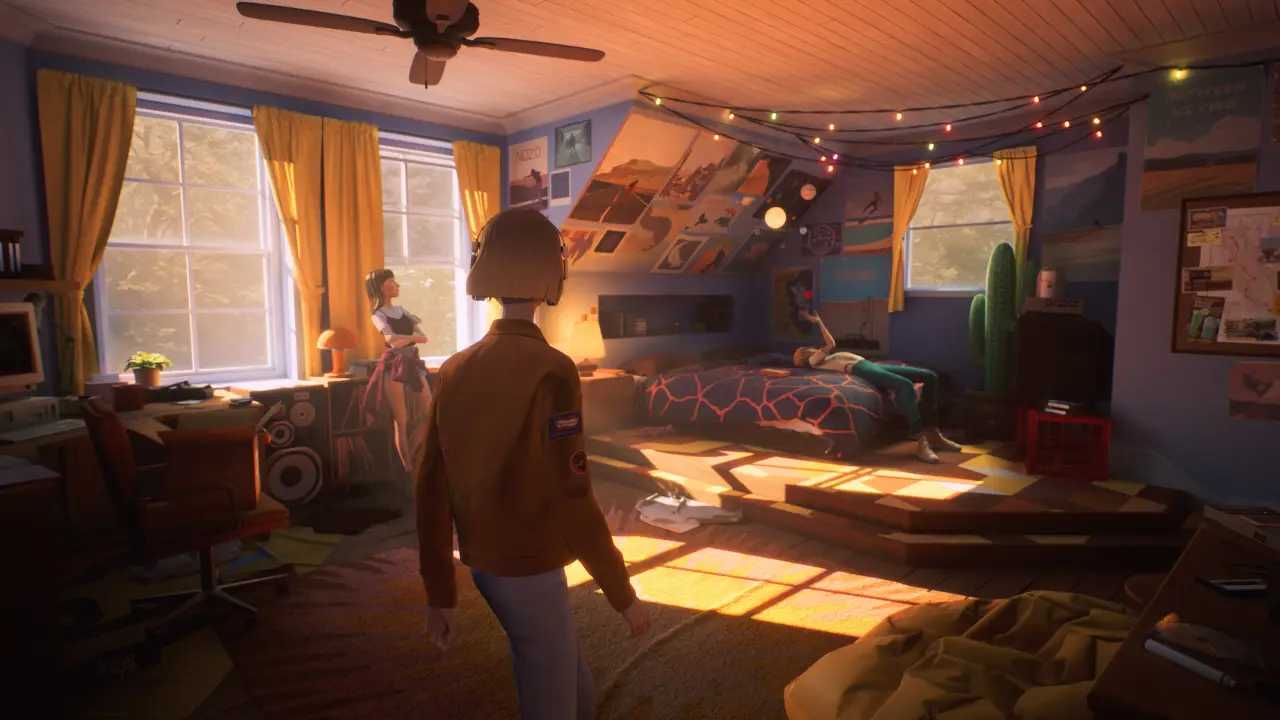
The more interesting part is how it uses them. Most games build the level and the loop first, then layer music across the whole thing afterward. Mixtape inverts that. Director Galvatron locks the song, then designs the moment around its rhythm — what you do, how the camera moves, where the beat drops. The result is that every time a track turns, the scene turns with it, like a match held to the melody so the feeling can take off.
One review nailed it: the game understands music the way Stacey does, not as background noise but as the thing that tells you who you are and where you have been. Every chapter unlocks a song and a memory at once, so the whole run is really you playing a tape from one end to the other. That structure — playlist as level design — finally makes the music the engine rather than the wallpaper. You keep going partly because you want to hear what is on next, the same small thrill as flipping to side B.
All three leads are fully voiced, and the writing is sharp and unforced, with none of those lines that exist only to wring a tear. The performances catch that teenage register precisely, the cool and the fragile in the same breath, loud on the outside and terrified within.
The ambient work is quietly detailed too — the grain of skateboard wheels grinding over pavement, the night air, the distant murmur of a party — all of it building that one summer evening layer by layer. It is the dimension I score highest, a 9.5, and the one most worth your headphones.
Visuals | 8.5/10
グラフィック: 8.5/10Memory turned into a filter — a stop-motion kind of nostalgia
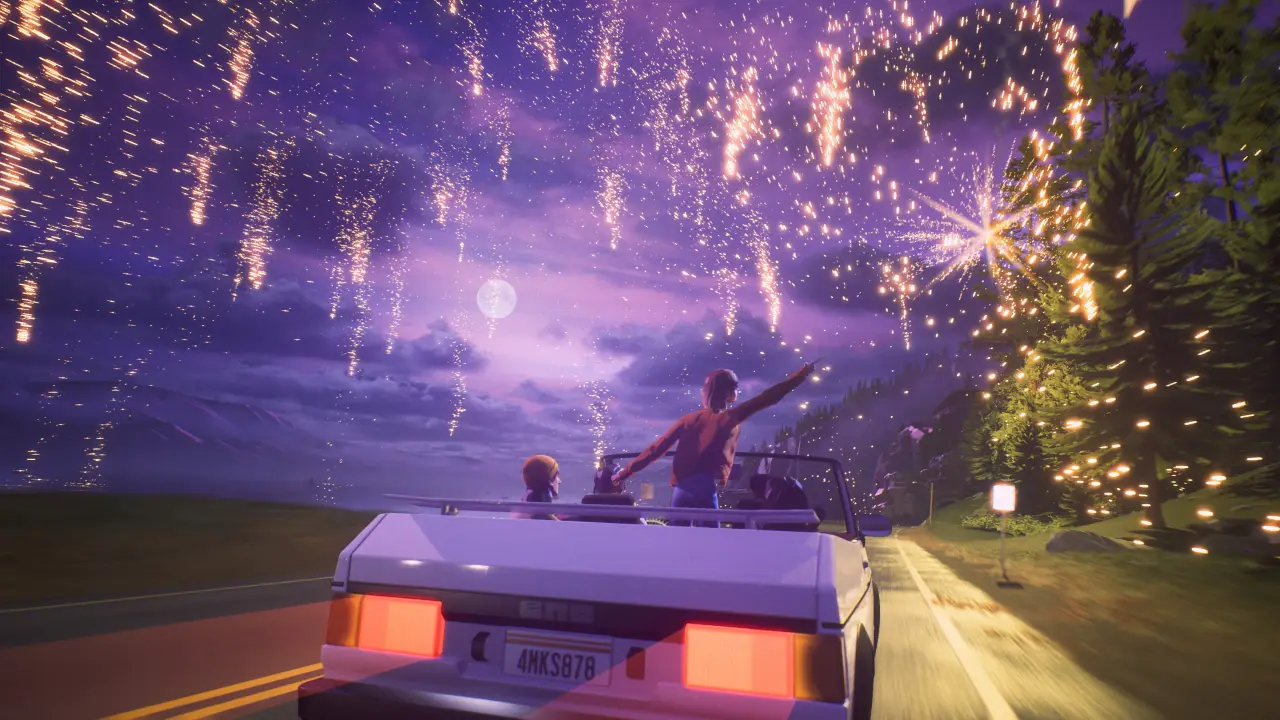
You will recognize Mixtape from a single glance. It runs on Unreal Engine 5, yet it deliberately refuses photoreal fidelity in favor of a stop-motion-flavored, hand-touched look — The Guardian reached straight for Into the Spider-Verse. The characters feel sculpted frame by frame, the backdrops carry grain and brushwork, and the whole thing reads as not quite real and exactly right.
Why right? Because that is the effect it wants, which is memory. When we picture those nights at fifteen, we do not replay a clean recording. We replay something time has retouched, brighter than it ever actually was. This art style takes that act of remembering and renders it directly as a visual filter. The forest, the lake, the amusement park shuttered for the night — every set is worked over with care, and the skating stretches in particular, with that rush of speed and light, are genuinely beautiful. There is a deliberate looseness to the linework, a sense that an artist's hand passed over each frame, that no amount of raw engine horsepower can fake.
What is rarer still is how color and framing keep tracking the emotion. Happy passages flood the sky with unreal oranges and bruised purples, as if a memory had painted it brighter; the wistful moments drop the palette and leave wide empty space so the characters look small and alone. That trick of telling mood through color often gets sanded flat by photoreal rendering in big productions, and Mixtape, precisely because it abandoned realism, gets to push it all the way. It is a quiet but persuasive argument that good visuals were never really about resolution and polygon counts, but about whether the art team had something to say.
Where it shows the seams — flat layers and platform gaps
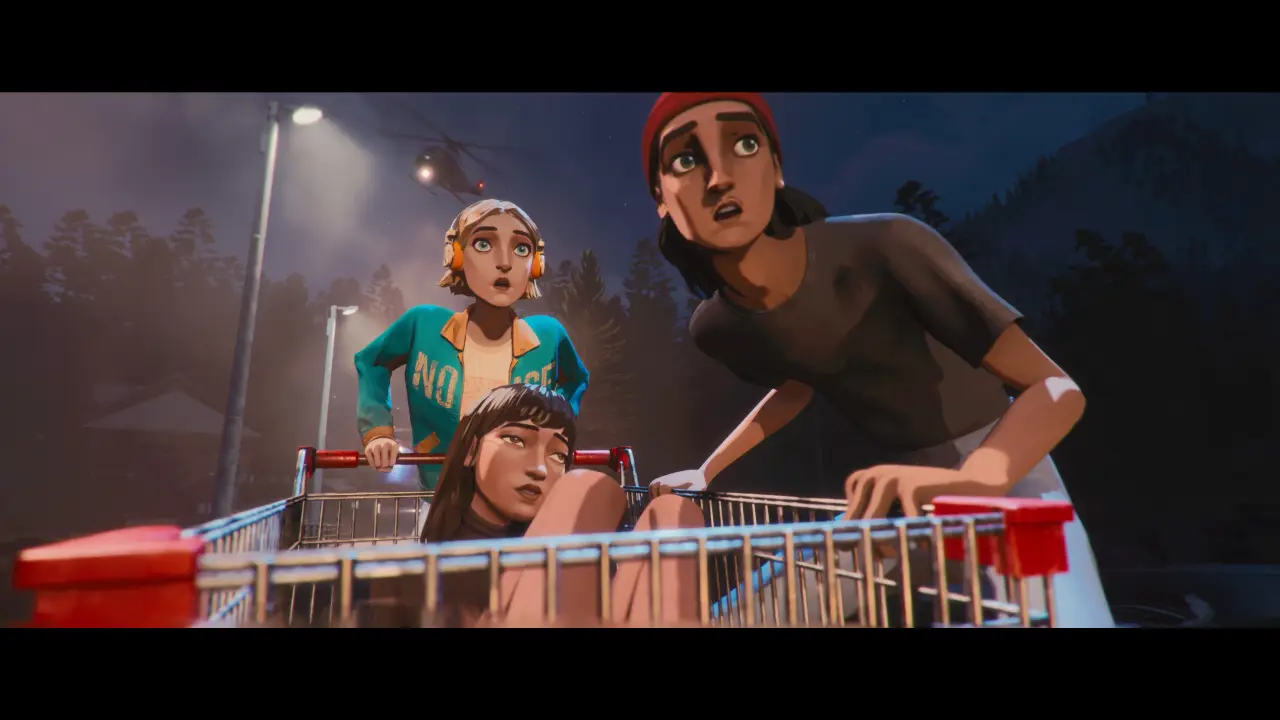
It is not flawless. The blemish people name most often is the running-through-the-forest type of scene, where you can fairly clearly see the characters sitting as 2D cutouts pasted onto a 3D backdrop, and the depth briefly snaps. That paper-doll dissonance is loudest in fast-moving shots, and it is one of the few places the look pulls you out. The near-perfect GamesBeat review docked its sliver of a point largely for this.
The platforms are worth a word too. Metacritic does not line up across them: the Xbox build hit 92, the highest; PC and PS5 landed at 86; the Switch 2 version sits a little lower at 82. That gap is about fidelity and stability rather than cut content — all three are the same game, the Xbox version is simply the most polished pass.
If you care about presentation and happen to have a free choice of platform, the Xbox family is the steadiest tier to see it on, and the Game Pass arrangement makes that an easy default. On a portable Switch 2 screen the softer resolution actually flatters the hand-drawn look in some scenes, so the lower number does not translate cleanly into a worse experience; it is more that the big-screen Xbox pass holds up best when you sit close. None of these versions are broken, none stutter in any way that wrecks the mood, and the art direction does most of the heavy lifting regardless of where you run it. Resolution is the variable here. Taste is the constant.
Combat | 6.5/10
ゲーム性: 6.5/10The skating feels good, and a crash just rewinds
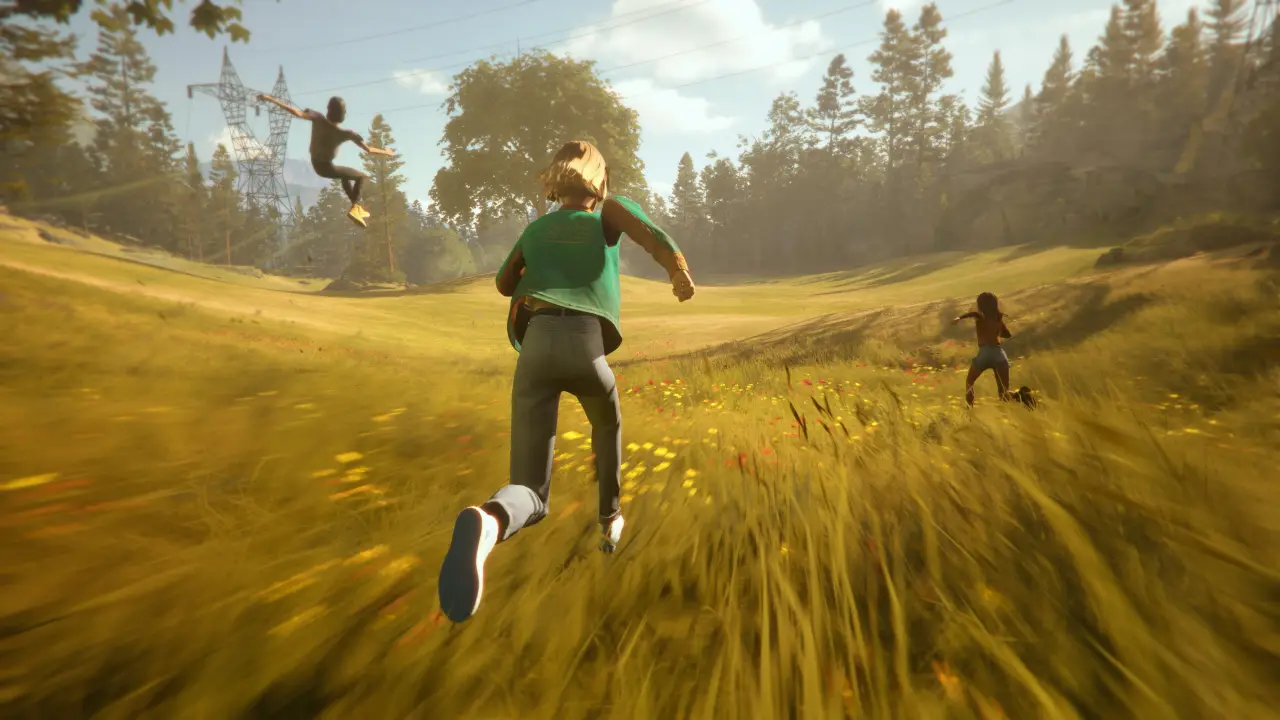
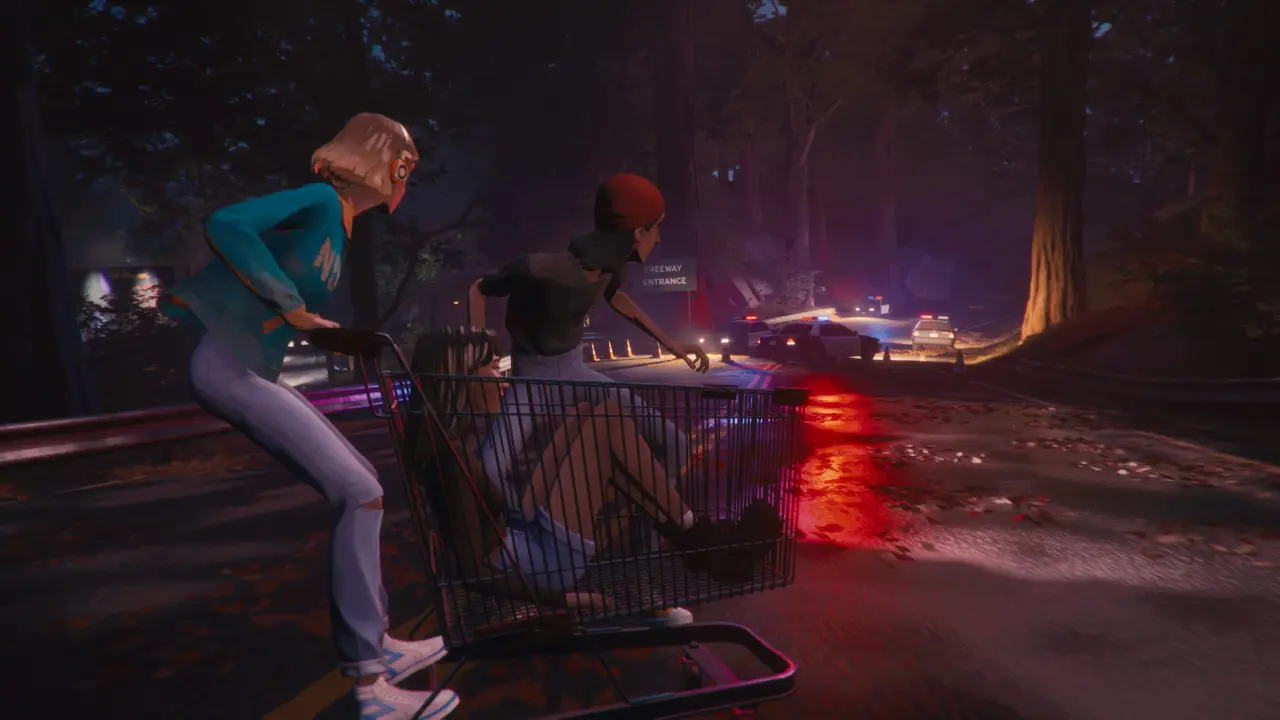
The good news first. The thing you do most in Mixtape is skate, and it is surprisingly solid. Pushing off, building speed, carving a turn, popping an ollie — set against those exploding songs, the rhythm is dead on. The kindest piece of design is the safety net: a wipeout carries no penalty, the game quietly rewinds you a beat and lets you try again without breaking flow. You never get stuck somewhere because your thumbs failed, and the mood stays carried by the music instead of snapping under frustration.
Beyond skating it stuffs in plenty of variety: walking and poking around, gathering scraps of notes to reassemble the past, taking photos of your friends, swinging a bat, launching fireworks from the back of a car, even a dream sequence where you take flight. Each one is a shallow taste. Just as you find the rhythm of it, the chapter ends and a new song begins. These little verbs are not there to challenge you. They are there to fold you into the feeling of the moment.
My own favorite is the stretch in the amusement park after closing. The game hands you no objective at all. You just hold a camera and wander between an empty carousel and a stilled Ferris wheel, snapping the three friends. You are not completing anything in that moment; you are saving the negatives of a friendship. When those photos resurface later, the small jolt of "we really were here together" is something no achievement point could ever hand you. That instinct — to build a mechanic as a container for feeling rather than a difficulty gate — is where it parts ways most sharply with almost every other game.
A kiss that will make you blush
One interaction deserves its own paragraph, because it captures the whole personality of the game. There is a scene where two teenagers kiss, and the game genuinely hands you control of their tongues and asks you to make sure they mix together appropriately. The first time you reach it you will probably cringe and laugh at once — and that is the smart part. A teenage first kiss really is that clumsy, that fumbling, that lost.
It refuses to shoot the moment as something elegant and instead honestly reconstructs the awkwardness, which is precisely why it rings true. That willingness to be ugly in service of being real runs through every interaction in the game, and it is a big part of why it lands. It does not airbrush your adolescence for you. It sits beside you and lets you be embarrassed all over again, and somehow that is more flattering than any idealized version could ever be.
The real argument: is this even a game
This is where Mixtape's biggest fight lives. It has almost no puzzles, no fail states, and many stretches are less about playing than about being walked through. Even the warm AltChar review, sitting at ninety, admits the interaction is simple and that some sections feel prescribed rather than participatory, and calls that the reason it falls short of the very top tier. PC Gamer was blunter at 74, with the critic writing that the game never convinced them it needed a player's input at all.
After launch a chunk of players piled on too, saying it basically plays itself. My read is this. Hold a Nioh or an Elden Ring ruler up to it and it fails, which is why my own number lands at 6.5. But flip the angle, treat it as a film you complete with your hands — every push of the board, every firework you set off is you helping it finish the feeling — and the thinness reads as restraint instead. The interactions are not deep, but they are never the point; they are the thread that keeps your hands busy while the real work happens in your chest. The one thing to settle before you buy: do you want a challenge, or do you want company.
Content | 7.0/10
ボリューム: 7/10Three or four hours, one night, and you have to accept it is short
Let me be plain. Mixtape is short. The main story runs about three to four hours — one quiet evening, start to finish — and even a full completionist sweep, every corner touched, runs only seven or eight. For a game at twenty dollars standard, that length will split the room. Anyone counting value by the hour will feel shortchanged, but the other way to read it is that there is not a single minute of padding in there. No busywork, no checklist errands, no chores stretched to inflate a number.
Its content is organized as those tape chapters, roughly thirty of them, each tied to a song and a scene. That structure makes it a tightly edited experience rather than an open field to roam. What it offers is not breadth, it is density. In a handful of hours, the concentration of feeling runs very high.
Flip the lens, too. So many games now compete on size — hundred-hour worlds, side quests you cannot exhaust, maps you cannot fill — and the back half so often becomes more fatigue than joy. Mixtape runs the other way. It dares to be small, dares to cut to black while you still want more. That kind of restraint is genuinely scarce right now. Three hours that never waste your time against fifty hours you cannot remember a single moment of — which one is actually worth more is a sum every player runs differently in their own head.
It is also worth being precise about what "short" buys you here, because length and quality are not the same axis. A bloated forty-hour open world can leave less of a mark than one perfectly cut afternoon, and Mixtape is firmly the afternoon. The brevity is a deliberate editorial choice, not a budget shortfall — the studio clearly decided that this story earns its power by ending before it overstays, the same way a great pop single knows to stop at three minutes rather than sprawl to seven.
No DLC, no season pass, and almost no reason to replay
The good news is that it ships as a complete package: no paid DLC, no season pass, and those dozens of expensive licensed tracks are all bundled into the base game with nothing more to pay. In an era that reflexively carves things into season passes, that is a decent posture. There is no upgrade tier dangling a few extra songs behind a paywall, no deluxe edition holding the "real" ending hostage; what you buy is the whole tape, both sides, start to finish.
But the replay value is genuinely limited. There are 26 achievements, yet because choices do not move the ending and there are no real branches, a second run walks the same road to the same story. This is not a thing you grind on a loop. It is closer to a film you love: you will think of it, recommend it, maybe revisit it some night years later, but you will not return daily.
There is one small exception worth flagging, though. The soundtrack itself becomes a kind of long tail. Plenty of people, once the credits roll, go and hunt those songs down to keep as an actual playlist.
In that sense the content reaches past the game — what it plants in you is a record that follows you for a long time and a mood you occasionally pull back out, value you cannot calculate from a runtime alone. So calibrate your expectation here: a complete, concentrated, one-time core experience, plus a playlist that lingers, rather than a long-haul game to sink hundreds of hours into. I land this dimension at 7.0, docking the main bulk and the replay tail, not the rare restraint.



コメント 0
ご意見をお聞かせください
このゲームについての感想や評価をお寄せください。
まだコメントはありません。このレビューへの感想をぜひどうぞ。