


















Opening
Here is a sentence I did not expect to write in 2026: the best-value way into an open-world wuxia right now costs exactly nothing.
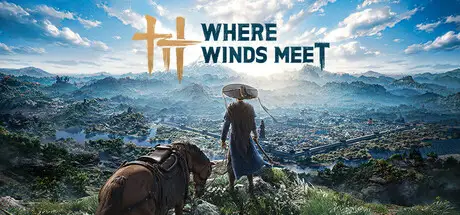
That game is Where Winds Meet, a free-to-play martial-arts action RPG from NetEase's Everstone Studio. It launched worldwide on 14 November 2025 across PC and PS5, and every microtransaction is strictly cosmetic. Two million people poured in on the very first day. A full fifteen million had played by the end of the first month, and the Steam concurrent peak hit 251,008 just eight days after launch.
So why are the scores all over the map? Metacritic sits at 85. Some outlets handed it an 8.5; IGN gave it a flat 6. This review is about that gap — what the game nails, where it stumbles, and which kind of player you have to be before you download it. The short answer is that the spread is not a contradiction at all: it is the predictable result of one game trying to be a single-player epic and a live-service MMO at the same time, and your score depends almost entirely on which of those two you walked in wanting. Sort that out for yourself and every pro and con below slots neatly into place, and the scoring gap stops looking like a riddle. The production is not in question — what is in question is whether the kind of game sitting underneath all that production is the kind you actually want to spend your evenings playing.
Story | 7.5/10
ストーリー: 7.5/10A stolen pendant drops you into the bloodiest century in Chinese history
The setup is old-fashioned, and that turns out to be the right call. You are a young martial artist, you get jumped, and a pendant you carry is taken. Recovering it is your thread through the whole thing.

The choice of era is the smart part. The Five Dynasties and Ten Kingdoms was one of the most fractured stretches in Chinese history — dynasties rising and collapsing like a carousel, warlords everywhere, nobody truly in charge. That chaos is a natural stage for a wanderer with a sword, because there is no single rightful throne demanding your loyalty. Instead you slip between rival factions, and most critics agree the main story is genuinely solid rather than a checklist you can predict from the opening hour.
What is rarer still is that it does not treat the Five Dynasties as a skin slapped over a generic plot. The precariousness of an age where survival is never guaranteed actually bleeds into the quests and the people in them. The figures you meet are not click-to-accept quest dispensers; they are men and women with their own calculations and their own scramble to stay alive. That sense of a specific time and place is something plenty of games wear as mere decoration and never deliver, and it is a large part of why this one earns your willingness to keep going.
What matters more is that you are not a protagonist welded to a script. Your choices steer where the world goes; they do not all funnel back to the same ending.
In an age of fake open worlds that quietly herd you down one corridor with the illusion of choice, that freedom is rarer than it should be. The factions remember how you treated them, doors open or close based on earlier decisions, and the sense that the world is responding to you rather than waiting for you is a large part of what keeps the early hours compelling.
The story is good, and it has no intention of ending
A warning before you start: do not expect the clean, decisive finale a single-player game would give you.

Where Winds Meet is, at its core, a live-service title. It kept rolling out updates through December 2025 and January 2026, and the v1.2 patch dropped large-scale group battles outright. That means the central narrative is left deliberately open — new regions, new arcs, new factions keep getting bolted on. The upside is an endless supply of fresh material. The downside is just as blunt: if you are the type who wants one complete story consumed in a single sitting, you will feel left dangling.
There is also a hard, concrete demerit: the UI is far too dense. Tutorials, quest markers, event pop-ups pile onto the screen, and the second a story beat lands on an emotional note, a single red-dot notification yanks you out of a rainy Five Dynasties night and back into a live-service loop. This is the biggest enemy of its narrative immersion, and it is exactly what IGN's "tries everything, masters nothing" critique looks like when it lands on the story.
Here is how it actually felt to play. Taken on its own, any individual story beat is well made — feuds, duty to country, doomed romance, all of it shot with real care. What you struggle to get is the experience of a single emotional throughline carrying you start to finish, the way a dedicated single-player narrative would. The reason is structural: the plot is delivered in chunks, with mountains of operational busywork chopping the pacing apart in between. If you crave immersive long-form storytelling, you will end up wanting more. If you treat it as something to dip into a beat at a time, the problem barely registers. The writing itself is not the weak link here; the live-service scaffolding around it is what drags the rhythm down. Judge the prose alone and it holds up well; judge the pacing as a whole and the seams of a service game keep showing through, which is a very different and much more forgivable kind of flaw.
Audio | 7.5/10
サウンド: 7.5/10Traditional melodies over ink-wash visuals, and the mood actually lands
Start with the good. The soundtrack leans into a classical Chinese register, and paired with that ink-wash art it conjures exactly the bleak-but-elegant atmosphere a Five Dynasties war epic needs.

Better still, the music is not treated as wallpaper. Life activities like playing the guqin or sitting down to a game of weiqi fold sound directly into play — you are not hearing a track, you are plucking the string yourself. That "music as a verb" approach is part of why so many players who came to be a layabout in a chaotic era ended up staying. Combat audio bites down hard on the parry-and-execute feedback, too: the crisp crack when a guard breaks is a core part of what gives the Soulslike fighting its weight. Strip that layer away and even pretty animations feel weightless; keep it, and every clean parry makes you hungrier to hunt the next timing window.
The ambient layer pulls equal weight. A city hums with market chatter and footsteps; the wilds carry wind through grass and the chirr of insects, so the Five Dynasties world sounds full rather than like a muted painting. That density of sound mirrors the density of those crowded streets — the game wants a living, smoke-and-cooking-fire jianghu, and audio is what carries that warmth into your ears. Audio is one of the quieter reasons the place feels inhabited rather than staged.
Lips that miss the dialogue, a scratch on an otherwise handsome face
Audio has a flaw it cannot dodge, and it is audible in the literal sense.

The loudest complaint is lip-sync. Mouths routinely fail to match the voice track, and in a game this polished the mismatch stands out badly — a beautifully drawn face that opens its mouth and sounds dubbed in a different room.
It is a neat miniature of the "first-rate production, out-of-focus detail" verdict the game keeps earning. The artists clearly poured their hours into sweeping vistas and combat spectacle, and the finer pass on facial timing simply did not happen.
On platforms, the audio is tuned with PC and PS5 in mind; on those two, headphones reveal the most layered environmental and combat mix. Mobile sits in "perfectly audible" territory, which is what you get when you stretch across this many devices.
For most players, though, the soundtrack and ambience pull you in well before the lip-sync ever bothers you. It is a blemish, not a dealbreaker, and it fits the broader shape of a game whose ceiling is sky-high and whose final polish ran short.
I landed on a 7.5 for audio, and that number says exactly what I mean: the mood and the function are both there, the music and the sound effects are earnestly serving the wuxia world, and the only thing missing is a finishing pass refined enough to match the ambition of the art. Stand at a city gate and close your eyes, and you can hear the place breathing — that is not a small achievement. If the team circles back and fixes the lip-sync, this score has clear room to climb.
Visuals | 8.5/10
グラフィック: 8.5/10It skipped the photorealism race and built a moving scroll painting instead
To talk about how this game looks, start with what it refused to do. Another recent Eastern blockbuster, Black Myth: Wukong, chased photoreal fidelity down to every strand of hair. Where Winds Meet went the opposite way: stylized realism laid over an ink-wash palette.

The result is mountains, pavilions and street markets that read like a Chinese scroll painting that happens to move. That visual identity is worth real money — in a field where everyone is competing over who is more real and whose ray tracing is hotter, this one is recognizable at a glance. Within that Metacritic 85, art is the universally agreed-upon strength; the lighting and combat animation sit at a level that is simply pleasant to look at. For a free game, that production tier is close to bringing a knife to a gunfight in your favor.
There is a durability bonus, too. Photoreal games age badly the moment hardware falls behind or the tech moves on. A painterly style rests on artistic choices rather than raw horsepower, so it keeps its grace on mid-range PCs and even on phones — a pragmatic, genuinely clever call for a game spread this thin across platforms.
The cities are the flex; the faces are where it runs out of budget
Where the game spends most lavishly is its cities.

Step inside and the vendors, pedestrians and interactive NPCs are packed in tight; the whole place is alive, and critics flatly call it one of the liveliest cities in the genre. You are not running quests through an empty set, you are burrowing into a working marketplace. That world density is something plenty of full-price games never reach.
Spend an hour just wandering and you notice how much of it is reactive rather than decorative. Stalls have wares, hawkers have patter, side alleys hide a small story or a curious face. The city is not a backdrop you pass through on the way to the next objective marker; it is a place that rewards loitering, which is precisely the texture a wuxia world needs to feel lived-in rather than staged.
Pull the camera in to a face, though, and the cracks show. The flip side of the lip-sync issue is that some character models simply did not get the same attention as the rest of the art — the world is maxed out, but a few faces look under-resourced. In cutscene close-ups that gap gets magnified. Pull back to normal play distance and it mostly vanishes, since you spend nearly all your time moving and fighting in the open world rather than staring at someone's chin. On platforms, PC and PS5 look best; mobile and the summer-2026 Xbox release are later expansions.
Screenshots from this game survive as wallpaper without any apology: mist threading between peaks, rain breaking on tiled eaves, lantern light spilling across a night market. That is the payoff of committing to a single, confident art direction instead of chasing a fidelity arms race you can only ever tie. Art is the strongest card this game holds, and the 8.5 is earned several times over. Bear in mind, too, that this is a free game; clearing this visual bar without charging a cent overshoots most people's mental expectations of the word "free." You will struggle to name a second open world that costs nothing yet still produces shots you would happily post to your feed. This is a card the game plays with total confidence, and it never once stops to ask you for money before dealing it.
Combat | 8.5/10
ゲーム性: 8.5/10Seven weapon classes plus bare hands, and the melee is the hardest-hitting in F2P
Gameplay is this game's real currency, so start with the fighting.

You get a whole armory: sword, twin blades, fan, spear, whip, bow, and unarmed martial arts, each with its own moveset and unlockable special techniques. This is not a reskin of the same numbers — every weapon is a different way to fight. The spear sweeps a crowd, the fan and twin blades dance through nimble combos and repositioning, and going bare-handed taps the old wuxia romance of taking on the world with nothing but your fists.
Crucially, the rhythm borrows from Soulslikes: parries, dodges, counters, executions, bosses with poise bars to crack. Land a clean parry into an execution and the payoff is real. Among free-to-play open worlds, the melee feel is about as solid as it gets, and that is the core reason an outlet was willing to put 8.5 on it.
The value of "swap weapon, swap playstyle" deserves a hard underline. Plenty of action games hand you an arsenal that all plays roughly the same, separated only by numbers. Here, a spear and a fan are two entirely different senses of distance, rhythm and footwork. That means the same boss can be a fresh puzzle the moment you change kit, which is what keeps the combat from going stale dozens of hours in rather than mashing one combo start to finish. For anyone who likes to dig into an action system, there is real meat on this bone.
Lightfoot and a grappling hook turn travel into something worth playing
Traversal is the other thing that made me sit up.

How does an old wuxia MMO handle travel? Open map, click a waypoint, wait for the load, done. Where Winds Meet insists you move yourself: lightfoot parkour, a grappling hook and free climbing chain into one vertical movement system. You can swing across an entire canyon hugging a cliff face, or chase a fleeing target across the rooftops. Travel stops being a chore and becomes content.
That system also feeds exploration. Because you can climb, swing and run the eaves, the map dares to go vertical — a high roof, a cliffside cave, a distant spire; if you can see it, you can almost certainly reach it, with no invisible wall slapping you back. That "see it, reach it" freedom is one of the most addictive things an open world can offer, and the hook makes it feel effortless. Level designers clearly built around that promise, tucking rewards onto ledges and into corners that only pay off once you trust the movement to carry you there.
The systems can bury you, and the first hours barely teach a thing
Here is the part that drives people off — it just refuses to teach you properly.

In the opening hours, martial arts, inner techniques, mystic arts, gear affixes and build combinations all land at once with almost no gradual onboarding. OpenCritic flatly names it: the game does a poor job of teaching its mechanics. The result splits the room — hardcore players see depth to mine, while raw newcomers get buried and quit early.
Push through the wall, get a build figured out, and the combat finally opens up. Suddenly the inner techniques and weapon synergies stop being a wall of menus and start being a toolkit you reach into instinctively mid-fight.
Compare it sideways: Genshin Impact is also a free open world, but on melee feel and parry depth it is nowhere near the same weight class. One last caveat: at launch some reviewers reported input lag, with sword swings landing a beat late — likely a server-side issue, so if feel matters to you, watch how the patches go before you commit serious hours. On balance, gameplay is the most praiseworthy part of the package: the combat has depth, the exploration has freedom, the systems have heft, and the one thing standing in the way is that wretched onboarding. Clear the early "drowning in systems" hump and the payoff is concrete. I scored gameplay an 8.5; the point and a half I withheld comes almost entirely from the teaching and the launch-window feel.
Content | 5.5/10
ボリューム: 5.5/10A 150-hour main story, plus the option to just live as a drifter
On sheer volume, this game holds up.
The main campaign alone aims at roughly 150 hours, stacked on top of a busy online world and a flood of side content. But the genuinely clever move is how seriously it treats its life activities: cooking, fishing, playing the guqin, weiqi, running a little business — these are not throwaway minigames, they are pursuits you can sink into. Plenty of players never came for the fighting at all; they came to be an idler in a chaotic era. That dual appeal is why it banked nine million downloads in two weeks and fifteen million players in its first month.
Those life systems deserve a specific nod for how committed they are. Many open worlds bolt on fishing or cooking as filler you tire of in two tries.
Here they have depth, progression and real long-term draw — some people effectively treat it as a wuxia slow-life simulator, with the main story as background noise. Recipes branch, fishing spots reward patience and timing, and a household you build up actually persists and grows, so the loop has somewhere to go rather than fizzling after the novelty wears off. It is the kind of systemic care that usually gets reserved for a game's headline pillar, spent instead on the things you do between fights, and it pays off in how easily an evening disappears into them. That split personality, able to fight and able to lounge, lets it catch a wider span of players than almost any rival. You can be a sword-wielding wanderer cutting through bandits, or a recluse who fishes, cooks and plays music while the wars happen somewhere offscreen — and both are fully supported builds of a life, not afterthoughts.
This lands squarely on the most romantic idea many people hold about wuxia: the jianghu is not only bloodshed, it is street-corner life, music and chess and calligraphy, the small social textures of a world. Making those non-combat pursuits compelling enough to sink into is where Where Winds Meet genuinely put in the work, and it is what separates it from an ordinary action game wearing a martial-arts coat.
There is a lot of content, but a lot of it is grind — its biggest demerit
The problem hides inside that very word, "a lot."
It is a free live-service game, so the dailies, seasons and stat-grind progression are the unavoidable price. Maxing a build or a piece of gear demands sustained time. OpenCritic calls the progression grindy and stalled outright, and PlayStation Universe complains that the clever ideas and strong combat get dragged down by free-to-play grind. That is precisely why I scored content at a 5.5 — not because there is too little of it, but because the quality is diluted by the grind, so the real worth is lower than the raw total suggests.
I have to spell out that hidden price, because it is where free games hook you hardest and where you regret it hardest. The game does not want your money; it wants your time, served through a carefully tuned set of dailies and a growth curve engineered to make one day offline feel like a loss. For time-rich players who enjoy the climb, that is the fun. For working adults or anyone who just wants to relax, it slides from pleasure into obligation fast. Updates are frequent and free — v1.2 added large-scale battles, and the seasonal drops keep arriving at no charge — so the raw content supply is genuinely not the issue here.
The question to ask yourself is simple: are you here to play a game, or to clock in for an unpaid job? Answer that honestly and you will know within an evening whether this 5.5 is a warning aimed at you or a footnote you can cheerfully ignore. Either way, do not read the low content score as "there isn't enough to do" — there is far too much to do. Read it as a flag that a meaningful slice of that bulk is treadmill rather than craft, and that the headline hour-count is more generous than the genuinely worthwhile hours underneath it.





コメント 0
ご意見をお聞かせください
このゲームについての感想や評価をお寄せください。
まだコメントはありません。このレビューへの感想をぜひどうぞ。