ニュース
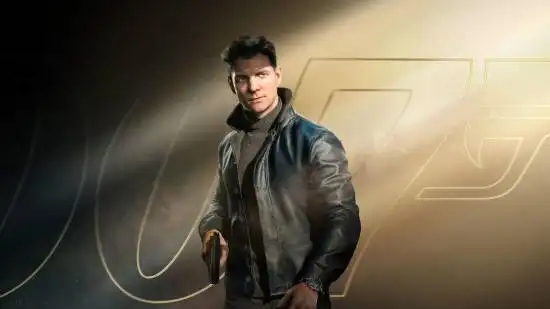
007 First Light Drops to $24.69 in Its First-Ever Sale, Beating the Previous Low
007 First Light gets its first discount, with Green Man Gaming stacking an extra 18% off the 20% official price cut plus
















Opening an RPG on the subway, I originally just wanted to grind a few mobs, but then the story suddenly took a sharp turn and I instantly woke up—more effective than an 8 a.m. coffee. Today I want to talk about those RPGs that completely flip halfway through: they start out like a chill commute drama, then suddenly turn into a different work altogether and make you re-examine everything you experienced before.

Let’s start with Dragon Age: Inquisition. In the early game everyone is holed up in the snowy little town of Haven, playing the role of the “Herald of Andraste.” The vibe is a bit like clocking in at work every day—doing quests on a steady, predictable schedule. Then Corypheus shows up and wipes your base off the map, Solas leads a retreat to Skyhold, and in that moment the whole tone changes. Your title becomes “Inquisitor,” you go from worker bee to team leader, and the pressure and sense of power both spike. Even just walking around town feels more ceremonial.
Speaking of world collapse, my favorite old title to replay on commutes is Final Fantasy VI. The first half is just you going up against the Gestahlian Empire, with the pacing of a pretty classic JRPG. Midway through, Kefka suddenly murders the Emperor and causes the Warring Triad to go berserk, the world shatters into a wasteland, continents rearrange, cities turn to ruins, the airship crashes, and your party is completely scattered. In the second half, you wander the World of Ruin, slowly finding everyone again. That process feels oddly healing, like slowly cleaning up a life that’s fallen into total disarray.

If you just want a quick “psychological smack in the face” during fragmented time, In Stars and Time is seriously addictive. The game opens with Expedition 33 getting wiped out by a mysterious old man. You think it’s just a narrative hook, but a few hours later the protagonist Siffrin gets one-shotted by the same old man, and the new leader Vesper steps up. At that moment I was actually a bit angry, like my carefully raised character had been hard-reset. Then the end of Act 2 hits even harder: it’s revealed that the world is actually a painting, and the main cast has an even deeper, fated entanglement with it. The twists stack layer upon layer, like watching episode 10 of a show and realizing the first five episodes were all setup.
Divinity: Original Sin 2 is the kind of game you buy expecting one single title, only for the first act alone to already have the content load of a full game. You escape Fort Joy by boat, thinking you’ve just unlocked a big new map and are about to start a vacation-style adventure, when suddenly you’re attacked by a mysterious, almost unwinnable ship. After the chaos, any Godwoken companions you didn’t recruit are gone for good, and your party is permanently locked in. For casual players that can feel a bit exhausting, but from that point on every line of dialogue hits harder, because you know these people really are the ones who will “walk with you all the way to the end credits.”

When it comes to plot twists, Star Wars: Knights of the Old Republic is probably the most famous example. In the first half you’re chasing the legend of the fallen Sith Lord Darth Revan—listening to people recount his campaigns while doing quests—feeling like just another tiny cog in the machinery of justice in the Star Wars universe. Then midway you’re suddenly told you are Revan, suffering from amnesia. That info bomb instantly slaps new labels on all your past choices: you go from “chasing the villain” to “how do I deal with my own former life.” That sudden suffocation of being bitten by your own history is perfect to savor slowly with headphones on.
Bloodborne is more like a bedtime horror story that starts as gothic creepiness and suddenly morphs into cosmic horror. Early on you’re hunting monsters in a gloomy city, with the vibe of a classic eerie small town. As your Insight slowly rises, you start sensing that something is off. Once you slay Rom, the Vacuous Spider, the illusion shielding reality completely shatters, the Blood Moon rises, streets and NPCs all “change faces,” and those gigantic Amygdala—who were always there but invisible to you—suddenly appear in your vision. Being forced to have your eyes pried open to see the truth is uncomfortable, but also unforgettable.

If you prefer something more grounded, Deus Ex is a classic case of a sudden tonal shift. At the beginning the protagonist is an anti-terrorism agent for UNATCO, trading blows with terrorists, and it feels like a sci‑fi police thriller. As you dig deeper you discover the so‑called “Gray Death” plague was actually unleashed from above as a tool, and UNATCO is just a façade for even darker powers. The protagonist goes from a naive office worker upholding order to an insider dismantling the system, which really mirrors that feeling of thinking your company is proper and upright when you first join, only to learn the real stories in the break room.
Anyone who likes a bit of raising-sim flavor has probably played Fire Emblem: Three Houses. The first half is you working as a teacher at the Officers Academy: training students, chatting, giving gifts—basically a campus‑style management sim. Then at a key turning point, Edelgard suddenly declares war on the Church, the protagonist gets knocked unconscious, and when you wake up five years have passed and the whole world is at war. Those students you once strolled around the campus with are now commanders on the battlefield. Each house can lead to completely different routes, and every battle feels like attending a nightmarish class reunion.

On the MMO side, World of Warcraft: Cataclysm literally bakes the “mid‑run tonal whiplash” into a patch update. Deathwing bursts from Deepholm and shatters the World Pillar, the old Azeroth maps get overhauled on a massive scale: the Barrens is split in two by a giant fissure, Thousand Needles is flooded, and capital cities Stormwind and Orgrimmar are scarred. For veteran players, it’s like waking up one day to find your entire commute route torn up and rebuilt; all the familiar corners are suddenly unrecognizable, so it’s no wonder so many people ended up nostalgic for the old world.
Finally, I have to mention a small indie like Slay the Princess. At first it looks like a subversive little story where you’re sent to kill a princess—a single‑location interactive short. But once you finish the first run, you fall straight into a time loop. New voices join in each cycle, and the princess’s personality changes based on your choices. As you go on, you discover that the player and the princess are actually two halves of a cosmic being: one represents absolute stasis, the other eternal change. The “quest” gradually turns into a tragic love story about self‑awakening. It’s exactly the kind of small‑scale, big‑brain concept that’s perfect to replay in short bursts.

From a casual player’s perspective, these RPGs with mid‑game tone shifts are perfect if you’re tired of straight‑line, uneventful playthroughs but don’t want to wrestle with overly complex systems. If you care more about narrative whiplash and atmosphere, prioritize tighter, punchier titles like In Stars and Time and Slay the Princess. If you also want to enjoy high‑budget visuals, Dragon Age: Inquisition and Bloodborne will give you plenty of eye‑pleasing scenery. Of the 10 “mid‑run tone‑shift” RPGs mentioned here, how many have you played? Which twist hit you the hardest? Share in the comments, and feel free to follow the In Stars and Time hub—I’ll later dig into more commute‑friendly little details in this game from a “commuter” perspective.




コメント 0
ご意見をお聞かせください
コメント欄へようこそ。このゲームの感想を聞かせてください。一番乗りにはうれしいことがあるかも。
コメントはまだありません。最初の一件をどうぞ。