
ニュース
Planet Zoo 2 Launch Listing Undercuts Steam by $6.10
Frontier Developments’ new zoo-building sequel is listed at $43.89 through Loaded, compared with $49.99 on US Steam. The
















If I had to rate this incident, I’d give it a 4 out of 10: the “plot” is pretty intense, but it’s not funny at all. An online tournament for “Delta Force” and “League of Legends” somehow got turned into a negative case study in remote-control software. If this happened in the PS2-era forums, it would definitely sit on the front page for days.
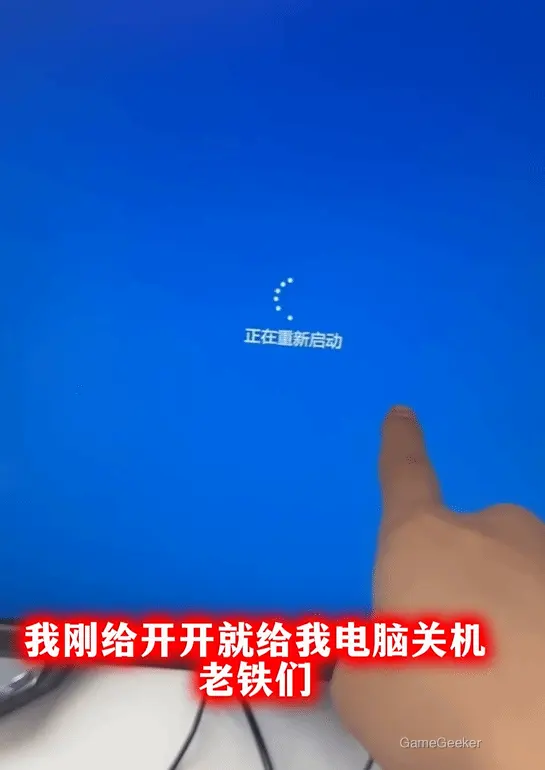
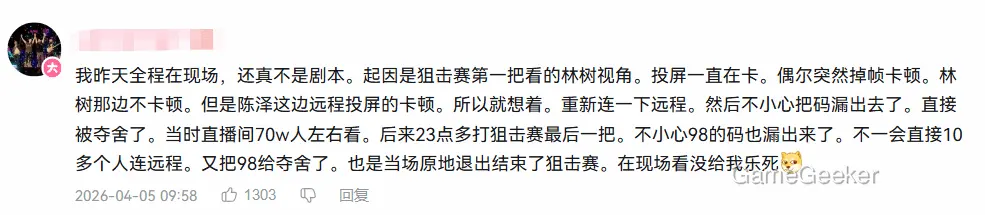
The whole thing is simple and very typical. On the night of April 4, Douyin top streamer Chen Ze was live, hosting “Delta Force” and “League of Legends” matches. His stream lagged and he wanted to tweak the screen projection, but in front of hundreds of thousands of viewers, he directly exposed the “permanent verification code” of his remote-control software on screen. You don’t even have to imagine what happened next: four or five people rushed in and connected to his computer at the same time, the mouse flying all over, forcibly ending the stream, restarting, uninstalling software – the combo was more brutal than a random-match brawl, and in the end the livestream had to be terminated.

What’s even more absurd is that another participating streamer, “98”, immediately suffered the exact same fate. Same verification code leak, then more than a dozen people connected to his computer remotely at once, and he simply quit the tournament. To put it plainly, this is no longer just a “tech newbie’s mistake”; the entire chain was exposed live: the security design of the remote-control software, the streamer’s own security awareness, and the audience’s sense of boundaries. With all three failing at once, the scene was bound to be ugly. To say there’s “no responsibility at all” would be an insult to all the veteran netizens who’ve been educated for years by phishing sites.
A lot of people like to package this kind of thing as “netizens trolling,” as if slapping on a “just for laughs” label can whitewash any behavior as harmless fun. Back in the “World of Warcraft” days, at worst that meant muting your mic in YY for a bit, or playing some alt-account drama; but remotely controlling someone else’s computer is something that genuinely touches personal privacy and property. In essence it’s not much different from the old crowd that maliciously reflashed phones or wiped internet café hard drives. You’re walking a tightrope on the edge of the law: if it goes smoothly, you think it’s fun; one misstep, and the person standing across from you will be a police officer.
That said, the streamers shouldn’t act like pure victims either. You’re running a big, high-profile livestream; device security is as basic as checking your controller before you queue for ranked. A permanent verification code like that simply should never appear on the stream screen. You can call it a habit issue, you can say you panicked in the moment, but that’s like in the PS1 era only saving to a single memory-card slot with no backup—if the power cuts once, all your progress is gone, and no one can help you. No matter how much your fans feel for you, it’s hard for them to explain this away as a “normal mistake.”
From a player’s perspective, there are two lessons here. First, stop worshipping things like “permanent codes” and “one-click connect.” Adding a few extra steps in your security settings is not a hassle; treat it like making an extra save backup before entering “Diablo 2.” Second, as viewers, don’t treat “can I connect in?” or “I’ll just click a couple of times and leave” as some kind of tech flex. This isn’t secretly changing someone’s CS keybinds in an internet café; it’s something that can realistically get you into legal trouble. Platforms and software vendors will inevitably have to respond too, making everything more foolproof from permission prompts to default settings, because reality has already proven: if something can be misclicked, someone will eventually misclick it live.
In the end, I don’t see this as some huge “social incident,” but it is definitely not a clown show that can be brushed off with a “funny fail compilation” label. Game streaming is supposed to be a place where everyone comes for some light fun, but it’s been forcibly turned into a remote-control black-history exhibit. Hopefully after this, streamers will treat device security as a mandatory talent in their skill tree, and viewers will stop treating boundary-pushing as a meme. If you really want to “put on a show,” go play a few ranked matches in “Delta Force.” At least when you throw there, you only lose LP, not your bottom line.





コメント 0
ご意見をお聞かせください
このゲームについての感想や評価をお寄せください。
コメントはまだありません。最初の一件をどうぞ。