
ニュース
Spyro’s New Game Set for Spring 2027 and It Actually Looks Worth Living In
June 8, 2026: Toys for Bob revealed Spyro: A Realm Beyond at Xbox Games Showcase, targeting Spring 2
















There has been no shortage of new co-op horror games over the past two years, but not many have truly made the leap from streamer-driven hype to a fully realized release. With the full version of The Cage now available, it feels less like a newcomer in the genre and more like a game that has already proven itself in the market and is now completing its final product form.

Let’s start with its core selling point: the premise is tightly focused and highly distinctive. Players take on the role of dangerous criminals sent into a “megastructure” that stretches endlessly downward. The objective is not simply to escape, but to maintain a living, hungry elevator known as “The Cage.” You must explore warped spaces to gather resources, avoid traps and monsters, and continuously “feed” the elevator. If it runs out of food, your teammates themselves may become the next meal. From a design perspective, this mechanic ties exploration pressure, resource management, and co-op role division together, adding a constant countdown layer to the traditional multiplayer horror formula.
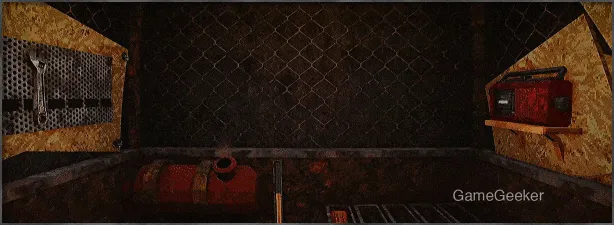
The game also introduces a very direct high-pressure rule: once the alarm sounds, players must immediately retreat to the elevator to avoid an anomalous phenomenon called “Self-Assembly.” According to the official description, “no one has ever survived” it. Objectively speaking, this kind of mechanic is not new; at its core, it is still forced contraction and pacing shifts. But within the confined setting of The Cage, it does make it easier to create a sense of chaos in multiplayer coordination, and it is also more suitable for livestream viewing.
Since launching in Steam Early Access in December 2024, the game has already received more than 4,000 positive reviews. Now, with its full release arriving to a “Very Positive” reception, it is clear that this is not just a short-lived gimmick. The article notes that it blew up among streamers both in China and overseas thanks to its amount of content, horror atmosphere, and high degree of randomness, and that judgment basically holds up. For a multiplayer horror game to retain players over time, it usually cannot rely on a single scare alone—it needs replayable runs, mistakes worth reviewing, and strong potential for social, entertaining moments. The Cage aligns well with those needs in all of these areas.

That said, whether it is worth picking up still depends on how you plan to play. It supports teams of up to 6 players, and in theory, the more complete your group is, the higher your chances of survival and the fuller the experience. If you already have a regular squad, games like this usually offer much better value, because the random encounters and team role distribution in each run can greatly amplify the fun. On the other hand, if you mainly rely on matchmaking with strangers, the horror atmosphere and cooperative efficiency may not hold together at the same time, and the experience is likely to fluctuate quite a bit.

Overall, the value of the full version of The Cage lies not in being “yet another multiplayer horror game,” but in how it packages resource management, escape-driven pressure, and streamer-friendly spectacle into a relatively complete experience. It may not be the most accessible entry in the genre, but it feels very much like a mature test case built on second-generation product thinking: it understands what audiences want to watch, and it understands why players will want to queue up for one more run. If you have a regular group and enjoy high-pressure cooperative gameplay, it is worth adding to your shortlist; if you mostly play solo, it is better to watch community feedback first before deciding.




コメント 0
ご意見をお聞かせください
コメント欄へようこそ。このゲームの感想を聞かせてください。一番乗りにはうれしいことがあるかも。
コメントはまだありません。最初の一件をどうぞ。