ニュース
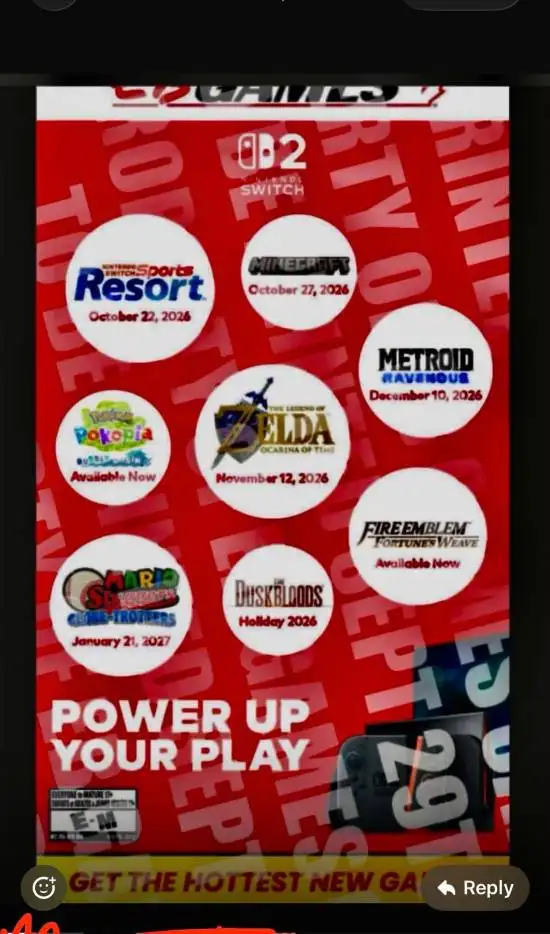
EB Games Leak Reveals Ocarina of Time Remake Release Date
A Reddit user claims an EB Games poster leaked several Switch 2 release dates, though the listing remains unverified. Ni
















As an FPS / Action gamer and content creator who spends every day immersed in League of Legends, when I saw the “Xiao Yuhime high-priced companion play remarks” incident these two days, my first reaction wasn’t to spectate the drama, but: this actually lays all the cards of the entire companion play ecosystem on the table. It’s far more than just a case of shooting her mouth off.

Let’s sort out the facts first. Xiao Yuhime is both a League of Legends streamer and a companion play store owner. While talking about the current state of the industry on stream, she mentioned that some high-priced companion play services basically get no orders, and also brought up that even Worlds-level pro players doing companion play, priced at over 1,000 yuan, don’t sell well in the market. After this clip entered the editing circles, it was quickly amplified into “looking down on peers” and “questioning the value of pro players,” and the controversy took off immediately. Later she apologized on Weibo, admitting that she spoke too casually on stream, was worried about hurting her companion play friends’ feelings, and said she would be more careful with her wording in the future.

From the perspective of a player who’s been grinding ranked long-term and occasionally helps others climb, I actually feel that parts of her explanation stated some industry consensus quite bluntly. She mentioned that when bosses place orders, they prefer high-rank players who frequently play flex queue, have complete BP thinking, and mature playstyles, rather than those “stomper streamers” who go legendary in 20 minutes every other game, because once the novelty of that low-rank stomping thrill wears off, many people still return to more stable high-rank flex queues. Behind this is really the difference between “how fun a showmatch feels” and “how reliable long-term climbing is”—one leans toward entertainment, the other toward function.
The truly high-priced tier is the companion play rates for Worlds-level pro players. In her apology she specifically emphasized that she wasn’t saying these players are “not worth over 1,000,” but that from the boss’s point of view, the gap in actual experience between 500–600 and over 1,000 is not as huge as imagined, so they’ll choose the cheaper tier for cost-effectiveness. This sounds realistic and cold: competitively, Worlds and high-rank King tier are of course two different universes, but ordinary consumers are buying “being carried to a few wins” and “learning a bit along the way,” not a full tactical lecture in a training room.
From the perspective of a player’s wallet, if you just want to avoid the mental damage of random match teammates, casually finding a high-rank player who can communicate and control the tempo means that even 500–600 is already a luxury spend. If you’re really going to pay over 1,000, it has to be because you’re either a die-hard fan, or you’re going for the emotional value of “meeting your idol” and “fulfilling a dream,” rather than purely looking at a win rate curve. Conversely, for the pro player or streamer themselves, that price also includes fame, scarcity, and time cost; reducing it purely to “is it worth it for climbing efficiency” is fundamentally a mismatch.
Looking at the trend, the League of Legends companion play industry will very likely continue to polarize: on one side are pure climbing and tactical coaching services, emphasizing clear communication, stable tempo, and strong BP, with prices that may not be low but are relatively transparent; on the other side are emotional-value and IP-premium services, which depend on whether you’re a fan of that player or streamer and willing to pay for a duo-queue experience. The advice for regular players is simple: don’t let labels like “Worlds” or “top streamer” lead you by the nose. First figure out whether you want technical improvement and climbing efficiency, or a unique emotional experience, and then let your wallet decide which tier to buy.
This incident is also a reminder to the industry: when practitioners talk on stream about things like “no one orders the high-priced ones,” even if they’re merely repeating market feedback, it’s easy for peers to feel you’re undercutting them. But on the other hand, the gap between pricing and real demand does need someone to puncture it. As a player, what I hope to see is a companion play market with clear segmentation and honest pricing—you want to sell mechanics, then let your rank and teaching ability speak for you; you want to sell clout, then openly admit this is an emotional-value order. As long as information is symmetric and everyone plays within the price range they can afford, this ecosystem has a chance to last.





コメント 0
ご意見をお聞かせください
コメント欄へようこそ。このゲームの感想を聞かせてください。一番乗りにはうれしいことがあるかも。
コメントはまだありません。最初の一件をどうぞ。