
ニュース
Grab two free PC games before Epic's clock runs out, while Undertale and Divinity: Original Sin 2 are 75% off
Astral Ascent and LUFTRAUSERS are free to keep today, while two of PC gaming's most celebrated RPGs cost less than $14 c
















That initial bit of damping in the brake pedal often affects lap times more than having ten extra buttons on the steering wheel. It works on the same principle as a fire-control system in an armored vehicle: if the input end is unstable, every correction downstream is just patchwork. This MOZA article analyzing the SRP2 pedals makes its core point very clear: if you play racing simulators to improve lap times and driving skill, then what really determines your upper limit is not the wheel in your hands, but the pedal set under your feet. I think that judgment is directionally correct, and it’s grounded in solid research rather than just trying to impress people by stacking specs.
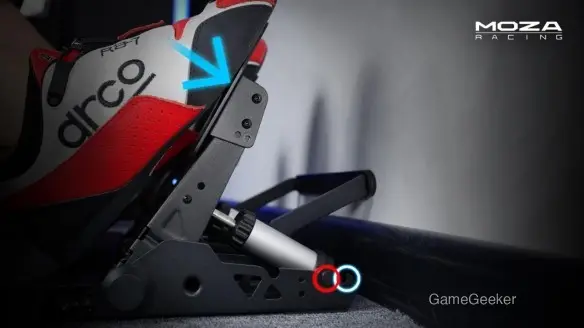
In terms of realism, pedals directly control power delivery, braking force, and vehicle dynamics—especially load transfer before and after corner entry, which fundamentally depends on footwork. The article divides tuning priorities for beginners into two areas: throttle and clutch actuation force, and brake pedal feel combinations. That’s a very practical approach. So-called actuation force is the minimum threshold at which the vehicle starts to respond after you press the pedal. Throttle actuation force determines whether you can modulate speed smoothly and precisely, while clutch actuation force affects how clearly the bite point is defined. If this part can’t be adjusted, both the driving experience and track performance will suffer.

The SRP2 offers a fairly solid solution here: both the throttle and clutch support two-stage preload, and can be switched quickly by hand without tools. The first stage is lighter, making it suitable for road cars, performance cars, and players just getting started; the second stage is heavier, with a more clearly defined actuation force, making it better suited for most sim racers training their pedal technique. The value of this design is that, unlike some “pseudo-professional” peripherals that blindly chase stiffness and end up feeling like you’re stepping on a block of concrete, it doesn’t sacrifice precision for superficial hardcore appeal.
Now look at the brake system, the most critical part in any vehicle setup. Many beginners run with the default configuration all the way through, or mistakenly assume that harder automatically means more professional. The result is a very familiar set of symptoms: inconsistent braking G-forces, understeer or outright loss of control on corner entry, frequent ABS activation, and naturally, poor lap times. The SRP2 comes standard with 25 brake pedal feel combinations, using an elastomer-and-spring structure to simulate the feel of road cars, trucks, supercars, performance cars, and professional race cars. The three high-frequency recommended setups from the official side are also quite clear: 8 x 60R for recreational driving and road cars; 4 x 60R plus 4 x 70R for supercars, performance cars, and rally; and 4 x 70R plus 4 x 80P for professional race cars.

From a tactical perspective, the significance of configurable pedal feel goes beyond mere comfort—it helps players build stable muscle memory. The SRP2 brake uses a 100KG high-precision load cell, a 15Bit high-precision angle sensor, and MOZA’s in-house sensor fusion algorithm, all aimed at converting your foot input into in-game braking force as consistently as possible. For players of Forza Horizon, this means better control over heavy braking and throttle-blipping rhythm; for Euro Truck Simulator players, the 10° and 25° pedal face adjustments are also meaningful, especially during long drives and under different seating positions, where the ankle’s working angle becomes more natural.
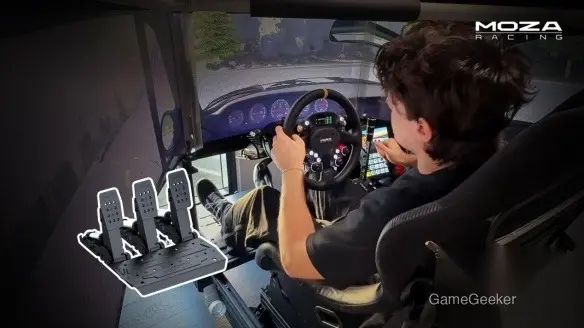
If you’re a user upgrading from entry-level gear, my advice is simple: shift part of your budget away from steering wheel lighting effects and button count, and prioritize the pedals instead. The payoff is often more like a mechanized assault in World War II—it directly determines the pace of your advance. The SRP2’s positioning is very clear right now: it’s a product that balances accessibility for beginners with room for faster progression, and its 25 combinations already cover most scenarios. If you later decide to pursue the more hardcore pedal feel of GT3, LMP1, or even F1, you can expand the combinations to over 1000 through the performance brake upgrade kit. For anyone serious about training, that kind of upgrade path is far more reliable than blindly chasing “the stiffest, most professional” setup from the start.





コメント 0
ご意見をお聞かせください
このゲームについての感想や評価をお寄せください。
コメントはまだありません。最初の一件をどうぞ。