ニュース
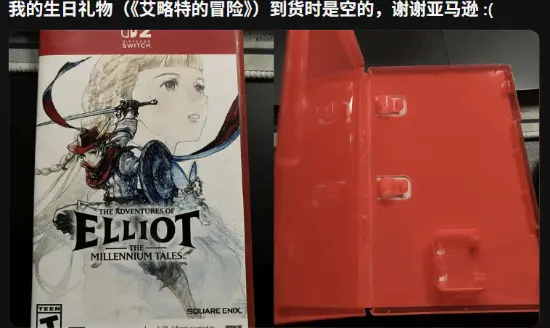
Bunny Garden 2 Physical Buyers Should Wait Before Grabbing an Empty Box
The Adventurer Elliot empty-box incident is a reminder that physical buyers should look beyond platf
















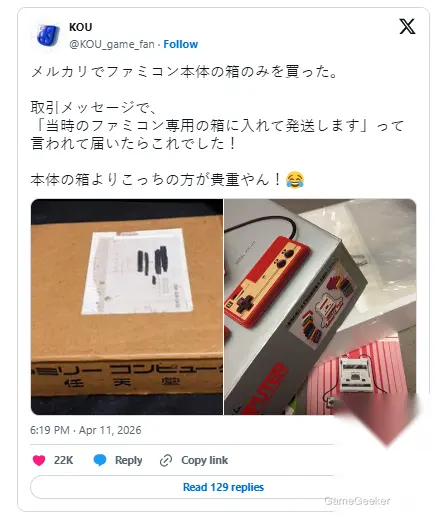
Sometimes, the most fascinating part of the collectibles market isn’t what you paid for, but the item the seller “happened” to include with the shipment—something that completely rewrites the value of the entire transaction. Recently, a Japanese collector bought an empty Famicom box on Mercari, originally just wanting a suitable outer case for their collection. In the end, though, the packaging itself became the star of the deal. That’s because what the seller used for shipping wasn’t an ordinary old cardboard box, but an extremely rare original Nintendo factory repair shipping box.
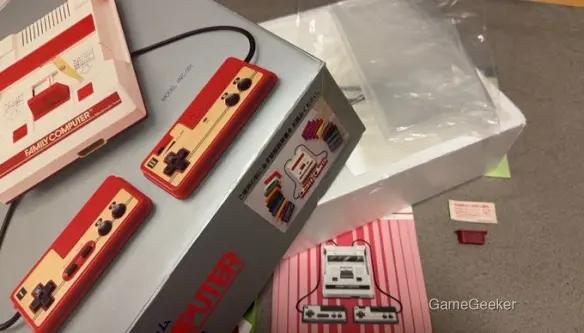
The reason this caught the attention of veteran players is that it wasn’t some kind of reproduced merchandise, but a genuinely functional piece of packaging marked by history. Printed on the box are Nintendo’s early kanji LOGO and the company address, identifying it as the special box officially used to return consoles after repair. The original text also notes that this kanji LOGO was only used between 1889 and 1950, so many people who got into Nintendo later may never even have seen it. For collectors who favor “system-level collecting,” an item like this has more character than simply owning a console, because it preserves the after-sales, logistics, and repair process all in one.
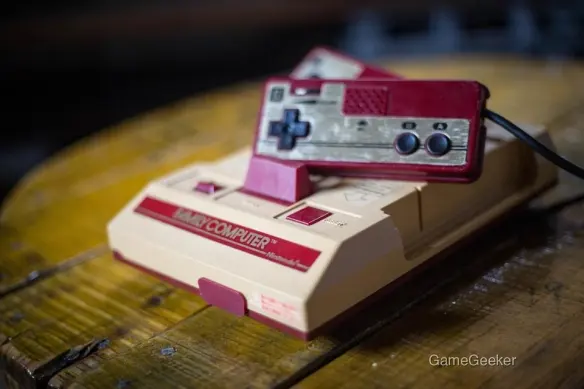
Even more amazingly, the box is still in very good condition. Inside, it not only still contains the original delivery slip, but also a warranty certificate stamped with the “repair completion date.” According to the records, this Famicom was purchased in Showa 63, that is, January 1988, and was sent in for repair twice in the same year, in June and again in September. Just from this history, you can almost reconstruct the life cycle of an old console in your head: bought home, played heavily, developed problems, mailed back for repair, then put back into service. That sense of age and lived history isn’t something a brand-new sealed item can fully replace.
That’s also why many people online see it as a museum-grade collectible. Back then, households that simply bought a console and never had to send it in for repair usually would never have come into contact with this kind of official repair box at all. In other words, it is naturally rarer than the console box itself, so it’s no surprise that some people remarked that “the packaging is rarer than the item inside.” From a collector’s perspective, this kind of object is a classic example of a low-profile, high-value piece: not eye-catching, but packed with information, and able to prove a complete history of use.
What I really like about this small incident is the additional meaning it brings out: early game hardware simply wasn’t as stable and durable as it is today, so repair records are actually a shared memory for many people. Some will be reminded of how easily machines broke down in childhood, while others may think back to those moments when parents resorted to “physical discipline” because they played too long. It’s like an old item in a sandbox save file—usually unremarkable, but once you open the stats panel, it’s filled with timestamps left behind by a player’s life.
If you’re also hunting for old game-related items, my advice is: don’t just focus on the standard trio of “console, cartridge, and manual.” Supplementary materials such as repair forms, shipping labels, warranty cards, and purchase receipts often do more to elevate a collection, and they’re much harder to fake or piece together later. Of course, the premise is that they should be kept in their original condition—don’t scrub away old stickers and historical marks on paper just for the sake of “looking nice.” For people who truly understand this world, the yellowing, the creases, and the stamps are the most valuable parts of these collectibles.
コメント 0
ご意見をお聞かせください
コメント欄へようこそ。このゲームの感想を聞かせてください。一番乗りにはうれしいことがあるかも。
コメントはまだありません。最初の一件をどうぞ。