News
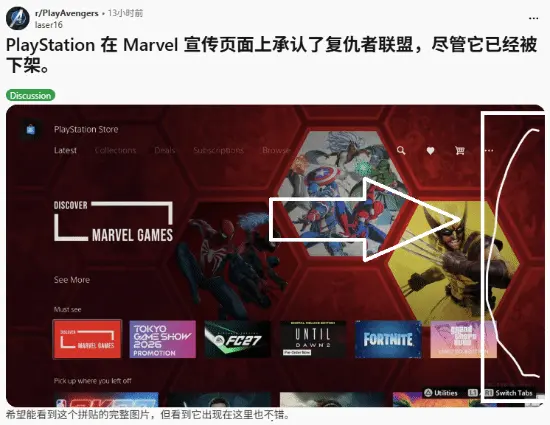
After 3 Years Offline, Marvel's Avengers Accidentally Appears on a PS Collection Cover, Sparking Debate
September 12 saw Marvel’s Avengers on a PS Store Marvel bundle cover—likely oversight—three years offline. Marvel’s Wolv
















Watching domestic games rise and fall over the years, I’ve come to believe one thing more and more: what truly creates a gap is often not whether you’ve encountered something new, but whether you can turn it into real inner strength. Back in the day, some people looked up guides, while others could only copy homework, and in the end the paths they carved out in the jianghu were completely different. Now, when this is applied to AI, the feel is actually much the same—except this time, the divide is coming faster and hitting harder.

According to Anthropic’s warning, the new dividing line today is no longer “whether you’ve been exposed to AI,” but whether you have the ability to use AI efficiently and deeply. Put plainly, some people just treat AI as a substitute for a search box, asking one question and taking one answer; others are already using it for research, writing, breaking down problems, supporting learning, and even reshaping their entire workflow. The former are like players wandering in the beginner village, while the latter have already started mastering combos and cultivating mental techniques—so naturally, their efficiency and output are not even on the same level.

The article mentions that the people with a real advantage are using AI to rapidly acquire knowledge, optimize decisions, and make their results more complete and higher in quality. To put it directly, this is “intelligence-augmented” competitiveness. It’s not just about saving time; it lets an ordinary person’s ability to process information, organize content, and solve problems improve in visibly dramatic ways, as if they had suddenly absorbed an advanced secret manual. Beyond all the sentiment, the most unsettling part of this change is that it is no longer just a matter for the tech world—it is happening simultaneously in education and the workplace.
But looking at it calmly, Anthropic’s judgment this time is not exaggerated. “The real gap today no longer lies in whether someone has been exposed to AI, but in differences in depth of use and application ability.” That statement stings, but it’s realistic. People who only use AI superficially are likely to become increasingly marginalized in the future, because others do not simply have one more tool than they do—they have a faster way of learning, stronger decision support, and a higher ceiling for output.

Coming back to the matter itself, I would rather see it as a new reshuffling of foundational abilities. Experts are also very clear in their judgment: in the future workplace, AI literacy may become part of basic competitiveness, just like reading, writing, and arithmetic. It may sound alarmist, but if you look back at how people who knew how to search, make spreadsheets, and retrieve information gradually pulled ahead of those who didn’t, you’ll realize this trend is nothing unfamiliar.
If you still treat AI as nothing more than casual chat and entertainment, then you really do need to catch up. My suggestion is simple: don’t rush to chase flashy tricks—first practice three things. Let AI help you organize information, let AI assist you in learning new knowledge, and let AI take part in analyzing real problems and producing outputs. If you can master these three moves solidly, at the very least you won’t fall behind in the next round of competition. By the time everyone can “use” AI, what truly determines the difference will no longer be whether you know how to click it open, but who can wield it with the kind of unmistakable mastery that the sword-flying technique in The Legend of Sword and Fairy once embodied.




Comments 0
Share your game review
Join the discussion and share your review of this game.
No comments yet. Share your review.