News
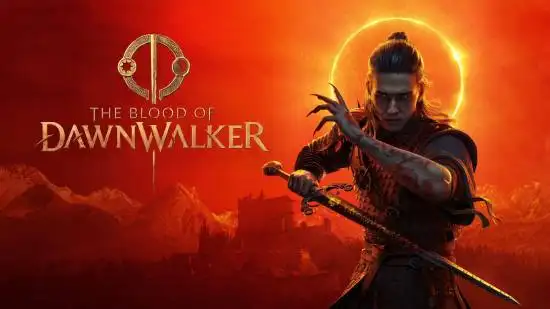
The Blood of Dawnwalker Is Out Now and Tops Steam's Best Sellers
The Blood of Dawnwalker tops Steam’s global best-sellers chart, excluding free games, after its official unlock. Led by
















Holy crap! This episode just gets more addictive the deeper you dig. Looking at free DLC today, it still deserves an industry conscience award. Many studios treat updates like scraps, but some games go all in the moment they make a move, making players slam the table on the spot. I genuinely want to give this kind of play a high score.
First, let’s look at the long-standing benchmark, The Witcher 3: Wild Hunt. Aside from the well-known paid expansions “Hearts of Stone” and “Blood and Wine,” CDPR also added 16 free DLC packs to the base game back then. The content wasn’t just a few random skins thrown in to fool people, but equipment, character appearances, side quests, and even “New Game+.” Even today, that level of update support still holds up, like suddenly announcing another round of grand prizes in a livestream and sending the audience into a frenzy.

Next up is one of Capcom’s very steady moves in recent years: the Resident Evil remake line often uses free DLC to bring back “Mercenaries Mode.” The Mercenaries Mode in Resident Evil 4 Remake follows an arcade-style scoring format, where players have to clear enemies at high speed to maintain combos while scavenging supplies to push their score, making the pace even more explosive than the main game. Leon, Krauser, Luis, and HUNK are all playable, while Ada Wong and Wesker joined alongside “Separate Ways,” giving the character roster enough weight. By contrast, Resident Evil 3 Remake was relatively light in terms of base-game content and didn’t bring this mode back. The fact that it recently went on sale for just 19 yuan also shows that players do have clear standards when it comes to content volume.
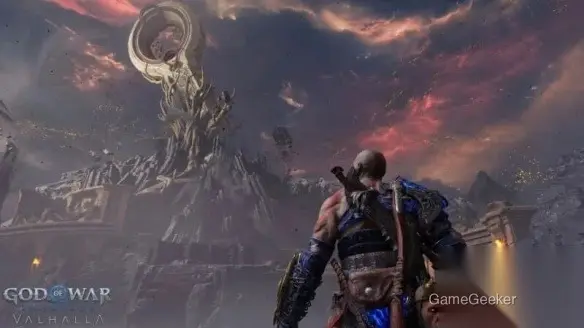
Now here’s the highlight: the free DLC “Valhalla” for God of War Ragnarök is genuinely sincere. It isn’t just a random challenge room; it directly follows the ending of the base game, bringing Kratos and Mimir into a new trial while also pulling back classic scenes, enemies, and weapons from the Greek era, maxing out both nostalgia and emotion. Even better, it wraps everything in a roguelite framework, letting you constantly pick up random runes, stat boosts, and upgrades during combat, while using repeated runs to advance the narrative. This design is both replayable and meaningful, rather than just artificially stretching playtime.

On the multiplayer side, the “Legends Mode” in Ghost of Tsushima is also outrageous. It is clearly a single-player blockbuster, yet it somehow built a fully-fledged cooperative mode. The four classes—Samurai, Hunter, Assassin, and Ronin—have clear roles, covering everything from melee and ranged combat to assassination and support, and it even includes skill trees, progression paths, and an equipment system. The later-added “Raid Mode” placed even more emphasis on builds and coordination, while daily challenges, weekly missions, and other live-service-style content were layered on top. Even today, it doesn’t feel outdated. The high-difficulty “Assault Missions” for the new series entry Ghost of Yōtei went live a few days ago, which also shows that Sony is still continuing down this path.

There are also surprises from domestic games. The recently launched free DLC “Eirene’s War Furnace” for AI LIMIT not only includes standard BOSS challenges and consecutive battles, but also adds a roguelite-like “War Trial.” The most brutal part is that once you enter the mode, your original equipment and stats are wiped clean, forcing you to rebuild your Build through random options, then combine it with the imprint system and meta-progression for an endgame loop. This kind of design is especially addictive for players who enjoy studying strategies. Soulmask is no slouch either. Its 1.0 official release came alongside “Floating Sands,” which both new and returning players can claim permanently for free from April 10 to May 10. The new map is nearly as large as the base game, and it also adds new regions, resources, hostile ecosystems, over 100 ship parts, new masks, new enemies, and new BOSSes. This volume is no longer a freebie—it is practically a second admission ticket.
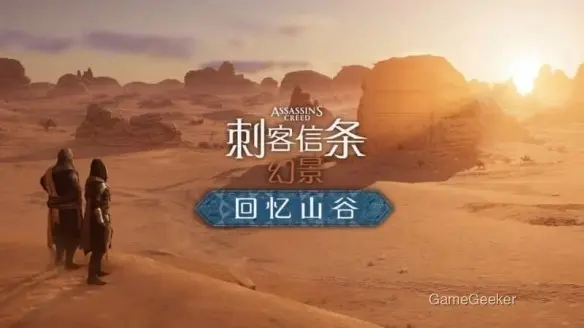
But! Free DLC isn’t the whole story. Long-term updates can also elevate a game to legendary status. After Assassin’s Creed Mirage was criticized for being relatively small in content volume, it launched the free DLC “Valley of Memory,” which not only added the new region “AlUla” and a story about Basim searching for clues about his father, but also improved parkour along the way. Free jumping, side flips, and backflips were all added, and even difficulty, damage, and stamina consumption can be customized. The main story also received a repeatable challenge mode. Then there’s No Man’s Sky, which has spent nearly ten years of continuous updates overhauling foundational systems like building, multiplayer, and missions, while adding fishing, wandering, space flight, pet battles, and more, and it still hasn’t stopped. The recent “Freeway” update for Starfield added free flight between planets and a spaceship cruising mode. Cyberpunk 2077 also relied on version 2.0 to rework its core systems, pulling its Steam rating up to 86% Very Positive.
My buying advice is very straightforward: if you prefer single-player storytelling and immersion, prioritize The Witcher 3: Wild Hunt and God of War Ragnarök; if you enjoy score chasing, challenges, and replay value, Resident Evil 4 Remake and AI LIMIT will suit you better; and if you love teaming up with friends, the Legends Mode in Ghost of Tsushima is still a very strong choice. Players’ expectations for “continued content completion after release” are now getting higher and higher. If developers want to stabilize their reputation, launch hype alone really isn’t enough. Whether post-launch updates can stand firm is the true grand final where skill is proven.



Comments 0
We'd love to hear from you
Welcome! Share your take on this game — being first might come with a surprise.
No comments yet. Be the first!