News
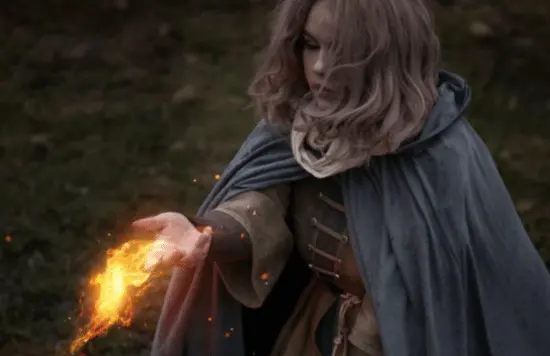
Elden Ring Cosplay Goes Full Post-Production, Is It Still Cosplay?
A Reddit user shared a Melina and Ranni cosplay from Elden Ring, with magic effects making it look close to the original
















What struck me first was not the so-called “bold subject matter,” but the way the women’s circumstances in the frame were fragmented by the window bars. It felt a lot like hearing someone cry for help through a crack in the door—you know she is right there, yet you also know she has long been trapped by an entire set of rules.
Recently, Bilibili’s well-known film and video channel @影视飓风 released the documentary “In a Place Where the Sex Industry Is ‘Legal,’ We Saw…”, turning its lens toward Daulatdia in Bangladesh. The article mentions that this place is considered one of the largest sex industry districts in the world. What makes the documentary most worth watching is not the eye-catching label of a “legal red-light district,” but the people behind that label: forced labor, struggles for survival, and corruption within the chain of interests are all laid bare before the audience.

As for the characters, although this is not a game, nor a work that wins in the traditional sense through “character development,” it still gave me a powerful sense of authenticity. Great documentaries are actually a lot like great narrative works: they do not treat suffering as cheap emotional manipulation, nor do they portray women as mere symbols wearing only the expression of victimhood. It feels more like it is telling you that these people are not background props—every one of them is struggling to live.
What impressed me deeply was that many viewers mentioned how exceptionally polished this episode was. Some audience members who had been to Chittagong, Bangladesh, said outright that the visuals were stunning and highly cinematic. That kind of response matters, because it shows that this time, 影视飓风 did not merely “switch topics,” but truly pushed its visual storytelling into a more complex human reality.

But what pulled me out of it was not the documentary itself, but rather some people’s voyeuristic mindset. Whenever issues like this come up, there are always those who only want “novelty” and “thrills,” as if suffering were merely story packaging for consumption. That way of watching makes me very uncomfortable. Because what a documentary should really leave behind is not momentary shock, but a renewed understanding of systems, environments, and human beings themselves.
Judging from its content trajectory, this was also a clear breakthrough for 影视飓风. In the past, many people still associated it mainly with more niche content such as equipment, technology, and travel; but this time, it went straight into real-world issues and humanistic expression. For creators, this feels like moving from “making the footage look beautiful” to “making reality understandable”—the difficulty is on a completely different level.

Among the community feedback, one comment I particularly agree with was: “Being able to produce this kind of high-quality content is very important for shaping teenagers’ values.” It sounds grand, but when you bring it down to actual experience, it is actually very simple: when young viewers see that “legal” does not equal “just,” and see how women’s fates can be swallowed by structural problems, their judgment becomes more complete instead of remaining at the superficial level of right and wrong.
If you already watch 影视飓风 regularly, this episode is well worth your time; if you have only ever thought of it as a gear channel, this episode is even more worth watching. Because its greatest strength lies precisely in the fact that it does not stop the camera at technical showmanship, but on people. In that moment, the image feels like a true old friend who is willing to listen to you.





Comments 0
Share your game review
Join the discussion and share your review of this game.
No comments yet. Share your review.