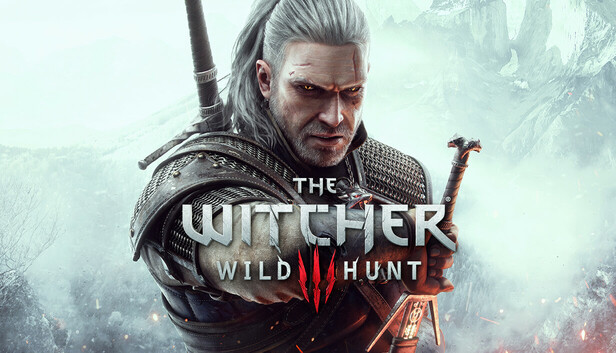
 The Witcher 3: Wild Hunt — Remastered
Popular PicksView All
123456789101112
10 Best Single-Player Escape-Room Puzzle Games
10 Best Sokoban Games with Creative Twists
10 Best Programming Puzzle Games in 2026: Visual Logic, Bots, and Assembly
10 Best Railway Network Management Games in 2026
10 Best Single-Player Photography Exploration Games in 2026
10 Best Single-Player Monster Taming Games in 2026
10 Best Immersive Sim Games on Steam (2026)
10 Best Mech Games on Steam (2026)
10 Best Single-Player Pirate Games on Steam (2026)
10 Best Steam Autumn Sale 2026 Games by Budget and Play Style
7 Best Time-Loop Mystery Games for Exploration, Dialogue and Deduction
7 Best Fictional Language Deciphering Puzzle Games in 2026
Popular Games LikeView All
Games Like PowerWash Simulator - 12 Best Relaxing Cleaning and Restoration PicksGames Like Dave the Diver - 12 Best Diving, Cooking and Systems-Stacker PicksGames Like Road to Vostok - 12 Best Hardcore Survival Shooter PicksGames Like Path of Exile 2 - 12 Best Action RPG and Loot PicksGames Like Clair Obscur: Expedition 33 - 12 Best Turn-Based RPG PicksGames Like R.E.P.O. - 12 Best Co-op Horror PicksGames Like PEAK - 12 Best Co-op Climbing and Survival PicksGames Like Slay the Spire 2 - 12 Best Roguelike Deckbuilders to Play NextGames Like Mina the Hollower - 12 Best Top-Down Action and Zelda-Like PicksGames Like Baldur's Gate 3 - 12 Best CRPGs and Turn-Based RPGsGames Like Monster Hunter Wilds - 12 Best Co-op Hunting and Action RPG PicksGames Like Hollow Knight: Silksong - 12 Best Metroidvania Picks (2026)Games Like Final Fantasy VII Rebirth - 12 Best Action RPG & JRPG PicksGames Like Dead by Daylight - 12 Best Asymmetric & Co-op Horror PicksGames Like Forza Horizon 6 - 12 Best Open-World Racing & Driving Picks (2026)Games Like 007 First Light - 12 Best Stealth and Spy GamesGames Like Solarpunk - 12 Best Cozy Survival and Crafting GamesGames Like Subnautica 2 - 12 Best Underwater and Alien-World Survival GamesGames Like Lies of P - 12 Best Soulslikes to Play in 2026Games Like Hell Let Loose - 12 Best Tactical Milsim Shooters
Popular ReviewsView All

Mina the Hollower — Review

Clair Obscur: Expedition 33 — Review

Schrödinger's Call — Review

Resident Evil Requiem — Review

Shift At Midnight — Review

Mixtape — Review

Middle-earth™: Shadow of Mordor™ — Review

The Mermaid Mask — Review

MOLE — Review

Desktop Explorer — Review

Mad Max — Review

Go-Go Town! — Review

Dead as Disco — Review

Crushed In Time — Review

Beastro — Review

Moonlight Peaks — Review
Is The Witcher 3 Concert on Black Myth’s Radar?
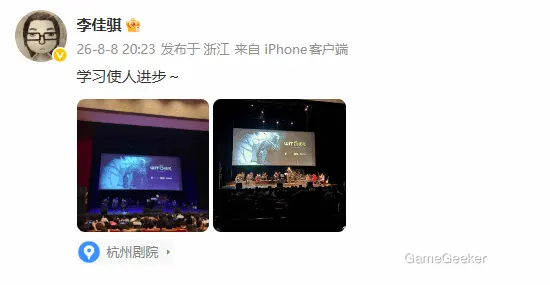
Black Myth: Wukong audio director Li Jiaqi recently posted photos on Weibo from a The Witcher 3 concert, writing that "learning helps you improve." The update was later compiled and published by Gamersky. Li was not there as a casual fan: he is the overall sound lead on Black Myth: Wukong, and his work combining Chinese drums with rock rhythms has already drawn industry attention. His next major focus is Black Myth: Zhong Kui.
For a game audio lead, a concert like this is also research. For Li Jiaqi, hearing The Witcher 3 performed live is not just about whether the melodies still work outside the game. The more useful question is how music fits into the pace and logic of play, and how it stays restrained while the player is making decisions.

From a design perspective, game music is not decoration layered on top of a game. It is part of the same design equation as level structure, combat, and narrative. The fact that The Witcher 3 can support a concert at all means its themes, regional identity, and character emotions have remained clear to players. Li Jiaqi has previously argued that game music should not disrupt the player's flow state, a view that matters especially in action games. Once the soundtrack draws too much attention to itself, the player's dodges, reads, and counterattack timing start to lose clarity.
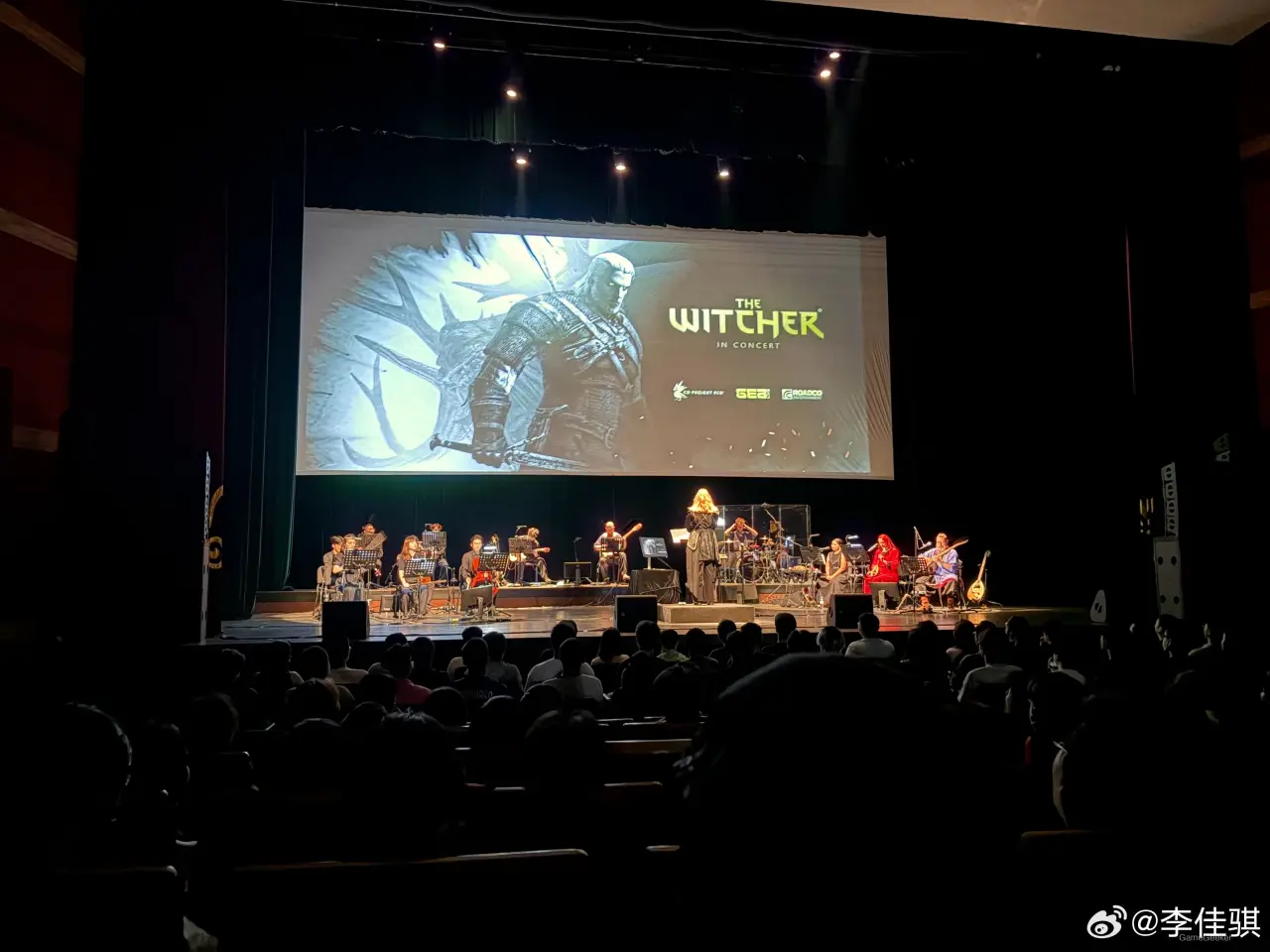
The more interesting part is how Li handles traditional Chinese elements. Chinese drums and rock rhythms can easily collapse into empty signposting. What made Black Myth: Wukong worth discussing was that it did not treat traditional culture as a texture pack. Li has also rejected reducing traditional Chinese culture to simple symbols, emphasizing that creation should come from a natural expression of cultural identity. The best scoring often knows when to hold back: it waits for the scene to open, then pushes the emotion forward in one clean surge. That is much sharper than a score that constantly pushes itself to the front.
The harder test is Black Myth: Zhong Kui. The Zhong Kui subject already carries folklore, underworld imagery, and ritual weight. If instruments such as suona, drums, or vocal styles are used as shortcuts, the material will be wasted. What the game needs is atmosphere that grows naturally from the scene, so players sense danger through exploration and combat rather than being forced to decode cultural labels because the score insists on them.
The broader trend is that game concerts are becoming a useful afterlife for major scores. If a score can move onto a stage, it has at least become more than functional accompaniment. If another creator goes specifically to study it, there is likely structure worth learning from. For players, this kind of news does not need to be read as a crossover tease or news hint. It is closer to a public note from a creator thinking through the craft. The question worth watching is whether Black Myth: Zhong Kui can keep its sound system as steady as the last game.
This article was produced and published by Gamersky. Reproduction without permission is prohibited.
The Witcher 3: Wild Hunt — Remastered Black Myth: Wukong





Comments 0
Share your game review
Join the discussion and share your review of this game.
No comments yet. Share your review.