
News
over the hill launches with introductory Steam offer and lower-priced key listings
Funselektor’s off-road exploration game is out on Steam at $19.99 with an introductory offer. Approximate third-party ke
















A NewsPicks industry report says that in 2020 China produced 3916 tons of matcha and consumed 3966 tons, accounting for 55.72% and 56.43% of the global total. It also projects China’s output at 12000 tons by 2025, versus about 4000 tons for Japan, signaling that the global matcha competitive landscape is being reshaped.
If you read this shift like a league table, it resembles a long-underestimated team suddenly leading in possession, shot volume, and conversion at once. Japan dominated the matcha market for years, with clear strengths in cultural symbolism and premium positioning, but its traditional small-workshop production model is under real pressure when global demand needs fast scaling. China’s approach combines large-scale cultivation, standardized production, and product innovation: expand capacity first, then keep lifting quality, a textbook industrial catch-up pattern.
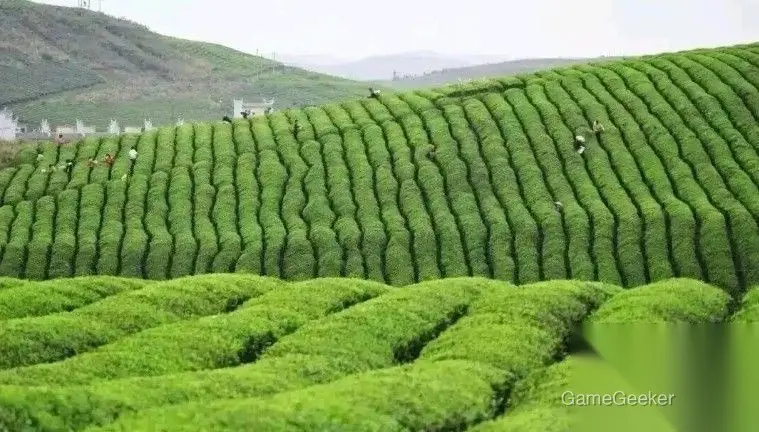
More importantly, China is no longer just supplying raw material. Industry data shows Chinese matcha is already supplied to Starbucks and Häagen-Dazs, and exported to more than 40 countries and regions, including Japan and the United States, with entry into Japan’s high-end market already underway. Tongren, Guizhou has built the world’s largest single matcha workshop and automated production line, and together with the dual-core producing regions of Zhejiang and Guizhou, this indicates a full industrial infrastructure is now in place. In that context, the claim that Japan’s “foundation is being threatened” is not only about branding; at its core, it is about whether a production model can match the pace of global market expansion.

On product performance, Chinese matcha can reach a fineness of 6000 mesh, and some premium products reach 2–5 microns. Its applications have expanded from food and beverages into cosmetics and textiles. Historically, records trace matcha’s origin to China’s Wei and Jin period, its flourishing in the Song dynasty, and its transmission to Japan in the late ninth century, where it evolved into a Japanese cultural symbol. What is happening now looks more like a transfer of industrial leadership over time, not a one-off upset.

For consumers, a practical way to choose is to separate use cases. For daily drinking and baking, high-value Chinese products are worth prioritizing, with close attention to origin, fineness, testing standards, and batch stability. For users focused on tea-ceremony experience or layered flavor complexity, high-end Japanese products can still serve as a benchmark. At the industry level, the long-term winner will not be decided only by who produces more, but by who can close the loop across stable flavor, brand premium, and global channels. China is already ahead in capacity and supply chain; the next hard battle is high-end brand mindshare.





Comments 0
Share your game review
Join the discussion and share your review of this game.
No comments yet. Share your review.