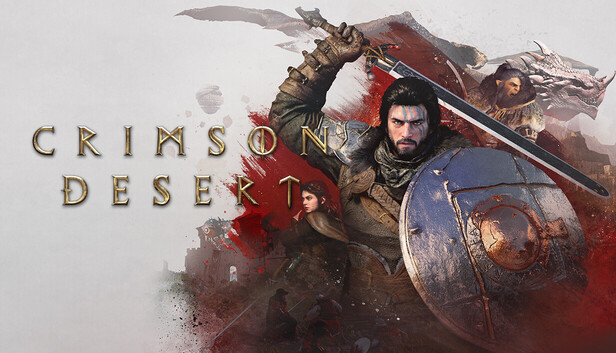
 Crimson Desert EnhancedFetching price~ $69.99
Popular PicksView All
123456789101112
12 Best Mystery Games on PC (2026)
12 Best Space Sim Games on Steam (2026)
12 Best Story-Rich Games to Play (2026)
12 Best Turn-Based Tactics Games on Steam (2026)
12 Best Puzzle Games on Steam (2026)
12 Best Games to Play with Friends on PC (2026)
12 Best JRPGs on Steam (2026)
12 Best City Builder Games on Steam (2026)
12 Best Zombie Games on Steam (2026)
12 Best Free Indie Games on Steam (2026)
12 Best Short Indie Games to Try (2026) — Done in One Evening
12 Best Cozy Games on Steam (2026)
Popular Games LikeView All
Games Like PowerWash Simulator - 12 Best Relaxing Cleaning and Restoration PicksGames Like Dave the Diver - 12 Best Diving, Cooking and Systems-Stacker PicksGames Like Road to Vostok - 12 Best Hardcore Survival Shooter PicksGames Like Path of Exile 2 - 12 Best Action RPG and Loot PicksGames Like Clair Obscur: Expedition 33 - 12 Best Turn-Based RPG PicksGames Like R.E.P.O. - 12 Best Co-op Horror PicksGames Like PEAK - 12 Best Co-op Climbing and Survival PicksGames Like Slay the Spire 2 - 12 Best Roguelike Deckbuilders to Play NextGames Like Mina the Hollower - 12 Best Top-Down Action and Zelda-Like PicksGames Like Baldur's Gate 3 - 12 Best CRPGs and Turn-Based RPGsGames Like Monster Hunter Wilds - 12 Best Co-op Hunting and Action RPG PicksGames Like Hollow Knight: Silksong - 12 Best Metroidvania Picks (2026)Games Like Final Fantasy VII Rebirth - 12 Best Action RPG & JRPG PicksGames Like Dead by Daylight - 12 Best Asymmetric & Co-op Horror PicksGames Like Forza Horizon 6 - 12 Best Open-World Racing & Driving Picks (2026)Games Like 007 First Light - 12 Best Stealth and Spy GamesGames Like Solarpunk - 12 Best Cozy Survival and Crafting GamesGames Like Subnautica 2 - 12 Best Underwater and Alien-World Survival GamesGames Like Lies of P - 12 Best Soulslikes to Play in 2026Games Like Hell Let Loose - 12 Best Tactical Milsim Shooters
Popular ReviewsView All

Mina the Hollower — Review

Clair Obscur: Expedition 33 — Review

Schrödinger's Call — Review

Resident Evil Requiem — Review

Shift At Midnight — Review

Mixtape — Review

Middle-earth™: Shadow of Mordor™ — Review

The Mermaid Mask — Review

MOLE — Review

Desktop Explorer — Review

Mad Max — Review

Go-Go Town! — Review

Dead as Disco — Review

Crushed In Time — Review

Beastro — Review

Moonlight Peaks — Review
205 hours and only halfway? Is *Crimson Desert* really going to take 400 hours to grind through?
When an open world turns “100% completion” into a long-term decision problem, the question is no longer how big the map is, but whether every step of exploration has value. Crimson Desert has recently sparked discussion, and the core reason is straightforward: one foreign reviewer, after playing for more than 205 hours, still believed they had completed only about half of the content. At that scale, it no longer feels like ordinary checklist-style exploration, but more like an endgame position in chess—you think you’ve reached the middlegame, only to realize the board has only just been set.
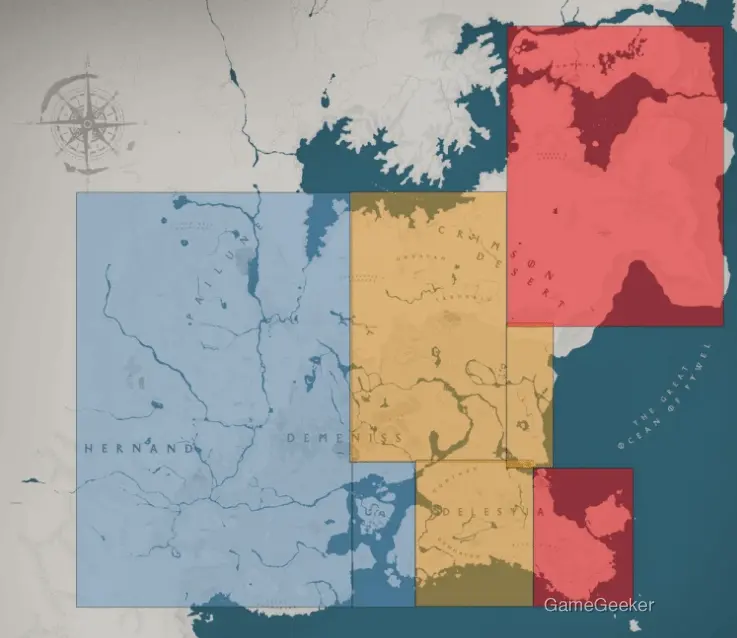
From a systems design perspective, the article suggests that Crimson Desert, developed by Pearl Abyss, may redefine what “huge” means in the modern open-world genre. The world map shown by the reviewer is striking as well: even after playing continuously for more than eight days, there were still vast areas on the map they had not touched at all. And based on the progress analysis, regions with over 90% completion made up only a small portion, while most areas had been only partially cleared, and unexplored regions actually accounted for the overwhelming majority. Based on this progress, some media outlets speculate that reaching 100% completion in this game could take 300 to 400 hours.
But the issue is that sheer size in an open world has never been an automatic advantage. What strategy-minded players fear most is not abundant content, but “waste”—spending dozens of hours only to face repetitive outposts, mechanical traversal, and low-density events. In that case, such an ultra-long playtime only dilutes the sense of exploration. The current divide in the community is actually very real: some players hear “400 hours” and get excited, feeling that at last there is a true blockbuster with enormous value and plenty to do; others worry that an oversized map will lead to hollow content and ultimately become nothing more than an endurance test reserved for hardcore grinders.

In terms of strategic depth, my criteria for judging works of this massive scale are very clear: if every region has its own distinct mechanics, enemy ecology, and resource trade-offs, then 400 hours can be brilliant, because the player is constantly making new decisions; but if it’s just a growing pile of quest markers, then what separates it from a high-quality long-form game is exactly that sense of strategic interplay. An open world isn’t about simply covering the map with content, but about making players repeatedly weigh routes, rewards, and risks.

So my advice is also straightforward: if you already enjoy slow-paced exploration and are willing to invest in a game over the long term, a game of Crimson Desert’s scale is worth watching; but if you have a low tolerance for repetitive tasks and care more about content density than playtime length, it’s best to wait for more hands-on reviews before deciding whether it is truly a massive world or just massively long work hours. After all, hearing that 205 hours is only halfway sounds impressive, but what really determines success or failure has never been the number of hours itself—it’s how many of those 400 hours are truly moves worth making.
Crimson Desert EnhancedFetching price~ $69.99




Comments 0
Share your game review
Join the discussion and share your review of this game.
No comments yet. Share your review.