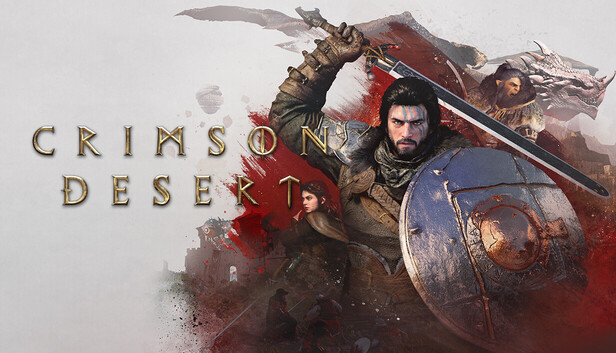
 Crimson Desert EnhancedFetching price~ $69.99
Popular PicksView All
123456789101112
12 Best Mystery Games on PC (2026)
12 Best Space Sim Games on Steam (2026)
12 Best Story-Rich Games to Play (2026)
12 Best Turn-Based Tactics Games on Steam (2026)
12 Best Puzzle Games on Steam (2026)
12 Best Games to Play with Friends on PC (2026)
12 Best JRPGs on Steam (2026)
12 Best City Builder Games on Steam (2026)
12 Best Zombie Games on Steam (2026)
12 Best Free Indie Games on Steam (2026)
12 Best Short Indie Games to Try (2026) — Done in One Evening
12 Best Cozy Games on Steam (2026)
Popular Games LikeView All
Games Like PowerWash Simulator - 12 Best Relaxing Cleaning and Restoration PicksGames Like Dave the Diver - 12 Best Diving, Cooking and Systems-Stacker PicksGames Like Road to Vostok - 12 Best Hardcore Survival Shooter PicksGames Like Path of Exile 2 - 12 Best Action RPG and Loot PicksGames Like Clair Obscur: Expedition 33 - 12 Best Turn-Based RPG PicksGames Like R.E.P.O. - 12 Best Co-op Horror PicksGames Like PEAK - 12 Best Co-op Climbing and Survival PicksGames Like Slay the Spire 2 - 12 Best Roguelike Deckbuilders to Play NextGames Like Mina the Hollower - 12 Best Top-Down Action and Zelda-Like PicksGames Like Baldur's Gate 3 - 12 Best CRPGs and Turn-Based RPGsGames Like Monster Hunter Wilds - 12 Best Co-op Hunting and Action RPG PicksGames Like Hollow Knight: Silksong - 12 Best Metroidvania Picks (2026)Games Like Final Fantasy VII Rebirth - 12 Best Action RPG & JRPG PicksGames Like Dead by Daylight - 12 Best Asymmetric & Co-op Horror PicksGames Like Forza Horizon 6 - 12 Best Open-World Racing & Driving Picks (2026)Games Like 007 First Light - 12 Best Stealth and Spy GamesGames Like Solarpunk - 12 Best Cozy Survival and Crafting GamesGames Like Subnautica 2 - 12 Best Underwater and Alien-World Survival GamesGames Like Lies of P - 12 Best Soulslikes to Play in 2026Games Like Hell Let Loose - 12 Best Tactical Milsim Shooters
Popular ReviewsView All

Mina the Hollower — Review

Clair Obscur: Expedition 33 — Review

Schrödinger's Call — Review

Resident Evil Requiem — Review

Shift At Midnight — Review

Mixtape — Review

Middle-earth™: Shadow of Mordor™ — Review

The Mermaid Mask — Review

MOLE — Review

Desktop Explorer — Review

Mad Max — Review

Go-Go Town! — Review

Dead as Disco — Review

Crushed In Time — Review

Beastro — Review

Moonlight Peaks — Review
Has the score of *Crimson Desert* sparked a huge controversy? Should a mediocre story really lead to a major point deduction?
It blew up! It really blew up!
With the review embargo for Crimson Desert lifted, it instantly turned overseas discussion forums into a full-on bonfire party. On March 19, 2026, media reviews officially went live. Scores were all over the place, but one complaint was strikingly consistent: the story doesn’t quite hit hard enough, and even feels a bit flat.

So here’s the question. How exactly should this game be judged? For a title that mainly sells itself on action, open-world design, and visual impact, if the story doesn’t reach masterpiece status, should that really drag the whole score down that much? That’s the real battleground today.
Overseas blogger @Critical_Scribe laid it out bluntly. His core point was simple: narrative is given too much weight in game reviews. Unless it’s a purely narrative-driven work like Life is Strange or Firewatch, then in a 10-point system, story should account for at most 2 points.
Is that take bold? Absolutely. But hold on—there’s actually some real logic behind it.

What he said is pretty grounded in reality. When players actually pick up a controller or sit down at a keyboard, the first things they feel aren’t how literary the dialogue is, but whether the combat feels good, whether the controls are smooth, whether the frame rate is stable, and whether the visuals can really carry the experience. In his words, "Gameplay will always be king, with performance and visuals close behind."
Doesn’t that sound a lot like what people say on livestreams: don’t talk about the story yet—show me how it feels to play first!
Even more interestingly, this blogger also mentioned that when he saw Crimson Desert was made by a Korean developer, he never expected “epic storytelling” to be the game’s biggest selling point in the first place. What mattered more to him was whether the game could make players think while operating under pressure, and whether it could give its action experience a real sense of intensity and presence.

But! The other side isn’t wrong either. Just because it’s an open-world action game doesn’t mean the story gets a free pass. You can build a huge world and make the combat look incredible, but if the characters aren’t memorable and the progression isn’t engaging, players can still burn out in the mid to late game. Especially since many media scores today are based on the overall experience, it’s naturally hard to separate narrative out entirely.
So the controversy around Crimson Desert this time isn’t really about whether the story is bad or not, but about how much the story should count. And that matters, because it could shape how people judge an entire category of games in the future: when it comes to big-budget titles that lean toward action, spectacle, and visuals, should they be judged by film standards or by game standards?
My view is simple. If Crimson Desert is not trying to tell a grand, complex epic, then sure, a mediocre story should cost it some points—but it shouldn’t be a deal-breaker. Especially in the open-world action lane, gameplay, performance, and feedback are always the main course. Story is more like bonus dessert; it shouldn’t steal the spotlight.
The advice for players is also pretty clear. If you’re the type who cares most about game feel, combat, or graphics, then this is still a title worth watching closely. But if you only buy games for strong narrative, character arcs, and a story that lingers with you, then it’s probably best to wait and see how the finer details of the reception shake out before deciding whether to jump in.
From here on out, this debate over “gameplay above all” versus “narrative is also a crucial part” will probably keep raging. If I had to sum it up in one livestream-ready line, it’d be this: whether a game can play well will always come before whether it can tell a good story. But if it wants top scores, being good at combat alone still isn’t enough.
Crimson Desert EnhancedFetching price~ $69.99 Life is Strange RemasteredFetching price~ $39.99
 FirewatchFetching price~ $19.99





Comments 0
Share your game review
Join the discussion and share your review of this game.
No comments yet. Share your review.