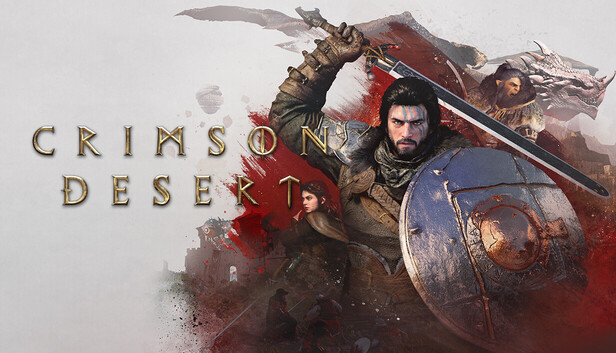
 Crimson Desert EnhancedFetching price~ $69.99
Popular PicksView All
123456789101112
12 Best Mystery Games on PC (2026)
12 Best Space Sim Games on Steam (2026)
12 Best Story-Rich Games to Play (2026)
12 Best Turn-Based Tactics Games on Steam (2026)
12 Best Puzzle Games on Steam (2026)
12 Best Games to Play with Friends on PC (2026)
12 Best JRPGs on Steam (2026)
12 Best City Builder Games on Steam (2026)
12 Best Zombie Games on Steam (2026)
12 Best Free Indie Games on Steam (2026)
12 Best Short Indie Games to Try (2026) — Done in One Evening
12 Best Cozy Games on Steam (2026)
Popular Games LikeView All
Games Like PowerWash Simulator - 12 Best Relaxing Cleaning and Restoration PicksGames Like Dave the Diver - 12 Best Diving, Cooking and Systems-Stacker PicksGames Like Road to Vostok - 12 Best Hardcore Survival Shooter PicksGames Like Path of Exile 2 - 12 Best Action RPG and Loot PicksGames Like Clair Obscur: Expedition 33 - 12 Best Turn-Based RPG PicksGames Like R.E.P.O. - 12 Best Co-op Horror PicksGames Like PEAK - 12 Best Co-op Climbing and Survival PicksGames Like Slay the Spire 2 - 12 Best Roguelike Deckbuilders to Play NextGames Like Mina the Hollower - 12 Best Top-Down Action and Zelda-Like PicksGames Like Baldur's Gate 3 - 12 Best CRPGs and Turn-Based RPGsGames Like Monster Hunter Wilds - 12 Best Co-op Hunting and Action RPG PicksGames Like Hollow Knight: Silksong - 12 Best Metroidvania Picks (2026)Games Like Final Fantasy VII Rebirth - 12 Best Action RPG & JRPG PicksGames Like Dead by Daylight - 12 Best Asymmetric & Co-op Horror PicksGames Like Forza Horizon 6 - 12 Best Open-World Racing & Driving Picks (2026)Games Like 007 First Light - 12 Best Stealth and Spy GamesGames Like Solarpunk - 12 Best Cozy Survival and Crafting GamesGames Like Subnautica 2 - 12 Best Underwater and Alien-World Survival GamesGames Like Lies of P - 12 Best Soulslikes to Play in 2026Games Like Hell Let Loose - 12 Best Tactical Milsim Shooters
Popular ReviewsView All

Mina the Hollower — Review

Clair Obscur: Expedition 33 — Review

Schrödinger's Call — Review

Resident Evil Requiem — Review

Shift At Midnight — Review

Mixtape — Review

Middle-earth™: Shadow of Mordor™ — Review

The Mermaid Mask — Review

MOLE — Review

Desktop Explorer — Review

Mad Max — Review

Go-Go Town! — Review

Dead as Disco — Review

Crushed In Time — Review

Beastro — Review

Moonlight Peaks — Review
Why Did *Red Desert* Receive a Lukewarm Reception in Reviews? Did It Lose Because It Wasn’t Fun?
What concerns me most, actually, isn’t how big the map is, but whether a protagonist can make me want to keep following them. But in Polygon’s review of Crimson Desert, the point that stung me the most was exactly this: even after 10 hours, the reviewer still couldn’t clearly say who the protagonist really is. For an open-world action-adventure game, that kind of hollowness makes it very easy to lose emotional connection in an instant—like traveling alongside someone who refuses to speak. No matter how vast the scenery is, it’s hard to truly feel close.

Crimson Desert, developed by Pearl Abyss, will launch on PC, PS5, and XSX on March 20. With the review embargo lifted, Polygon editor Marloes Valentina Stella’s early impressions were not optimistic. She said her total playtime was close to 30 hours, with about 20 hours actually spent progressing through the game. Her stance was also very clear: if a game still hasn’t become fun after 10 hours, or even 20, then it’s already wearing down the player’s patience.
As for the characters, this is where much of the controversy is concentrated. The reviewer herself is actually very fond of this type of game, even mentioning that last year she regarded Kingdom Come: Deliverance 2 as one of the best RPGs she had ever played. Precisely because she isn’t someone who is “naturally indifferent to this kind of game,” her disappointment with Crimson Desert carries more weight. The protagonist feels hollow and has very little dialogue, making it hard for players to build empathy. To me, that is more serious than “repetitive missions.” Repetition can sometimes be saved by mechanics; if the character doesn’t come to life, the entire journey feels awkward.

What left a strong impression on me is that Polygon placed major criticism on the mission design. Take bounty quests, for example: they sound like they should involve carefully unraveling clues to hunt down a criminal, but in practice they often turn into an assembly line of tracking, pressing buttons to subdue, attacking, and hauling the target back. More troublesome still, after capturing a wanted criminal, you can’t fast travel, and even some ordinary side quests require riding for half an hour. There are also very few fast-travel points early on, making movement quite tedious. One line in the review really hit hard: “It promises nearly endless activities, but forgets the most important thing: the activities themselves should be fun.”
But what really pulled me out of it is that even its “basic interactions” were described as awkward and clumsy. The reviewer strongly criticized the control system as complex and chaotic, and Pearl Abyss even recommends using a controller first. Functions like the lantern, Axioms, carrying objects, chopping trees, and blinding flashes are all packed into cumbersome button combinations. Even supposedly intuitive actions like greeting people, talking, finding merchants, and stealing have button logic that easily gets mixed up, leading to frequent misinputs. Just hearing about that design feels uncomfortable—it’s like you only meant to knock gently on a door, but every time you end up yanking the doorknob off.

Of course, Crimson Desert is not a total wash. Polygon acknowledged that its combat system is one of its strengths. Regular enemy encounters aren’t too difficult early on, but several boss fights are quite challenging, with varied movesets and solid hit feedback, and the character-switching system adds a bit of freshness. Coupled with some challenging puzzles, unexpected encounters, and impressive scenery, it’s clear the game is not entirely without bright spots. It’s just that those strengths are spread too thin, with too much travel time and repetitive busywork filling the gaps.
If you’re considering buying it at launch right now, my advice would be cautious: if you’re mainly here for the action combat, it may be worth waiting for more mid- to late-game reviews; if you’re here for narrative immersion, character development, and that sense of life in an open world, then at least judging from this early review, it hasn’t provided a sufficiently convincing answer. What an open world fears most is not a lack of content, but that you can keep walking through it for a long time and still never meet anyone who makes you want to stay.
Crimson Desert EnhancedFetching price~ $69.99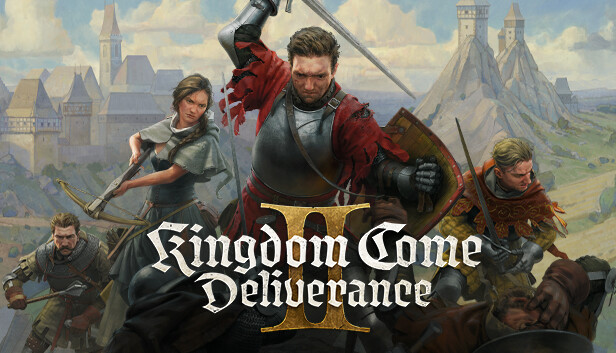 On saleKingdom Come: Deliverance IIFetching price~ CN¥228.00-60%




Comments 0
We'd love to hear from you
Welcome! Share your take on this game — being first might come with a surprise.
No comments yet. Be the first!