
News
over the hill launches with introductory Steam offer and lower-priced key listings
Funselektor’s off-road exploration game is out on Steam at $19.99 with an introductory offer. Approximate third-party ke
















Blood-Stained Yellow Sands, the major expansion for Blade and Sword: Jianghu Road, is now available as a free update on July 27, 2026. The wuxia RPG is developed by Youli Hualong Studio and published by IndieArk. To mark the launch, the Steam version is also running a limited-time 30% OFF discount, cutting the base game from 58 yuan to 40.6 yuan.
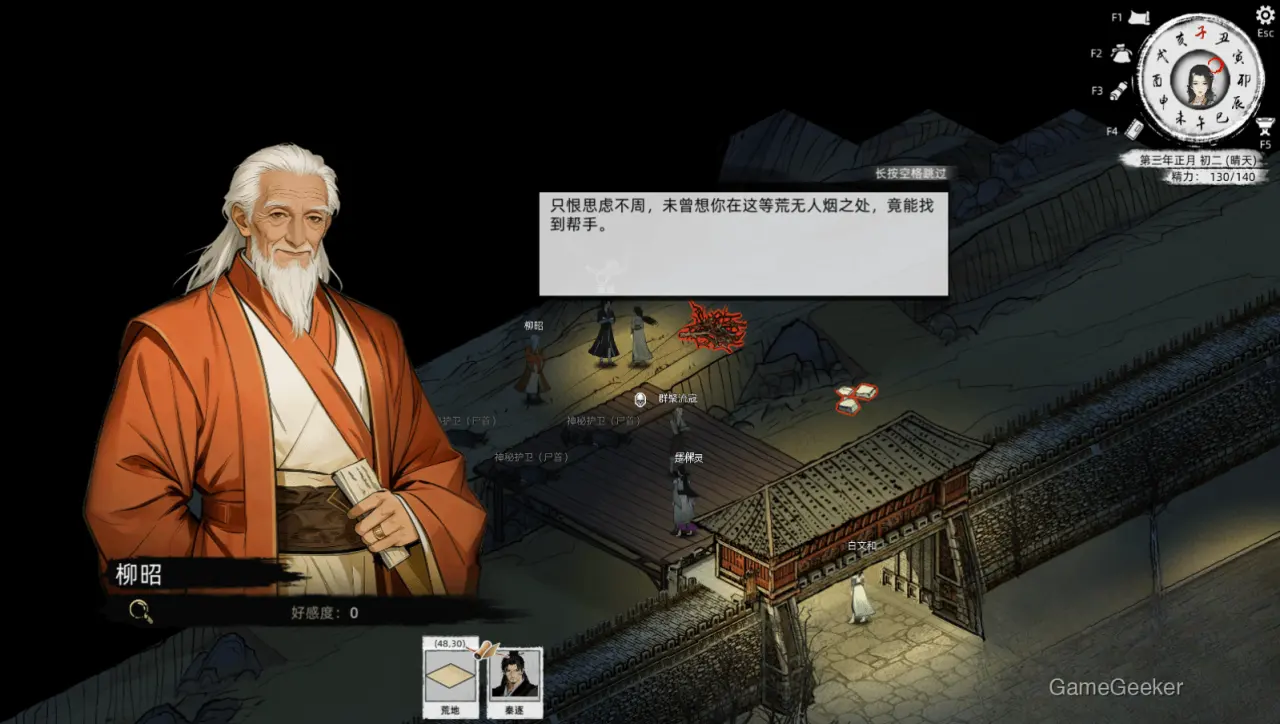
Free is the headline, but the scale matters more. The expansion adds two new maps, 82 story NPCs, 37 pieces of equipment, 18 weapon recipes, more than 10 hours of playtime, and a 100,000-word script. This is not a small bundle of comeback bonuses. It reads more like a full side arc wrapped around a new regional mystery. Wuxia RPGs often struggle when new areas arrive without enough narrative pressure to justify them, but this expansion at least seems aware of that risk. Its story hooks include turmoil involving Samhan and Japanese raiders, a mysterious secret letter, the Western Regions, Liang Junzi's past, Yinyue Tower, Great Brightness Palace, the Loulan remnants, and the Black Wind bandits.

The base game was never a simple linear martial arts campaign. Blade and Sword: Jianghu Road is built around a traditional wuxia story mixed with sandbox systems and side-scrolling real-time combat. It has a million-word original wuxia narrative, five main-story endings, 15 maps, and storylines for five major sects. The player begins as an ordinary young man, then gets pulled step by step into the disputes of the martial world until a heroic name starts to take shape.
That makes it less a straight visual-novel-style wuxia tale than a layered sandbox built from sects, NPCs, random events, and identity choices. The question is what each choice opens or closes next.

Combat is framed around experimentation rather than fixed class progression. The game uses a side-scrolling real-time battle system, has no class restrictions, and includes more than ten weapon types alongside dozens of martial arts, movement skills, internal arts, and divine techniques. The point is not to pick a class and follow a single upgrade route. It is to build combinations across weapons, footwork, and internal power.
Those martial arts combinations only matter if they hold up in play. If the system just piles up moves, it can feel scattered. If the chosen skills connect cleanly with enemy behavior, it starts to feel like a proper jianghu duel.

The sandbox layer is where Blade and Sword: Jianghu Road separates itself from more traditional story-led wuxia games. It includes gang conflicts, martial arts tournaments, constable and assassin roles, brothels, martial arts schools, escort missions, prison breaks, companion and house servant development, marriage and childbirth, life activities, and fishing. That sounds messy on paper, but the shared purpose is clear enough: random NPCs and random events are meant to make the martial world feel like it keeps changing without the main quest pushing it along.
For players who only want to follow the main plot, that can mean too many side paths. For players who like setting their own goals, it becomes the reason to keep playing.





Comments 0
Share your game review
Join the discussion and share your review of this game.
No comments yet. Share your review.