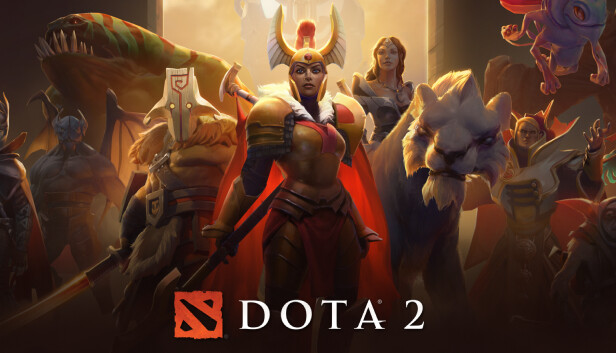
 Dota 2FreeLoading store offers
Popular PicksView All
123456789101112
10 Best Steam Scream V Horror Games for a Halloween 2026 Wishlist
10 Best Short-Level Precision Platformers for Focused Movement Practice
10 Best Single-Player Underwater Adventure Games
10 Best Fantasy Shopkeeping Games for Crafting and Trading
10 Best Single-Player Escape-Room Puzzle Games
10 Best Sokoban Games with Creative Twists
10 Best Programming Puzzle Games in 2026: Visual Logic, Bots, and Assembly
10 Best Railway Network Management Games in 2026
10 Best Single-Player Photography Exploration Games in 2026
10 Best Single-Player Monster Taming Games in 2026
7 Best Time-Loop Mystery Games for Exploration, Dialogue and Deduction
7 Best Fictional Language Deciphering Puzzle Games in 2026
Popular Games LikeView All
Games Like PowerWash Simulator - 12 Best Relaxing Cleaning and Restoration PicksGames Like Dave the Diver - 12 Best Diving, Cooking and Systems-Stacker PicksGames Like Road to Vostok - 12 Best Hardcore Survival Shooter PicksGames Like Path of Exile 2 - 12 Best Action RPG and Loot PicksGames Like Clair Obscur: Expedition 33 - 12 Best Turn-Based RPG PicksGames Like R.E.P.O. - 12 Best Co-op Horror PicksGames Like PEAK - 12 Best Co-op Climbing and Survival PicksGames Like Slay the Spire 2 - 12 Best Roguelike Deckbuilders to Play NextGames Like Mina the Hollower - 12 Best Top-Down Action and Zelda-Like PicksGames Like Baldur's Gate 3 - 12 Best CRPGs and Turn-Based RPGsGames Like Monster Hunter Wilds - 12 Best Co-op Hunting and Action RPG PicksGames Like Hollow Knight: Silksong - 12 Best Metroidvania Picks (2026)Games Like Final Fantasy VII Rebirth - 12 Best Action RPG & JRPG PicksGames Like Dead by Daylight - 12 Best Asymmetric & Co-op Horror PicksGames Like Forza Horizon 6 - 12 Best Open-World Racing & Driving Picks (2026)Games Like 007 First Light - 12 Best Stealth and Spy GamesGames Like Solarpunk - 12 Best Cozy Survival and Crafting GamesGames Like Subnautica 2 - 12 Best Underwater and Alien-World Survival GamesGames Like Lies of P - 12 Best Soulslikes to Play in 2026Games Like Hell Let Loose - 12 Best Tactical Milsim Shooters
Popular ReviewsView All

Mina the Hollower — Review

Clair Obscur: Expedition 33 — Review

Schrödinger's Call — Review

Resident Evil Requiem — Review

Shift At Midnight — Review

Mixtape — Review

Middle-earth™: Shadow of Mordor™ — Review

The Mermaid Mask — Review

MOLE — Review

Desktop Explorer — Review

Mad Max — Review

Go-Go Town! — Review

Dead as Disco — Review

Crushed In Time — Review

Beastro — Review

Moonlight Peaks — Review
Bunny Garden 2 devs slam teams for poor Chinese comms holding them back
During a recent livestream, prominent DOTA2 streamer Charles bluntly called China’s pro teams “trash” and singled out low communication efficiency in Chinese during high-stakes matches as a key reason for their lackluster international showings—a take first reported by Youmin Star that’s now splitting the community.
This isn’t just hot air—Charles is pointing to language efficiency as the real bottleneck in team coordination. From a design standpoint, modern DOTA2’s competitive meta has long moved past the era where a single carry could dominate. Today’s top-tier play demands constant five-man sync, crystal-clear calls, and flawless execution—non-negotiables at the highest level. What Charles calls 'low Chinese communication efficiency' really boils down to too much noise when every millisecond counts: compare “There’s someone in the left jungle” to “LJ TP”—the latter gets vital info across fast enough to matter in pro matches, where hesitation loses fights.

The real issue isn’t the language—it’s the training. If speaking Chinese were the problem, teams could just adopt standardized callouts like CS:GO’s map shorthand. Yet many Chinese squads still wing it with messy, unstructured comms—nothing like the disciplined systems used by teams like OG or Team Spirit. As fellow commentator Chao Ge put it, every team now needs sharp game sense, deep tactical understanding, and tight coordination—no exceptions. The real issue isn’t Chinese per se, but the absence of a purpose-built information pipeline.

Beneath the outrage lies a deeper truth about China’s DOTA2 scene. With the global meta now demanding split-second micro, layered macro, and on-the-fly adjustments, raw individual talent no longer suffices. While some fans agree that communication gaps hurt performance, many argue that blaming the Chinese language is lazy scapegoating—after all, past The International champions include non-English-native rosters. Success doesn’t depend on what language you speak—but whether your team has built a comms system that holds up under fire.
Ultimately, this isn’t about linguistics—it’s about system design. A squad with a well-rehearsed voice protocol can execute textbook teamfights in dialect; without that foundation, even fluent English speakers will fumble at critical moments.
Dota 2FreeLoading store offers





Comments 0
Share your game review
Join the discussion and share your review of this game.
No comments yet. Share your review.