 On saleFable
Popular PicksView All
123456789101112
10 Best Fantasy Shopkeeping Games for Crafting and Trading
10 Best Single-Player Escape-Room Puzzle Games
10 Best Sokoban Games with Creative Twists
10 Best Programming Puzzle Games in 2026: Visual Logic, Bots, and Assembly
10 Best Railway Network Management Games in 2026
10 Best Single-Player Photography Exploration Games in 2026
10 Best Single-Player Monster Taming Games in 2026
10 Best Immersive Sim Games on Steam (2026)
10 Best Mech Games on Steam (2026)
10 Best Single-Player Pirate Games on Steam (2026)
7 Best Time-Loop Mystery Games for Exploration, Dialogue and Deduction
7 Best Fictional Language Deciphering Puzzle Games in 2026
Popular Games LikeView All
Games Like PowerWash Simulator - 12 Best Relaxing Cleaning and Restoration PicksGames Like Dave the Diver - 12 Best Diving, Cooking and Systems-Stacker PicksGames Like Road to Vostok - 12 Best Hardcore Survival Shooter PicksGames Like Path of Exile 2 - 12 Best Action RPG and Loot PicksGames Like Clair Obscur: Expedition 33 - 12 Best Turn-Based RPG PicksGames Like R.E.P.O. - 12 Best Co-op Horror PicksGames Like PEAK - 12 Best Co-op Climbing and Survival PicksGames Like Slay the Spire 2 - 12 Best Roguelike Deckbuilders to Play NextGames Like Mina the Hollower - 12 Best Top-Down Action and Zelda-Like PicksGames Like Baldur's Gate 3 - 12 Best CRPGs and Turn-Based RPGsGames Like Monster Hunter Wilds - 12 Best Co-op Hunting and Action RPG PicksGames Like Hollow Knight: Silksong - 12 Best Metroidvania Picks (2026)Games Like Final Fantasy VII Rebirth - 12 Best Action RPG & JRPG PicksGames Like Dead by Daylight - 12 Best Asymmetric & Co-op Horror PicksGames Like Forza Horizon 6 - 12 Best Open-World Racing & Driving Picks (2026)Games Like 007 First Light - 12 Best Stealth and Spy GamesGames Like Solarpunk - 12 Best Cozy Survival and Crafting GamesGames Like Subnautica 2 - 12 Best Underwater and Alien-World Survival GamesGames Like Lies of P - 12 Best Soulslikes to Play in 2026Games Like Hell Let Loose - 12 Best Tactical Milsim Shooters
Popular ReviewsView All

Mina the Hollower — Review

Clair Obscur: Expedition 33 — Review

Schrödinger's Call — Review

Resident Evil Requiem — Review

Shift At Midnight — Review

Mixtape — Review

Middle-earth™: Shadow of Mordor™ — Review

The Mermaid Mask — Review

MOLE — Review

Desktop Explorer — Review

Mad Max — Review

Go-Go Town! — Review

Dead as Disco — Review

Crushed In Time — Review

Beastro — Review

Moonlight Peaks — Review
Fable’s 30-Minute Gameplay Reveal Is Out, but Its October Release Still Isn’t Locked In
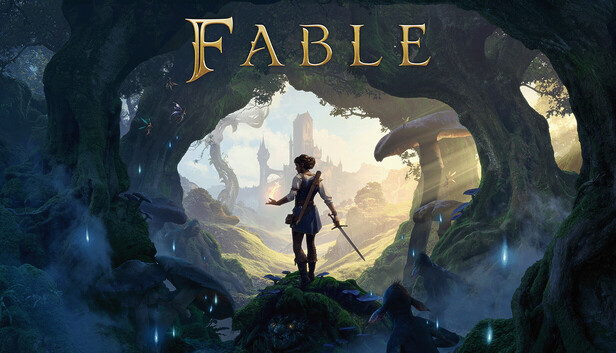
Fable was shown in a new 30-minute gameplay presentation during Summer Game Fest, with details coming from an advance viewing event held under an Xbox official invitation. The demo focused on the systems driving Playground Games' reboot, and the most important takeaway is not combat but how the world reacts to the player. The bigger answer will have to wait until October this year, since what was shown is still an in-development build and may differ from the final release.
Within both Xbox's first-party lineup and the broader RPG space, Fable has always been an outlier. More than 20 years ago, the original was already folding home ownership, shopkeeping, friendships, and family-building into its main adventure. It felt less like a standard action RPG than a life sim wrapped inside one. After Fable III launched in 2010, the series went quiet for over a decade, until 2020, when it was handed to Playground, the team best known for Forza Horizon. That immediately raised the obvious question: could the studio modernize the series without sanding off what made it strange in the first place?
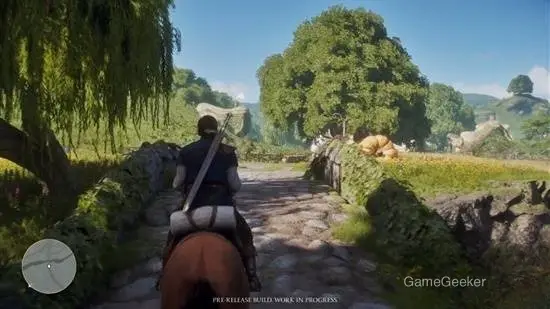
The clearest idea in the demo is that the world is meant to remember you. According to the presentation, the game features more than 1000 individually designed, fully voiced NPCs, each with their own social ties and life path. If that system survives intact in the final game, it matters for more than just making the world feel crowded. It would turn the open world from a static backdrop into a reactive simulation, which is exactly the layer this reboot seems to be chasing.
The examples shown already point in that direction. The player gives alms to a beggar named Jack, then later buys a tavern and hires him as an employee. The point is not a one-off scripted quest, but a system that can permanently redirect an NPC's life. Reactions also vary by personality and position. For someone like the shopkeeper Megan, the player's shrewdness and status as a business owner are appealing. A clothing shop owner who dislikes the wealthy responds in the opposite way, marking prices up by 80%. That makes the morality system feel more granular than a basic good-or-evil split. Instead of stamping the player with one alignment, the game builds a profile through accumulated traits.
The demo also showed how those traits are assigned. Saving a talking pig from slaughter leaves impressions of the player as upright, compassionate, and shrewd. Giving money to a beggar adds a kindness tag. Buying a tavern makes people see you as a wealthy entrepreneur. NPCs then judge those same actions differently depending on who they are, creating something more layered than the usual morality meter.

The life-sim side looks just as important. The map's bakery, tavern, and general store can all be purchased, and once you own them, you can adjust product prices, employee wages, and job assignments. Homes range from small cottages to grand manors, with options to live in them, rent them out, and change the rent. If a house already has residents, you can either force them out or compensate them, and both choices affect how locals see you. All income from your properties is automatically collected into a shared storage chest, which cuts down on the busywork of running around to gather rent by hand.
Each employee also has their own personality and level of competence. A mild-tempered, friendly worker can improve a shop's popularity and overall returns. The demo even showed the player taking a blacksmith job, using a forging minigame to earn money for a house while improving blacksmithing skill. That matters because it suggests the economy is more than set dressing. It is tied directly into the progression loop and into how you choose to live outside the main story.


Quest design follows the same logic. One example asks whether the player will save a talking pig named Colin in the first place. If the answer is yes, there is a second layer: do it by force, or pay for the pig instead. In the demo, the protagonist chose to buy Colin, earning thanks from a boy and also receiving another quest clue. The appeal of that structure is not just the number of branches. It is that the method of solving a problem feeds back into the world, which feels more sustainable to build and more convincing in play.
Compared with other RPGs, this Fable looks like it is trying to fill a specific gap. It is not leaning hardest on dense stat systems, and it is not chasing the fully cinematic RPG template either. Its main pitch is social simulation. According to the developers, the game includes hundreds of branching dialogue sequences and more than two hours of high-quality motion-captured cutscenes. Even so, caution is still the right stance. This is an in-development build, and the real test is whether performance, repetition, and the depth of interaction between all these systems can hold up. For players watching Xbox's single-player lineup, the key question is already clear: not whether Fable can deliver pretty scenery, but whether all of these systems will genuinely lock together when the fuller reveal comes in October this year and, ultimately, at release.
On saleFable Rogue Fable III~ $9.99Loading store offers
 On saleForza Horizon 5
 Fable - The Lost Chapters
 Fable Anniversary





Comments 0
Share your game review
Join the discussion and share your review of this game.
No comments yet. Share your review.