
News
Grab two free PC games before Epic's clock runs out, while Undertale and Divinity: Original Sin 2 are 75% off
Astral Ascent and LUFTRAUSERS are free to keep today, while two of PC gaming's most celebrated RPGs cost less than $14 c
















Compared with Forza Horizon 5, the core change in Forza Horizon 6 this time is not just the map shifting from Mexico to Japan, but that the entire driving rhythm is moving in a denser, more layered direction. For players who have long been bouncing between PC and consoles, this kind of upgrade carries more weight than simply adding more cars; the former changes how every drive across the map feels, while the latter mostly determines how deep the garage gets.

Let’s start with the most intuitive numbers. The total vehicle count in this game has reached 550, and the official preview mentions both classic Japanese models and professionally tuned American cars. In the open-world racing space, that number is already highly competitive; but what really widens the gap is that the number of roads on the map has increased to 673, nearly 100 more than the 578 in Forza Horizon 5. Looking further back through the series, the first game had 216 roads, the second 315, the third 488, the fourth 531, the fifth 578, and now the sixth 673. That growth curve alone shows that Playground Games is still continuing to pile on map density.

If we compare it with the previous game, the biggest selling point of the Japan setting this time is not just a “reskin,” but “verticality.” Information revealed so far makes it clear that this will be the most elevation-focused map in the series, with winding mountain roads and undulating terrain that clearly set it apart from the relatively flat Mexican landscape of Forza Horizon 5. For players who enjoy attacking corners on mountain roads and clipping lines while drifting, this kind of design can easily shift the driving experience from broad and open to a constant sequence of cornering; for players who prefer high-speed cruising, the adjustment cost will also be higher than in the previous game.

From another angle, the environmental atmosphere is also filling in a side of the series that has previously felt relatively “clean.” The map will feature more realistic traffic congestion, and pedestrians will no longer just circle around festival sites, but be spread across more areas of the city. Combined with the neon lights, road signs, and street lighting of Japan’s nightlife scenes, the city will feel more like “a racetrack where people actually live” rather than simply an amusement park cleared out for players. It is worth noting that the game is not a full recreation of the real Tokyo; only some locations are recreated with a relatively high degree of accuracy. So players expecting a 1:1 tourism simulator should probably reset their expectations back to the racing-game lane first.
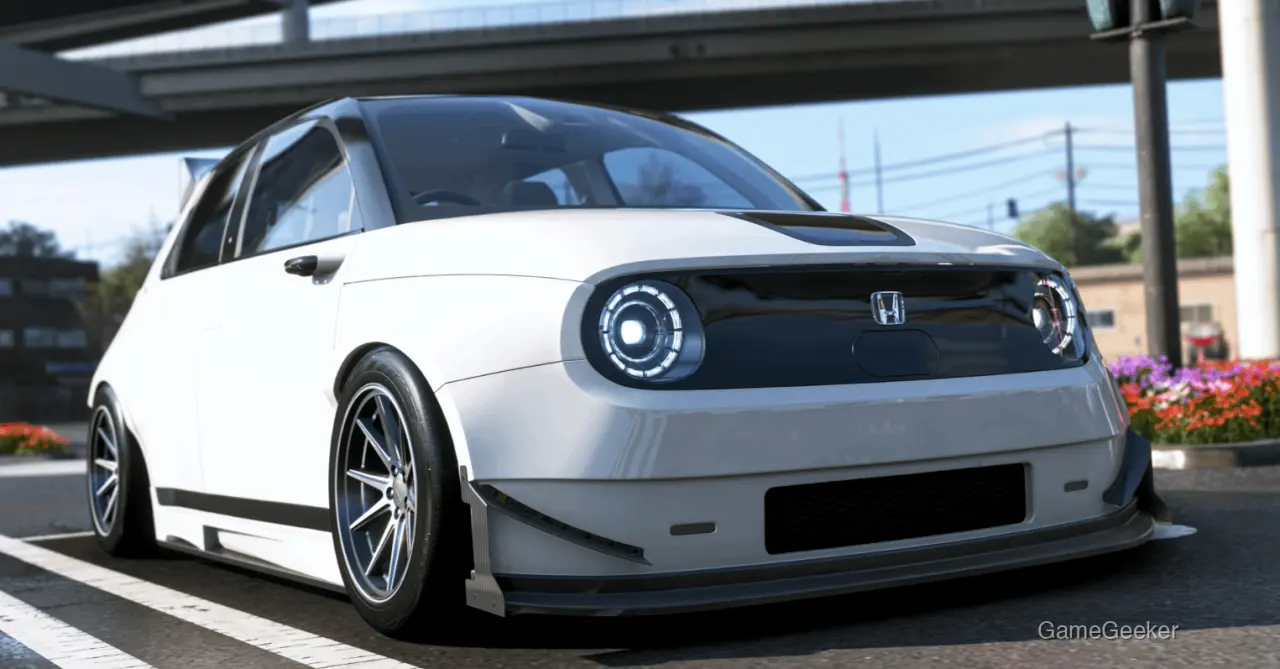
What is most likely to ignite discussion in the community is still the appearance of the Akina course. According to current leaks, the Akina course familiar to Initial D fans has been recreated with precision, preserving its iconic corners and overall route style. Compared with a general, suggestive tribute, this approach feels more like directly stuffing Japanese mountain-road culture into Horizon’s giant map; drift players, JDM fans, and community content creators who enjoy recording mountain runs will basically all treat this as one of their first must-visit spots.
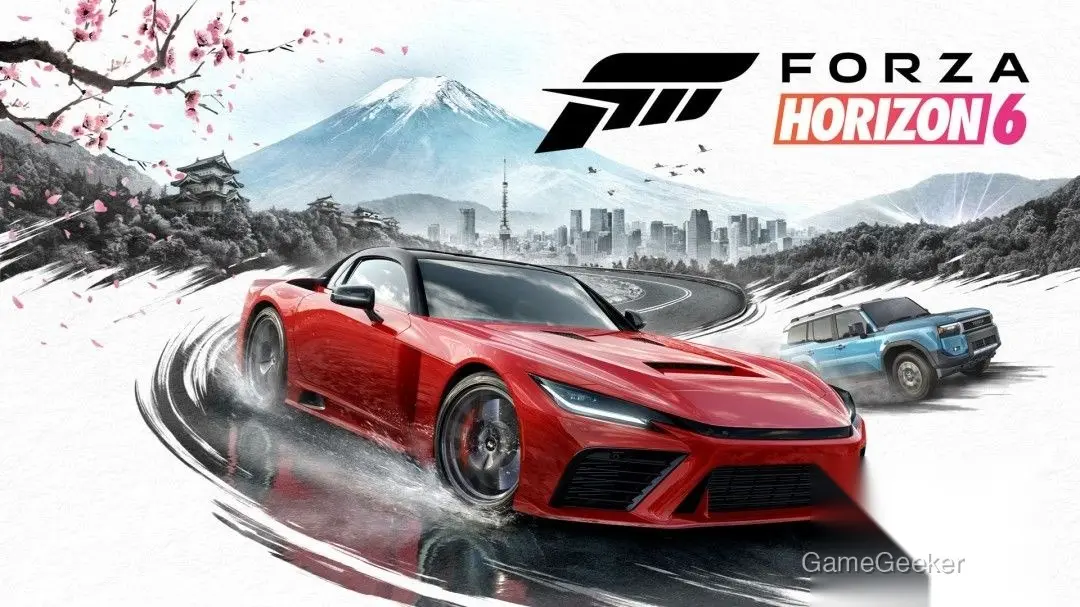
The release information is also very clear: Forza Horizon 6 will launch on PC and Xbox Series on May 19, joining Xbox Game Pass Ultimate on day one; the PS5 version, meanwhile, will have to wait until later in 2026. From a multiplatform perspective, players already subscribed to XGPU are still getting the best deal at launch, with the lowest cost of trying it out; PC players who care more about graphics options and long-term community activity should also keep a close eye on day one. By contrast, PS5 players this time are more like waiting for the “complete edition rhythm.” Playing later may not necessarily be a worse deal, but it will definitely mean missing the first wave of community hype.
Overall, Forza Horizon 6 this time does not look like a region-swapped version of Horizon 5, but more like a full-fledged evolution that pushes map structure, urban atmosphere, and Japanese car culture upward at the same time. If all of these revealed features ultimately land in a stable, polished form, then among open-world racers of the same type, it will likely be more replayable than its predecessor and better suited for long-term map grinding.




Comments 0
Share your game review
Join the discussion and share your review of this game.
No comments yet. Share your review.